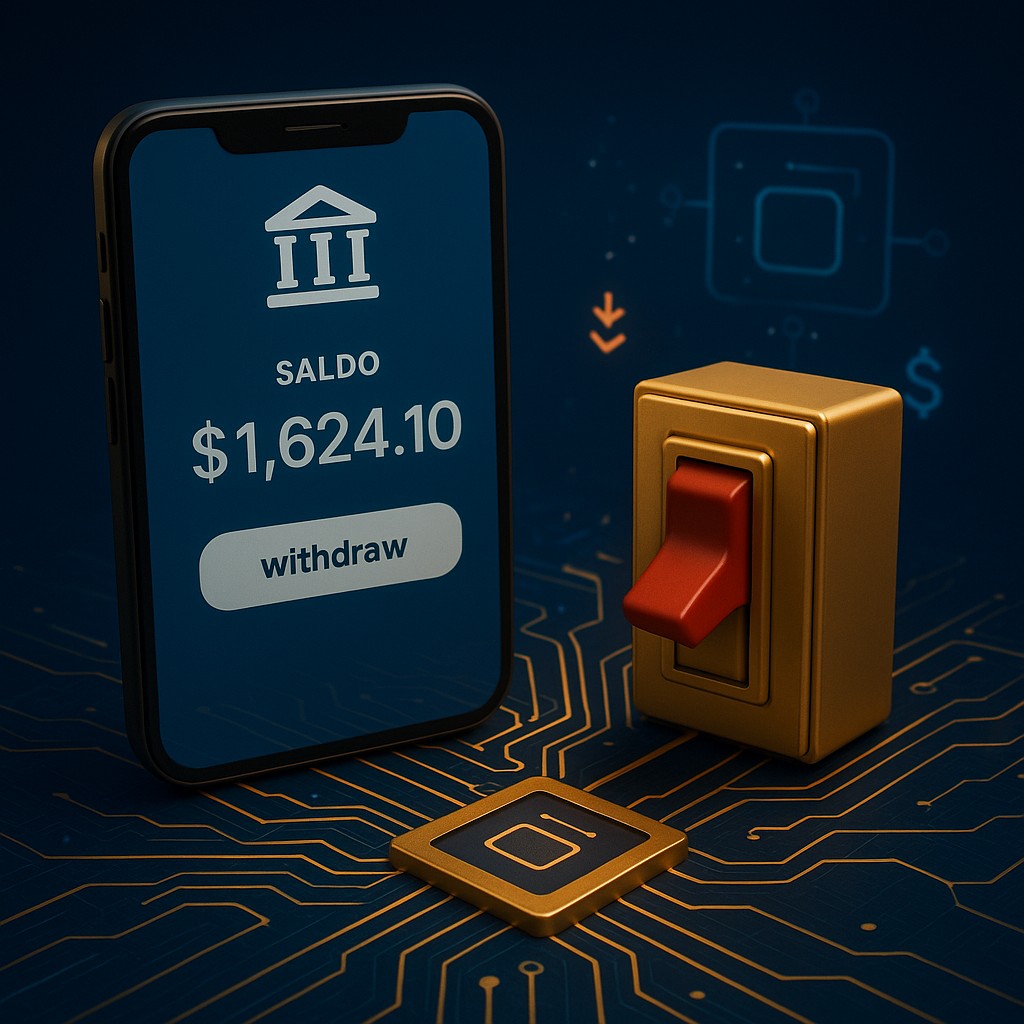
In the spring of 2023, the financial world watched in stunned silence as Silicon Valley Bank vanished in a matter of hours. This was not the cinematic bank run of the 1930s, where desperate crowds in overcoats huddled outside locked brass doors. Instead, it was a silent, digital stampede. Depositors pulled their money through smartphone apps while sipping coffee, moving tens of billions of dollars with a few taps. The speed of information, fueled by social media, had moved faster than the physical and regulatory "plumbing" of the global banking system. It became clear that in an age of instant transfers, the old "lender of last resort" model was like trying to douse a forest fire with a garden hose.
Central banks have realized that moving to a purely digital economy requires a new kind of architecture, especially as they develop Central Bank Digital Currencies (CBDCs). These digital versions of national money are not just about convenience; they represent a fundamental redesign of how money behaves during a crisis. By embedding "programmable limits" into the very code of the currency, central banks are creating a mechanical circuit breaker for the financial grid. This shift transforms the monetary authority from a passenger reacting to the storm into a proactive architect who can literally slow down a panic before it breaks the system.
The Frictionless Panic of the Digital Age
To understand why central banks are obsessed with limits, we first have to appreciate how much "friction" used to protect our economy. In the past, moving large sums of money was a chore. You had to visit a branch, speak to a person, sign physical forms, and wait for armored trucks to move paper and ink. This friction acted as a natural brake. It gave regulators time to breathe, negotiate bailouts, or find a buyer for a failing bank. In the digital world, that friction has vanished. Money is now just a flickering sequence of data moving at the speed of light. When trust evaporates, the data flees instantly.
When a private bank suffers a run, people aren't just withdrawing money; they are moving it to a "safe haven." Historically, that meant taking out physical cash or moving funds to a massive, "too big to fail" competitor. However, if a Central Bank Digital Currency exists, it becomes the ultimate safe haven. Because a central bank cannot go bankrupt, every depositor would logically want to move their life savings into a CBDC wallet at the first sign of trouble. Without constraints, a CBDC could accidentally cause the very banking collapse it was meant to prevent by making it too easy for everyone to leave the private banking system at once.
This phenomenon is known as "digital disintermediation." If everyone moves their money out of commercial banks and into central bank wallets, those commercial banks lose the deposits they use to fund mortgages, small business loans, and car payments. The entire engine of credit in our society would lock up. To prevent this, the designers of the digital pound, the digital euro, and other CBDCs are building "holding limits" and "transfer caps" directly into the software. These are not meant to control your Saturday night grocery bill; rather, they ensure that the move from private bank credit to central bank money happens at a manageable trickle rather than a destructive flood.
Engineering the Monetary Circuit Breaker
The concept of a programmable limit works much like the circuit breakers in your home’s electrical panel. When the current flowing through a wire hits an unsafe level, the breaker trips to prevent a fire. In a CBDC framework, the central bank can set a hard-coded cap on how much digital currency any one person can hold in their personal wallet. For example, the Bank of England has discussed a potential limit of between £10,000 and £20,000 for a digital pound. This ensures that while you can use the currency for daily shopping, you cannot suddenly dump your entire $500,000 retirement fund into it during a moment of market panic.
These limits are "programmable" because they are flexible. In times of economic calm, these limits might be invisible or set higher to encourage people to use the system. However, the true value of the code lies in its ability to manage "velocity," or the rate at which money changes hands. By slowing down the transfer of funds from private banks to the central bank, the government buys the most precious commodity in a crisis: time. This time allows the private bank to stabilize, social media rumors to cool down, and the government to prevent a "contagion" that could take down the entire economy.
| Feature |
Traditional Cash/Banking |
Programmable CBDC |
| Transaction Speed |
Slow for large amounts (requires being there in person) |
Instant (24/7/365) |
| Crisis Response |
Reactive (Lender of Last Resort) |
Proactive (Hard-coded limits) |
| Systemic Friction |
High (Human staff, business hours) |
Low/Adjustable (Algorithmic rules) |
| Safety Level |
Depends on the bank's health or insurance limits |
Absolute (Backed by the State) |
| Flow Control |
Limited (Bank queues or withdrawal caps) |
Automated (System-level holding limits) |
Moving From Reactive to Architectural Governance
For over a century, the primary tool of a central bank during a crisis was the "discount window." This is a setup where the central bank lends money to commercial banks that are running low on cash. It is a reactive role, essentially the fire department arriving after the smoke is already visible. While this remains vital, it is a blunt instrument. It often involves massive injections of cash that can cause long-term inflation or create "moral hazard," where banks take bigger risks because they know the government will catch them if they fall.
Programmable CBDCs allow for an "architectural" approach. Instead of just reacting to money flows, the central bank designs the pipes to ensure the pressure never hits a breaking point. By setting limits on individual wallets, the central bank creates a decentralized buffer. If a million people all try to move money at once, the system effectively says, "You can move this much, but no more for now." This doesn't stop people from using their money, but it prevents the "all-at-once" nature of a digital run. It forces the panic to move at a human pace rather than a computer-driven one.
This new role marks a shift in the philosophy of money itself. We are moving from a world where money is a passive tool to one where money is an active participant in its own regulation. Critics often worry this sounds like a loss of freedom, but from a system-wide perspective, it is a stabilization tool. Just as a bridge is designed with weight limits to prevent a collapse caused by too much vibration, a digital currency is designed with flow limits to prevent an economic collapse. The goal is to keep the broad financial grid working so that credit remains available for everyone, even when parts of the grid are under stress.
Dispelling the Myth of Permanent Spending Caps
Whenever the words "programmable" and "currency" appear together, people get skeptical, and for good reason. There is a common fear that programmable limits are a gateway to "social credit" style control, where the government might tell you that you’ve bought too much coffee or that your money will expire if you don’t spend it by Friday. It is vital to distinguish between "programmable money" (where the money itself has rules about what it can buy) and "programmable infrastructure" (where the system has rules about how much can be moved to keep things stable).
Current designs for Western CBDCs, such as those being explored in the UK and Europe, focus strictly on the latter. These limits are tools for the whole economy, not for micromanaging individuals. They are aimed at the gateway between the private banking system and the central bank. Their purpose is to manage the "stocks and flows" of the economy, not the choices of the person. In fact, most central bank proposals include strong privacy protections and emphasize that a CBDC must work alongside cash, rather than replacing it.
Another myth is that these limits will make the currency "worse" than traditional cash. In reality, a CBDC with limits is often safer than a digital balance in a private bank account. A private bank account is technically an "IOU" from that bank; if the bank fails, you are a creditor waiting for insurance payouts. A CBDC is a direct claim on the central bank, making it the highest form of money available. The limits are simply the "safety tax" we pay for having access to a risk-free digital asset that doesn't depend on the health of a commercial middleman.
Balancing Innovation with Financial Stability
As we head toward a future where "programmable limits" become a standard feature of our money, the challenge for policymakers is one of balance. If the limits are too low, no one will use the digital currency, and it will fail to modernize the economy. If the limits are too high (or don’t exist), the risk of a catastrophic bank run increases, potentially destabilizing the institutions that provide our mortgages and business loans. Finding the "Goldilocks zone" for these limits will be one of the great economic experiments of the 21st century.
This evolution is a fascinating mix of computer science and economics. We are essentially applying "throttling" techniques from web servers to the world of global finance. When a website gets too much traffic, the server limits requests to prevent a total crash. Central banks are now doing the same with our money. It is a recognition that speed is not always a good thing in finance; sometimes, the ability to slow things down is the only thing that keeps the lights on.
The next time you hear about a digital currency, remember that it is more than just a digital version of the paper in your wallet. It is a sophisticated piece of infrastructure built to survive a world where a tweet can move a billion dollars. By embracing these mechanical circuit breakers, we are building a financial system that is not only faster, but more resilient to the unpredictable storms of human psychology. You are witnessing the birth of a monetary system that doesn't just wait for a crisis to happen, but is built from the ground up to ensure the panic never gains enough momentum to break the world.