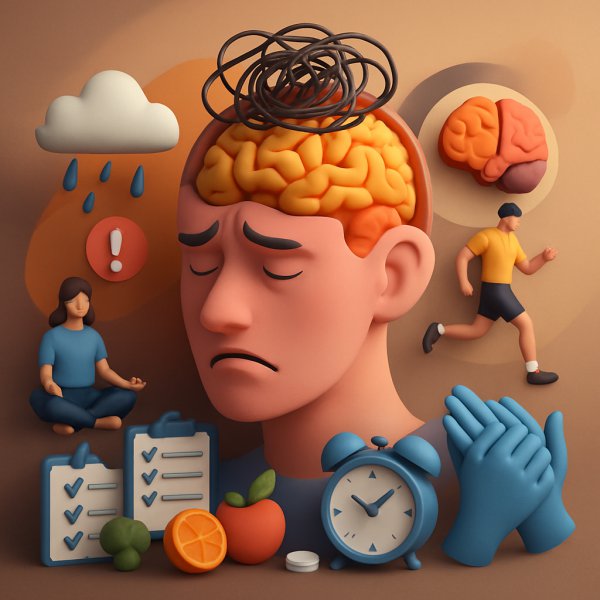
Why stress is not just a feeling - it quietly rearranges your nervous system
Imagine your body is a smart house with motion sensors, sprinklers, a thermostat, and a very nervous guard dog. Every time the guard dog senses trouble, it yelps, the sprinklers might go on, lights flash, and the thermostat kicks the furnace into overdrive. That system is brilliant when danger is brief - it saves you from real threats. But if the alarm never turns off, bulbs burn out, pipes leak, and the guard dog develops arthritis.
This is the drama of chronic stress. Short bursts of stress prime us to act and adapt; prolonged stress nudges the nervous system into a new baseline state, one that can feel normal while quietly impairing memory, increasing anxiety, and making it harder to recover. Those changes are not just "in your head" - they involve hormones, immune signals, nerve cells, and even the structure of your brain. Understanding how chronic stress rewires the nervous system helps you spot the signs early and take realistic steps to bring the house back into order.
Over the next sections we will peel back layers - from the quick stress reflex that helped our ancestors survive, to the long-term rewiring that modern life can trigger. Expect clear metaphors, a few real-world scenes, and practical tools you can try today to move your nervous system toward balance. No prior neuroscience degree required, just curiosity and an open mind.
If you prefer a roadmap first: you will learn the biological actors (hormones, brain regions, immune cells), the consequences for thinking and feeling, everyday scenarios where this shows up, common myths, and evidence-based strategies to promote recovery. Along the way there are reflection prompts to help these ideas become genuinely useful for your life.
The quick stress primer - how your nervous system normally responds
Acute stress is the "get-away" signal: a fast chain of events designed to keep you alive. Sensory inputs - a car horn, a warning text, a barking dog - trigger the amygdala, the brain's threat-detection hub. The amygdala activates the sympathetic nervous system and the hypothalamic-pituitary-adrenal axis, or HPA axis for short, which together unleash adrenaline and cortisol. These chemicals speed up your heart, sharpen attention, and prioritize energy for muscles over digestion or long-term thinking.
This acute response is adaptive and reversible. Once the threat ends, parasympathetic systems - think the body's "rest and repair" mode - bring heart rate down, digestion resumes, and cortisol falls. Brains thrive on this cycle of activation and recovery. The problem begins when the cycle gets stuck in "on" mode - when stressors are frequent, unrelenting, or perceived as uncontrollable.
Chronic stress is not just lots of single stressful events; it is the prolonged wear and tear from repeated activation. The HPA axis becomes less predictable, neurotransmitter systems shift, and immune signals change. Over weeks, months, or years this repeated activation changes how neurons connect and how circuits regulate emotion, memory, and decision-making. In short, prolonged alarms remodel the smart house in ways that can make future alarms louder and more disruptive.
A tour of the brain regions most affected by long-term stress
Start with the hippocampus, the memory hub. Chronic exposure to elevated cortisol impairs the growth of new neurons in the hippocampus and can shrink its volume over time. That shows up as memory lapses, difficulty with context, and a weaker ability to distinguish past threats from present reality. It is not that all memories vanish; rather, the fine tuning that helps you place memories in time and space becomes dulled.
Across town is the amygdala, which senses emotional salience. Under chronic stress the amygdala often becomes more reactive and can even increase in volume in some subregions. The result is a lower threshold for detecting threat - you may interpret ambiguous situations as dangerous and feel anxiety rise faster. This heightened vigilance can be helpful in a dangerous environment but exhausting when the danger is mostly imagined or socially based.
The prefrontal cortex, the planning and self-control center, takes a hit too. Chronic stress reduces activity and connectivity in prefrontal circuits that regulate emotions and inhibit impulsive reactions. That means you might find it harder to concentrate, make decisions, or step back from reactive behaviors. In practical terms, stress can feel like the brain's governor has slipped off the throttle, making habitual and emotional responses more dominant than thoughtful action.
Finally, microglia and white matter are part of the story. Microglia are immune cells in the brain that prune synapses and respond to inflammation. Under chronic stress they can become persistently activated, leading to excessive synapse pruning or low-grade neuroinflammation. White matter - the brain's wiring - can show changes in myelination and connectivity, shifting the speed and efficiency of communication across regions. These are subtler changes but they influence how reliably different brain regions coordinate under pressure.
The nervous system beyond the brain - autonomic balance and body feedback
The autonomic nervous system is the house's plumbing and wiring. It has two major branches - the sympathetic system that speeds things up, and the parasympathetic system that slows things down. Chronic stress biases the system toward sustained sympathetic tone and weakened parasympathetic recovery. You might notice a faster resting heart rate, poor digestion, shallow breathing, or difficulty sleeping - all signs the nervous system is remaining in an "on" state.
The vagus nerve is an important parasympathetic highway that connects the brain to the heart, lungs, and gut. Reduced vagal tone correlates with poorer emotional regulation and increased inflammation. So chronic stress does not only act top-down via the brain; it shifts body signals that, in turn, feed back to the brain creating a loop that can perpetuate anxiety and fatigue.
Also relevant is the link between stress and the immune system. Repeated cortisol elevations can lead to a state of glucocorticoid resistance, where immune cells become less responsive to cortisol's anti-inflammatory signal. This paradoxically promotes persistent low-grade inflammation, which affects mood, cognition, and neural plasticity. In short, when stress remains high the immune system may join the chorus, amplifying changes in the nervous system.
Molecules and messages - cortisol, neurotransmitters, and neuroplasticity
Cortisol is the headline hormone in chronic stress conversations, but it is part of a larger chemical cast. Cortisol interacts with neurotransmitters like serotonin, dopamine, glutamate, and GABA - systems that shape mood, motivation, and excitation-inhibition balance. Chronic stress can lower serotonin and dopamine signaling, which links to depressive symptoms and reduced reward sensitivity. It can also increase glutamate release in certain circuits, which, when sustained, promotes excitotoxicity and synapse loss.
Neuroplasticity - the brain's capacity to change - is a double-edged sword in chronic stress. Stress-related signals can reduce brain-derived neurotrophic factor, or BDNF, which is crucial for neuron survival and synaptic growth. Less BDNF equals fewer new connections and slower recovery. This biological scarcity explains why learning, memory, and recovery of emotional balance feel harder under chronic stress.
Epigenetics provides a longer-term mechanism. Chronic stress can modify gene expression via DNA methylation and histone changes without altering DNA itself. These epigenetic shifts can adjust how stress-response genes are expressed, sometimes across months, and in animal models they can even affect offspring. The take-away is that prolonged stress leaves molecular footprints that can shape future sensitivity to stress.
Everyday scenes that show how the nervous system rewires
Picture Maya, a call center supervisor juggling deadlines, screaming customers, and family caretaking. Over months she notices she forgets details from earlier in the day, snaps at her partner, and struggles to sleep. Those cognitive slips and emotional reactivity point to changes in hippocampus and prefrontal circuits, with a revved-up amygdala making harmless triggers feel threatening. Maya's body is adapting to an environment she perceives as relentlessly demanding; her nervous system is refitting itself to cope, but at a long-term cost.
Now imagine a city where the traffic lights are stuck on red in several neighborhoods. Cars pile up, honking intensifies, and even after the original problem is solved, drivers remain cautious and slow for weeks. This traffic jam metaphor describes how stress can create a new "normal" neural rhythm - slower thinking, hypervigilance, and overactive alertness - which persists beyond the original cause.
These scenes are not doom sentences - they illustrate a plastic nervous system that responds to context. The good news is the same plasticity that allows stress to rewire the brain also allows targeted changes through supportive experiences and practices.
Myths people believe about stress and the nervous system
Myth 1 - "Stress is either good or bad." Reality - stress is a tool. Short-term stress is essential for growth and survival, while chronic stress becomes harmful when recovery is inadequate and stressors are persistent.
Myth 2 - "Once the brain is changed by stress, the damage is permanent." Reality - many stress-induced changes are reversible with time and intervention. Neuroplasticity, increased BDNF through exercise, therapy, and medications can restore structure and function, though duration and severity of stress influence recovery speed.
Myth 3 - "If I just 'think positive' I can fix chronic stress." Reality - cognitive reframing helps but will not alone reverse physiological changes. Effective recovery typically combines psychological strategies, physical self-care, social support, and sometimes medical treatment.
Myth 4 - "Stress only affects emotions." Reality - chronic stress affects memory, immune function, metabolism, sleep, and cardiovascular risk. It is a whole-body phenomenon with neural fingerprints.
Each myth simplifies a complex system. Recognizing nuance helps you choose strategies that actually address the nervous system, not just the narrative.
A compact comparison table - acute vs chronic stress effects
| Feature |
Acute stress |
Chronic stress |
Nervous system consequence |
Helpful intervention |
| Hormonal pattern |
Brief spike of adrenaline and cortisol |
Sustained or dysregulated cortisol; HPA axis blunting or overactivity |
Impaired memory, mood shifts, metabolic effects |
Sleep, stress management, medical review |
| Brain regions |
Transient activation of amygdala; PFC intact |
Hippocampal shrinkage, amygdala hyperactivity, PFC downregulation |
Memory problems, increased anxiety, poor impulse control |
Exercise, therapy, cognitive training |
| Autonomic tone |
Sympathetic surge then recovery |
Elevated sympathetic tone, low parasympathetic recovery |
High HR, poor digestion, sleep disturbance |
Breathing, vagal-stimulating practices |
| Immune response |
Temporary immune modulation |
Low-grade inflammation, glucocorticoid resistance |
Fatigue, mood changes, disease risk |
Anti-inflammatory lifestyle, sleep, medical care |
| Plasticity |
Learning and adaptation |
Maladaptive rewiring, epigenetic changes possible |
Longer-term behavioral patterns |
Multimodal interventions for recovery |
Reflection prompts to make this personal
Take a moment and answer these quietly or jot a few notes. Thinking about your life anchors these ideas in reality and makes change easier.
- Which situations in the past year repeatedly triggered a fight-or-flight reaction for you?
- What small memory problems or attention slips have you noticed recently, and when do they happen?
- How often do you feel you recover fully after a stressful episode versus stay on edge for hours or days?
- Which recovery strategies have you tried, and which felt realistic to maintain?
- Who in your social circle helps you feel safe, and how often do you connect with them?
- If professional help were a regular self-care tool, what would make accessing it more likely for you?
Spend five minutes answering these - clarity about patterns is often the first actionable step.
Practical, evidence-based steps to help your nervous system recover now
Immediate tools you can use today:
- Diaphragmatic breathing for 3 to 5 minutes reduces sympathetic drive and increases vagal tone. Breathe in slowly through the nose for four counts, hold one count, breathe out through the mouth for six counts. Repeat and notice heart rate or tension drop.
- Grounding and sensory shifts help calm a reactive amygdala. Describe five things you see, four you can touch, three you hear, two you smell, one you taste. This simple practice reorients attention away from threat.
Daily habits that support neuroplastic recovery:
- Move your body. Aerobic exercise increases BDNF and supports hippocampal health. Aim for moderate activity 3-5 times per week, even brisk walking counts.
- Sleep is non-negotiable for resetting stress hormones and consolidating memory. Prioritize consistent sleep times, reduce screens 60 minutes before bed, and create a cool, dark environment.
- Build social safety. Regular, supportive interactions lower cortisol and stimulate oxytocin, which calms the nervous system. Even brief, quality conversations matter.
- Nutrition and inflammation. A balanced diet rich in omega-3s, fiber, and antioxidants supports brain health while reducing low-grade inflammation associated with chronic stress.
Therapies and longer-term strategies:
- Cognitive behavioral therapy and similar approaches strengthen prefrontal regulation of emotion through practice. Therapy provides skills to reframe perceived threats and develop coping plans.
- Mindfulness-based interventions improve stress reactivity and increase prefrontal control over the amygdala. Practice 10-20 minutes daily to notice measurable changes over weeks.
- Medication when appropriate - selective serotonin reuptake inhibitors and other medications can correct neurotransmitter imbalances and facilitate engagement with therapy. Discuss options with a clinician if daily functioning is impaired.
- Targeted treatments for sleep problems, persistent anxiety, or trauma-based stress may accelerate recovery and are worth exploring with professionals.
Small, consistent actions matter more than occasional heroic efforts. The nervous system remodels slowly, both toward stress and toward recovery, so build durability into your plan.
When to reach out for professional help - clear signs
Consider professional help if stress affects your ability to work, sleep, maintain relationships, or if you experience persistent sadness, panic attacks, suicidal thoughts, or substance misuse. Also reach out if physical symptoms - chest pain, severe headaches, or fainting - occur, as these require immediate medical evaluation. A qualified clinician can assess HPA axis involvement, suggest therapy, prescribe medication if appropriate, and rule out medical causes that mimic stress symptoms. Seeking help is a pragmatic, high-return choice - not a sign of weakness.
Parting encouragement - you are not stuck with the first sentence of this story
Your nervous system learned adaptively to keep you safe, and that same capacity to learn works in your favor now. Changes from chronic stress are real, but they are not an unchangeable fate. Small, consistent practices shape hormones, immune signals, and neural connections over weeks and months. Science supports recovery through body-based routines, social support, therapy, and when needed, medication. Think of it as updating the smart house: replace burnt bulbs, rewire noisy circuits, teach the guard dog new commands, and restore a reliable thermostat.
Start with one modest step today - a five-minute breathing practice, a short walk with a friend, or a sleep commitment you can keep. Track how you feel for two weeks and iterate. Recovery is not a sprint; it is a steady, cumulative process where habits compound in your favor. You are more adaptable and more resilient than you feel in tough moments. Take one intentional action now, and let the nervous system follow your lead.