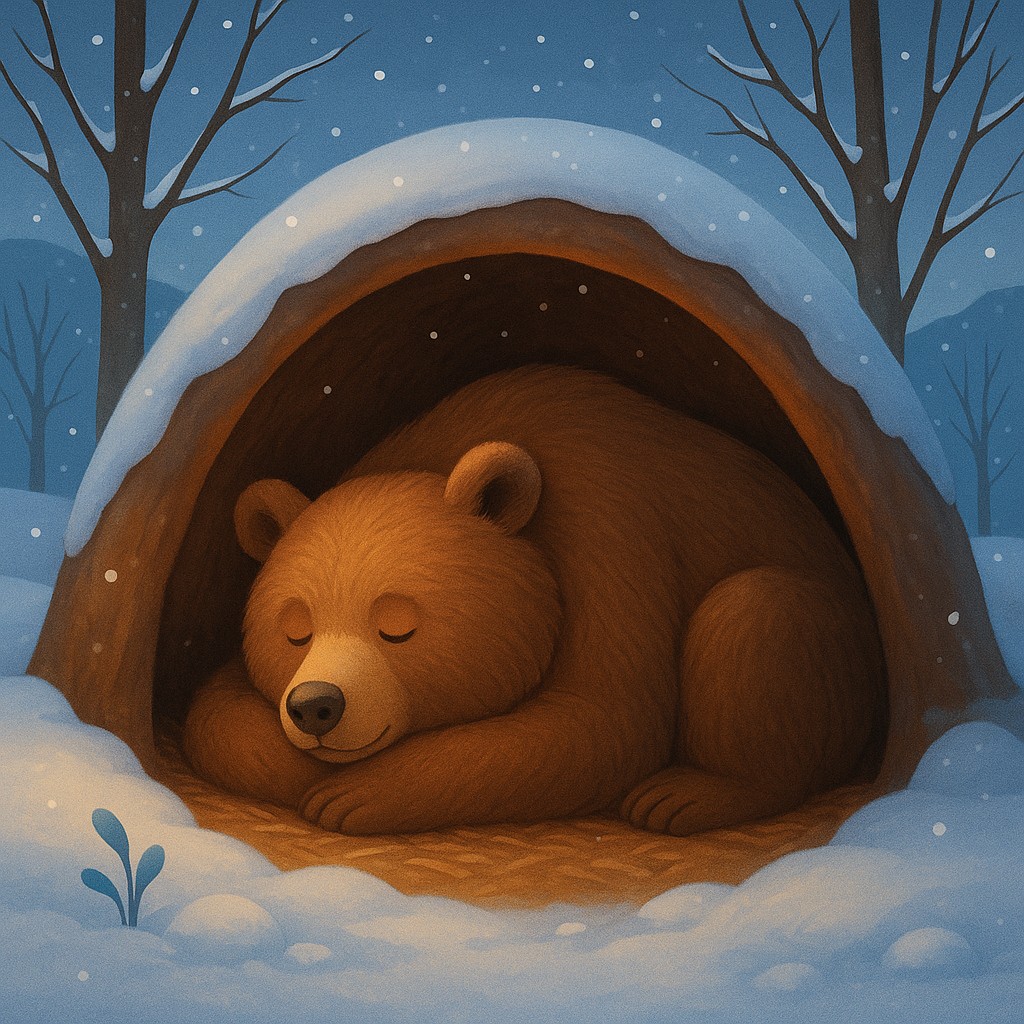
Imagine falling asleep in late autumn and waking months later in spring without eating, drinking, or moving much. No midnight snacks, no water bottle, no bathroom breaks. Your heart slows, your body cools a little, and somehow you do not wake up starving, frozen, or panicked with bedhead. For most animals, and certainly for most people, that sounds like a fantasy novel with a weak plot. For bears, it is just Tuesday.
Bear hibernation is one of nature’s best survival tricks, and it is more subtle than many people think. Bears are not just “sleeping a long time.” Their bodies run a finely tuned energy budget, recycle resources, protect organs, and time waking with the return of food. If you have ever wondered how a huge animal can pass winter without turning into a muscle-less, dehydrated mess, you are about to meet an impressive piece of biology.
Even better, this story busts a lot of myths: bears are not frozen like popsicles, they do not always sleep without waking, and their bodies do not simply shut down. They use a controlled, balanced slowdown that keeps them alive, healthy, and ready to leave the den when spring comes.
What “hibernation” means for a bear (and how it differs from deep-freeze animals)
When people say “hibernation,” they often picture an animal becoming nearly lifeless, with body temperature close to the air. That fits some classic hibernators, like ground squirrels and some bats, which can drop body temperature a lot and go into torpor. Bears do something different. Many scientists call it “winter sleep” because bears cut their metabolism dramatically, but their body temperature drops only a little.
A bear usually lowers its body temperature by only a few degrees Celsius, while its heart rate and energy use fall much more. That mix matters: the bear stays warm enough to remain somewhat responsive. If danger appears, many bears can wake and react faster than a small hibernator deep in torpor. Think of it less like powering off a computer and more like switching to a very efficient low-power mode.
Another point: “hibernation” is not the same for all bear species or all climates. Black bears, brown bears (including grizzlies), and polar bears each have their own version, shaped by food, temperature, and life history. Polar bears are especially interesting because not all of them hibernate; pregnant females are the main ones that den for long periods. So bear hibernation is not one universal script, it is a flexible strategy.
The fall preparation: eating like it’s your job (because it is)
Before a bear can live off its internal savings account, it must build that account. In late summer and fall, bears enter hyperphagia, a phase of intense eating. This is not just being hungry, it is a biological drive to eat huge amounts and turn that food into fat. A bear’s world narrows to one mission: eat efficiently, avoid risk, and store energy for winter.
During hyperphagia, bears may spend most of their day foraging. Depending on habitat, they might focus on berries, nuts, salmon, roots, insects, or human food (which is one reason keeping garbage secured matters). This feeding frenzy is not gluttony for fun. It is an essential survival plan, especially where winter food is scarce.
Fat is not just fuel, it is also the raw material for water. When the body breaks down fat, it makes metabolic water, which helps bears get through months without drinking. So the bear is not only packing lunches for winter. It is also stocking an internal water supply.
Finding the den: safety, temperature, and a little bear interior design
A bear’s den is more than a cozy cave. It is a carefully chosen shelter that reduces heat loss and lowers the chance of disturbance. Dens can be caves, hollow trees, brush piles, dug-out hillsides, or spaces under roots. The best sites are dry, shielded from wind, and hard for predators or people to reach. For pregnant females, den choice can be especially important because they will give birth and nurse cubs in the den.
Bears often line their dens with leaves, grasses, or other insulating materials, basically making a natural sleeping bag. Snow can also insulate, which sounds odd until you remember that fluffy snow traps air and slows heat loss. If a den gets sealed by snow, it can stay surprisingly stable in temperature compared to outside. It is not exactly warm, but it is steady, and steadiness matters.
Contrary to cartoons, bears do not always sleep in one unbroken coma. Many will shift position, rouse briefly, or respond to disturbances. The goal is not perfect stillness. The goal is to save energy while staying safe.
The winter slowdown: heart rate drops, metabolism sinks, and the body runs on smart settings
Once denning begins, a bear’s metabolism can drop a lot, often to around half of its normal rate, sometimes more depending on species and conditions. The heart rate can slow from a normal active rate down to very low levels, with long pauses between beats in some cases. Breathing becomes slower and shallower. All of this cuts the energy needed to keep the body running.
Here is the twist: bears manage this while keeping their body temperature relatively high compared to true torpor hibernators. A black bear might drop from roughly around 37 C to the low 30s C range, rather than near-freezing. That difference matters because it helps protect tissues and allows faster wake-ups. It also means bears do not rely on dramatic rewarming cycles like some small mammals do.
The bear’s fuel during this time is mostly fat. Burning fat gives a lot of energy per gram and produces metabolic water. Meanwhile, the bear cuts energy spent on movement, digestion, and many day-to-day processes. It is like running an expensive building with the lights dimmed, rooms closed off, and only essential systems on.
A quick comparison of bear hibernation vs classic small-hibernator torpor
| Feature |
Bears (winter sleep style) |
Small hibernators (deep torpor style) |
| Body temperature drop |
Modest (a few degrees) |
Often massive (can approach near-freezing) |
| Wake-up ability |
Relatively quick if disturbed |
Often slow, requires rewarming |
| Metabolic reduction |
Large, but not to extremes of torpor |
Extremely large during torpor |
| Body size influence |
Large bodies retain heat more easily |
Small bodies lose heat quickly, need deeper drops |
| Typical pattern |
Long steady dormancy with occasional arousals |
Repeated cycles of torpor and arousal |
This table hides a clear lesson: size matters. Large animals have a lower surface-area-to-volume ratio, so they lose heat more slowly than small ones. Bears can afford to stay warmer. Tiny mammals often cannot.
The “how do they not…” section: bathroom, thirst, muscles, and other winter mysteries
This is where bear hibernation moves from interesting to almost unbelievable. Bears pull off several physiological tricks that look like cheating.
First, bears typically do not urinate or defecate for months. Instead, their bodies recycle waste products to reduce toxicity and save water. One well-known feature is the fecal plug, formed from shed intestinal cells, hair, and other material, which helps seal the digestive system while they are not eating. It is not glamorous, but neither is taking a bathroom break in a snowed-in den.
Second, dehydration is avoided largely through metabolic water from fat breakdown and reduced water loss. Since they are not eating, they are not processing salty foods that would demand extra water for excretion. Slower breathing and a cool den also cut water loss.
Third, and perhaps most impressive, bears largely avoid muscle wasting and bone loss. If a human stayed in bed for months, muscles would shrink and bones would weaken. Bears keep much more of their muscle and bone strength despite being inactive. Researchers have found adaptations that help preserve protein and slow bone mineral loss. This is a big reason bear biology interests medical science, especially for understanding osteoporosis and muscle atrophy.
To make this stick, here are a few “hibernation miracles,” in plain language:
- They live off fat while sparing critical proteins as much as possible.
- They recycle resources, keeping waste from building up the way it would in us.
- They protect muscles and bones, staying surprisingly spring-ready.
- They keep the brain and organs stable, avoiding the damage you might expect from long inactivity.
Bears are not defying physics, they are using physiology with incredible efficiency.
Cubs in the den: winter is also baby season
One of the most charming parts of bear hibernation is that many cubs are born during the denning period. Pregnant females enter the den, then give birth in midwinter while still in a hibernation-like state. The cubs are tiny, blind, and helpless at birth, a funny contrast to the huge mother sleeping beside them.
How can the mother support birth and nursing without eating? She relies on her fat reserves, converting stored energy into milk. Her metabolism is reduced, but her body still prioritizes the cubs. This is also why fall feeding is so crucial for females, especially those that are pregnant. If food was scarce, reproduction may be delayed or cub survival may drop.
The den provides a stable environment for newborns. It shields them from harsh weather and predators, and it gives them time to grow before they face the outside world. When the family emerges in spring, the cubs are stronger, more mobile, and better prepared for a world that does not hand out second chances.
Common myths that refuse to hibernate (and what’s actually true)
Bear hibernation is well known enough to collect myths. Let us retire a few stubborn ones.
Myth 1: Bears sleep the entire time without waking
Bears can and do wake, sometimes briefly and sometimes for longer if disturbed. They might shift position, groom, or respond to noise. They are not unconscious for months. They are conserving energy while staying alert enough to react.
Myth 2: Bears get dangerously cold like frozen frogs
Some animals tolerate near-freezing body temperatures. Bears generally do not go that low. Their temperature drop is modest, and they stay warm enough to protect tissues and respond relatively quickly.
Myth 3: Hibernation is just “being lazy”
Hibernation is active regulation, not laziness. The bear’s body constantly manages fuel use, water balance, and organ protection. It is more like running a complicated spacecraft on limited power than taking an extended nap.
Myth 4: All bears hibernate the same way
Species, age, sex, pregnancy status, and climate all influence denning. Some bears den longer or shorter, and polar bear denning depends heavily on sea ice and reproduction.
Correcting these myths is not just trivia. It helps you see that hibernation is an evolved survival toolkit, tuned to the bear’s environment and lifestyle.
Waking up: spring timing, appetite, and the return to bear business
When spring arrives, bears do not pop out of the den like a jack-in-the-box. Their return is gradual. As temperatures rise and food becomes available, they grow more active and eventually leave the den. Timing is not just about warmth. It is about opportunity. Early spring often offers a poor menu, so bears emerge when foraging is likely to pay off.
After months without eating, their digestive systems have to ramp up. Bears are often very hungry and may lose a lot of weight over the denning season. That hunger drives them to seek early foods like emerging plants, leftover carcasses, or whatever calories they can find. Their energy priority shifts from conservation to replenishment.
This is also when human-bear conflict can spike. A hungry, newly awake bear may be tempted by easy calories like unsecured trash or pet food. Understanding hibernation helps here: a spring bear is not “mean,” it is running a biological recovery plan after a long winter.
The big idea to remember: hibernation is not a pause button, it’s a strategy
If you want one image to keep, use this: bear hibernation is a carefully managed winter budget. The bear saves energy by lowering metabolism and activity, uses fat as its main fuel, produces water internally, and protects muscles and bones. It stays warm enough to remain responsive, and in many cases it even supports new life in the den. All of that is coordinated by hormones, nerves, and evolutionary tuning tested by countless winters.
The next time someone says, “Bears just sleep all winter,” you can disagree politely and then drop the fact that bears can go months without eating, drinking, peeing, or losing major muscle strength. This is one of those rare moments when it is okay to feel a little smug about science.
When you look at a bear, you see more than strength and fluff. You see an animal that can switch its whole body into a winter mode that would make most creatures fall apart. And if that does not make you curious and a little impressed with the natural world, you might be the one who needs a nap.