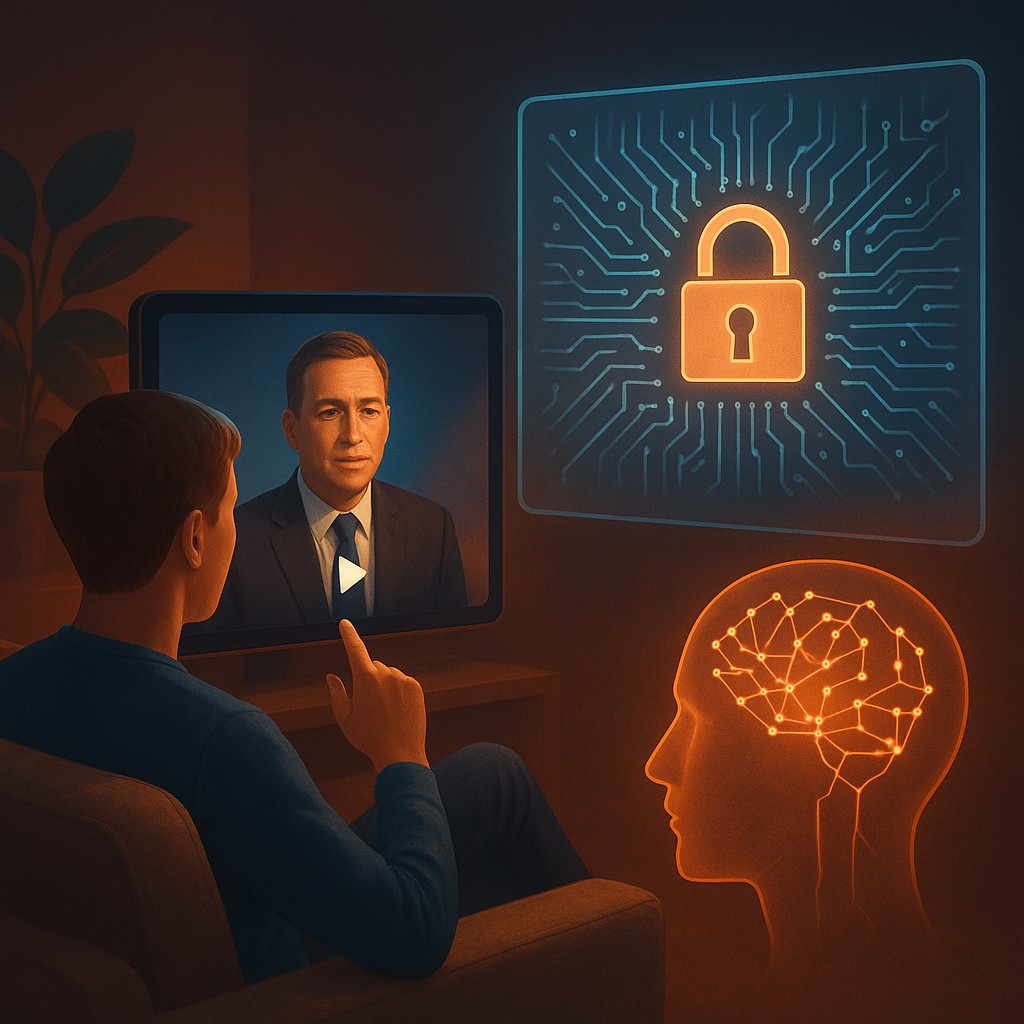
Imagine sitting on your sofa and scrolling through social media when you stumble upon a video of a world leader making a shocking announcement. The lighting is perfect, the voice is unmistakable, and even the tiny reflections in their eyes look entirely real. A few years ago, you might have called your friends in a panic. Today, however, you pause. You know that "seeing is believing" is no longer a reliable way to navigate the world. As AI video models become capable of creating cinematic masterpieces from a simple text prompt, the line between reality and imagination has almost disappeared.
The good news is that as AI gets better at mimicking reality, engineers and regulators are giving us a new kind of "sixth sense." We are moving toward a world where every pixel of a synthetic video carries a hidden passport, a secret handshake that tells the internet exactly where it came from. This isn't about slapping a clumsy logo in the corner that anyone could crop out with a phone app. Instead, it involves a sophisticated, invisible layer of data woven into the very fabric of the video as it is being created.
The Hidden Science of Digital Signatures
To understand how a video can "know" it was made by AI, we have to look at what happens the moment a model begins to render a scene. Traditional watermarking is like a sticker on a window; you can peel it off or block it with tape. However, the new "frame-level watermarks" required by international standards act more like the DNA inside a living cell. This information is embedded into the mathematical patterns of the pixels themselves. When an AI generates a frame, it subtly adjusts the brightness or color of specific pixels in a pattern that is invisible to the human eye but instantly recognizable to a computer.
This process creates a cryptographic signature, which is essentially a digital fingerprint locked with a mathematical key. Because this signature exists within every frame, it stays there even if the video is edited, shrunk down for a messaging app, or recorded by someone pointing a smartphone at a computer monitor. This resilience is the backbone of modern digital literacy. It ensures that no matter how many times a video is shared or loses quality, its origin story remains intact and easy to find for those who know how to look.
Beyond the Surface: Digital Forensics
The real power of these new regulations lies in the push for standardized metadata. Metadata is often called "data about data," but for AI media, it is more like a ship's log for a digital file. Under new global frameworks, such as those discussed by the FTC, AI companies are being pushed to include specific information in this hidden layer. This includes the name of the AI model used, the date it was made, and a "manifest" that proves the content hasn't been changed since it was created.
One of the most important steps forward is the C2PA standard, short for the Coalition for Content Provenance and Authenticity. This is a group of tech giants and media companies working together to create an open "nutrition label" for digital content. By clicking a small icon in the corner of a video, you can see its entire history. You might see that the video was "Born AI" at 10:00 AM using a specific software and has not been tampered with since. This transforms the internet from a "trust me" system into a "show me the receipts" system, allowing you to verify what you are watching in real time.
Comparing Old Methods to Modern Watermarking
To appreciate why experts are focusing on these high-tech solutions, it helps to see how they compare to old methods. The goal is to move from "visible and weak" to "invisible and indestructible."
| Feature |
Traditional Watermark |
Modern Cryptographic Watermark |
| Visibility |
Visible logo or text in the corner |
Completely invisible to humans |
| Durability |
Easily removed by cropping or blurring |
Survives editing, compression, and filming |
| Security |
Simple to fake or copy |
Protected by mathematical signatures |
| Information |
Limited to a brand name or icon |
Contains detailed history and origin data |
| User Experience |
Can be distracting or block the view |
Does not change the visual quality |
As the table shows, this isn't just a minor upgrade; it is a total shift in how we secure information. While a visible watermark tells a human, "I made this," a cryptographic watermark tells a browser or a social media site, "I am an AI creation, please label me." This allows platforms to automatically tag posts as "Made with AI," taking the pressure off the user and letting the technology do the detection.
Debunking Myths About Digital Forgery
There is a common myth that if a watermark is invisible, a clever hacker can eventually find it and "scrub" it out. This is a bit like saying that if you know a cake contains sugar, you should be able to reach in and pull out every individual grain after the cake is baked. Because these watermarks are baked into the mathematical "noise" of the pixels, removing them would destroy the video's quality. If you change the pixels enough to remove the mark, you usually end up with a blurry, unwatchable mess that can no longer be used to trick anyone.
Another myth is that these rules will "stop" deepfakes. It is important to remember that technology is a tool, not a cure. These regulations are like a lighthouse in a storm; they don't stop the rain, but they show you the way. While bad actors might use "bootleg" AI models that don't include these marks, the global standard creates a clear divide. If a video comes from a trusted source, it will have a signature. If a video has no data at all, that is a massive red flag that tells users and platforms to be extremely skeptical.
Developing Your Digital Instincts
As these technologies become part of our daily lives, we have to change how we judge what we see. In the past, we were taught to look for glitches, like strange shadows or extra fingers. However, as AI becomes "hyper-real," those mistakes are disappearing. Soon, an AI video will look exactly like a real one. This means we must stop relying only on our eyes and start using our tools. Checking the metadata will become as common as checking the expiration date on a carton of milk.
This new way of thinking isn't about being cynical; it's about being prepared. When you understand that there is a layer of "hidden background info" beneath the surface, you are no longer just a passive viewer. You become a digital detective. You learn to look for "info" icons that reveal where a clip came from. You begin to understand that a missing digital trail is a piece of evidence in itself. By mastering these concepts, you aren't just protecting yourself from lies; you are helping keep the internet a place where truth still has a fighting chance.
The journey toward a transparent digital world is just beginning. While the technology can seem scary, it is being built to serve us. By using these new standards and learning to read the hidden signatures in our media, we ensure that our curiosity remains a strength rather than a weakness. Stay curious, stay skeptical, and always check the data before you share that "mind-blowing" clip. The future of the internet is written in the pixels, and now you know how to read between the lines.