How a wild cat became your living room roommate: a surprising origin story
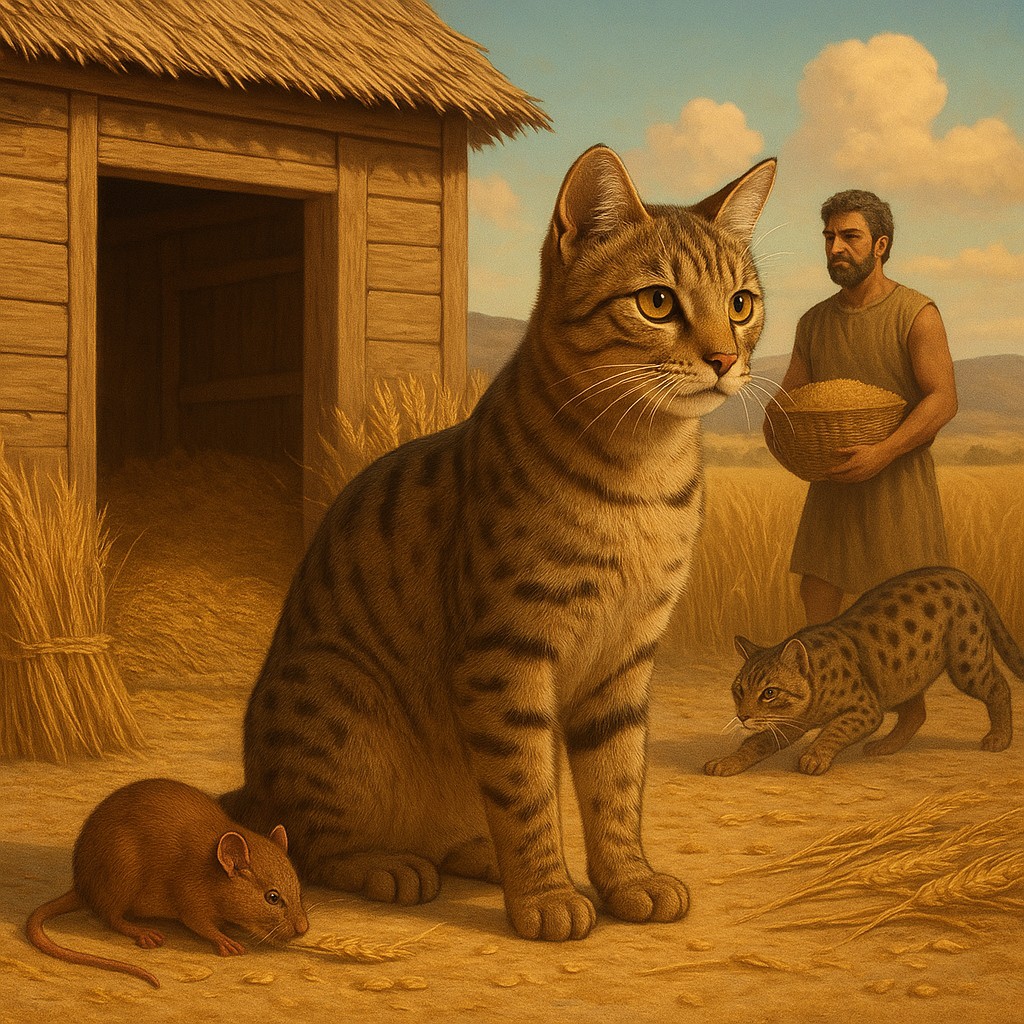
Imagine a dusty sack of grain sitting outside a new village 10,000 years ago. Rodents come to raid the food. A small wildcat slips in under moonlight to hunt. People in the village notice fewer rats and no fuss about feeding the cat, and a quiet, useful relationship is born. That simple scene is the heart of how cats went from wild hunters to household companions - a story that is part ecology, part convenience, part clever evolution, and part human culture.
This is not a tale of humans capturing and training wolves into pets, then repeating the process with cats. Instead, cats largely chose us. They were attracted to a new ecological niche that humans unintentionally created - settlements with stored grain and the rodents that feed on it. Over centuries, the friendliest, least fearful cats tended to hang around humans more often, and those associations deepened. The result is a gradual, mutual accommodation that left surprisingly subtle marks on cat bodies and behaviors.
Why does that matter today? Because understanding how cats became pets helps us see them as both descended from wild ancestors and shaped by human life. It explains why your cat sometimes behaves like a prowler, sometimes like a cuddler, and always like someone who answers to their own agenda. It also matters for how we care for cats now - knowing their origins helps us respect their needs while enjoying the enchantment of sharing our homes with them.
If you like a mix of science, history, and a little myth-busting, this learning nib will walk you through the evidence, the key players, and the surprising ways both people and cats changed during this long, mutual friendship. Expect stories about ancient farmers, island cats, genetic detectives, and the reasons why your cat still looks a lot like a wildcat.
When agriculture met predators: the ecological invitation
The story begins not in a temple or palace, but in a grain store. When people transitioned from a hunter-gatherer lifestyle to farming, they began to collect and store surplus crops. Those stores created concentrated food sources for small mammals. An abundance of mice and rats presented a consistent, reliable food supply for local wildcats - especially the African wildcat, Felis silvestris lybica. Unlike a wandering predator chasing scarce prey, these wildcats found more food for less effort by living close to human settlements.
This proximity was advantageous to both parties. Cats gained steady prey without having to roam far, and humans benefited from reduced rodent damage to their food supplies. Crucially, cats that were less afraid of humans would have better access to this new food source. Over generations, natural selection favored individuals who tolerated human presence. The process was gradual and largely self-initiated by cats - they were the ones who took the original step into human-altered environments.
That ecological backdrop explains a lot of features in the domestic cat. They are excellent small-prey hunters, solitary in their hunting style, and able to survive on relatively little human-provided food. Their fitness in a village setting depended less on heavy morphological change and more on behavioral flexibility - being willing to live close to humans while remaining able to fend for themselves.
Natural traits that made cats excellent companions
Cats arrived with a toolkit of traits that made them suited to the commensal life that farms offered. They are obligate carnivores with a specialization for catching small, fast-moving prey. Their hunting skill, stealth, and sensitivity to movement made them efficient rodent controllers. In addition, cats are solitary hunters, which means they do not require cooperative social structures to thrive near human households.
Cats are also relatively low-maintenance compared to larger domestic animals. They do not require herding, milking, or daily care to the same extent as livestock. A barn cat could largely fend for itself, supplementing its natural diet with the rodents around grain stores. Reproductive biology also mattered - cats can have multiple litters a year when resources are abundant, so populations could respond quickly to the new ecological niche.
Finally, cats have a social flexibility that is often underappreciated. While many wildcat populations are solitary, some form loose colonies around prime food sites, tolerating the presence of related or unrelated individuals. This tolerance made it easier for some wildcats to extend that social flexibility to humans, allowing proximity without losing their basic wild nature.
Domestication or self-domestication - what actually happened
When we talk about domestication, we often picture active human selection and breeding. Dogs are a clear example of that story. Cats, however, followed a different route that scientists call self-domestication. Instead of humans capturing and selectively breeding the tamest individuals, cats adapted themselves to a human-made environment. Humans did not initially set out to make pets of them - the relationship began as a practical, ecological arrangement.
Genetic studies support this view. Ancient DNA and population genetics show that domestic cats are closest to the Near Eastern wildcat, and that the earliest signs of human-associated cats appear around the time and place where agriculture arose. The genetic divergence between wild and domestic forms is relatively shallow compared to fully domesticated species. That means fewer dramatic physiological changes happened in cats - the most obvious differences are often behavioral or associated with coat color and pattern rather than body plan.
Over time, humans did exert selection pressures - sometimes intentional, sometimes accidental - for traits like tameness, coat variety, and a propensity to live indoors. But the initial and essential step was ecological - cats finding humans useful, and humans finding cats useful by keeping pests down.
What archaeology and genetics reveal about the timeline
Archaeologists have found compelling evidence tying cats to early human settlements. One of the most famous finds is a cat buried alongside a human on Cyprus around 9,500 years ago, which is strong evidence that people were living with, and possibly keeping, cats long before the great Egyptian cat cults. Cyprus is especially telling because it required humans to transport cats across water, implying intentional movement rather than accidental wandering.
Genetic analyses paint a consistent picture. Modern domestic cats cluster genetically with Felis silvestris lybica, the wildcat of the Near East. Ancient DNA studies indicate that the earliest domestic lineages likely spread from the Near East into Europe and Africa alongside human migration and trade. More complex patterns appear later, when additional wildcat populations mixed with domestic lineages, and when humans began purposeful breeding in certain regions.
Morphological changes in cats are subtle and emerge late compared to other domesticated animals. Unlike dogs, domestic cats do not show dramatic skull or size changes in the archaeological record. This bears out the idea of a long period of commensal living with relatively light selection on physical traits.
Table: Wildcat, Early Commensal Cat, and Modern Domestic Cat compared
| Trait or context |
Wildcat (F. s. lybica) |
Early commensal cat (Neolithic - Bronze Age) |
Modern domestic cat |
| Typical habitat |
Wild scrub, savanna-edge, undisturbed areas |
Human settlements, granaries, farms |
Homes, farms, cities worldwide |
| Relationship to humans |
Avoidant; solitary territory |
Tolerant of humans for food; commensal |
Socialized to humans, variable dependence |
| Morphology |
Robust skull, wild coloration |
Similar to wildcats, minimal change |
Wide coat and color variety; some breed-specific traits |
| Behavior |
Primarily nocturnal, territorial hunter |
Flexible timing, reduced fear of humans |
Variable - hunters still, but also highly social and playful |
| Genetic signature |
Wild population structure |
Close to wildcat genetics; early admixture |
Mixed ancestry, selective breeding in recent centuries |
| Timeframe |
Pre-domestication |
Starting ~10,000 - 4,000 years ago |
Extensive human influence in past few thousand years |
How humans later shaped the cat and cat culture
Once cats were accepted near human dwellings, cultural practices amplified their role in human societies. In ancient Egypt, cats entered a semi-sacred zone, revered in art and law, which increased their global visibility as symbols of companionship and protection. Merchants and sailors transported cats across the Mediterranean and into new lands to control pests on ships and in trade hubs. In this way, cats followed human networks, spreading their genes and behaviors widely.
Human preferences eventually influenced specific traits. Coat colors and patterns that might have once been neutral underwent more variation as people kept cats as valued companions. Over the last few hundred years, selective breeding has produced recognizable breeds with distinct physical and behavioral features. Yet this selective stage is relatively recent in the long arc of feline domestication.
Culturally, cats acquired diverse meanings: protectors, mousers, religious symbols, villains in superstition, and beloved household members. These cultural layers did not dramatically alter their biology, but they changed how humans treated, transported, and valued cats across societies.
Myths and misconceptions - clearing up common errors
People love easy stories, and several myths about cat domestication persist. One is that cats were first domesticated in ancient Egypt and that Egyptians invented the cat-human relationship. While Egypt played a major role in popularizing cats and many archaeological finds are Egyptian, earlier evidence from the Near East and Cyprus tells a more ancient story. Another myth is that domestication made cats completely tame and dependent. In reality, domestic cats retain many wild behaviors and can survive without humans in many contexts.
A third misconception is that domestication always involves dramatic physical change. Compared with animals like cows or dogs, cats show subtle morphological change because the initial selection pressures were behavioral and ecological rather than direct human-driven breeding. Finally, people sometimes assume all cat breeds are ancient. In truth, many modern breeds are the result of selective breeding in the last few centuries; true ancient lineages are rarer than popular lore suggests.
Understanding these corrections helps us appreciate the real complexity and beauty of the cat-human relationship - it was gradual, mutual, and sometimes ambivalent.
How to recognize domestication traits in your cat today
Look at your cat closely and you will see traces of both wild ancestry and living with humans. Vocalizations are a good clue - kittens use a specialized "solicitation purr" that draws human attention, and many adult cats retain distinct meows that seem specifically targeted at people. Behaviorally, cats can show both independence and social attachment - they may be highly territorial, yet they also form bonds with certain humans.
Physical clues are more subtle. Domestic cats can present greater coat diversity and sometimes smaller, more gracile skulls than wild counterparts, but these traits vary widely by breed. Observe hunting behavior; even indoor cats often exhibit hunting-style play or stalking, reflecting their predatory heritage. The blend of indifference and intimacy you see is a hallmark of a species that built a relationship with humans on its own terms.
Why cats still seem wild - and why that is beneficial
A striking thing about cats is that they never fully "lost the wild." Their sensory world, hunting tactics, and self-reliance remain highly developed. From an evolutionary viewpoint, this retention is sensible. Cats were never bred to do heavy labor or to rely completely on humans. Their survival strategy favored autonomy and precision hunting - useful traits both in the wild and near human settlements.
This partial wildness benefits both cats and people. Cats can be independent in ways that fit modern human lifestyles. They provide pest control and companionship with minimal maintenance compared to many other domestic animals. Their wild instincts also make them endlessly entertaining - a stalking cat in play is engaging because it taps into deeply honed predatory sequences.
However, that wildness also means cats can be stressed by inappropriate environments or enforced social constraints. Understanding their need for hunting outlets, vertical spaces, and secure alone time helps us be better guardians of the species we share our homes with.
Simple actions that honor a long partnership
Knowing the history of how cats became human companions suggests practical, compassionate ways to care for them. Provide opportunities to express natural behaviors - play that mimics hunting, perches for surveillance, and quiet retreat spaces. Keep indoor cats mentally and physically stimulated to reduce boredom-driven behaviors that come from unmet hunting instincts. When choosing a pet, consider temperament and breed history - some are more social, some retain noticeably stronger hunting drives.
Also, respect the semi-wild side. Avoid over-socializing or expecting constant affection if your cat prefers autonomy. Recognize that occasional aloofness is not indifference - it is a living echo of a partnership that began because both species gained something from proximity.
Curiosity invitations - ways to learn more and test ideas
If you want to explore this story further, there are fun and educational ways to do it. Visit natural history museums or local university archaeology departments that sometimes display ancient animal remains and the contexts they were found in. Read accessible works by researchers who study animal domestication and ancient DNA - these blend field archaeology with genetic detective work. Try simple observational experiments at home, like timing your cat's hunting play sessions or noting vocalizations in different contexts - record, compare, and see patterns emerge.
Citizen science projects also welcome observations on feral and free-roaming cats, behavior patterns, and human-cat interactions. By contributing data, you help scientists refine their understanding of how cats live with humans today, which in turn sheds light on the deep past.
A final note - a mutual history worth cherishing
The journey from wildcat to housemate is not a simple story of conquest, nor is it a tidy example of human mastery. It is an ongoing friendship built on convenience, opportunity, and mutual tolerance. Cats approached human settlements, people welcomed the pest control, and both sides adapted in small but meaningful ways. That history explains why cats can be mysterious companions - equal parts wild and domestic, independent and affectionate.
Take that mixture as an invitation. When you watch your cat stretch in a sunbeam, pounce on a toy, or casually ignore your call, you are witnessing the living result of a ten-thousand-year negotiation between two very different species. Treat it with curiosity and respect, and you will enjoy the rich, sometimes baffling, always rewarding company that cats have offered humanity since the first granaries were built.