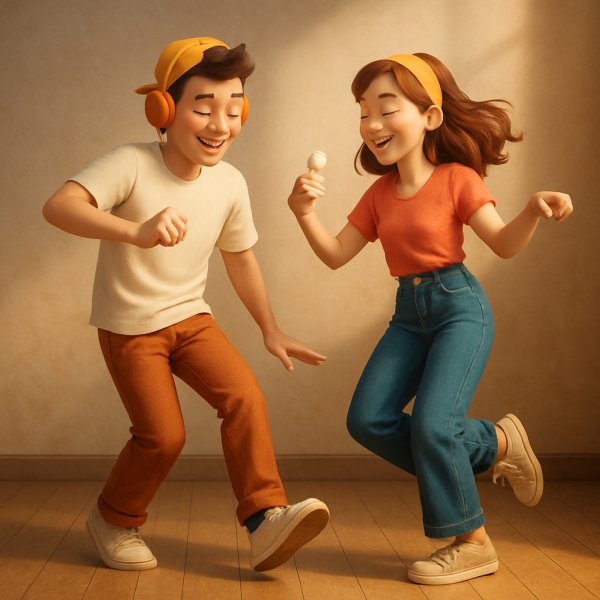
Why the hoobby boogie will make you grin, move, and keep showing up
Imagine a dance that feels like your favorite hobby and your best Saturday night decided to hold hands and go for a walk. That is the hoobby boogie: a playful, adaptable style that blends a steady groove with tiny flourishes inspired by everyday pastimes. You do not need a mirror, a fancy outfit, or perfect rhythm to start. You only need curiosity, a willingness to look a little silly, and three counts of time.
People cling to hobbies because they give structure, joy, and a small daily victory. The hoobby boogie turns those qualities into movement, by turning small, repeatable gestures into rhythm-based patterns that anybody can learn. It is both a micro-habit and a micro-celebration, so practicing it will often boost your mood while training your coordination and musicality. Think of it as movement therapy with a wink.
This learning nib will take you from the very first bounce to short improvisations you can drop into at a party or in your living room. You will learn foundations like timing and posture, then add "hobby gestures" that give the dance its personality, and finally practice drills that turn awkwardness into comfortable groove. Each section gives small exercises and reflection questions so you actually internalize the moves instead of just copying them.
By the end, you will have a practical progression you can use for 10 minutes or for 60, and you will understand how to improvise so the hoobby boogie becomes something that fits your body, music choices, and daily mood. The aim is confidence over perfection, rhythm over rigidity, and play over performance.
The three pillars that make the hoobby boogie feel effortless: beat, base, and personality
At its heart the hoobby boogie sits on three pillars: beat, base, and personality. Beat is the groove, the steady pulse you count on. Base is your stance, footwork, and the small bounce that powers the movement. Personality is the hobby-derived gesture or styling that turns the boogie into your boogie. Mastering each pillar gives you immediate, usable dance ability and keeps you improvising when the music changes.
Beat is simple to find: tap your foot to the song’s pulse and count 1-2-3-4, or feel it in the tempo of your favorite pop or funk track. Once you can feel the beat, you will no longer be guessing where your next step should land. Base is what your body does between taps. It includes posture, a relaxed knee flex, and a subtle weight shift that creates momentum. Personality is the finishing touch. Maybe you mimic folding a little origami, or pretend to paint the air, or add a small hip shimmy reminiscent of a hobby you love.
This structure allows you to scale complexity gradually. Beginners should focus 80 percent on beat and base, and 20 percent on personality. As you gain comfort, invert those ratios so personality becomes your signature. The hoobby boogie is meant to be fun first, technical second, so always favor movements you enjoy doing for ten seconds straight.
Reflection question: Which hobby action makes you smile when you imagine doing it? That action will become your signature gesture in the hoobby boogie.
Finding and owning the pulse without panic
Most people think they have to be “musical” to dance, but the pulse is simply repetitive sound you can tap to. Start with tracks you already love and count in fours quietly in your head. Tap your right foot on count 1 and your left on count 3, keeping a soft bounce in between. If you lose the pulse, stop, breathe, and start again at the top of the next musical phrase. Repetition builds confidence more than perfection does.
A helpful drill is to sing the word “boogie” on each downbeat while nodding. The combination of voice and movement locks the rhythm into your nervous system faster than tapping alone. Once that feels steady, add a small ankle roll, then a knee bend. These micro-changes are the base that supports more flamboyant moves later.
Building a stable base: posture, grounding, and the boogie bounce
Good posture matters because it gives you control and reduces fatigue. Stand with feet roughly hip-width apart, knees soft rather than locked, and weight slightly forward on the balls of your feet. A slight tilt in your pelvis and a relaxed core let the upper body move freely. The hoobby boogie loves a small, constant bounce - call it the boogie bounce - which is the elastic energy that links your feet to your gestures.
Practice the boogie bounce by counting and gently lowering on 1, and rising on 2, repeating through 4. Keep your shoulders relaxed and think of your knees as springs. This small vertical movement is forgiving and looks rhythmically sharp on camera or on the dance floor. Once you can keep the bounce while singing your pulse word, you are ready to add foot patterns.
Step-by-step beginner sequence that turns uncertainty into rhythm
Start simple: three moves repeated in sequence make a whole dance. The moves in the beginner sequence are basic, repeatable, and designed to build confidence in musical timing.
- The Bounce and Tap: Keep the boogie bounce. Tap the right foot forward on count 1, return on 2, tap the left foot forward on 3, return on 4. Maintain posture and rhythm. This keeps you moving without over-committing to big steps.
- The Groove Slide: From the bounce, shift your weight to the right and slide the left foot out on counts 1-2, shift back center on 3-4. The slide can be small, just a few inches. It teaches lateral movement and helps you feel space on the floor.
- The Hobby Flick: Choose a hobby gesture - a small wrist toss, a pretend knitting motion, or a tiny air-brush flourish. Do it on the last two beats of an eight-count phrase so it feels like punctuation.
Work through the sequence slowly at first, counting aloud. Four eight-counts of the sequence equal about 32 beats, which is long enough to form a mini-routine. Your goal for the week is to be able to run through the 32-beat sequence without losing the pulse.
Practice drill: Set a timer for 10 minutes. Warm up for two minutes, then repeat the sequence for seven minutes, finishing with a one-minute free improvisation. This builds stamina and improvisational willingness.
How to layer complexity as you master the basics
Once you can run the beginner sequence cleanly, add rhythmic variations: syncopate the taps, hold the hover for a beat, or add a shoulder pop on count 2. Complexity comes in layers - first change timing, then change the direction, then change the gesture. Always keep one hand on the pulse, either literally tapping your knee or counting out loud, so you do not drift away from timing.
Another useful addition is the "hobby echo" where you mirror your hobby gesture with the opposite hand for two counts and then return. Echos create call-and-response within your body and are a great way to develop coordination without complicated footwork.
A handy comparison table for beginner, intermediate, and advanced hoobby boogie goals
| Level |
Primary focus |
Typical move set |
Practice target |
| Beginner |
Pulse and stable base |
Bounce and Tap, Groove Slide, Hobby Flick |
32-beat sequence clean at comfortable tempo |
| Intermediate |
Add syncopation and styling |
Syncopated taps, shoulder pops, hobby echo |
Improvise 1 minute over varied songs |
| Advanced |
Musicality and partner play |
Rhythm substitution, complex arm phrases, partner exchanges |
Lead/follow cues and 3-minute seamless improvisation |
This table helps you see what to prioritize at each phase. Do not rush forward because the base keeps your dance readable and sustainable. The hoobby boogie rewards small, high-quality repetitions.
Styling: turning ordinary gestures into signature moves
The hoobby in hoobby boogie refers to the joyful incorporation of a hobby-like gesture into the dance. The trick is to exaggerate tiny actions so they read clearly but stay small enough to repeat easily. A painter might sweep an imaginary brush across their torso, a gardener might mimic snipping shears, and a gamer might mimic a thumb flick. Keep gestures in the size of a grapefruit to tennis ball - large enough to see, small enough to sustain.
Styling also includes where you place your gaze and how you use your shoulders and chest. Imagine you are telling a short visual joke with your body; timing is your punchline. A well-placed eyebrow raise or a subtle chest pop on the downbeat can make a simple step feel intentional and charismatic. When you practice, video yourself from a short distance and note which gestures register clearly and which disappear.
Styling drill: Choose three hobby gestures. For one song, use gesture A for the first eight-bar phrase, B for the second, and C for the third. Rotate the gestures so you practice switching. This builds a vocabulary of moves that you can pull out instinctively.
Partner play and social boogie etiquette
The hoobby boogie is naturally social, but it is also respectful. When dancing with a partner, the leader gives clear but gentle cues, and the follower responds with matching energy and playful variations. A standard partner exchange in the hoobby boogie is a "gesture pass" where the leader presents their hobby gesture and the follower echoes it back with a small modification. Keep handholds light, use eye contact, and leave space for personal expression.
Etiquette basics include asking before you initiate close partner moves, scanning the floor before you travel, and applauding creative choices with a smile or a vocal cheer. A good rule of thumb is "share the spotlight." If you are more confident, offer smaller, supportive moves that allow your partner to shine. If you are new, accept invitations that feel comfortable and communicate with simple nods.
Practice tip: With a friend, spend five minutes trying one partner exchange in silence, then replay while talking through cues. Silent practice trains feel; verbal practice trains clarity.
Common misconceptions about learning the hoobby boogie — debunked
Misconception 1: You must be born with rhythm. False. Rhythm is a skill like handwriting or cooking. It improves with deliberate practice and many adults find dramatic improvements in just a few hours of focused work. Use count-based drills and repetition rather than waiting to "feel it."
Misconception 2: You need to be flexible or athletic. False. The hoobby boogie favors small, repeatable gestures. Very little flexibility is required. Strength helps endurance but is not essential for the joyful, social aspects of the dance.
Misconception 3: You have to copy an instructor exactly. False. Learn the skeleton of the move, then adapt the styling to your body. If a step calls for a 45-degree slide and you have a smaller space, slide 10 degrees and add a higher arm flourish. The aim is communicative movement, not replica.
Misconception 4: Practicing alone is boring and less effective. Partly false. Solo drills are crucial for building personal timing and confidence. Social practice adds nuance and responsiveness. Ideally, mix both.
Practice plans that respect busy schedules and build skill steadily
Structure matters more than time. Short, focused practices on consistent days beat sporadic marathon sessions. Below is a four-week plan that requires 15 to 30 minutes per session and progresses logically.
Week 1: Foundation - 15 minutes daily. Warm-up, pulse drills, boogie bounce practice, sequence repetition for 10 minutes. Finish with one minute of free boogie.
Week 2: Add footwork - 20 minutes five days a week. Introduce Groove Slide and Hobby Flick variation, start syncopation drills twice this week.
Week 3: Styling and musicality - 20 to 25 minutes five days a week. Add hobby gestures and shoulder/torso styling. Practice over songs with different tempos.
Week 4: Social and improvisation - 25 to 30 minutes five days a week. Partner exchanges and one-minute improvisations over two songs. Record one session and review for small improvements.
Micro-goals for each day include maintaining posture, keeping the bounce for a full song, and adding one new micro-gesture. The cumulative effect of small goals over weeks is what builds real confidence.
Quick practice checklist:
- Warm-up 2 minutes (ankle rolls, knee bends).
- Pulse and counting 3 minutes.
- Core sequence practice 8 to 15 minutes.
- Styling or partner practice 5 minutes.
- Short cool-down and reflection 1 to 2 minutes.
How to improvise and make the dance unmistakably yours
Improvisation begins with listening, not doing. Pick three musical elements to listen for: the kick drum pulse, a recurring guitar riff, and a vocal phrase. Assign a specific movement to each element - for example, tap to the kick, slide to the riff, and hobby flick to the vocal phrase. When these elements appear, respond with the assigned movement. This method helps you make varied yet coherent choices, which feels much safer than random flailing.
Another approach is "constraint improvisation" where you limit yourself to only two moves and two gestures for a full song. Constraining options forces creativity. After you master constraints, gradually expand your vocabulary and combinations. The personality of your hoobby boogie comes most from the small repeated motifs you favor.
Reflection questions: What three musical elements do you notice first when you listen to a song? Which movement felt most natural when you responded to those elements?
Troubleshooting common sticking points and a few quick fixes
If you lose the beat easily, slow the music or practice counting aloud with a metronome app for five minutes a day. If your knees hurt, reduce the depth of your boogie bounce and focus on weight shift rather than vertical motion. If your hobby gesture feels awkward or invisible, shrink it and exaggerate the wrist or shoulder involvement so it reads better.
Confidence issues are often solved not by more technique but by micro-rituals. Before you dance, take three deep breaths and smile. The simple act of smiling can change body tension and make your movements more relaxed and inviting. Remember that most observers respond positively to genuine engagement more than polished execution.
Turning practice into a habit you love
Habits stick when they are short, consistent, and tied to pleasure. Make the hoobby boogie your "5-minute reset" after work or your "walk-in-the-kitchen" song to start cooking with a grin. Put a sticky note on your phone that says "Boogie break?" and set a recurring reminder three times a week. Celebrate micro-wins: record a 30-second clip once a week and notice the progress.
Pair the hoobby boogie with another enjoyable action, like a cup of tea or a friend check-in. Habit stacking makes practice easier and more likely to survive busy weeks. Over time, you will find yourself spontaneously inserting a small boogie into odd spaces, which is precisely the point.
Final nudge: make it playful, make it yours, then make other people smile
Learning the hoobby boogie is less about reaching a destination and more about folding joy into motion. Take small steps, repeat with curiosity, and allow mistakes to be charming instead of fatal. The dance is designed to reward authenticity, not perfection, so when you give yourself permission to be playful, others will welcome it. In a few weeks you will have a set of moves you can call on in elevators, kitchens, or dance floors, and you will be carrying a tiny, portable ritual that boosts your mood.
Go try a ten-minute session today: find a song you love, set a timer, and run through the beginner sequence. Notice what makes you laugh, what feels oddly satisfying, and what invites repetition. Then ask a friend to join next time and trade signatures. The hoobby boogie is not just a dance, it is a small, social invention you can share and evolve. Have fun, keep experimenting, and remember: the best boogie is the one that gets you moving.