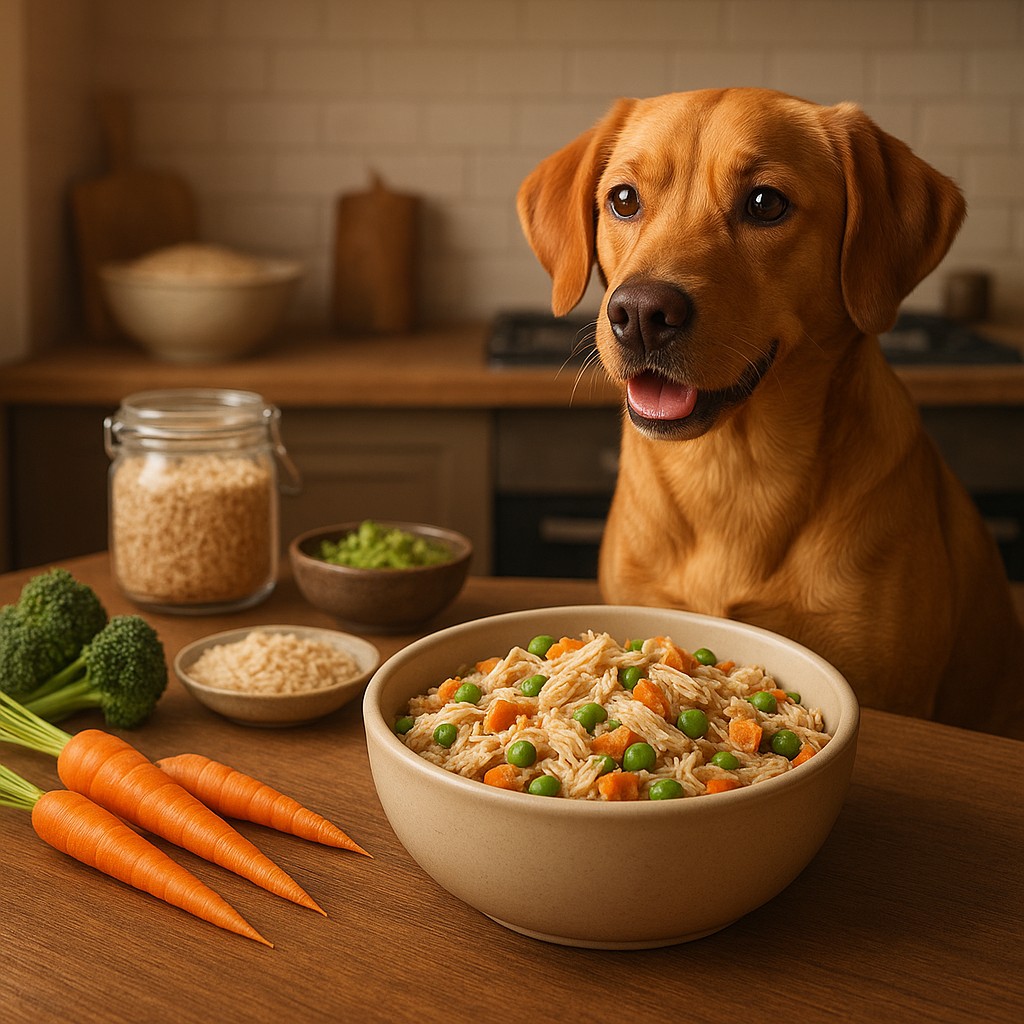
You can absolutely cook for your dog, and done well, it can be wonderful. Done "vibes-only," it can slowly create nutrient gaps that do not show up for months, until your dog’s coat dulls, stools change, energy drops, or joints start to complain. The aim is not gourmet. The aim is repeatable nutrition that keeps your dog lean, bright-eyed, and resilient, while still feeling like you are running a small, loving restaurant for a very opinionated customer.
"Perfect health" is a fine goal, but dogs are not robots and neither are we. What you can do is stack the odds in your dog’s favor: feed a complete and balanced diet, keep an ideal body condition, protect the gut, and build routines that make consistency easy. Think of home-cooked feeding like building a house: tasty ingredients are the paint, but nutrients are the foundation and steel beams. We are going to build it the right way.
Before you cook a single chicken thigh: the non-negotiables of a healthy homemade diet
If there is one myth to retire, it is this: "If it is fresh food, it must be complete." Fresh food can still be incomplete. Dogs need specific amounts of protein, fat, calcium, essential fatty acids, vitamins, and trace minerals. If any of those are consistently too low or too high, your dog might look fine at first, then develop problems over time. Calcium is the classic example: meat-heavy homemade diets without enough calcium can hurt bone health, especially in puppies.
Treat homemade feeding like a recipe plus a nutrition plan. There are two responsible approaches:
- Use a veterinary nutritionist-designed recipe (best if you want precision and minimal guessing).
- Use a "base recipe + complete supplement" method, where most calories come from whole foods and a dog-specific balancing supplement fills in the micronutrients (often the easiest option for day-to-day life).
Another myth: "Dogs should eat like wolves." Your dog is a domesticated omnivore with a pancreas, not a tiny gray wolf living on your couch. Dogs can digest starch, benefit from fiber, and do well on balanced cooked diets. Raw feeding can be done safely but raises risks for foodborne illness and bone-related injuries, and it needs even more careful formulation. If your goal is good health, consistency and balance usually beat extremes.
Finally, remember the boring superhero of wellness: lean body condition. Most chronic disease risk rises with excess body fat. A slightly hungry dog is not neglected; it is often healthier. You want ribs you can feel easily, a visible waist from above, and a tuck-up from the side.
The building blocks: what to include (and why your dog cares)
A great homemade diet is like a band: every member matters. Protein is the lead singer, fat is the drummer, carbs are the keyboard, and micronutrients are the sound engineer making everyone heard.
Protein: the "stay strong, heal fast" anchor
Protein provides amino acids for muscle, immune function, enzymes, and the glossy coat you brag about. Good choices include chicken, turkey, lean beef, pork, eggs, and fish. Organ meats are nutrient-dense and powerful in small amounts, but they are not a main course.
Most adult dogs do well when a meaningful share of calories comes from animal protein, but more is not always better. The right amount depends on activity level, age, and health issues.
Fat: energy, brain support, and a coat that looks photoshopped
Fat supplies energy and helps the body absorb vitamins A, D, E, and K. It also provides essential fatty acids, especially omega-3s, which support skin, joints, and help control inflammation. Practical fat sources include the natural fat in meats and small amounts of cooking oils. Fish like salmon or sardines can provide both protein and omega-3s.
Too much fat is a common homemade mistake. It can cause loose stools, raise the risk of pancreatitis (inflammation of the pancreas) in susceptible dogs, and lead to quiet calorie creep.
Carbs and fiber: not filler, but functional
Cooked rice, oats, potatoes, and pasta provide digestible energy. Vegetables and some fruits add fiber and plant nutrients that support gut health. Fiber especially helps with stool quality and makes dogs feel full, which matters if your dog would happily eat the couch.
Good veggies include carrots, green beans, pumpkin, zucchini, broccoli in modest amounts, and leafy greens. Fruits like blueberries and apples (no seeds) can be nice extras.
Calcium, phosphorus, and the mineral tightrope
This is where many homemade diets fall short. Meat is high in phosphorus and low in calcium. Dogs need enough calcium and the right calcium-to-phosphorus balance for healthy bones and muscles. If you are not feeding a properly measured amount of edible bone (hard to do safely when cooked), you must add calcium with a measured supplement such as calcium carbonate, calcium citrate, or finely ground eggshell powder, or use a complete balancing supplement that includes calcium.
For puppies this matters even more. Large-breed puppies have very specific calcium needs. For growing dogs, do not wing it. Use a professional recipe.
Micronutrients: the small things that keep the big things working
Iodine, zinc, copper, selenium, vitamin D, vitamin E, and B vitamins all matter. Some are plentiful in whole foods, others are not reliable without supplements. Liver supplies vitamin A, but too much liver can cause a toxic excess. Fish supplies vitamin D, but relying on fish alone is inconsistent.
That is why a dog-specific balancing supplement or a veterinary-formulated recipe is so valuable. You want the confidence that your dog’s diet is not missing something subtle but essential.
Portioning without panic: how much to feed, and how to adjust
Portioning is where good intentions often fail, mostly because dogs are persuasive. Instead of guessing, start with a calorie estimate, then adjust based on your dog’s body condition over 2 to 4 weeks.
A practical starting point for many neutered adult dogs is:
- Small dogs (5-10 kg / 11-22 lb): roughly 350-700 kcal/day
- Medium dogs (10-25 kg / 22-55 lb): roughly 700-1,200 kcal/day
- Large dogs (25-40 kg / 55-88 lb): roughly 1,200-1,800 kcal/day
These are broad ranges because activity level matters a lot. A couch-loving Labrador and a trail-running pointer do not have the same needs.
Use body condition like a dashboard, not a judgment
Weigh your dog weekly for a month when switching diets. Look for:
- Too much food: ribs hard to feel, loss of waist, frequent soft stools from excess fat, weight creeping up
- Too little food: ribs sharp, low energy, more scavenging, weight dropping
Adjust total food by about 5-10 percent at a time, then reassess after 10-14 days.
A simple "plate model" you can actually remember
If you use a balancing supplement (recommended), a common pattern for adult dogs is:
- About 50-70 percent of calories from protein sources (meat, fish, eggs, dairy if tolerated)
- About 10-25 percent of calories from carbs (rice, oats, potato)
- About 10-20 percent from vegetables and fruit
- Add the balancing supplement exactly as directed based on your dog’s weight or calorie intake
This is a framework, not a magic spell. The supplement is what turns "nice food" into a "complete diet."
A practical feeding schedule: when to feed for steady energy and a happy gut
Most adult dogs do best on two meals per day, roughly 10-12 hours apart. This helps stabilize appetite, can reduce bile vomiting in some dogs, and makes training treats easier to budget. Very small dogs, very active dogs, or dogs with sensitive stomachs may do better with three smaller meals.
Puppies need more frequent meals because they have small stomachs and high growth needs. General rhythm:
- Under 4 months: 3-4 meals/day
- 4-6 months: 3 meals/day
- 6-12 months: 2 meals/day (some do well staying at 3)
Try to feed at consistent times, but do not become a hostage to the clock. Your dog will try to negotiate either way.
Treats and chews: the stealth calorie budget
Treats should ideally be under 10 percent of daily calories, especially if you aim for a lean dog. Use part of the meal portion for training, or choose low-calorie options like tiny bits of cooked chicken breast, carrots, or commercial low-calorie treats.
What foods are great, and what foods should never make it into the bowl
You do not need exotic ingredients. You need safe, repeatable staples.
Great staples for many dogs
These are widely tolerated and easy to cook:
- Proteins: chicken, turkey, lean beef, pork loin, eggs, sardines, salmon (cooked), plain nonfat Greek yogurt (if tolerated)
- Carbs: white rice, oats, quinoa, sweet potato, potato
- Vegetables: carrots, green beans, pumpkin, zucchini, spinach in small amounts
- Healthy add-ons: small amounts of fish oil (vet-guided), tiny amounts of chia, plain kefir (if tolerated)
Foods to avoid (seriously)
Some are toxic, some cause trouble:
- Onions, garlic, leeks, chives
- Grapes and raisins
- Chocolate, caffeine, alcohol
- Xylitol (often in sugar-free products)
- Cooked bones (splinter risk)
- Macadamia nuts
- Excess salt, fatty scraps, heavily seasoned foods
Also avoid turning your dog into the final resting place for everything in the fridge. Pancreatitis and chronic GI problems love surprise leftovers.
A simple comparison table: feeding amounts and example daily plans by dog size
These examples assume a healthy adult dog, average activity, and a complete balancing supplement used as directed. Amounts are approximate and should be adjusted to your dog’s calorie needs and body condition.
| Dog size (example) |
Approx. daily calories |
Meals/day |
Example daily cooked food (split into meals) |
| Small (5 kg / 11 lb) |
~350 kcal |
2 |
90 g cooked lean turkey + 60 g cooked rice + 40 g mixed veg + supplement |
| Medium (15 kg / 33 lb) |
~800 kcal |
2 |
220 g cooked chicken thigh meat (skinless) + 120 g cooked potato + 80 g mixed veg + supplement |
| Large (30 kg / 66 lb) |
~1,500 kcal |
2 |
400 g cooked lean beef + 200 g cooked rice + 120 g mixed veg + supplement |
Notes to keep this honest: cooking changes weight because of water loss, different meats vary in fat, and calories can swing. For true precision, weigh ingredients and calculate calories from nutrition data, then keep the recipe consistent.
Sample "base recipes" you can rotate (with the missing piece highlighted)
These are not fully balanced without a supplement or a veterinary recipe. Think of them as tasty, consistent foundations.
Chicken and rice comfort bowl (easy on most stomachs)
Use boneless, skinless chicken or turkey, cooked rice, and soft vegetables like carrots and zucchini. Add a bit of fish such as sardines once or twice a week for omega-3s. Keep seasonings out; your dog does not need rosemary-garlic artisanal vibes. Add a complete dog balancing supplement to make it nutritionally complete.
Beef and potato performance bowl (for active dogs who stay lean)
Use lean ground beef or beef chunks, cooked potato or sweet potato, and green beans. This is energy-dense, so portion carefully. If stools get soft, reduce fat and add more fiber such as pumpkin or green beans. Add the balancing supplement.
Fish-forward skin and coat bowl (rotation option)
Use cooked salmon or sardines plus a lean protein or eggs to keep overall fat reasonable, add rice or oats, and spinach or zucchini. Because fish varies in vitamin D and fat, keep it as a rotation meal, not a daily mystery. Add the balancing supplement.
The "perfect health" extras that actually move the needle
Home cooking is one pillar. The other pillars are boring, powerful, and often underused.
Keep your dog lean and strong
Daily walking is good, but dogs also benefit from strength and balance work: hill walks, controlled sit-to-stands, slow leash walks over varied ground, and gentle play. Muscle supports joints and lowers injury risk. For older dogs, muscle is medicine.
Protect the gut with consistency
Dogs like routine. Frequent ingredient changes can cause stool problems. Introduce new foods slowly, one at a time, and give each change several days. If your dog has allergies or chronic GI issues, work with a vet; food trials are frustrating but effective.
Do not guess with supplements
More is not better. Random multivitamins plus liver plus fish oil plus kelp can overshoot vitamins A and D or iodine. Pick one well-designed balancing supplement or one veterinary-formulated recipe, then keep extra add-ons modest and purposeful.
Safety, storage, and how to make this doable on a busy week
Cook in batches, portion into containers, and refrigerate 3-4 days' worth. Freeze the rest in labeled portions. Thaw in the fridge, not on the counter. Keep cutting boards and utensils clean. Your dog’s gut is hardy but not invincible, and your household certainly is not.
When you start, keep a simple log for two weeks: what you fed, how much, stool quality, energy, itching, and weight. This turns "I think it is going well?" into real feedback you can use.
A confident next step (and a friendly reality check)
If you want the best outcome, here is the winning move: pick one core recipe style your dog likes, make it consistent, and get it properly balanced either with a veterinary nutritionist recipe or a reputable complete supplement designed for home-cooked diets. Then feed for a lean body condition, adjust portions slowly, and keep the routine steady so you can see what works.
Your dog does not need culinary novelty. Your dog needs you to be calmly competent, the kind of chef who measures the calcium and resists the sad eyes. Do that, and you will not just be making food. You will be building a long, energetic life where "perfect health" stops being a wish and starts looking like a daily habit.