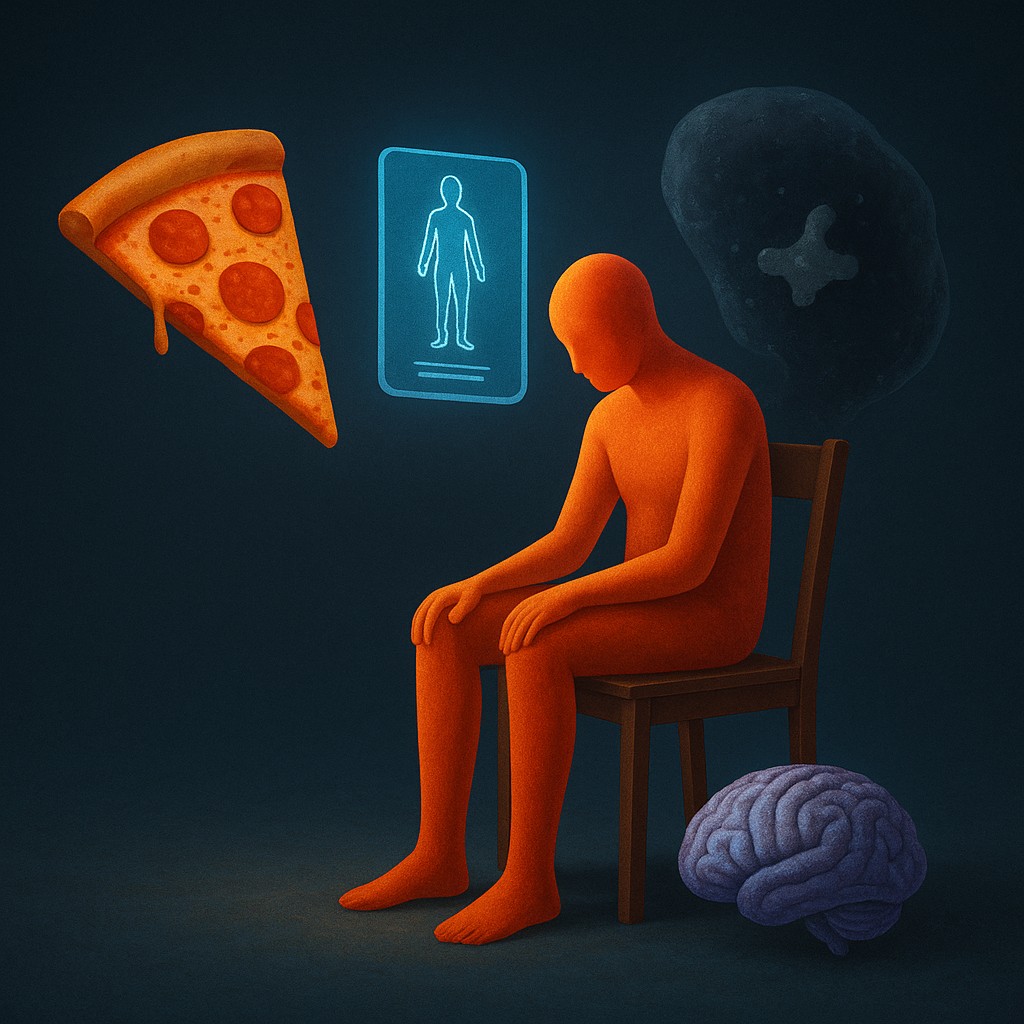
We all have a nagging tendency to imagine health as either an unshakeable fortress or a fragile house of cards that collapses at the first bite of pizza. The truth is much more nuanced. Our bodies are spectacularly resilient machines, capable of repairing incredible damage, but they still have their breaking points. The real danger does not lie in an occasional Saturday night indulgence; it hides in the creeping habits we invite to our table every day without even realizing it.
Understanding what actually threatens our longevity and well-being isn't just about making a list of "don'ts." It is about decoding how certain lifestyle choices hijack our internal chemistry. We live in a world that feels designed to test our physical limits, caught between ultra-processed foods, the sedentary life forced on us by screens, and a level of chronic stress we have come to accept as normal. To protect our most precious asset, we must take an honest look at the behaviors that gradually sabotage our inner engines and rob us of our best years.
The Stationary Trap: Rusting in Place
We often hear that sitting is the new smoking. While that is a bold claim, it isn't without scientific merit. Through millennia of evolution, our bodies were built for movement, walking, and regular physical effort. When we spend eight to ten hours a day glued to a chair, our metabolism enters a sort of lethargic standby mode. Blood flow slows down, insulin becomes less effective, and our muscles - lacking stimulation - begin to lose their ability to burn fats and sugars efficiently.
The greatest danger of a sedentary lifestyle isn't just weight gain; it is the silent breakdown of our cardiovascular system and bone density. Even if you hit the gym for an hour a day, it doesn't necessarily make up for being completely motionless the rest of the time. Consistency is what matters. The simple act of standing up, stretching, and walking a few steps every hour keeps our enzymes - the proteins that trigger chemical reactions - active. Ignoring this need for movement is like letting a complex machine rot in a damp garage, allowing our bodies to literally oxidize from the inside out.
Beyond the physical toll, staying still for too long directly impacts mental health. The brain needs the oxygen boost provided by movement to regulate mood and clear out metabolic waste. When we remain static, we encourage mental stagnation and increase the risk of anxiety or depression. It is a vicious cycle where exhaustion leads to inactivity, which in turn makes us feel even more tired. Breaking free requires a radical shift in perspective: sometimes, the comfort of our sofa is our greatest enemy.
The Invisible Assault: Empty Calories and Hidden Sugar
If you had to name a prime suspect in your pantry, it would undoubtedly be added sugar, especially in liquid form. Excessive consumption of simple sugars and ultra-processed foods acts like a constant bombardment of the pancreas and liver. When we ingest these substances, our blood sugar levels skyrocket, forcing the body to pump out massive doses of insulin. After repeating this cycle over and over, our cells stop responding to insulin signals. This "insulin resistance" opens the door to type 2 diabetes and metabolic syndrome.
The problem isn't just the quantity of food, but the quality. Modern industrial products are often stripped of fiber, vitamins, and minerals to favor artificial flavor and a long shelf life. This leaves us "overfed" but "undernourished." We are technically taking in too many calories, yet our cells are starving because they lack the essential micronutrients they need to function. It is one of the worst things we can do to our health: starving the body while simultaneously overloading it with metabolic waste.
To better understand the impact of these choices, let's look at how certain eating habits stack up against our actual biological needs.
| Risky Behavior |
Major Biological Impact |
Long-term Consequence |
| High sugar intake |
Insulin spikes and inflammation |
Insulin resistance and diabetes |
| Too many ultra-processed foods |
Altered gut microbiome |
Immune and digestive disorders |
| Regular alcohol consumption |
Liver and nerve toxicity |
Liver disease and cognitive decline |
| Chronic lack of fiber |
Sluggish digestion |
Increased risk of colon cancer |
Nighttime Sabotage: The Death of Sleep
We live in a culture that glorifies sleep deprivation, treating it almost like a badge of productivity or a sign of character. This is a monumental mistake. Sleep is not "down time"; it is a period of intensive maintenance where the brain flushes out waste (via the glymphatic system) and the body repairs its tissues. Chronically depriving yourself of sleep is like refusing to change a car's oil while continuing to drive it at top speed. The consequences hit every front: failing memory, a weakened immune system, and constant irritability.
Lack of sleep also wreaks havoc on hunger hormones, specifically ghrelin and leptin. When you sleep too little, you naturally crave fatty and sugary foods the next day because your brain is searching for a quick energy fix to compensate for fatigue. This creates a direct bridge between poor rest and obesity. Furthermore, the heart never gets the break it needs, keeping blood pressure high throughout the night and significantly increasing the risk of heart attacks or strokes.
It isn't just about sleeping "enough"; it is about sleeping well. Exposure to the blue light from screens before bed blocks the production of melatonin, the hormone that tells our body it is time to recover. By checking social media right before turning out the lights, we send a confusing message to our brain, simulating sunlight in the middle of the night. This disruption of our "circadian rhythm" - our internal 24-hour clock - is a constant assault on our biology, upsetting hormonal cycles that are millions of years old.
The Illusion of Smoke and the Social Weight of the Glass
Year after year, tobacco remains the undisputed champion of self-inflicted health destruction. There is no safe level of cigarette consumption. Every puff introduces thousands of toxic substances that directly attack your DNA, causing mutations and weakening the body's ability to repair itself. Smoking doesn't stop at destroying the lungs; it hardens the arteries, yellows the skin, and reduces the blood's ability to carry oxygen, affecting every organ from the brain to the toes.
Alcohol, on the other hand, often enjoys a better reputation, sometimes even dressed up with questionable medical benefits, like the classic "glass of red wine for the heart." While moderation is certainly key, regular alcohol consumption is a known carcinogen. Ethanol is a toxin that the liver must process as its top priority, meaning other vital functions - like burning fat - are put on hold. Over time, alcohol degrades neural connections, disrupts deep sleep, and fuels the body-wide inflammation that accelerates aging.
The most insidious part of these habits is their social component. We often drink or smoke to fit in or to manage stress we can't express any other way. This creates a psychological dependency where health takes a backseat to the immediate comfort of the group. Breaking these habits often requires redefining how we relate to others and finding new ways to cope with life's pressures. The cost of social conformity should never be your own life expectancy.
Chronic Stress: The Poison of Cortisol
We end this overview with what is perhaps the most discreet yet devastating enemy: chronic stress. Stress is a magnificent survival response when you need to escape a predator, but it becomes toxic when it is permanently triggered by emails, traffic jams, or financial worries. In this state, the body is flooded with cortisol and adrenaline. These hormones, while useful for a few minutes, become corrosive when they circulate in the blood for months or years.
Chronic stress literally shuts down functions that aren't essential for immediate survival, such as efficient digestion and the immune system. This is why people often get sick right after a period of intense pressure. Even more seriously, stress changes the physical structure of parts of the brain related to emotional control and decision-making. Ignoring your mental health, refusing to truly disconnect, or neglecting social relationships for the sake of work is one of the costliest decisions you can make for your longevity.
There is a common misconception that stress is "all in your head." In reality, stress is deeply physical. It increases arterial stiffness, encourages the body to store dangerous abdominal fat around the organs, and speeds up the shortening of telomeres - the caps at the ends of our chromosomes that determine our biological age. Learning to say no, meditating, breathing, or simply spending time in nature is not a luxury for the idle. It is an essential biological survival strategy in a world that never stops.
Taking care of your health does not require becoming a hermit or living in constant fear of every germ. On the contrary, it is an act of freedom. It means refusing the traps of modern convenience to give the body what it fundamentally needs: real food, restorative sleep, daily movement, and a sense of peace. Every small change, every extra step, and every hour of sleep gained is a victory that builds up over time. You have the power to rewrite your biological future starting today - not through grand speeches, but through the small daily choices that, together, build a vibrant and energetic life.