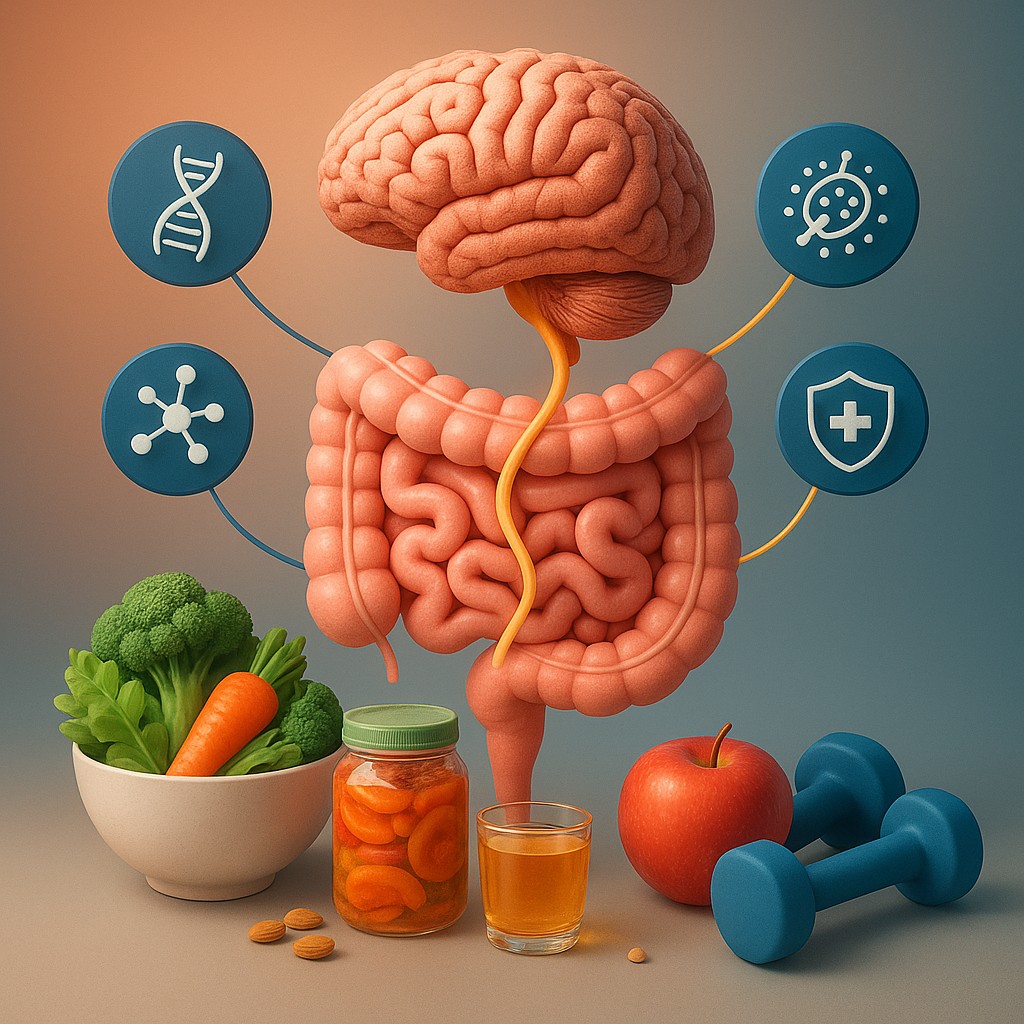
Have you ever felt "butterflies" in your stomach before an important meeting, or noticed your gut tighten when you were stressed? That is not just a romantic or dramatic turn of phrase, it is a glimpse into a constant, unseen conversation between your gut and your brain. Understanding that dialogue - called the gut-brain axis - changes how we think about digestion, mood, and even some chronic diseases. It is both deeply biological and strangely everyday.
This piece takes you from the essentials to the fascinating details: how nerves, the immune system, and the billions of microbes in your gut exchange messages; what scientific evidence supports those exchanges; and most importantly, what concrete steps you can take to nurture a healthy relationship between your two favorite organs. Expect simple takeaways, myth-busting, and practical tips, all with a bit of humor to make the science stick.
The pathways of the gut-brain conversation: nerves, hormones and inflammation
The gut-brain axis depends on several communication channels that operate at the same time. The most direct is the vagus nerve, a cable of information that links the intestinal wall to the brainstem and carries both sensory and motor messages. At the same time, hormones made by intestinal cells circulate in the blood and adjust appetite, digestion, and even emotional states - think ghrelin and peptide YY. Finally, the immune system plays a major role: inflammatory molecules produced locally can reach the brain and influence cognition and mood.
These routes do not work in isolation but as a network. For example, a change in microbes can alter intestinal barrier permeability, trigger a local immune response, and generate cytokines that affect brain function. Likewise, psychological stress activates the hypothalamic-pituitary-adrenal axis and increases cortisol release, which in turn changes microbial composition and gut motility. Understanding these feedback loops is essential to see why interventions on one side - gut or brain - can affect the other.
Who lives in the gut and why it matters to the head
Your gut hosts a vast and diverse community of bacteria, viruses, fungi and other microbes, collectively called the gut microbiota. These residents help digest fiber, synthesize certain vitamins, and maintain a protective barrier. They also produce small molecules, called metabolites, that can cross the intestinal wall and act locally or at a distance, including on the brain. Microbial diversity is often linked with better metabolic and immune resilience, although "diversity" is not the only marker of health.
Some species play key roles, sometimes called keystone species, such as producers of short-chain fatty acids (SCFA) - acetate, propionate and butyrate - which feed colon cells and modulate the immune system. Other microbes influence tryptophan metabolism, an amino acid precursor of serotonin, a neurotransmitter important for mood. It is crucial to understand the microbiota is not a fixed organ: it changes with diet, age, medications and environment.
The small molecules that change minds: metabolites, neurotransmitters and chemical signals
Microbial metabolites are powerful mediators in the gut-brain axis. SCFA, for example, strengthen the intestinal barrier, reduce inflammation and can influence production of neurotrophins, factors that support neuron health. Microbes that alter tryptophan metabolism can shift the balance between serotonin production and other metabolic pathways that affect the central nervous system. In addition, some bacteria produce or modulate neurotransmitters like GABA, dopamine and serotonin; these molecules can act locally on enteric neurons or change activity through indirect signals.
It is important to keep a realistic perspective: although a large portion of the body's serotonin is found in the gut, gut serotonin and brain serotonin are largely compartmentalized, because the blood-brain barrier limits direct passage. Nevertheless, the metabolic pathways that lead to these neurotransmitters, immune signals, and local neuronal interactions can all modulate brain physiology at a distance. In short, small molecules matter, but their effects depend on context and the whole network.
The evidence: experiments, human studies and current limits
Many ideas about the gut-brain axis come from elegant animal studies. Germ-free mice, raised without microbes, show major differences in behavior, brain anatomy and stress responses; fecal microbiota transplantation can transfer some behavioral traits from one animal to another. These results show microbes can influence brain circuits and behavior in animals. However, direct translation to humans is complex because of biological differences, environment and individual variability.
In humans, observational studies find associations between microbiome composition and conditions like depression, anxiety or autism spectrum disorders, but these associations do not establish clear causality. A few controlled clinical trials have tested probiotics or dietary interventions and observed modest effects on mood or digestive symptoms, but results are often heterogeneous and sensitive to the product, duration and participant characteristics. In summary, the scientific case is promising but cautious and nuanced: for some clinical applications the evidence is strong, for others more rigorous trials are needed.
Untangling common misconceptions: what is exaggerated and what is true
There are several popular myths about the gut-brain axis worth correcting. Myth one: "Taking a probiotic will cure depression." Current evidence does not support that; some probiotics show modest mood effects in certain people, but they do not replace medical treatment when needed. Myth two: "Most of the body's serotonin goes straight to the brain." As noted above, gut serotonin does not move to the brain in significant amounts. Myth three: "A 'clean' gut means a better brain." Reality is more subtle: microbial balance and resilience matter more than simply trying to eliminate microbes.
What matters is that the gut-brain axis is modifiable but not magical. Interventions that sustainably shape the microbiota and gut health - like fiber-rich diets, regular sleep and stress management - have plausible, cumulative effects on mental well-being. Medications, probiotics and specific interventions require rigorous evaluation and often personalization.
Practical strategies to cultivate a resilient gut-brain axis
Changing daily habits can have a concrete effect on the gut-brain axis. Here are science-based, easy-to-apply principles: eat more fiber and plant foods, limit processed sugars, include fermented foods when tolerated, move regularly, get enough sleep and reduce stress with techniques like meditation or physical activity. Antibiotics can disrupt the microbiota, so use them judiciously. Probiotics may help in some cases, for example with particular digestive disorders, but choice should be targeted and guided by clinical data.
Some concrete, simple recommendations:
- Add a variety of vegetables, legumes and whole grains each day to feed your microbes.
- Favor traditional fermented foods, like plain yogurt, kefir or unpasteurized sauerkraut, if you tolerate them.
- Move 30 minutes a day, even a walk, since exercise positively affects microbial diversity.
- Seek professional support for persistent anxiety, depression or digestive problems, rather than relying solely on dietary changes.
Comparative table of interventions and their level of evidence
| Intervention |
Main mechanism |
Level of human evidence |
Practical tip |
| High-fiber diet |
Promotes SCFA, microbial diversity |
High - cohort studies and nutrition RCTs |
25-30 g of fiber/day via vegetables, fruits, legumes |
| Fermented foods (yogurt, kefir, sauerkraut) |
Supply of live microbes and metabolites |
Moderate - observational studies and small RCTs |
Introduce gradually and monitor tolerance |
| Probiotics (specific strains) |
Targeted microbial modulation |
Variable - some strains show effects |
Choose strain/indication and recommended duration |
| Prebiotics (inulin, FOS) |
Feed beneficial microbes |
Moderate - effects on microbiota demonstrated |
Start with small doses to avoid bloating |
| Regular exercise |
Increases microbial diversity via metabolic effects |
Moderate - observational studies and interventions |
150 min/week of moderate activity recommended |
| Stress management (meditation) |
Reduces HPA activation and inflammation |
Moderate - demonstrated psychological effects |
10-20 min/day for noticeable benefits |
When to seek help: signs not to ignore
Sometimes symptoms point to something serious beyond self-care. See a professional if you have persistent fatigue, unexplained weight loss, severe or chronic abdominal pain, new and persistent digestive problems, or significant depressive or anxious symptoms that impair daily functioning. For combined problems - for example, chronic abdominal pain with worsening mood - a multidisciplinary approach involving a gastroenterologist, psychiatrist or psychologist, and a dietitian may be best. Personalized medicine is becoming the norm, because the same intervention does not work for everyone.
A mnemonic to remember the essentials of the gut-brain axis
Here is a handy acronym to recall the key pieces: GUT-MIND.
- G - Germs (microbes): diversity and metabolic functions.
- U - Underlying pathways: vagus nerve, hormones, immunity.
- T - Tryptophan and neurotransmitters: metabolism that influences mood.
- M - Metabolites: SCFA and other active small molecules.
- I - Immunity: cytokines and local/systemic inflammation.
- N - Nutrition: fiber, fermented foods, prebiotics.
- D - Diversity and dynamics: individual variability and the need for personalization.
Say this acronym to yourself before buying a probiotic yogurt or changing your diet, to keep a balanced perspective.
You are now equipped with a clear, practical understanding of the gut-brain axis. This is not a passing trend but a central piece of human biology that links what you eat, how you live, and how you think. By applying a few consistent principles - dietary variety, physical activity, sleep and stress management - you strengthen not only your gut health but also your mental resilience. Remember that curiosity and patience are your allies; science advances, and each small change is part of a larger story of well-being.