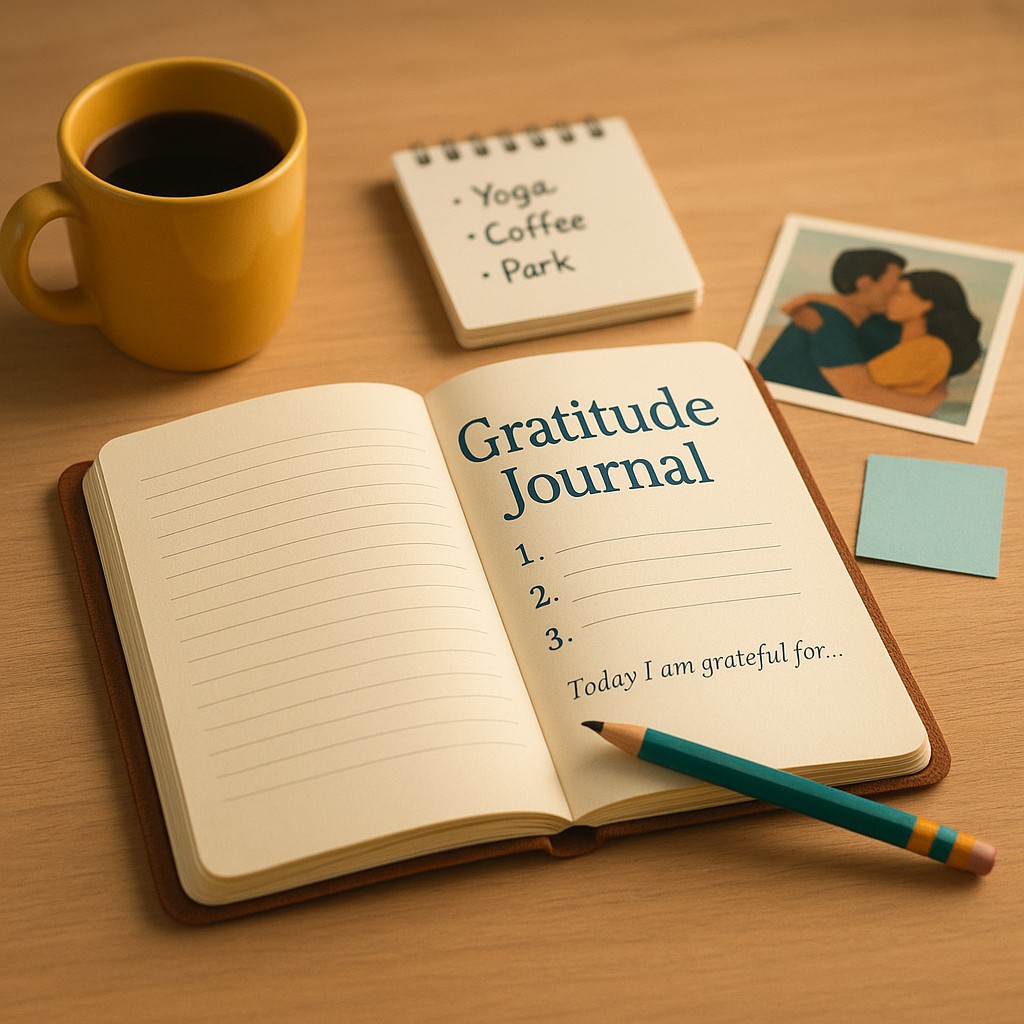
Why a tiny notebook can change your brain, your mood, and your mornings
Imagine starting each day by noticing three small things that went right, then closing your eyes and feeling a tiny, warm glow. That small exercise is not magic, it is attention deliberately pointed at good things. A gratitude journal trains your mind to find and hold on to bright spots, even when life feels messy, and it does this by changing the weight your brain gives to events. The best part is it does not require a spiritual retreat, expensive gadgets, or perfect handwriting, just a few minutes and a pen.
If you have tried gratitude in the past and felt awkward or fake, you are not alone. Many people hear the word gratitude and picture forced smiles and plastered positivity, but a practice of gratitude is actually about realistic appreciation - noticing things that made a difference, however small. Over time this noticing builds new mental habits, like a muscle that learns to lift small weights of joy. The result is not constant bliss, but a steadier capacity to see value and resilience on ordinary days.
This guide walks you through what a gratitude journal is, why it works, how to start in ways that actually stick, and how to avoid traps that make gratitude feel hollow. I will mix science with practical steps and a few stories to make the ideas memorable and fun. By the time you finish reading, you should feel confident to begin a gratitude journal that fits your life, day by day.
You will also find templates, prompts, and a compact comparison table to help pick the style that suits you. Whether you are short on time or want to deepen the practice into something reflective and rich, the goal is simple: help you notice more of what matters and feel more capable of holding those moments close.
How gratitude journaling changes your brain and your life
The science behind gratitude is surprisingly robust. Repeatedly attending to positive experiences strengthens neural pathways associated with positive emotion and social cognition. Studies show that people who keep gratitude journals report better sleep, lower stress, and greater life satisfaction, because the practice shifts attention patterns away from rumination and toward noticing resources and relationships.
Gratitude also rewires perception of value. When you regularly catalog small benefits, your threshold for noticing them becomes lower - you start seeing more instead of needing bigger events to feel grateful. This is a practical form of cognitive training; think of the brain as a camera that adjusts exposure to bring out details you might have missed before. Over weeks, this new exposure setting becomes easier to activate without the journal.
There is also a social effect. Gratitude journals encourage you to notice contributions from other people, which motivates acknowledgement, appreciation, and stronger relationships. Writing thank-you notes, even mentally, fosters reciprocal kindness and reduces feelings of isolation. So the practice benefits internal mood and social connectedness at the same time.
Finally, gratitude mitigates negativity bias - the evolutionary tendency to give stronger weight to negative events. A journal is a small-scale corrective. It does not erase problems, but it creates a more balanced ledger of experience, so negative events are seen in context rather than as the entire narrative.
A simple, step-by-step starting recipe that actually works
Start tiny and consistent. Choose a small notebook or an app, and commit to three minutes a day for the first three weeks. Each entry should list three things you are grateful for, written in a sentence or two, followed by one short reflection on why that thing mattered. This short structure is easy to repeat and builds the habit without demanding emotional theatrics.
Make the practice concrete and sensory. Instead of writing "I am grateful for family," try "I am grateful for my sister calling today and laughing about Dad's terrible recipe." Add one sentence about why it mattered, for example, "It made me feel seen and reminded me we can still laugh together." Specificity creates emotional resonance and helps your brain store the memory with richer detail.
Anchor the habit to an existing routine, such as brushing your teeth, making coffee, or right before bed. Habit stacking - attaching a new behavior to a regular cue - dramatically increases follow-through. Use a visible cue like an open notebook on your nightstand, and celebrate small wins when you write, even if you miss a day. Consistency matters more than perfection.
If you prefer digital tools, use an app with reminders and simple prompts, but keep entries short and private for best results. Avoid turning the practice into a performance for social media; internal honesty is more effective than curated gratitude posts. The aim is to change your internal story, not to produce content.
What to write: prompts, examples, and a few creative spins
Not sure what to put on the page? Start with these reliable prompts that move you from surface noticing to meaningful reflection. Use one prompt per day or mix them up to keep things interesting and avoid rote repetition. You can also pick themes for the week - people, skills, small comforts, past lessons - to explore gratitude from different angles.
Here are some prompts to get you started:
- Three things that made you smile today, and why they mattered.
- A person who helped you recently, and what you appreciated about them.
- A simple comfort you had this week, and how it affected your mood.
- A personal strength or skill you used, and the outcome it produced.
- A challenge that taught you something valuable, and the lesson it offered.
Examples of realistic entries:
- "Grateful for the barista remembering my usual and spelling my name right, because it felt like a small kindness that started the day well."
- "Grateful for my dog nudging me off the couch for a walk, because the fresh air cleared my head and I solved a stubborn problem on the walk."
- "Grateful for finding a re-usable bag in the car, because it meant I avoided a plastic bag and felt a small sense of order."
Try creative alternatives occasionally: write a gratitude letter you never send, take a photo and caption it, or keep a "reverse" gratitude list where you note frustrations and what learning came from them. Variety keeps the practice alive.
Quick comparison: choose the journaling style that fits you
| Style |
Time per session |
Best for |
Strengths |
Weaknesses |
| Short list (3 items) |
2-5 minutes |
Busy people |
Easy, fast, builds habit |
Can feel shallow if repeated without variety |
| Narrative entry |
10-20 minutes |
Reflective types |
Deep processing, richer memory |
Requires time and mental energy |
| Photo + caption |
1-5 minutes |
Visual thinkers |
Anchors memory with image, fun |
Less available when you need privacy |
| Gratitude letter |
20-40 minutes |
Relationship builders |
Powerful emotional effects, boosts connection |
More effort, can be intense |
| Weekly roundup |
15-30 minutes |
Less frequent journaling |
Big-picture view, tracks patterns |
Less day-to-day reinforcement |
Use this table as guidance, not strict rules. You can switch styles depending on time and mood.
Common myths and honest pitfalls to watch out for
One myth is that gratitude means ignoring problems or faking happiness. That is false. Genuine gratitude coexists with sadness and difficulty; it does not require minimizing legitimate pain. A healthy gratitude practice acknowledges hardship while also noticing pockets of value. When practiced well, gratitude increases resilience, not denial.
Another misconception is that longer entries equal better results. Quality beats quantity; specific, emotionally resonant notes matter more than word count. Writing three meaningful sentences beats an overflowing list of clichés. The brain responds to novelty and vivid detail, so specificity is the real currency.
Some people fall into the comparison trap, feeling pressure to record glamorous moments or to perform gratitude publicly. This makes the practice competitive and counterproductive. Keep your journal private, honest, and unshowy. The benefits come from shifting your mind, not from receiving applause.
Finally, beware of guilt when you miss days. Habits are built over time, not by punishing lapses. If you skip a day or a week, be curious about the reason rather than harsh. Return to the practice with a small, doable commitment. Kindness toward yourself is part of sustainable habit change.
Make it stick: practical nudges and behavior hacks
Small tweaks boost adherence and deepen impact. First, make the cue obvious. Keep the notebook in a visible place or set a recurring alarm at a consistent time. Second, attach the journaling to another rewarding routine, such as coffee or evening relaxation, so the practice piggybacks on an existing incentive.
Track your progress with a simple calendar or habit tracker. Seeing a streak of consistent days creates a mild dopamine reward that encourages continuation. If you miss a streak, avoid negativity and use a gentle plan to restart. Celebrate milestones, like one week or one month of consistency, with a small treat.
Experiment with social accountability if that helps you - try a low-pressure partner or group where people check in about the practice, not judge content. However, keep the content authentic; sharing only curated positives dilutes the benefit. Finally, pair gratitude journaling with other reflective practices like brief mindfulness or a short breathing exercise to amplify focus and calm.
Measuring progress: what real change looks like over time
You will not wake up permanently grateful after one entry, and that is okay. Expect gradual changes: after two weeks you may notice improved mood in the evenings, after a month you may sleep slightly better, and after three months the tendency to ruminate could lessen. These shifts are subtle but cumulative, like compound interest on attention.
Keep a simple metrics log if you enjoy data - note mood ratings on a 1 to 10 scale before journaling and one week averages, energy levels, sleep quality, or frequency of social interactions. These quantitative markers can reveal patterns. Remember that subjective changes matter too: feeling calmer in hard moments or catching yourself appreciating the small things are valid signs of progress.
If the practice stalls, revisit your why. Are you journaling because you feel obliged, or because it genuinely adds value? Re-centering on purpose helps. Also, vary the format occasionally to avoid burnout - switch from lists to letters to photos every few weeks.
Advanced practices for deepening gratitude and resilience
Once the basic habit is established, deepen the practice with targeted variations. Try the gratitude letter once a month, write a "reverse gratitude" entry where you identify something painful and list what it taught you, or practice third-person journaling where you describe a positive event as an observer - this increases perspective-taking. Each variation trains a different cognitive muscle.
Savoring exercises extend gratitude beyond the page. After writing about a positive event, take 30 seconds to mentally replay it and notice physical sensations. This post-writing savoring strengthens emotional encoding. Another advanced move is to create an annual "gratitude map" where you identify recurring sources of meaning and consider ways to invest more in them.
You can also connect gratitude practice to goal pursuit. Use entries to note progress and small wins toward goals, which increases motivation without forcing overwhelm. Gratitude can be both reflective and strategic - it builds momentum and helps maintain perspective during long projects.
A two-week plan you can start today
Week 1 - Build the habit:
Day 1-7: Each evening, write three specific things you are grateful for and one sentence about why. Keep entries under five minutes. Anchor to bedtime.
Week 2 - Add depth:
Day 8-10: Continue the three-item list, add one savoring exercise per day - relive one positive moment for 30 seconds after writing.
Day 11-13: Try one narrative entry (10 minutes) on any day - pick a meaningful moment and describe it with sensory detail and why it matters.
Day 14: Write a short gratitude letter to someone who helped you recently. Decide whether to send it or keep it private.
This plan builds rhythm first, then adds depth, and ends with a relational act that amplifies the practice. Adapt the days and intensity to your schedule.
Closing nudge: start small, stay curious, and be kind to yourself
Gratitude journaling is work you do for your future mental landscape; it is not a performance, it is an investment. Start with tiny, honest steps, and give your brain time to learn the new pattern. Expect modest, steady returns: clearer perspective, stronger relationships, and a calmer mind when life throws curveballs. Keep the practice personal, specific, and varied so it stays alive rather than becoming a to-do item you resent.
If you try it, remember to be curious about the experience. Notice what changes, what does not, and what surprises you. Use the templates and prompts here as scaffolding, then personalize the method so it fits your voice and rhythm. With small, consistent attention, a simple notebook becomes a reliable ally, helping you remember the good things and the people who make them possible.