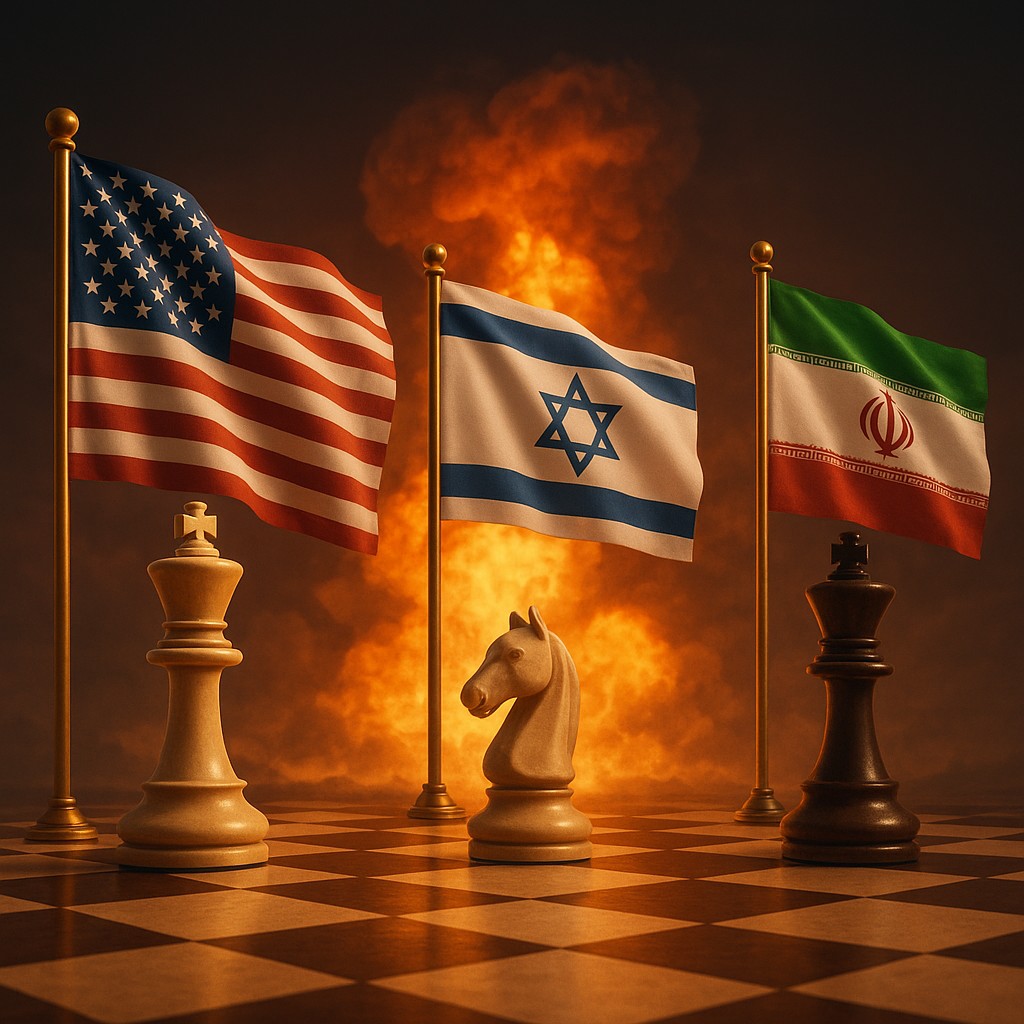
To understand the high-stakes game of chess currently unfolding in the Middle East, you have to look past the explosions in the headlines and dive into a tangle of history, geography, and strong personalities. At the center of this storm are three main players: the United States, Israel, and Iran. Each is driven by deep security fears and a completely different vision for how the region should work. While news reports often focus on the latest missile strikes, the real story is about a massive shift in global alliances and whether the strategy of "maximum pressure" will actually pass its toughest test.
The current friction isn't just a random spark. It is the result of decades of "shadow boxing" – secret or indirect fighting – finally spilling out into the open. As Donald Trump pushes for a clear victory or a total overhaul of Iranian power, he finds himself in a strange spot. He has a motivated partner in Israel, which has a world-class military, yet many of America’s longtime friends in Europe and Asia are staying on the sidelines. This says a lot about how the modern world weighs the risk of high gas prices, the scars of past wars, and the difficult math of picking sides when nobody knows how the fight will end.
The Long Road to Today’s Tension
To figure out why things are so heated, we have to look back a few years to when the diplomatic ties holding everything together began to snap. For a long time, the relationship between the West and Iran was managed by the nuclear deal, formally known as the Joint Comprehensive Plan of Action (JCPOA). When the Trump administration pulled out of this agreement, it signaled a move away from trying to control Iran through talks. Instead, the U.S. chose to squeeze Iran through economic and military pressure. This started a cycle of "tit-for-tat" moves, where Iran tried to show it could make life miserable for the rest of the world if its own economy was choked by sanctions.
This history matters because it explains why Iran feels backed into a corner and why the U.S. thinks only force will get results. Over the last decade, Iran has built what it calls the "Axis of Resistance." This is a network of allies and "proxies" – local groups that fight on Iran's behalf – in Lebanon, Yemen, Iraq, and Syria. These groups allow Iran to project power far from home without using its own national army. When the U.S. or Israel hits Iranian interests, Iran often hits back through these partners. This "indirect warfare" has recently turned into a direct fight, with missiles flying across borders in a way we haven't seen in decades. It makes the threat of a full-scale regional war feel very real.
Israel’s role in this story is unique and intensely personal. For the Israeli government, an Iran with nuclear potential or even a strong network of local fighters is a threat to its very existence. This means that while other countries might see the conflict as a political headache or an economic risk, Israel sees it as a matter of life and death. This shared sense of urgency between the Trump administration and Israeli leaders has created a military partnership so close that it can be hard to tell where one country’s strategy ends and the other’s begins.
Why the Rest of the World is Hesitating
If the U.S. and Israel are so sure that Iran needs to be stopped, why aren't the British, French, Germans, or Japanese rushing to help? The answer comes down to "burnout" and "bank accounts." Many European nations spent the early 2000s fighting in Iraq and Afghanistan, and they have almost no appetite for another huge military mission in the Middle East. Voters are exhausted by foreign wars that never seem to have a clear exit plan or a simple definition of victory.
Beyond politics, there is the cold reality of energy security. Iran sits right next to the Strait of Hormuz, a narrow waterway where about 20 percent of the world’s oil and natural gas passes through every single day. Countries like Japan and many in Europe depend on this oil much more than the United States, which is now a major energy producer itself. These allies worry that if they join a war against Iran, Iran will react by closing the Strait or attacking oil tankers. For a leader in Tokyo or Berlin, a war with Iran doesn't just mean a military bill; it means the price of gas and electricity could double overnight, potentially wrecking their economies.
Furthermore, there is a basic disagreement on how to handle Tehran. Many of America's traditional allies still believe the nuclear deal was the best chance for peace. They see the current "maximum pressure" campaign as a self-fulfilling prophecy that only leads to more violence. They are reluctant to join a fight they feel could have been avoided with diplomacy. This creates a rift where the U.S. asks for "burden sharing" to keep the world safe, but allies see it as "risk sharing" in a conflict they never wanted.
The Trump Strategy and the Israel Connection
Donald Trump’s foreign policy has always been "transactional." He believes that if the U.S. is providing a military safety net for global trade routes, other countries should pay their fair share or send their own soldiers. This is why he has been so critical of nations like Japan or South Korea, suggesting they should protect their own tankers in the Gulf. When he asks allies to join the mission, he isn't just looking for extra troops; he wants a sign that the world approves of his "America First" approach.
Israel, however, is on a different wavelength. Under its current leadership, Israel has found a partner in Trump who is willing to take risks that previous U.S. presidents avoided. This has led to a highly coordinated military front. While the U.S. provides massive firepower and high-tech scouting from a distance, Israel provides sharp intelligence and a willingness to fight directly on its own doorstep. This pair is powerful, but it also looks like a "two-on-one" fight, which makes it harder for neutral countries to join without looking like they are taking sides in a local grudge match.
| Player |
Main Goal |
Biggest Worry |
Stance on Fighting |
| USA |
Regional stability and stopping Iran's nukes. |
Getting stuck in another "forever war." |
Leading the military and economic pressure. |
| Israel |
Survival and stopping local threats. |
Iranian nuclear weapons and border safety. |
Fully committed and working closely with the U.S. |
| Iran |
Survival of its government and regional power. |
Economic collapse due to harsh sanctions. |
Hitting back with "asymmetric" strikes and proxies. |
| Europe/Japan |
Stable economies and energy prices. |
Expensive oil and a flood of refugees. |
Pushing for talks and refusing to join the fight. |
The Dangers of a Cornered Player
In any high-stakes fight, you have to look at the "theory of the cornered cat." When a country like Iran feels it has nothing left to lose because its economy is ruined and its leaders are under threat, it might act in ways that seem crazy to outsiders. This "miscalculation" is what keeps diplomats awake at night. If Iran feels an invasion is coming no matter what, it might strike first at "soft targets," like the plants that turn seawater into drinking water in the Gulf, or the internet cables that run along the seafloor.
This fear of "asymmetric warfare" – or irregular fighting – is another reason why many countries are staying away. If the U.S. and Israel destroy an Iranian missile base, Iran might respond by hacking a European power grid or launching a drone at a cargo ship owned by a neutral country. by staying out of the military group, countries like France or Italy hope to stay off the target list. They want to keep a line of communication open with Tehran so they can act as go-betweens, a role that becomes impossible once they fire a shot.
The lack of a clear "Day After" plan also makes allies pause. History shows that it is relatively easy for the U.S. military to take down a government, but it is incredibly hard to build something stable afterward. Without a plan for what happens to Iran after a war, or how a new government would work, most allies see intervention as a recipe for chaos. They worry that a power vacuum in Iran would be filled by even more violent groups, leading to a decade of instability that would hurt the global economy much more than the current situation does.
Finding a Path to Calm Things Down
Despite the angry talk and the missile fire, there are still quiet diplomatic channels working behind the scenes. Many of the countries refusing to join the war are actually working double-time to prevent it from getting worse. They act as "middlemen," passing messages between Washington and Tehran to make sure neither side accidentally crosses a "red line" that would make total war unavoidable. This "good cop, bad cop" routine is an old trick in international relations; while the U.S. and Israel play the tough roles, the allies offer a way out through talks.
The conflict is also being shaped by local politics in every country. In the U.S., many people want to avoid another war in the Middle East, while others believe being "tough" is the only way to stay safe. Similarly, in Iran, there are power struggles between those who want to keep fighting and those who realize the country can't survive this much pressure forever. This means the situation can change fast depending on who is winning the argument at home.
What we are seeing is a rapid change in global politics. The era where the U.S. could whistle and bring together a huge "coalition of the willing" from dozens of countries has faded. In its place is a more divided world where every nation does its own math. The fact that only Israel is standing shoulder-to-shoulder with the U.S. isn't necessarily a sign that America is weak. Instead, it’s a sign of how specific and high-risk this particular fight has become.
Seeking Clarity in the Fog of War
To understand this conflict, you have to look through several lenses at once: history, the oil market, and national survival. It is a story about the limits of power and the complexity of modern friendships. While headlines make it look like "good guys vs. bad guys," it is actually a much more complicated tale of how countries protect themselves when the stakes are as high as they can get.
As you follow the news, remember that silence from an ally is often just as important as a statement from a friend. The world is watching to see if "maximum pressure" will lead to a new era of stability or a deeper pit of conflict. By understanding why some countries are dragging their feet and others are diving in, you get a much clearer picture of how the world really works. Stay curious, keep asking why, and remember that in global politics, the most important moves often happen away from the cameras.