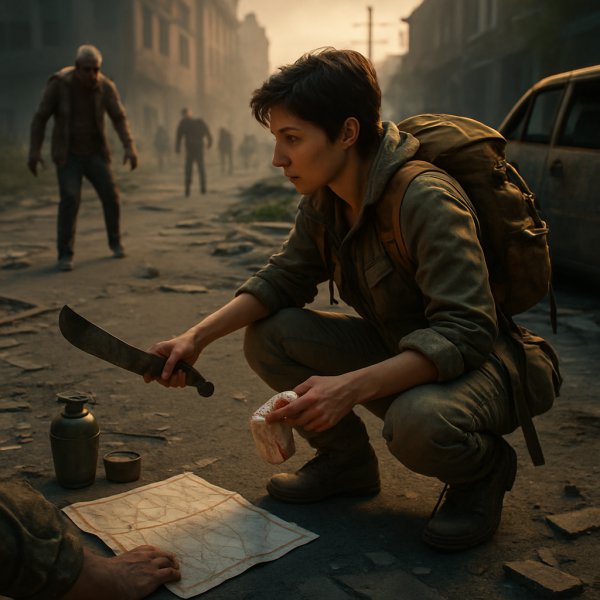
If a horde ever shows up, why you should care even if zombies are fictional
Picture this: the lights blink out, car horns fade, and every fictional nightmare you have about the undead starts trending in real life. Whether or not the undead are real, the idea of a sudden societal collapse is a powerful thought experiment that teaches real skills. Learning to survive a zombie apocalypse is really practice in surviving power outages, pandemics, natural disasters, and human-caused crises. The scenarios force you to think fast about priorities, human behavior, and what truly matters when institutions fail.
Beyond the thrill factor, the zombie framework is useful because it simplifies problems into clear threats - immediate danger, limited supplies, and the unknown. That simplicity lets you work on timeless skills - situational awareness, first aid, foraging, and leadership - in a memorable way. Treat this as a survival playbook with a bit of theater: the plots you saw on screen are exaggerated, but the lessons are practical. If you walk away with better emergency plans, a calm mind under pressure, and a few tools ready to go, you are winning.
Think of this guide as a map for becoming the kind of person who can handle the unexpected with competence and humor. I will blend science, real-world case studies, and a dash of storytelling so the skills stick. Expect analogies you remember, reflection questions that force you to apply ideas to your life, and tangible steps you can take today. By the end, you will feel smarter, more prepared, and ready to make calm choices if the world goes sideways.
What to do first when the chaos starts: assess, avoid, stabilize
When a crisis hits, your brain wants to take over with adrenaline and decisions. The best initial response is simple and structured: assess your situation, avoid immediate danger, and stabilize the essentials. Start by counting the obvious - who is with you, what injuries exist, and whether the nearest threats are inside or outside. Think of this as a medical triage for you and your environment: quick, prioritized, practical.
Avoidance means distance and discretion. If you can move to a safer space without exposing yourself to unnecessary risk, do it. Think in terms of layers: your front-line action is avoidance, the backup is a secure position, and stabilization means making sure basic needs - breathing, bleeding control, and warmth - are managed. A calm, planned approach reduces panic and gives you options that adrenaline-fueled improvisation may not.
Stabilizing also includes a short mental checklist you can do in under a minute: check for life-threatening injuries, secure your immediate perimeter, and identify a nearby escape route. If someone is bleeding heavily, stop the bleeding. If you are safe for the moment, gather essentials - water, a jacket, a phone or radio if it works - and move to a defensible location. The point is to be a little boring and methodical when everyone else is loud and impulsive.
Practical pocket checklist to memorize:
- Who is hurt and how badly?
- Where are immediate threats and can you get away quietly?
- What are the nearest sources of water and shelter?
- What essential items can you grab in 60 seconds?
Your gear: what matters and why minimalism beats hoarding
Gear is comforting, but heavy backpacks slow you down and attract thieves or attention. The right kit balances essentials, multi-purpose items, and redundancy. Think of your gear as a Swiss army of usefulness: one item should ideally solve multiple problems, from shelter to first aid to navigation. Focus on quality over quantity, and prepare for the reality that you may have to improvise.
A compact bug-out bag typically includes water purification, a reliable light source, a multi-tool, fire-starting kit, basic first aid, and a compact shelter option. Clothing choices matter more than you think; layers that dry fast, cover you from sun and insects, and allow quiet movement are invaluable. Keep copies of ID, local maps, and some cash in a waterproof pouch. Batteries die and power fails, so lean into hand-powered and mechanical solutions.
Here is a comparison of four common shelter choices to help you pick a strategy that fits your situation. The right choice depends on mobility, defense needs, and available supplies.
| Shelter type |
Strengths |
Weaknesses |
Best use case |
| Urban apartment |
Strong walls, utilities, lots of stored goods |
Crowd risk, limited escape routes, visible |
Short-term holdout with fortified entry |
| Suburban house |
Yard for food, multiple exits, quieter |
Larger footprint to defend, limited isolation |
Medium-term base for small groups |
| Rural cabin or farm |
Natural resources, space for agriculture, low density |
Longer travel to reach, limited immediate supplies |
Long-term survival and rebuilding |
| Vehicle or camper |
Mobility, ability to run away, self-contained |
Fuel dependency, noisy, limited long-term comfort |
Short-term escape and nomadic moves |
Keep the bag light enough to carry for several hours while maintaining the items that provide the most survival mileage. Test your kit in a day hike to see what you actually use and what is dead weight.
Moving safely through danger: routes, stealth, and timing
Movement is both a tactical decision and a psychological skill. When roads clog and panic spreads, you will often do better by going off-main roads and avoiding predictable behavior. Use maps and local knowledge to plot multiple routes, and always have a walking alternative if vehicles become impractical. Timing matters too - sometimes moving at dusk or dawn reduces visibility to other people while still leaving you enough daylight to navigate.
Stealth is underrated and simple: reduce noise, move predictably, and leave minimal traces. Imagine you are walking through a museum at night: soft footsteps, slow breath, and an awareness of sound. A noisy chain of people or metal-on-metal gear draws attention. Noise discipline, light discipline, and scent management - simple hygiene and clean clothing - improve your odds of staying unnoticed.
When traveling, use buddy systems and set clear movement orders so everyone knows their role and limits. Keep rest breaks short and controlled, and put scouts or lookouts at strategic points when stopping. If you are in a vehicle, practice fuel discipline and never refuel in exposed locations. Think of every trip like a recon mission: gather what you need and leave nothing that makes the next person safer and you less safe.
Reflection question: If you had to move tonight, what three routes would you take and what supplies would you prioritize in your pack?
Defense and deterrence: intelligence before force
Hollywood teaches loud, cinematic firefights, but noise attracts attention and ammunition runs out. Smart defense starts with deterrence and avoidance. Secure your position so that potential threats do not arrive in large numbers. Fortify doors, create layered barriers, and set noise traps that give you early warning. Use non-lethal deterrents when possible - barriers, lighting, and small alarms - then escalate only if necessary.
Weapons are tools with costs and trade-offs. Firearms are effective but loud and require maintenance and ammunition. Melee weapons are quiet and reliable but demand physical stamina and close contact, which increases risk. The best approach is situational: if you must use force, aim for precision and minimize exposure. Train with whatever tool you choose so use under stress becomes instinctive rather than panic-driven.
Safety, training, and responsible use matter. Learn basic marksmanship, clean and maintain gear, and practice safe handling routines. Pair force with planning: control chokepoints, use cover, and know when to disengage. A calm, practiced response scales better than adrenaline-fueled aggression, and that composure can be your strongest deterrent.
Food, water, and medicine: source, treat, and conserve
Survival is mostly about calories, clean water, and basic health. Water is your top priority - humans can survive weeks without food, only about three days without water in challenging conditions. Learn easy water treatment: boiling, solar disinfection in clear bottles, chemical tablets, and ceramic or membrane filters. Store water intelligently in food-grade containers and rotate supplies.
Food strategies range from short-term caches to long-term food production. For short-term survival, high-calorie, non-perishable foods that require minimal preparation are best: canned proteins, nuts, dehydrated meals, and dense energy bars. For the long run, learn basic gardening, seed saving, and simple animal husbandry if you have space. Preserve food with smoking, drying, and canning techniques that require little infrastructure.
Medical care is a critical force multiplier; small injuries can become life-threatening without proper attention. Stock a solid first-aid kit and learn to treat wounds, stop bleeding, manage fractures, and handle infections with antibiotics when appropriate. Sterility and bloodborne pathogen knowledge is essential - improvise sterile dressings when needed, and know when to seek more advanced care. A basic set of over-the-counter medications and a reference guide will pay dividends.
Reflection question: Where would you source water within a 1-mile radius of your home, and how would you make it safe to drink?
Human factors: building a team that survives together
People can be your greatest asset or your largest liability. Small teams that trust each other, have clear roles, and practice together will outperform ad-hoc large groups. Define roles based on skills and temperament: leader, medic, scout, engineer, and morale officer. Rotate duties to avoid burnout and maintain some semblance of routine, because routine builds sanity.
Trust is fragile, so set rules for decision-making and consequences for breaking trust. Avoid forming black-and-white moral codes in the heat of the moment; instead, create a shared playbook before tensions rise. Practices from the military and emergency teams - clear communication, after-action reviews, and shared responsibilities - help groups stay coherent. Protect mental health with small rituals, humor, and time off; surviving is not just physical work but emotional endurance.
Conflict will happen, and how you resolve it matters. Use transparent processes, impartial mediators if possible, and ties to shared survival needs to guide decisions. Remember that exclusion and cruelty weaken groups faster than any external threat.
Long-term thinking: how to rebuild a life after the immediate crisis
If you survive the initial period, your attention shifts to sustainability. Think in terms of energy, food production, trade, and governance. Renewable energy - solar panels and hand-crank generators - change the game. So do skills - carpentry, mechanical repair, water management, and medicine become currency. Build relationships with nearby survivors in structured ways to create a network of mutual support.
Agriculture is the core of long-term survival. Start with high-yield, fast-growing crops and learn preservation techniques. Diversify food sources to include grains, root crops, and protein sources like chickens or aquaculture if feasible. Create seed banks and learn local ecology so you can produce food without depending on modern inputs.
Economy will re-emerge in some form, so think about what skills or goods you could trade when markets return. Barter items often include medical supplies, tools, fuel, and knowledge. Communities that establish rules for fairness and shared labor will rebuild more successfully than those that fracture into hoarding enclaves.
Analogy to remember: rebuilding is less about a heroic individual and more like restoring a damaged town slowly, block by block. The people with practical skills and the capacity to cooperate will shape the new normal.
Myths that help no one and truths that save lives
There are a lot of myths from movies and games that distort preparation. Myth one: headshots always do the trick. Reality - in high-stress scenarios, precision under fire is far harder than films suggest, and melee or strategic avoidance often beats risky shots. Myth two: malls and military bases are safe havens. Reality - they concentrate people and supplies, making them prime targets. Myth three: looting and lone wolf heroics are glamorous. Reality - long-term survival favors networks, not lone exploits.
Another myth is that you must choose between urban or rural forever. In truth, mobility and flexible bases are underrated. Also, the glamorized picture of unlimited ammo or perfect weapons is false; maintenance, parts, and food for your team are the real limiting factors. Embrace redundancy: multiple water sources, diverse food supplies, and layered security reduce single-point failures.
Finally, remember that the zombie theme is a metaphor for contagious threats, social collapse, and resource scarcity. Use the dramatized scenario to practice judgement, not to fetishize violence.
Questions to test your readiness and provoke planning
- If your power shut off for a month, what would you lose first and how would you replace it?
- Can you make clean water within one hour with no electricity? If not, what do you need to learn or buy?
- Who are the three people you would want in your team, and what roles would they fill?
- How would you leave your home quietly if you had 10 minutes notice?
- What skills could you teach others in exchange for food or protection?
Answering these will reveal gaps and priorities. Treat the questions like training exercises and revisit them periodically as your situation changes.
Three immediate actions you can take tonight
- Build or update a 72-hour kit with water, food, a flashlight, first aid, and a multi-tool. Test every item so you know how it works.
- Walk two potential evacuation routes from your home at a quiet time and note obstacles, choke points, and water sources.
- Learn one medical skill: how to control bleeding with a tourniquet, and practice a simple shelter pitch in your backyard.
These small, concrete steps dramatically increase your odds of handling short-term emergency scenarios, zombie-themed or not.
You are the calm variable in a chaotic world
Surviving an extreme event is not about being the strongest or luckiest person in the crowd. It is about being thoughtful, adaptable, and prepared, and about cultivating relationships and skills that outlast adrenaline. The zombie apocalypse is a fun lens but the deeper lesson is serious: preparedness is empowerment. Humor, routine, and small successes keep morale high. Your real weapon is not a particular tool but the combination of planning, practice, and calm judgment.
So take the small steps, test your gear, build your team, and keep learning. When everything else becomes unpredictable, your readiness will feel like a secret superpower. If the horde ever shows up, you will not be glamorous, but you will be effective. And that difference matters.