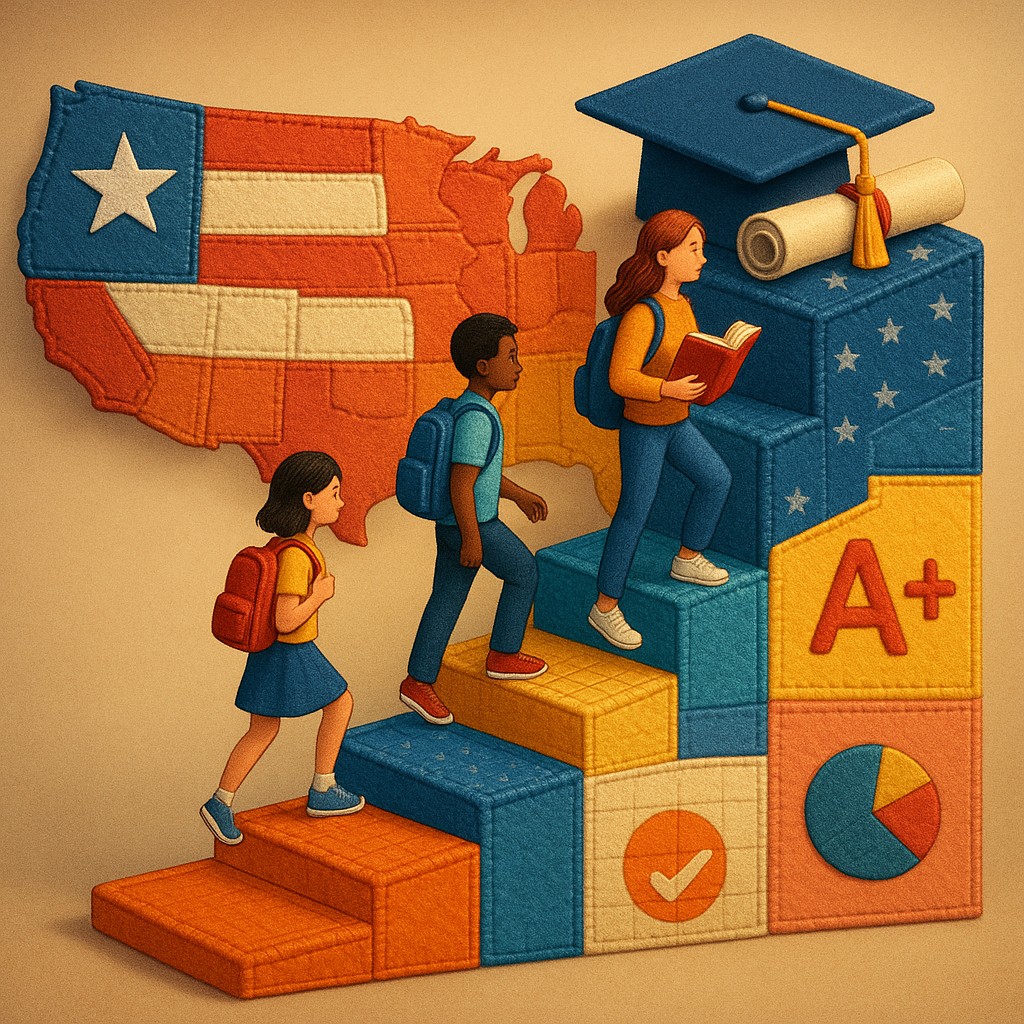
When you picture an American school, you probably think of yellow school buses, metal lockers, and Friday night football under the lights. Sure, those images are real - but behind them lies an education system far more varied and loosely stitched together than most people realize. Unlike countries where the national government controls education from the top down, the U.S. runs it like a patchwork quilt. Each state - and often each local district - gets to shape its own curriculum. That means a kid in rural Montana could have a totally different school day than one in downtown Chicago.
Still, there’s a common path nearly every student follows: starting with the first day of kindergarten and ending with the toss of a graduation cap. To truly get it, you need to look past the pop culture clichés and focus on how grades work, how students pick their classes, and why applying to college feels less like filling out forms and more like running a marathon sprint. Whether you’re moving to the U.S., thinking of studying here, or just wondering why teens stress so much over their GPA, let’s take a closer look at how this vast academic machine really ticks.
The Early Years and the K-12 Foundation
Most American kids start formal schooling at age five with kindergarten - that’s the “K” in “K-12,” the term for the full stretch from kindergarten through 12th grade. Before that, many attend preschool or “Pre-K,” though these programs are usually private and optional. Once they turn five, children enter elementary school, typically covering grades one through five. In these early years, one teacher stays with the same group all day, teaching reading, writing, basic math, plus a little science and social studies.
Around age eleven, students make their first big leap: middle school or junior high. This is where the idea of a single classroom fades, and kids start switching rooms for each subject. It’s a tough social shift - third graders were the oldest in elementary school, but now they’re the youngest, scrambling to find their place. Academically, things get harder. Specialized teachers take over each subject, helping students build the skills they’ll need for the final stretch of school.
High school - grades nine through twelve - is where the movies get it right. Students are grouped by year: freshmen (9th), sophomores (10th), juniors (11th), and seniors (12th). The goal now is earning “credits.” To graduate, a student must pass a set number of courses in core areas: math, science, English, history, and physical education. But they can also choose “electives” - classes based on personal interest, like photography, woodworking, computer coding, or choir. This mix of required courses and personal choice helps teens explore their passions before picking a career path.
Decoding the Grades and the Legendary GPA
In the U.S., student performance is measured with letter grades - A through F - and those letters are turned into a number called the Grade Point Average, or GPA. An A is top tier, usually meaning 90% or higher; an F means you didn’t pass. Oddly, most schools skip the letter E, jumping straight from D to F. The GPA isn’t just a number - it becomes a quick snapshot of a student’s academic worth, especially when applying to college.
The standard GPA uses a 4.0 scale: A = 4, B = 3, C = 2, D = 1, F = 0. So straight A’s give you a 4.0. But many schools also use weighted GPAs. If a student takes harder classes - like Advanced Placement (AP) or honors courses - an A might count as 5 points instead of 4. That’s how some students end up with GPAs over 4.0, like 4.2 or 4.5. They’ve beaten the usual scale by excelling in college-level work while still in high school.
The GPA isn’t just for show. It opens (or closes) doors. It determines who can play sports, join honor societies, and, most importantly, get into top colleges. Alongside GPA, students usually take standardized tests like the SAT or ACT. These long exams test math, reading, and writing. While more universities are dropping the test requirement, many still use them as a way to compare a student from a small town with one from a big city.
| Grade |
Percentage Equivalent |
Standard GPA Points |
Description |
| A |
90 - 100% |
4.0 |
Excellent |
| B |
80 - 89% |
3.0 |
Good / Above Average |
| C |
70 - 79% |
2.0 |
Average / Satisfactory |
| D |
60 - 69% |
1.0 |
Below Average / Passing |
| F |
Below 60% |
0.0 |
Failure / No Credit |
The Great American University Adventure
After high school graduation, paths split. The classic route is a four-year university. These schools award bachelor’s degrees and promise the full “college experience”: dorm life, clubs, and football stadiums that feel like small cities. U.S. universities are either public or private. Public ones are state-funded and cheaper for in-state students. Private schools cost more, but often have large endowments that let them offer strong financial aid.
Many students, though, start at a community college - two-year schools where they can earn an associate’s degree or finish general courses at a lower cost. After two years, they “transfer” to a four-year college to finish their bachelor’s. This “2+2” path is a smart way to save money and still graduate from a well-known university. Beyond undergrad, there’s graduate school - where students aim for master’s degrees, law (JD), medical (MD), or doctoral (PhD) degrees.
One standout feature of American higher education is the liberal arts model. Unlike in many countries, where students pick a career path at 18, Americans often spend their first two years exploring different subjects. You don’t apply to study law or engineering - you apply to the school itself. Many start as “undeclared” majors, sampling philosophy, biology, and literature before choosing a focus by the end of sophomore year. This approach aims to build broad thinkers who can connect ideas across fields.
Financing the Dream and the Reality of Tuition
You can’t talk about American education without talking money. Public K-12 schools are free - funded by local taxes - but college is another story. Tuition, housing, and books have soared over the past few decades, so most students rely on a mix of scholarships, grants, and loans. Scholarships are free cash awarded for smarts, talent, or sports. Grants are usually based on family income and don’t need to be repaid.
Loans, though, are the most common tool. Students borrow from the government or banks and pay it back - with interest - after graduation. That’s why student debt is a major national issue. Still, most believe a college degree pays off in the long run. To help manage costs, students fill out the FAFSA (Free Application for Federal Student Aid). It checks a family’s income and decides how much aid the student can get.
Despite the high price, American higher education stays in high demand. A big reason? World-class research and vast resources. From cutting-edge labs to huge libraries and career centers, U.S. universities don’t just teach trades - they build full social and professional ecosystems. Success here often depends as much on connections and internships as on what happens in class.
The Social Fabric and Extracurricular Life
In the U.S., school isn’t just about studying - it’s where student life happens. This is especially true in high school and college, where extracurriculars matter just as much as grades. A student with a perfect 4.0 GPA might lose out to someone with a 3.7 who captains the soccer team, plays violin, and volunteers at an animal shelter. The “well-rounded student” is a golden ideal here.
Sports are huge. High school football or basketball games often draw the whole town, and for some, an athletic scholarship is the only way to afford college. Beyond sports, there are clubs for everything: debate, robotics, drama, chess, student government. These activities teach leadership, teamwork, and how to juggle a busy schedule. It’s a high-pressure world where students hustle to build their resumes - but it also builds school spirit and a strong sense of belonging.
This social side shapes the schools themselves. The “campus” is key - whether it’s a high school with open courtyards and gyms, or a university that feels like a small city. Living in dorms during freshman year is a rite of passage, where students meet peers from across the country and the world. That “melting pot” effect is one of the system’s greatest strengths, pushing young people to step outside their comfort zones and learn from others before they enter the working world.
Adapting to the Rhythm of the Academic Year
The U.S. school year usually starts in late August or early September and ends in late May or early June. This schedule comes from the country’s farming roots, when kids were needed to help with summer harvests. Even though most families aren’t farming anymore, the long summer break lives on. There are also shorter breaks - Thanksgiving in November and a two-week winter holiday in December.
School days start early - often at 7:30 or 8:00 a.m. The day is split into “periods” or “blocks,” with short breaks in between for students to grab books from their lockers. Lunch happens in a big cafeteria, usually the social heart of the day. In college, that tight schedule disappears. A student might have one class at 10 a.m. and another at 4 p.m., with hours to manage on their own. That jump from the structured K-12 routine to full college freedom is often the biggest challenge for young people.
In the end, the American school system isn’t just about knowledge - it’s about independence. By letting students pick their classes, join clubs, and track their own GPA, the system tries to ease the shift from childhood to adult life. It can be stressful and expensive, sure. But it’s also full of chances to start over, change direction, or chase a new dream. In an American school, your path isn’t fixed. With enough credits, a solid GPA, and drive, you can always pivot and try something new.
As you step into American education, remember: this system runs on possibility. Whether it’s a second grader learning to code or a 40-year-old going back to college, the doors stay open. The GPA grind, the Friday night lights, the wide range of classes - all of it serves one goal: giving you the tools to shape your own future. It’s a loud, busy, colorful world. But once you learn the ropes, it becomes a place where you can find your voice - and your place.