Imagine a world where your car insurance pays out the very second a hailstone cracks your windshield. Or picture a farmer in a drought-stricken region receiving financial aid the moment a satellite confirms three weeks without rain. There is no paperwork, no endless phone calls with adjusters, and no waiting for a human clerk to "verify" the obvious. This is the promise of the smart contract: a piece of self-executing code that lives on a blockchain. However, there is a fundamental catch that sounds like a riddle. Blockchains are incredibly secure because they are completely isolated from the outside world. They are locked in a digital vault, unable to check the weather, verify the price of gold, or see if a plane actually landed on time.
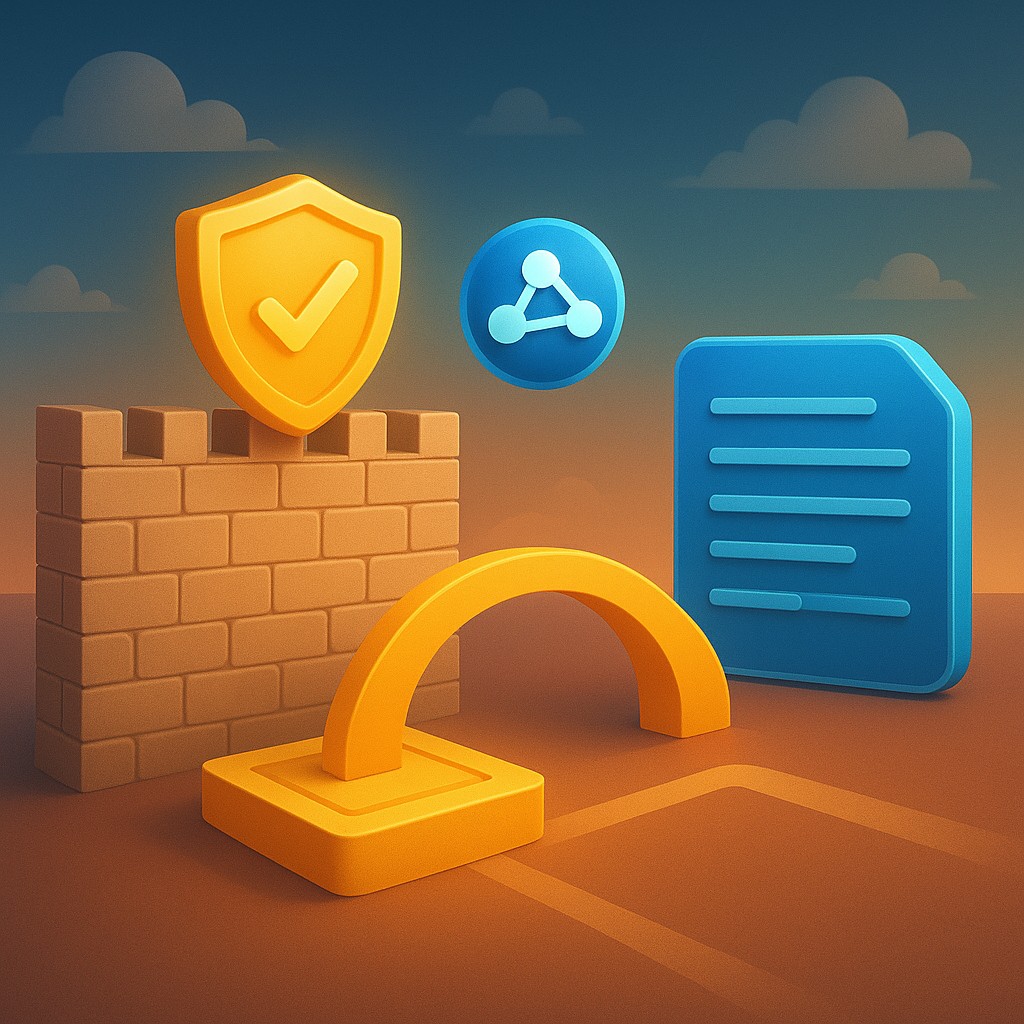
This isolation is known as the "Oracle Problem." If a blockchain could simply "Google it," it would compromise its own security. Different computers (nodes) across the globe might find different search results at different times, leading to a total breakdown in agreement across the network. To bridge this gap without breaking the system, we rely on Oracle Networks. These are the digital diplomats and data translators that act as the nervous system for our growing decentralized economy. By understanding how they work, we can glimpse a future where legal and financial agreements move at the speed of light, governed by mathematics and objective reality rather than institutional whim or bureaucratic delay.
The Great Wall of the Digital Ledger
To understand why we need oracles, we first have to appreciate the "island" nature of a blockchain. At its core, a blockchain is a shared ledger where every participant must agree on the state of things. If you send five digital tokens to a friend, every computer in the network must reach the exact same conclusion about your new balance. They achieve this by being "deterministic." This is a technical way of saying that if you give the same input to two different computers, they will always produce the exact same output. This is why blockchains are so trustworthy; they do not rely on opinions, only on repeatable logic.
However, the real world is the polar opposite. If you ask ten different people what the temperature is in New York right now, you might get ten different answers depending on which app they use or how close they are to a breezy window. If a smart contract tried to fetch that data directly, Node A might see 72 degrees while Node B, processing the transaction a microsecond later, might see 73 degrees. Suddenly, the computers disagree, the network splits, and the whole system grinds to a halt. To keep the peace, blockchains are intentionally built without internet access. They are blind to anything that does not happen natively on their own ledger, creating a massive barrier for any practical use involving real-world events.
Building a Bridge with Decentralized Oracles
Enter the oracle. In ancient Greece, an oracle was a priestess who acted as a medium through whom the gods spoke to humanity. In the world of coding, an oracle is a middleman service that fetches data from the outside world and broadcasts it to the blockchain in a format the contract can understand. But a single oracle is a dangerous thing. If you rely on one data source, you have created a "single point of failure." If that one oracle is hacked or goes offline, your multi-million dollar "smart" agreement becomes very stupid, very quickly. It would be like a judge basing a life-or-death verdict on a single, unverified tweet.
The solution is a Decentralized Oracle Network (DON). Instead of one source, a DON uses a committee of independent computers. When a smart contract needs to know the price of Ethereum in US Dollars, it sends a request to the network. Dozens of different nodes check various reputable exchanges and bring back their answers. The network then bundles these answers, often using a "medianizer" (a tool that finds the middle value) to filter out errors or fake data. If ten nodes say the price is $2,500 and one node insists it is $1,000,000, the system ignores the outlier. This process ensures that the data reaching the smart contract is not just accurate, but also resistant to tampering by any single corrupt actor.
Trusting the Data Over the Institution
The most radical shift triggered by oracle networks is the move from "institutional trust" to "cryptographic truth." In our current world, when you buy flight insurance, you are trusting the insurance company to be honest about whether your flight was delayed. You are also trusting their internal database, their claims department, and their bank to eventually send you the money. There is a power imbalance here; the company has the data, the money, and the lawyers, while you have a printed PDF and a hope that they will play fair.
With a smart contract backed by an oracle, that power dynamic evaporates. The contract is fueled by "if-then" logic: If the oracle network confirms flight AA123 is more than two hours late, then immediately send $200 from the digital vault to the passenger. The insurance company cannot stop the payment because they no longer control the trigger. The data itself becomes the judge and jury. This eliminates the "human in the loop" who might make a mistake or intentionally stall a payout to protect the company's profits. It creates a level playing field where the rules are written in code and the facts are delivered by a decentralized jury of data-fetchers.
Comparing Traditional Agreements and Oracle-Driven Contracts
To see how profound this change is, we can compare how common agreements function under the old system versus the new decentralized framework.
| Feature |
Traditional Legal Agreement |
Oracle-Driven Smart Contract |
| Enforcement |
Relies on courts, police, and lawyers |
Relies on self-executing code |
| Verification |
Manual audits and paper receipts |
Automated data via oracle consensus |
| Speed |
Weeks or months to settle |
Near-instant once conditions are met |
| Transparency |
Private records or hidden company data |
Publicly verifiable logic on the chain |
| Trust Model |
Trusting the reputation of the institution |
Trusting the mathematics of the network |
| Cost |
High (legal fees and admin work) |
Low (network transaction fees) |
The "Garbage In, Garbage Out" Constraint
Despite their brilliance, oracle networks are not magic. They are subject to the timeless law of computing: "Garbage In, Garbage Out." If a smart contract is designed to pay out based on a local election, but the only digital source for that data is a poorly secured website, the oracle will faithfully deliver that incorrect data. The contract, being a loyal soldier of logic, will execute the payment perfectly for the wrong person. This is why the quality of the data source is just as important as the security of the data carrier.
To combat this, sophisticated oracle networks use financial rewards and penalties. Nodes are often required to "stake" their own digital assets as collateral. If a node provides data that is wildly different from its peers, it is flagged as unreliable, and its stake is "slashed" or confiscated. This creates a powerful economic motivation for honesty. Additionally, networks are increasingly using multi-source validation, where nodes must pull from different APIs (the software windows that allow programs to talk to each other) to ensure that even if one website is hacked, the overall consensus remains clean. We are moving toward a world where data is not just checked, but triple-checked by a global, neutral machine.
Expanding the Reach of Decentralized Logic
The potential for this technology extends far beyond simple insurance or trading. Consider the global supply chain, a logistical nightmare where goods change hands across dozens of borders and companies. Currently, payments are often delayed because someone at a warehouse in Rotterdam has not manually scanned a barcode or signed a form. With IoT (Internet of Things) sensors acting as oracles, a cargo container can "tell" the blockchain when it has reached a specific location or if its internal temperature has spiked, spoiling the medicine inside. The moment the sensor verifies the arrival, the payment is triggered, removing days or weeks of friction from global trade.
We are also seeing the rise of "Real-World Assets" being brought onto the blockchain. This means things like real estate or carbon credits can be managed via smart contracts. An oracle can monitor a public deeds office or use satellite imagery of a forest to update the value of these assets. This effectively turns the physical world into a programmable environment. We are no longer just sending "internet money" back and forth; we are building a "World Computer" that can sense and react to physical reality. This allows for a level of transparency and efficiency that was previously unthinkable.
The Future of Digital Autonomy
As we embrace this technology, we must also handle the responsibility it brings. Smart contracts are permanent, meaning they cannot be easily "undone" if something goes wrong. If an oracle feed is manipulated and a contract executes, there is no "undo" button in the world of cryptography. This requires a new kind of literacy: one that involves understanding the logic of code and the reliability of our data sources. We are stepping out of an era where we trust "people" and into one where we trust "proven facts," a transition that is as exciting as it is daunting.
Ultimately, oracle networks are the final piece of the puzzle for a truly decentralized world. They prove that we can build systems that are both incredibly secure and deeply connected to our daily lives. By turning real-world events into mathematical certainty, we are creating a foundation for a society where agreements are honored automatically, where the small player has the same protections as the giant corporation, and where the truth is not a matter of opinion, but a matter of consensus. The bridge between the digital and the physical has been built; now, it is up to us to decide what kind of world we want to build on the other side.