Why one tiny skill will change your wilderness story
You can argue about navigation, first aid, or finding water, and you would be right to care about each. Still, if you had to pick one thing that most reliably turns a bad day in the woods into a manageable one, it is the ability to make and manage fire. Fire is the Swiss Army knife of survival - it makes water safe, warms the body, keeps animals away, cooks food, and sends a signal that rescuers can see from afar. In short, fire multiplies the value of every other survival action you take.
Imagine you are cold, tired, and three hours from the trailhead as cloud cover thickens and temperature drops. A fire is more than heat - it buys time, restores morale, and gives you options. In many survival scenarios people are rescued because they were visible and warm enough to last until help arrived. Learning firecraft is not about romanticizing campfire songs, it is about increasing the odds that you will be fine if things go sideways. And importantly, it is a skill that scales from very simple - a lighter and dry tinder - to very advanced - friction methods and wet-weather improvisation.
This Learning Nib will teach you the essential theory, practical techniques, and safe habits you need to become reliably competent at making fire in the wild. You will get clear steps to practice, explanations of common mistakes, and a comparison of methods so you can choose the best tool for your situation. By the time you finish, you should feel confident to start, maintain, and use fire purposefully, plus know when not to make one.
Along the way I will sprinkle short exercises and reflection questions so you practice thinking like a survivor, not just following a checklist. Firecraft is partly manual skill, and partly decision-making. We will cover both.
What fire truly gives you - practical uses you may not have thought about
The obvious use of fire is warmth, but its benefits go far deeper. Boiling or warming water reduces the risk of waterborne pathogens, making water safer to drink. Heat and smoke deter many animals and biting insects that can spread disease. A visible plume of smoke or a steady blaze at night dramatically increases the odds of being noticed by aircraft or search teams. Fire also dries wet clothing and gear, keeping body temperature stable and preventing hypothermia.
Beyond the physical, fire is a psychological amplifier. People who have a fire tend to make better decisions; they can rest, eat, and plan without the tunnel vision that fear produces. First aid becomes easier when you can sterilize tools or keep a patient warm. Cooking makes more calories usable and reduces stomach issues that might otherwise sap energy. When you understand the wide-ranging consequences of a single, well-managed fire, it becomes clear why it is one of the top survival priorities.
Finally, fire is adaptable. You can create quick signaling fires, slow smoldering fires to produce a lot of smoke, or small, efficient fires for boiling. The skill lies in choosing the right kind of fire for the situation and having the techniques to build it under real-world constraints - wind, rain, darkness, and limited materials.
The simple science that makes or breaks your fire: the fire triangle
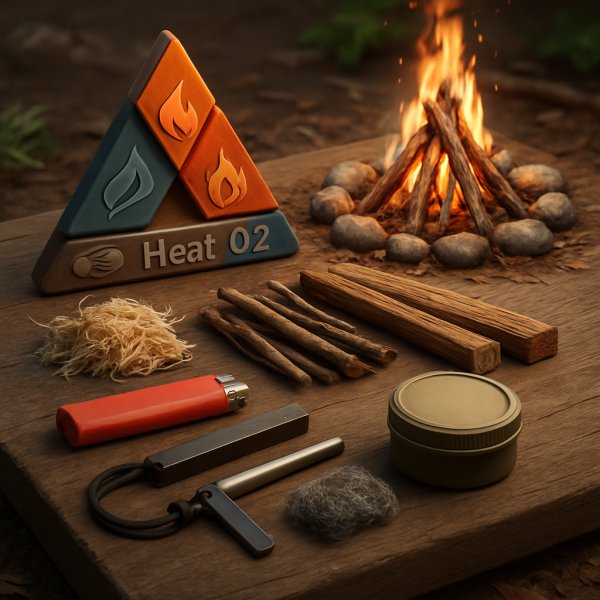
At its most basic, a fire needs three things - fuel, heat, and oxygen. Remove any one of these and the flame goes out. Fuel is anything that can burn - think tinder, kindling, and larger wood. Heat is the ignition source, which can be a match, a spark from a ferro rod, or friction. Oxygen is the air that feeds the flame, which is why smothering a campfire with wet logs often extinguishes it.
Understanding the fire triangle guides your decisions. If your matches get wet you can still get a spark - but you will need more fine, dry tinder to catch it. If you have abundant fuel but no airflow, the fire will smolder and produce smoke but little heat. If wind is strong, build a shelter or windbreak to protect the flame. When you think in terms of fuel, heat, and oxygen, techniques that seem magical become practical solutions.
This framework also helps with safety. Limiting oxygen by creating a controlled ring, clearing flammable material nearby, and keeping a water source or dirt close are deliberate ways to manage risk while keeping the fire effective.
Gather like a pro - tinder, kindling, and fuel, and how to recognize them
Tinder is the featherweight that lights from a tiny spark. Good tinder is dry, fibrous, and ignites easily; examples include dry grass, inner bark, dry leaves, lint, birch bark, cotton from a shirt, or char cloth. Kindling is the next size up - small twigs and thin sticks that catch from tinder and build the flame. Fuel wood is the larger logs that keep the fire burning for hours.
When collecting, think in layers. Start with tinder-collecting before you need it, set aside a pile of thin sticks no thicker than your thumb for kindling, and place larger logs within reach. In wet environments look for dry material under rocks, inside dead standing trees, or under the protective bark of fallen logs. Dead and standing is better than wet ground level wood, because it dries faster and is less waterlogged.
One practical habit to adopt is a "ready stash" - a small packet of tinder stored in a waterproof container in your pack. It could be cotton packaged with petroleum jelly, commercial tinder tabs, or simply dryer lint sealed in a zip bag. A ready stash often turns a bad day into a manageable one.
How to make fire: methods from easiest to most advanced, and when to use each
Some ignition methods are nearly foolproof, while others require practice and patience. Here is a practical ranking, starting with low-skill, high-reliability options and moving toward traditional friction techniques.
- Matches and lighters: Best for most hikers because they are easy, fast, and reliable when kept dry. Windproof lighters and stormproof matches extend usability.
- Ferrocerium rod (ferro rod): Extremely durable, performs well when wet, and produces hot sparks that can ignite many tinders. Requires a striker or knife spine.
- Flint and steel: Traditional, reliable, requires a small amount of practice. Works well with char cloth or fine tinder.
- Battery and steel wool: Simple chemistry - a battery will ignite fine steel wool. Great urban-to-wilderness trick but depends on battery availability.
- Magnifying glass or lens: Uses focused sunlight, reliable in sun, useless at night or in heavy cloud.
- Friction methods - bow drill, hand drill, fire plough: Low-tech and can work with local materials, but require skill, proper wood selection, and practice - useful as a last resort.
To help choose, here is a compact comparison table that shows the trade-offs at a glance.
| Method |
Ease for beginners |
Reliability in wet weather |
Gear needed |
Learning curve |
| Matches / Lighter |
Very easy |
Low unless waterproof |
Matches or lighter, waterproof container improves |
Minimal |
| Ferro rod |
Moderately easy |
High |
Ferrocerium rod, striker/knife |
Low to moderate |
| Flint and steel |
Moderate |
Moderate |
Flint, steel striker, char cloth |
Moderate |
| Battery + steel wool |
Easy |
Low to moderate |
Battery, steel wool |
Low |
| Magnifying lens |
Easy in sun |
Very low |
Lens, sunlight |
Minimal |
| Bow drill / hand drill |
Hard |
Low unless very dry wood |
Wood pieces, cord for bow drill |
High |
Use the table to match your environment and gear. If you hike with a partner, encourage both people to carry at least one ignition option and a small tinder stash.
Building fire structures that work, not just look pretty
Different fire lays serve different purposes. The right structure gives good airflow, concentrates heat, or produces smoke for signaling. Here are three reliable options and when to use them.
Teepee - The classic. Arrange small kindling in a cone over the tinder, then add larger sticks leaning on the cone. The teepee provides excellent airflow for initial ignition and a strong upward flame, making it ideal for quick warmth or boiling water. It is not as stable for long, slow burns, so feed gradually.
Lean-to - Build a windbreak of larger logs or a log as a backstop, then place tinder and kindling under a slanted support that faces the wind. This orientation allows the wind to blow hot air through the fire, useful in windy conditions. It is also easier to keep a fire going when you want a sheltered flame near a rock face or log.
Log cabin - Stack larger pieces in a square around the tinder, alternating directions. This creates a stable base and good long-term heat as the larger logs gradually catch. The log cabin burns slower and produces strong coals, great for cooking or maintaining warmth overnight.
When building, always arrange materials so you can add fuel without smothering the fire. Leave space for oxygen, and avoid piling wet wood directly against the flames. The goal is efficient combustion, not sheer size.
Tricks for wet weather and wind - keeping firecraft practical
Wet conditions are where many people give up and rely on luck. You can do better with a few techniques. First, find dry material under overhangs, inside hollow logs, or beneath bark. Birch bark and the inner layers of cedar or juniper often stay dry and burn even when outer bark is soaked. Make feather sticks - take a damp small log and use a knife to shave thin curls that increase surface area and catch sparks easier.
Wind can be your friend if you orient your fire correctly. Position a windbreak of logs or a pile of rocks to funnel airflow rather than blow the flame out. In rain or snow, create a tarp shelter or cook under a fallen log to protect the ignition area. Another wet-weather best practice is to start a small intensely hot fire to create coals, then use those coals to dry and ignite larger wood.
If you have matches or a lighter that got wet, dry them in a pocket close to your body before using. Also stash a small emergency fuel - fatwood, petroleum jelly-soaked cotton, or commercial tinder tabs - which ignite reliably even in damp conditions.
Safety, Leave No Trace, and knowing when not to build a fire
Fire safety is non-negotiable. A careless fire causes forest fires, injury, and legal trouble. Before lighting a flame, assess risk - is the area under a fire ban, very dry, or near low-hanging branches? Clear a 2-meter area of flammable debris, dig a shallow pit if appropriate, and surround it with rocks where available to prevent spread. Keep water, dirt, or a shovel nearby to extinguish the blaze. Never leave a fire unattended.
Leave No Trace principles also matter. Use existing fire rings when available, burn wood to ash, and minimize ground scarring. In many fragile environments - alpine tundra, deserts, or heavily used campsites - it is better to use a stove for cooking and avoid open fires entirely. Pack out what you packed in, and when you put a fire out, drown it with water, stir, and feel the embers until cool.
Finally, consider alternatives when fire would do more harm than good. If you are in bear country, an unattended cooking fire can attract wildlife. If you are in a region with a strict fire ban, a signaling mirror, whistle, or bright clothing may be safer options for attracting attention.
Myths that waste time and the clearer truths you should adopt
Myth 1 - You can always start a fire with two sticks and good will. The truth is friction methods work, but they require correctly matched wood types, dryness, and a lot of practice. Relying on friction as your only plan is risky unless you have trained extensively.
Myth 2 - Boiling renders all water safe. While boiling kills pathogens, it does not remove chemical pollutants or heavy metals. If water tastes chemically off, find another source or use filtration in addition to boiling.
Myth 3 - Bigger fires are better. Large flames consume fuel fast and are harder to control. Build the smallest fire that does the job - a cozy one for warmth and a concentrated ember bed for cooking.
Myth 4 - If you are cold, alcohol will warm you up. Alcohol increases blood flow to the skin, making you feel warm, but it speeds heat loss from your core and increases hypothermia risk. Avoid using alcohol as a warming strategy.
Understanding the real trade-offs replaces superstition with strategy. When you practice, focus on techniques that give the most reliable results under stress.
A simple, progressive practice plan to make firecraft second nature
Learning firecraft is like learning a musical instrument - you start slow, focus on fundamentals, then add variations. Here is a week-by-week practice plan you can use.
Week 1 - Basics and kit: Assemble a small fire kit - lighter or ferro rod, small knife, tinder stash. Practice building a teepee and lighting it in calm, dry conditions until you can do it three times without guidance.
Week 2 - Wind and fuel: Practice in breezy conditions, learn to build a lean-to fire and windbreaks. Gather and prepare kindling so you can set a fire in 10 minutes or less.
Week 3 - Wet-weather tricks: Practice using inner bark, feather sticks, and a ferro rod to start a fire with damp materials. Try drying small pieces to get coals going.
Week 4 - Alternative ignitions and safety: Practice with a ferro rod, and if you have interest, try flint and steel or battery and steel wool. Practice extinguishing fires and performing a Leave No Trace cleanup.
Ongoing - Skill maintenance: Practice once a month, vary locations, and add pressure tests - practice at dawn, dusk, and under rain. Journal your attempts, note what worked or failed, and refine your kit.
Reflection questions to ask yourself after each practice session:
- What was my easiest failure point - tinder, strikes, or airflow?
- How quickly could I gather enough dry kindling in this environment?
- If my primary tool failed, which backup would I use and how would I prepare it?
- How would I signal a rescuer using this fire without creating an unsafe blaze?
These questions turn training into thoughtful improvement. Try to practice with a friend and exchange observations.
Imagine this: a night that turned because of a spark
Picture two weekend hikers taking a wrong turn as dusk fell. Temperatures dropped, rain began to sift, and the trail faded into the trees. Instead of panicking, they pulled their gear together, found a lee slope beneath a stand of pines, and one of them built a small sheltered fire using a ferro rod and birch bark. The fire warmed them while they reoriented a map, boiled water to avoid illness, and kept their spirits steady until daylight. A passing ranger who spotted the smoke radioed help; what might have become a dangerous overnight ordeal ended with hot drink and laughter.
This vignette is simple because the core elements are simple - calm decision-making, a ready ignition tool, and the ability to gather and prepare tinder under pressure. It is also typical of many survivor accounts where the presence of a fire changed the outcome. Fire does not guarantee rescue, but it creates options that substantially increase survival probability.
Parting spark - the attitude and actions that keep you safe and confident
Mastering firecraft is not about becoming a pyromaniac, it is about competence and respect. The best fire skills blend mindset - calm assessment, risk awareness, and creativity - with practice. Start small, practice deliberately, and maintain a simple kit that supports your skill. When you test yourself, make safety and Leave No Trace a priority, so your confidence is grounded in responsibility.
If you take one thing from this guide, let it be this: good firecraft multiplies everything else you do in the wilderness. It buys time, increases visibility, stabilizes the body and mind, and makes remote survival far more likely. Spend a few purposeful weekends practicing the basics, and you will carry a quiet confidence into every trip. That confidence, more than matches or tinder, often makes the difference when plans change.
Go outside, gather a safe stash of tinder, and try to build a small teepee fire that you light, enjoy, and completely extinguish. Practice until it becomes routine, and your future self will thank you when a small spark makes a big difference.