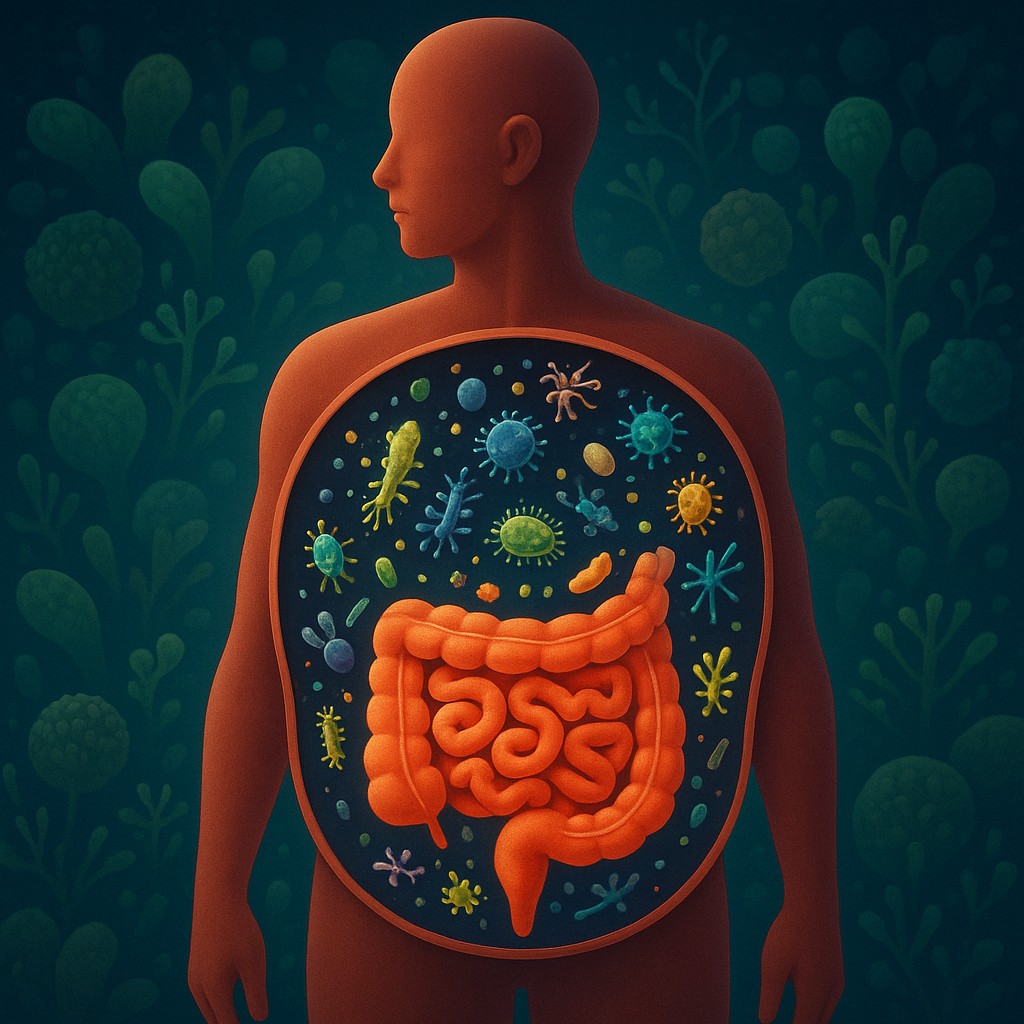
Imagine for a moment that you aren't just one person, but a walking, talking planet. Deep within the complex landscape of your body, tucked away in the folds of your digestive tract, lives a massive civilization of trillions of microscopic residents. This is your gut microbiome, a dense jungle of bacteria, fungi, viruses, and tiny organisms called archaea that weighs about as much as your brain.
For decades, we saw these microbes as either passive hitchhikers or dangerous invaders. However, groundbreaking science has recently flipped the script. It turns out these tiny tenants are actually the master conductors of our physical and mental health. When they are happy, you thrive; when they are stressed, the very foundation of your health begins to crumble.
The connection between your gut and the rest of your body is so deep that many researchers now call the microbiome a "forgotten organ." It does more than just digest your lunch. It talks directly to your brain, trains your immune system to tell friends from enemies, and produces essential vitamins that your own human DNA cannot make. In fact, many chronic conditions once blamed on "bad luck" or genetics-from autoimmune disorders and allergies to depression and heart disease-are now being linked to an imbalance in this internal ecosystem. To find the root cause of modern illness, we must look inward at how we are caring for the microscopic world within us.
The Invisible Architects of Modern Immunity
The human immune system is not a rigid shield, but a highly trained army, and over 70 percent of its troops are stationed directly in the gut. This is no coincidence. The gut is the main place where the outside world (in the form of food and environmental particles) meets your internal world. Your microbiome acts as the drill sergeant for these immune cells, teaching them how to spot harmful germs while preventing them from overreacting to harmless things like pollen or your own body’s tissues. When the microbiome loses its variety, these communication lines get tangled. This leads to the chronic, low-level inflammation that fuels most modern diseases.
Scientific evidence, such as a major 2021 study from Stanford School of Medicine, shows that a diet rich in fermented foods can significantly increase microbial diversity and lower signs of inflammation. This is vital because long-term inflammation is a "silent killer" linked to everything from type 2 diabetes to Alzheimer’s disease. When your gut lining becomes leaky, metabolic toxins can seep into your bloodstream. Your immune system senses these intruders and stays on permanent high alert. This constant state of war exhausts your body, eventually leading to tissue damage and chronic illness. By focusing on gut health, we aren't just fixing digestion; we are cooling the fires of inflammation at the source.
Planting a Diverse Inner Garden
If you want a resilient body, you need a diverse microbiome. Think of it like a forest: a single type of tree is fragile and easily wiped out by one pest, but a lush, diverse rainforest can withstand almost anything. The most powerful way to build this variety is through what you put on your fork. While we often focus on "macros" like protein and carbs, our microbes care about variety. The American Gut Project, one of the largest studies of its kind, found that people who ate more than 30 different types of plants per week had much healthier microbiomes than those who ate fewer than ten.
This variety provides different types of fiber and antioxidants, which act as specific fuel for different bacterial species. While one type of bacteria might love the fiber in a leek, another might thrive on the pigments in a blueberry. To make this work in real life, look beyond just "eating your veggies" and focus on the "Big Six" of plant diversity: vegetables, fruits, whole grains, beans, nuts, and seeds. Even small additions, like sprinkling hemp seeds on your yogurt or adding a handful of greens to your sandwich, help you reach that weekly goal of thirty items.
| Habits That Hurt |
Healing Alternatives |
The Scientific Reason |
| Ultra-processed additives |
Whole, single-ingredient foods |
Chemical thickeners can thin the gut's protective mucus. |
| Constant rushing and stress |
Mindful eating and deep breathing |
Stress pulls blood away from the gut, stopping digestion. |
| Over-sanitized living |
Spending time in nature |
Exposure to soil microbes trains the immune system. |
| Constant snacking |
Letting the gut rest (12 to 14 hour fasts) |
Activates the "cleansing wave" that sweeps the gut clean. |
| Artificial sweeteners |
Small amounts of honey or fruit |
Certain sweeteners can upset the microbial balance. |
The Art of Living Foods
While plant fiber acts as the "fertilizer" (prebiotics), fermented foods provide the actual "seeds" (probiotics). For thousands of years, every culture on earth has eaten fermented foods, from Korean kimchi and German sauerkraut to Indian lassi and Ethiopian injera. These foods are full of live cultures that can survive the trip through your stomach acid to settle in your colon. Once there, they produce fatty acids like butyrate, which are the main fuel for the cells lining your gut.
Introducing these foods should be a slow and steady process. If you go from zero to three bowls of sauerkraut overnight, your gut might protest with bloating. Start with a single tablespoon of fermented vegetables or a small glass of kefir daily. The goal is to be consistent rather than eating a large amount at once. Interestingly, studies suggest that fermented foods may be even better at increasing microbial diversity than fiber alone. This is because the fermentation process creates unique compounds that soothe the immune system. It is a biological partnership that turns simple cabbage or milk into powerful medicine.
Protecting Your Inner Border
It is not enough to just add the good stuff; we must also stop the accidental damage caused by modern life. One of the biggest disruptors is ultra-processed food. These products often contain chemicals called emulsifiers that act like detergents, quite literally scrubbing away the protective mucus layer that keeps your gut bacteria from touching your intestinal wall. When that wall is exposed, it triggers immediate inflammation. Similarly, while antibiotics save lives, they can act like "nuclear bombs" for the microbiome, sometimes taking months or even years for certain species to recover.
Beyond what we eat, how we live dictates the health of our microbes. We now know that exercise increases the amount of helpful bacteria that produce butyrate, even if you don't change your diet. A 2024 analysis confirmed that regular cardio and strength training improve the variety of your gut. Sleep is another non-negotiable factor. Your microbes have their own internal clocks; when you stay up late or have irregular sleep patterns, your gut bacteria become "jet-lagged," which can lead to weight gain and metabolic issues. A strong gut requires a lifestyle that respects the biological clock of these tiny residents.
The Power of the Pause
Perhaps the most overlooked part of gut health is the nervous system. The connection between the gut and the brain is a two-way street, heavily influenced by the vagus nerve, which acts like a biological super-highway. When you eat while stressed, scrolling through bad news, or driving in traffic, your body stays in "fight or flight" mode. In this state, your body prioritizes your muscles and heart rate over digestion. The production of stomach acid drops, meaning food enters the small intestine only partially broken down. This leads to rotting and the overgrowth of harmful bacteria that feed on undigested waste.
To fix this, we must return to a "rest and digest" state. Taking three long, slow breaths before your first bite tells your brain it is safe to eat. Chewing your food until it is a paste is not just a polite habit; it is a mechanical necessity that makes the job much easier for your microbiome. Furthermore, giving your gut a nightly rest with a 12 to 14 hour fast allows the "housekeeping wave" to do its job. This cleaning process moves through the intestines only when they are empty, clearing out debris and preventing bacteria from moving into the small intestine where they don't belong.
Taking care of your gut is one of the best things you can do for yourself. This journey doesn't require expensive gadgets or "miracle" cleanses, but rather a return to the basics: more plants, more fermented foods, more movement, and more stillness. By nurturing your microbiome, you aren't just preventing disease; you are upgrading your entire life. As your gut heals, you will find that your mind clears, your joints stop aching, and your energy levels even out. You are the host of a magnificent, microscopic world, and if you treat your microbial citizens with respect, they will repay you with a lifetime of health and resilience.