Imagine for a moment the journey of a single designer t-shirt before it ever lands on a store shelf. In a traditional fashion house, that shirt might be sketched in London, prototyped at a factory in Vietnam, and then shipped back to the United Kingdom for a "fit check." If the neck is too loose or the cotton is too stiff, the process starts all over again. This cycle of "sample, ship, check, and discard" can happen half a dozen times for one garment. This results in mountains of wasted fabric and a shipping-related carbon footprint that could put a jet engine to shame. The fashion industry has long been a major source of waste, but a shift in the invisible world of software promises to turn this physical mess into a digital masterpiece.
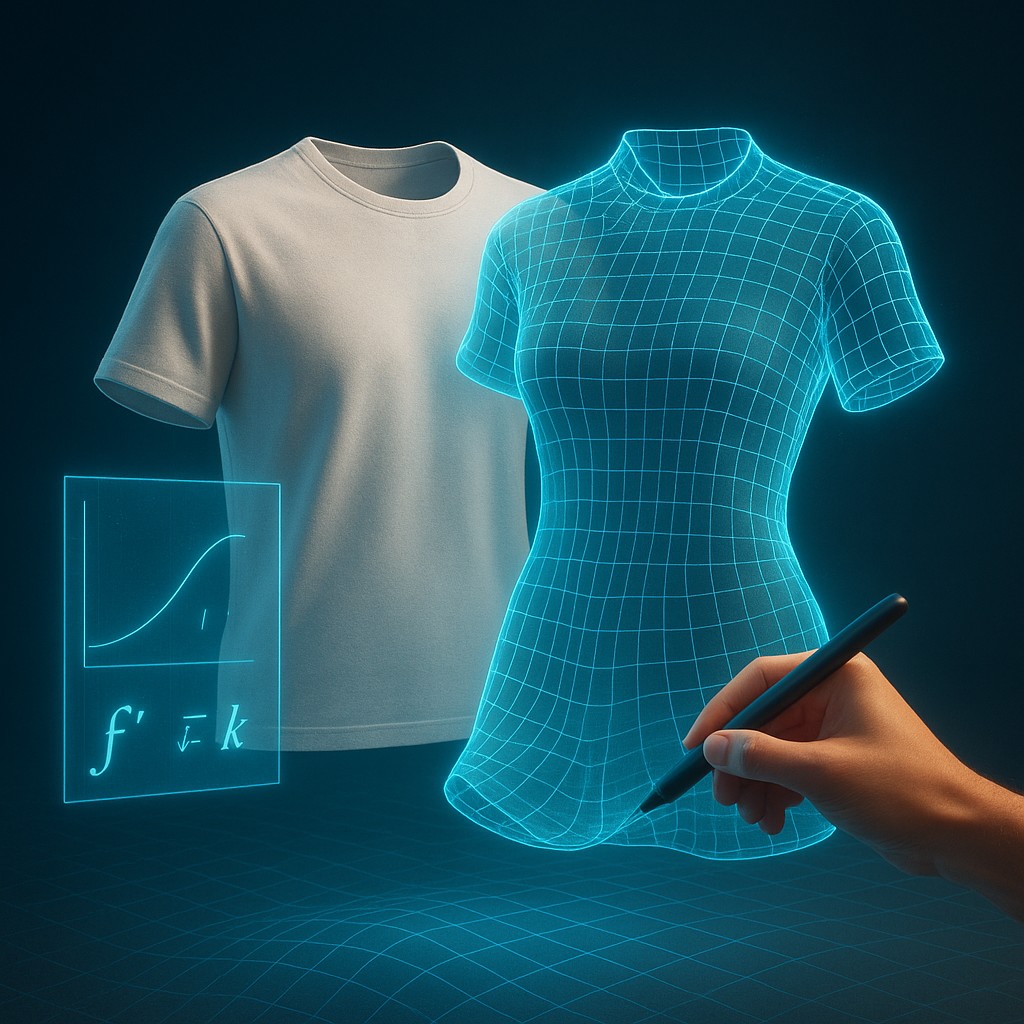
This transformation is driven by a concept known as the "digital twin." This is a highly detailed virtual replica of a physical object that behaves exactly like its real-world counterpart. In digital fashion, a digital twin is more than just a 3-D picture of a dress. It is a mathematical model that understands gravity, tension, and the structural differences between silk and denim. By using physics-based software engines, designers no longer have to guess how a garment will look; instead, they simulate exactly how it will perform. From the way a skirt ripples during a runway walk to how a heavy winter coat pulls at the shoulders, the digital twin allows the industry to fail fast in a virtual world so it can succeed sustainably in the real one.
The Mathematics of a Perfect Swish
To understand how a computer knows how a skirt should ripple, we have to look "under the hood" at physics-based rendering. Traditional 3-D modeling, the kind used in older animated movies, often treats objects as hollow shells. In contrast, digital twins in fashion use complex algorithms that account for the mechanical properties of textiles. When a designer scans a piece of linen into a system, the software records more than just the color. It tracks the weight, the thickness, and the "bending stiffness." These variables go into a "solver," a piece of code that calculates how thousands of tiny virtual triangles (the building blocks of the digital garment) interact with each other and the force of gravity.
The result is a simulation where fabric has "memory" and physical limits. If you try to stretch a digital twin of a leather jacket over an oversized model, the software will show you exactly where the seams are likely to burst. It calculates friction to ensure a silk scarf doesn't simply slide through a virtual neck like a ghost, but instead catches and bunches against the skin. This level of detail allows a designer to observe the "drape," which is the way a fabric hangs or falls on the body. A high drape score means the fabric is fluid and limp, like chiffon, while a low score suggests a structured fabric like heavy canvas. By mastering these numbers, the digital twin becomes a predictive tool rather than just a decoration.
Avatars with Anatomy and Attitude
A digital garment is nothing without a body to wear it, which is where the "soft avatar" comes in. In the early days of digital design, virtual models were rigid, mannequin-like statues. Modern digital twins, however, use lifelike avatars that mimic human anatomy with startling accuracy. These avatars have skeleton systems with joints that move like ours and, more importantly, "soft tissue" properties. When a virtual model sits down, the digital skin deforms and the digital fat shifts. This allows the designer to see if a waistband will dig into the wearer’s stomach or if the trousers will bunch uncomfortably at the crotch.
This focus on the interaction between body and cloth makes digital twins a revolutionary tool for inclusive sizing. Instead of designing for a "standard" medium and hoping for the best, brands can test a single digital pattern across thousands of different body types in seconds. They can simulate how a sports bra supports various chest sizes during a run or how a suit jacket fits someone using a wheelchair. This ensures that when the physical garment is finally made, it has already been "stress-tested" for a diverse range of human shapes. This dramatically reduces the number of returns, which are another massive source of environmental waste in the age of online shopping.
The Invisible Benefits of the Virtual Loop
Switching to digital twins creates a "virtual-first" workflow that completely changes the manufacturing timeline. In a physical-first world, the designer is often disconnected from the technician who cuts the fabric. With digital twins, the pattern-making and the 3-D visualization happen at the same time. If a designer shortens a sleeve in the 3-D window, the 2-D pattern pieces update instantly. This eliminates the "lost in translation" errors that happen when a 3-D vision is converted back into 2-D shapes for sewing.
| Feature |
Traditional Physical Prototyping |
Digital Twin Simulation |
| Turnaround Time |
Weeks (due to shipping & sewing) |
Minutes to hours |
| Material Waste |
High (excess fabric & discarded samples) |
Near zero (virtual testing only) |
| Accuracy of Fit |
Limited to the physical model used |
Testable across infinite body types |
| Carbon Footprint |
Significant (global logistics) |
Minimal (server energy use) |
| Collaboration |
Sequential and isolated |
Real-time and global |
This table shows just how much friction the digital twin removes from the creative process. Beyond the environmental perks, there is a massive economic incentive. By reducing the number of physical samples from five or six down to just one (the "golden sample"), brands save millions in logistics and materials. This efficiency allows for more experimentation. Designers can try bold ideas, like mixing heavy wool with delicate lace, without worrying about the cost of a failed prototype. If it looks terrible or falls apart in the physics engine, they simply hit "undo" and try again. This fosters a culture of innovation that was previously too expensive to maintain.
Measuring the Ghost in the Machine
While the visual accuracy of a digital twin is reaching a point of incredible realism, one final frontier remains: "hand-feel." In the textile industry, experts use the word "hand" to describe how a fabric feels, such as its coolness, fuzziness, or silkiness. A digital twin can tell you that a fabric weighs 200 grams per square meter and is very stretchy, but it cannot yet let a designer "feel" the soul of the material against their fingertips. This is why physical samples haven't disappeared entirely; they have simply moved to the very end of the process as a final quality check rather than a constant requirement.
The industry is currently experimenting with haptic technology, such as gloves or styluses that vibrate or resist movement to simulate texture. However, even without the ability to "touch" the virtual fabric, the data provided by digital twins is incredibly deep. We can now measure "thermal comfort" and "moisture management" through simulation. By entering data on how well a textile breathes, the digital twin can predict how much a wearer will sweat in a specific climate. We are moving toward a world where the digital twin is more than a visual replica; it is a complete biological and environmental simulation of how humans relate to their clothes.
Navigating the Myth of Precision
A common myth is that these simulations are just "high-end video game clothes." While the fashion industry did borrow techniques from gaming and film, the goals are completely different. In a video game, the goal is "visual plausibility," meaning if a cape looks like it is fluttering, that is good enough. In digital fashion, the goal is "engineering accuracy." If the digital twin says a seam will hold under a certain amount of force, the physical garment must do the same. This distinction is vital because a pretty picture that doesn't work as a real sewing pattern is just digital art, not a functional tool.
Another misconception is that digital twins will replace human designers or tailors. In reality, these tools act as "augmented intelligence." The software handles the grunt work of calculating gravity and tension, freeing the human creator to focus on style, storytelling, and complex problem-solving. A computer can tell you if a sleeve is too tight, but it cannot tell you if that tightness captures the "punk-rock" edge or "corporate elegance" a designer wants. The digital twin is a sophisticated instrument, but it still requires a master conductor to produce a symphony.
The Future is a Recursive Loop
Looking ahead, the digital twin will likely live far beyond the design studio. Imagine buying a digital twin of a dress to wear in an augmented-reality social media post before the physical version even arrives at your door. Or consider a world where your personal avatar, a digital twin of your own body, acts as a shopping assistant. It could "try on" clothes in virtual stores to ensure a perfect fit every time. This creates a circular economy where clothes are only made when they are already sold, and they are only sold when they are guaranteed to fit. This would virtually eliminate the "unsold stock" that currently clogs the global supply chain.
The journey from a sketch to a finished garment is becoming a seamless conversation between the physical and the virtual. By embracing the physics of the digital twin, the fashion industry is finally addressing its history of waste. High-tech simulation is proving to be the key to high-fashion sustainability. We are entering a world where the clothes you wear are designed by data, tested by gravity, and born in code before they ever touch your skin. This shift makes the industry smarter and ensures that the beauty of fashion does not come at a heavy cost to our planet. The next time you see a silk skirt ripple, remember there is a world of brilliant mathematics hidden in every fold.