Why foam, firework energy, and curiosity all arrive at the same bathtub-sized bubble
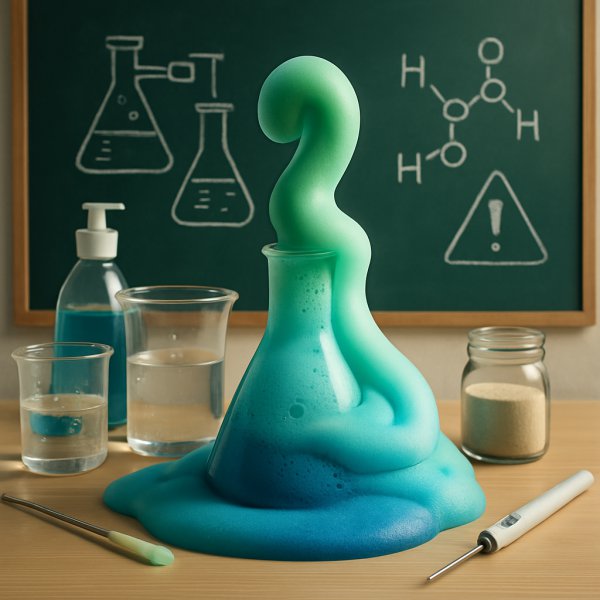
Imagine a thick ribbon of foam pouring out of a bottle so fast and so voluminous it looks like a tiny toothpaste factory went on strike for the day. That is elephant toothpaste: a theatrical chemistry demonstration that turns a bottle, a little soap, and common household ingredients into a frothy eruption that delights kids, students, and anyone who loves the satisfying physics of bubbles. It is pure theater and pure science at once - a sensory shortcut to a whole set of chemical ideas you can see, touch, and question.
This demonstration matters for more than spectacle. It is a compact lesson in reaction rates, catalysis, gas generation, exothermy - and in safety, experimental design, and how a small change in starting conditions produces big differences in outcome. Doing a safe version lets you learn how scientists think: make a hypothesis, change one variable at a time, measure what happens, and repeat. Plus, the memory of that foamy eruption sticks: the next time you hear about catalysis or decomposition, your brain will play the image of bubbling, overflowing foam.
Before you jump in, one quick truth: elephant toothpaste can range from a gentle classroom trick to a seriously energetic, hot, and potentially hazardous reaction depending on what hydrogen peroxide concentration and catalyst you use. I will lead you through a beginner-friendly, safe version that you can do at home or in a classroom, explain the underlying chemistry in plain language, give ideas for controlled variations, outline cleanup and safety, and correct the common myths so your experiment is as educational as it is thrilling.
Throughout, think like a curious scientist and a careful host. Keep your audience safe, ask what you want to learn, and treat the experiment as a controlled story - a beginning of setup, a middle of reaction, and an end of cleanup and reflection. That structure will make the experience more fun and far more memorable.
What is actually happening when the foam pours out
At the heart of elephant toothpaste is one chemical story: hydrogen peroxide is breaking apart into water and oxygen gas. The chemical equation is simple: two hydrogen peroxide molecules become two molecules of water plus one molecule of oxygen gas. That oxygen is the hero and the troublemaker - it needs somewhere to go. Enter soap, which captures the gas as countless tiny bubbles. The resulting foam is mostly air surrounded by soapy liquid.
But hydrogen peroxide decomposes slowly on its own. To make it explode into foam instead of drifting away quietly, we add a catalyst. A catalyst is a substance that speeds up a chemical reaction without being consumed by it. In elephant toothpaste, a catalyst makes the oxygen come out faster, producing a rapid rush of bubbles. Yeast works because it contains an enzyme called catalase, which helps break down hydrogen peroxide. Other catalysts, like iodide ions or manganese dioxide, can be much faster but also more reactive and potentially dangerous in home settings.
Finally, the reaction releases heat as the chemical bonds rearrange, which means the foam can be warm. That warmth confirms this is not just a mechanical foam-maker, but an exothermic chemical transformation. Observing temperature, foam volume, and timing gives you multiple measurable outputs to compare when you change variables - the core of experimental thinking.
Simple, safe materials and why each one is chosen
The beauty of a beginner-friendly elephant toothpaste is that it uses items you can find in a supermarket and keeps the chemistry gentle. Here are the practical choices and the purpose each serves, described in clear terms so you can tweak with intention.
- Hydrogen peroxide, 3 percent - This is the common household bottle used for first aid. It decomposes into water and oxygen, and at 3 percent it is mild enough to handle with standard precautions. Stronger concentrations exist and can create more dramatic eruptions, but they also produce hot, irritating foam and require professional protective equipment. For learning and safety, stick to 3 percent for home demos.
- Liquid dish soap - The soap traps oxygen as bubbles and stabilizes the foam so you get a towering column rather than a handful of tiny bubbles that dissipate quickly.
- Active dry baker’s yeast - Yeast contains catalase, an enzyme that speeds up the breakdown of hydrogen peroxide. It is safe and effective in classroom demos, and it models enzymatic catalysis in living organisms.
- Warm water - Activates the yeast. Too hot and you can kill the yeast, too cold and it acts sluggishly.
- Food coloring or glitter - Optional for visual flair, making the foam look like a colorful toothpaste stream or a glittering cascade.
- A plastic bottle and tray - A narrow mouth bottle helps the foam rise up, and the tray catches overflow, keeping surfaces clean.
These items keep the chemistry accessible and the risk low, while allowing you to explore variables like the amount of yeast or the temperature of the activating water.
Step-by-step: a beginner-friendly elephant toothpaste you can try safely
Before you begin, put on safety goggles and gloves, and work in a well-ventilated area. Keep kids at arm’s length unless an adult leads the demonstration. Have a tray or plastic sheet under the bottle to make cleanup easy.
- Set up your station. Place a clean, empty 16 ounce (about 500 mL) plastic bottle on a tray. Add about 1/2 cup of 3 percent hydrogen peroxide to the bottle. Add a squirt of liquid dish soap and swirl gently to mix. If you want color, add a few drops of food coloring down the inside of the bottle so that the foam comes out colored.
- Prepare the yeast solution. In a separate cup, combine one packet of active dry yeast (about 7 grams) with about 3 tablespoons of warm water and stir for 30 seconds. The water should be warm to the touch but not hot - think warm bath, not stove steam. Let the mixture rest for one minute so the yeast activates.
- The moment of truth. Pour the yeast mixture into the bottle and step back. Oxygen production begins quickly, creating foam that climbs and spills out in a thick, toothpaste-like column. Observe the foam color, height, and how warm the bottle feels. Use a thermometer if you want a quantitative measure of temperature change.
After the reaction slows, you can discuss what you observed. The foam is mostly water with air. You can touch it gently to feel that it is soapy and a bit warm. The bottle and foam will be sticky from soap, so rinse surfaces afterward.
Tips to make your demonstration pop and measure it scientifically
To make your experiment more reliable and more educational, think like a scientist and control variables. Keep the bottle size, hydrogen peroxide volume, and soap amount constant if you are testing one factor like yeast amount or water temperature. If you vary too many things at once, the results become confusing.
A few practical tips will improve your result. Use a narrow bottle to encourage a tall column of foam. If you want a thicker, slower foam, reduce the dish soap a little. If you want a faster reaction, gently increase the yeast or use slightly warmer activation water - but keep the water below about 45 degrees Celsius to avoid killing the yeast. For recorded data, time how long it takes for foam to reach a set height, or weigh the foam on a scale to compare volumes indirectly.
If you are running a classroom set of trials, prepare bottles with peroxide and soap in advance and add yeast at different strengths to each bottle. Challenge students to predict which will produce the tallest foam column, and have them record observations. This turns a one-off demo into an inquiry-rich learning activity.
Compare catalysts and concentrations - which gives what result and how safe is it?
| Catalyst or approach |
Typical hydrogen peroxide used |
Typical effect on foam |
Safety and notes |
| Active dry yeast (catalase) |
3 percent (household) |
Moderate foam, safe for classrooms, gradual and controllable |
Safe with goggles and gloves, models biological catalysis |
| Iodide salts (potassium iodide) |
Low to moderate concentrations - professional demos use higher concentrations |
Fast, vigorous foam, very dramatic |
More reactive, can stain, requires caution and supervision; avoid at-home use with high peroxide |
| Manganese dioxide |
Often used for quick decomposition in controlled labs |
Very fast catalytic decomposition |
Powder can be hazardous to handle; lab-only unless supervised |
| Very high concentration peroxide (30 percent and above) |
30-35 percent |
Extremely vigorous, hot, and potentially dangerous |
Not for home use; causes burns and can violently eject hot foam; needs professional PPE and ventilation |
This table helps you choose a path. For home and classroom settings, yeast plus 3 percent hydrogen peroxide is the recommended route because it balances excitement and safety. More aggressive catalysts and higher peroxide concentrations increase the risk of burns, toxic vapor, or uncontrolled splashing.
Variations to explore - make it an experiment, not just theatre
Once you have the basic demo down, you can turn it into an investigative series. Here are ideas that keep safety front and center and teach core scientific concepts:
- Dose-response experiment: Keep everything the same except change the amount of yeast. Record foam height or time to peak foam to see how catalyst concentration affects reaction rate.
- Temperature test: Activate yeast with different water temperatures and compare the results. Remember that too-hot water deactivates yeast, so include that concept as a teaching point.
- Soap comparison: Try different dish soap brands or foaming hand soaps to see how surfactant properties affect foam stability and texture.
- Biological catalysis demonstration: Use a piece of raw potato or liver (which contain catalase) instead of yeast to show that living tissues can catalyze peroxide decomposition too. Discuss how our bodies use catalase to protect cells from peroxide.
- Measurement challenge: Add a thermometer to monitor how hot the bottle gets, or use a scale to weigh foam output, turning the demonstration into a data-driven exercise.
When you run these variations, change only one variable at a time and repeat trials to reduce random variability. That discipline teaches good experimental design and gives repeatable results you can analyze.
Safety, cleanup, and disposal - because science is responsible fun
Safety is non-negotiable. Even with 3 percent peroxide, wear safety goggles and gloves to keep soap and peroxide off skin and eyes. Work on a tray or outdoors to catch overflow, and keep towels at hand for quick cleanup. Never ingest any of the materials, and keep the experiment away from small children and pets. If you try biological catalysts like potato or liver, dispose of them properly afterward.
When the demonstration is done, rinse the foam and bottle into the sink with plenty of water, unless local regulations advise otherwise. If you used glitter, consider using biodegradable glitter or skip it, because microplastics can be environmentally harmful. If you used food coloring, be aware it can stain porous surfaces; use plastic trays that can be washed or discarded.
Importantly, avoid high-concentration hydrogen peroxide and aggressive laboratory catalysts at home. Those make the reaction hot enough to cause burns or produce irritating vapors. If you need a more dramatic effect for a public show, collaborate with a trained chemistry demonstrator who has the right protective gear and ventilation, rather than trying to scale the reaction at home.
Common myths and useful clarifications
Myth: The soap causes the reaction. Not true - the soap traps the oxygen produced by the reaction, but it does not make the peroxide decompose. The catalyst makes the peroxide split faster, and the soap makes the gas visible and voluminous as foam.
Myth: Yeast is consumed by the reaction. No. In catalytic reactions, the catalyst facilitates the chemical change without being consumed. Yeast contains catalase, an enzyme that speeds the reaction; while some enzyme molecules may be denatured during the process, they are not "used up" in the same way a reactant would be.
Myth: Elephant toothpaste is explosive. Not in the household 3 percent yeast version. It is an exothermic reaction that can get warm, and with high concentrations of peroxide or reactive catalysts it can be violent. The version described here gives a safe, dramatic foam without explosion.
Myth: The foam is dangerous to touch. It is generally safe to touch once the reaction has mostly stopped, but it will be soapy and possibly warm. Rinse hands afterward. Do not touch or ingest the foam, and avoid splashing into eyes.
Clearing up these myths helps you lead a demonstration confidently and answer curious questions like a mini-expert.
Reflection prompts to sharpen your scientific brain
Take a moment to think and write down quick answers to these prompts. They encourage active understanding and help you design better experiments.
- Why does changing only one variable at a time matter when comparing experimental outcomes?
- How would the foam height change if you doubled the hydrogen peroxide volume but kept everything else constant, and why?
- What real-world processes use catalysis in ways similar to the elephant toothpaste reaction?
- If you saw different results in repeated trials, what sources of error would you investigate?
- How could you measure the oxygen produced more directly than just foam height?
- If safety requires avoiding stronger peroxide, what other theatrical visual effects could you add to make the demo more engaging without changing the chemistry?
These prompts move you from spectatorship into ownership of the experiment and develop habits scientists rely on: hypothesis, measurement, and critical interpretation.
Final fizz of encouragement
Elephant toothpaste is more than a party trick. It is a compact lesson in chemistry that rewards curiosity, precise observation, and thoughtful safety. By choosing the safe household route you get a satisfying, teachable demonstration that you can use to introduce catalysis, reaction rates, enzyme activity, and experimental design. Tweak variables, take measurements, and treat each trial as a miniature investigation. The iconic foam will make the lesson memorable, and the science you can pull from it will make you look like the brilliant friend who not only makes the foam but explains why it behaves that way. Go ahead, don your goggles, set up your station, and let your curiosity erupt into learning.