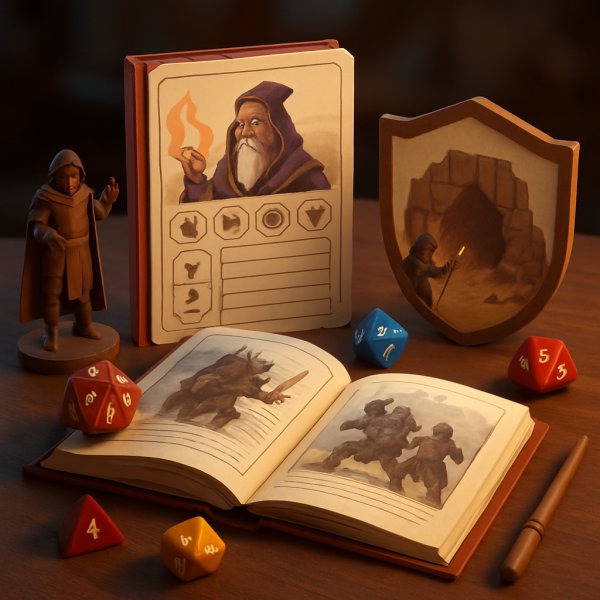
Welcome to Dungeons & Dragons - a doorway to adventure
Maybe you mean Dungeons & Dragons, the famous tabletop roleplaying game. Maybe you picture a dragon that lives in a literal dungeon, which honestly sounds like a great Tuesday. Either way, this guide will teach you how to play Dungeons & Dragons in a way that helps you start, grow, and genuinely enjoy the game. You will learn the basic rules, how to create a character that excites you, how the Dungeon Master runs a session, and how to become the kind of player everyone invites back.
Dungeons & Dragons is part rules, part improv theatre, and part collaborative story writing with dice as punctuation. People play for different reasons - tactical combat, character drama, clever problem solving, or simply to hang out with friends. Understanding what you personally want from the game will make everything else easier and more fun, because you will choose the parts of D&D that light a fire under you.
This guide builds from simple to complex, with practical steps you can try right away. Read it through, create a single-level character sheet, and then use the action plan near the end to run a short one-shot session. Expect to feel awkward at first - that is how all great players begin - and then delight in the small improvements you notice after a few sessions.
You will also find short stories that show how real groups learn and fail spectacularly, a table to compare common character roles, and reflection questions to help you connect your learning to your own goals. By the end, you should feel ready to step into the world, roll dice with confidence, and maybe even design a dungeon or two.
The essential rules, explained without the jargon fog
Dungeons & Dragons, especially the popular 5th Edition, simplifies most outcomes to a d20 roll plus modifiers compared against a target difficulty number. When you try something risky - climbing a wall, persuading a guard, or swinging a sword - you roll a twenty-sided die, add relevant bonuses, and hope to meet or beat the Difficulty Class set by the Dungeon Master. Combat uses the same roll structure but adds turn order, movement, actions, and reactions, which organizes the chaos into manageable steps.
Character abilities are distilled into six scores: Strength, Dexterity, Constitution, Intelligence, Wisdom, and Charisma. These scores determine your modifiers - the small numbers you add to dice rolls - and hint at what your character is good at. Classes such as Fighter, Rogue, Wizard, Cleric, and Bard give you defining features, access to certain skills and spells, and guide how you will contribute in and out of battle.
Hit Points are your measure of longevity in encounters; when they drop to zero, you risk dying or being stabilized. Spells, consumable items, and short rests or long rests provide ways to recover and continue. The rules have a lot of specifics, but you can start with the core cycle: describe action, roll d20 plus modifiers, compare to a target number, and narrate the outcome. Keep the narrative alive - dice resolve probabilities, not story.
Rulebooks like the Player’s Handbook and Starter Sets explain everything in detail, but a single cheat-sheet or the Basic Rules PDF is enough to get you playing in a single evening. The key is starting small: pick a class, learn a handful of spells or abilities, and let the table teach you the rest.
Building a character that feels like you, or like someone you would love to play
Character creation begins with concept - who is this person, what do they want, and what drives them? A powerful concept helps you choose race, class, background, and abilities in a way that makes roleplaying easy and fun. Backgrounds like Soldier, Acolyte, or Criminal give flavor and useful starting proficiencies that let you shine in certain scenes.
Mechanically you will allocate ability scores, choose skills, select equipment, and pick spells if your class casts magic. You do not need math wizardry; start with standard array or point buy options to make balanced characters. Focus on one or two signature moves or spells you enjoy - a rogue’s sneak attack, a cleric’s healing, or a wizard’s fireball - and gradually expand your toolbox.
Personality traits, bonds, ideals, and flaws are bits on your sheet that guide roleplaying. They can be simple hooks like a sworn oath, a fear of fire, or a tendency to bargain for every favor. Use these details to make decisions in-game and create memorable interactions rather than treating them as checkboxes.
Finally, talk to your group about the game tone and party composition. Playing a character that fits a cooperative ensemble makes combat smoother and narrative scenes richer. If everyone plays loud, cinematic characters, you can lean into theatrical choices, and if the group prefers tactical play, aim to optimize your role in combat and problem solving.
The art of the Dungeon Master - stage director, referee, and improv partner
The Dungeon Master, or DM, designs the world and presents challenges, but also responds to player choices in real time. Good DMs prepare a few scenes and NPCs, but they do not script everything; the game is collaborative storytelling. Mechanics are the DM’s tools to resolve uncertainty, and the DM’s responsibility is to keep the narrative moving and ensure everyone at the table has fun.
A common DM workflow starts with a map or encounter idea, a few NPC motivations, and an understanding of what the party might do. When the players do the surprising thing, the DM pivots: improvise motives, adjust difficulty, and reward creativity. The DM also adjudicates rules disputes with fairness - choose a consistent approach and return to the book after the session for any deep rule clarifications.
Good DM tips include keeping scenes short and focused, using props sparingly to set mood, and tracking initiative and conditions with simple notes. Most importantly, establish table expectations and safety tools for sensitive content so players feel comfortable exploring dramatic and risky material.
If you are nervous about running a game, start with published one-shots or a starter adventure, and run a session zero to set tone and expectations. Practicing improvisation and learning to say yes more often than no will make your table a creative sandbox rather than a strict quiz.
Combat, skill checks, and the rhythm of play
Combat is turn-based but designed to feel dynamic. Each round, everyone gets one turn in an initiative order determined by a Dexterity roll. On your turn you can move, take one action (attack, cast a spell, dash, help, etc.), and often a bonus action or reaction. Actions are where decisions matter: do you strike the enemy, try to grapple them, or protect an ally?
Skill checks handle non-combat challenges - persuading a town guard, disarming a trap, or tracking creatures through a forest. The DM sets a Difficulty Class that matches the task complexity. You can often roll with advantage if conditions favor you, or disadvantage if things are tough; advantage means roll two d20s and take the higher result, disadvantage means take the lower.
Remember that the rules favor cinematic play: clever tactics, creative uses of spells, and teamwork often succeed where brute force fails. Use the environment, coordinate with teammates, and think beyond "I attack" to "I push the chandelier, making it fall and block the corridor for two turns."
Magic, spells, and how to avoid paralysis by options
Spells are fun but can feel overwhelming. Start by learning a few spells that match your character’s role - healing spells for clerics, crowd control for wizards, support for bards. Memorize one reliable spell for common situations and experiment with the rest as you play. Spell descriptions matter: note concentration, range, components, and duration so you know when a spell will stay active.
Treat spellcasting like a toolkit. Healing and utility spells keep the party alive, damage spells resolve fights, and control spells shape the battlefield. When in doubt, ask what outcome you want, then choose the spell that most directly produces that outcome. The right spell used imaginatively outperforms rote selection.
When playing a caster, track your resources - spell slots and components - during a session. Resting mechanics let you recover resources, but resource management becomes part of the strategy when you are running a long dungeon crawl.
Social play and roleplay - the scenes that make a campaign unforgettable
D&D shines when players commit to character choices during conversations and moral dilemmas. Roleplay is not an acting audition, it is about making decisions in-character and supporting each other’s scenes. Use small details to make your character feel alive - a phrase they repeat, a nervous tic, or a superstition - and lean into those in social interactions.
Conflict between players can be dramatic, but table rules about consent and safety keep it productive. Use session zeros to set boundaries and agree on topics to avoid or handle sensitively. Reward creative roleplay in-game with inspiration points or small advantages so players feel motivated to act.
Remember that roleplaying enhances combat and exploration too. A forged alliance can open a safe route, a clever lie can avert a fight, and a heartfelt moment can give your character a recurring goal.
Growth over time - leveling, long campaigns, and campaign health
As characters gain experience, they get new abilities that change how they play. Leveling can be exponential in fun - a spellcaster gets new spells, a fighter gains maneuvers, and a rogue becomes terrifyingly effective at key moments. Long campaigns reward player investment in the story and allow the DM to weave personalized arcs.
Keep campaign health by balancing time spent in combat, exploration, and social scenes. Rotate spotlight moments so each player has time to shine, and check in periodically to realign expectations. Campaign burnout is real - take breaks, run one-shots, or switch to lighter arcs when energy wanes.
Mechanically, track treasure distribution, downtime activities, and narrative hooks that matter for character growth. When everyone feels their character is moving somewhere meaningful, the campaign stays engaging for longer.
Quick class-role comparison - pick a style and try it
| Class |
Primary role |
Playstyle tips |
| Fighter |
Frontline damage and defense |
Be where enemies need control; learn a few combat maneuvers |
| Rogue |
Single-target burst damage and skills |
Position for sneak attacks; specialize in stealth or tools |
| Wizard |
Area damage and control |
Pick versatile low-level spells; conserve high-level slots |
| Cleric |
Healing, support, frontline durability |
Choose a domain that fits your party needs; balance healing and casting |
| Bard |
Social skill expert and versatile caster |
Use inspiration liberally; support allies with buffs and control |
| Ranger |
Skirmisher and tracker |
Use terrain and ranged options; pick favored enemy to add flavor |
This table will help you choose a first class based on playstyle. Do not worry about maximizing optimal builds at first - play what sounds fun.
Short stories from the table - the first-time player and the first-time DM
Elena, a new player, chose a halfling rogue because the idea of a small character making big decisions amused her. In her first session she panicked during the first combat and tried to do everything at once. Her group kindly suggested a simpler approach - pick one thing each turn - and by the second encounter she was setting up sneak attacks and cracking jokes. She now plays monthly and delights in the small, clever moves that save the party at odd moments.
Marcus, a first-time DM, used a published starter adventure but ad-libbed a villain’s motivation after his players took a left turn. His improvisation created a memorable moral twist that none in the book anticipated. The group loved the surprise, and the session zero conversation they began afterwards kept future sessions collaborative. Marcus learned that planning is useful, but the magic is in responding to what players do.
A five-step action plan to get you playing this week
Imagine it is Friday evening and a small group of friends is curious. You are the person who gets this to happen. Here is a narrative run-through that gets you from zero to a one-shot.
- Invite three or four friends and suggest a two-hour one-shot, promising a light, welcoming session. Ask everyone if they want to play or assist as a DM.
- Choose Dungeons & Dragons 5th Edition and pick a starter kit or use the free Basic Rules online. Recommended starter materials:
- D&D Starter Set
- Essentials Kit
- Basic Rules PDF (free)
- Create quick characters together using pre-generated sheets or a 5-minute character build: pick class, race, and one defining trait. Keep roles varied - at least one healer or support, one damage dealer, one utility type.
- As DM, prepare a simple dungeon with three rooms, one social encounter, and one twist. Print one map or sketch it on paper; plan two possible player choices for each room.
- Run the session, focusing on fun: narrate vividly, encourage creative solutions, and pause rules debates if they would derail play. After the session, ask what worked and schedule a follow-up if everyone wants more.
These five steps will get you playing quickly while keeping the experience light and exploratory.
Reflection - turn your excitement into a plan
- What draws you most to Dungeons & Dragons - tactical combat, story, roleplay, or hanging out with friends - and how can you shape your first character to highlight that?
- If you become the Dungeon Master, what kind of world would you like to create, and what story seeds can you plant now that will bloom in future sessions?
- What fears do you have about roleplaying or running a game, and what is one small action you can take this week to reduce that fear?
Answering these prompts will anchor your intentions and make it easier to follow through.
Key takeaways to remember when you sit at the table
- Start simple: learn the d20 roll mindset and one signature ability for your character.
- Play your concept, not your spreadsheet; personality beats optimization early on.
- Communication and expectations at session zero prevent most group problems.
- The Dungeon Master improvises more than scripts; preparation plus flexibility is ideal.
- Use rests and resources intelligently - they are part of your strategic toolkit.
- Roleplaying rewards small details - pick one or two and repeat them.
- Have fun first; rules and mastery follow naturally with practice.
Go make a story worth remembering
Dungeons & Dragons is less about winning and more about creating memorable moments with friends - a daring rescue, an unexpected betrayal, a moment of quiet heroism by the campfire. You will feel clumsy at first and brilliant by the tenth hour. The real magic happens when dice, rules, and human improvisation meet: ugly, messy, hilarious stories that become favorite memories. Now take one step - invite someone to play, pick a class, or DM a short scene - and see where the dragon leads you.