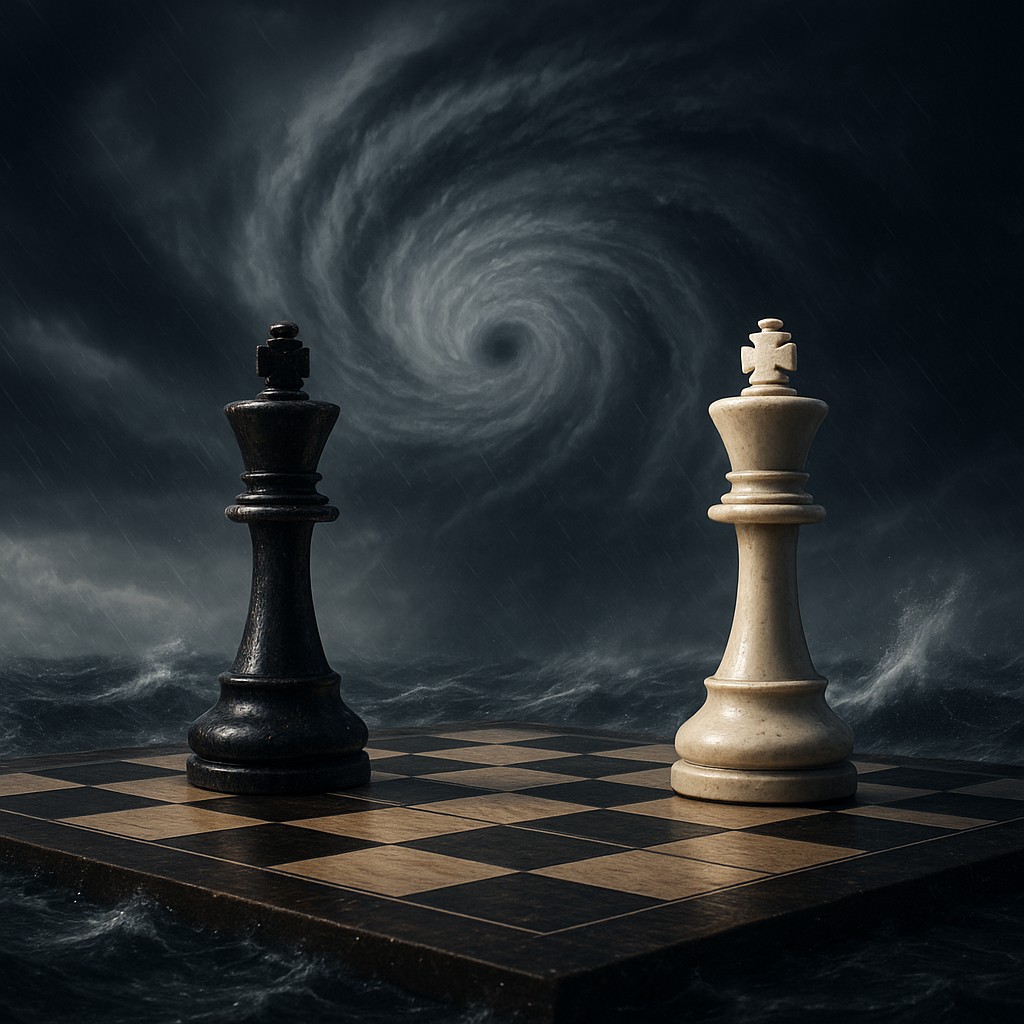
Trying to understand the current peace negotiations between Ukraine and Russia is a bit like watching two master chess players who have moved their board into the middle of a hurricane. On one side is a nation fighting for its survival and its land; on the other is a superpower that has staked its global reputation and internal stability on dominating the region. While the world waits for a "eureka" moment where both sides shake hands and stop the fighting, the reality is much more complicated. It is a world of quiet whispers behind closed doors, public grandstanding, and a list of demands that often feel like they come from two different centuries.
The tragedy of this conflict is that while both sides talk about "peace," they are describing two completely different worlds. For one, peace means restoring borders and seeing justice for war crimes. For the other, it means redrawing the map and gaining security guarantees that look a lot like control. To understand what is actually happening, we have to look past the dramatic headlines. We have to examine the mechanics of "track two" diplomacy, the influence of mediators like Turkey, China, and the UAE, and the internal pressures that make saying "yes" more dangerous for a leader than saying "no."
The Great Divide: Demands That Won't Budge
To see why a deal hasn't been reached, we have to look at where both sides have dug in. Ukraine’s position, known as President Zelenskyy’s Peace Formula, is rooted in international law. Their main demands include the total withdrawal of Russian troops from all Ukrainian land, including Crimea, the prosecution of war crimes, and long-term security guarantees - likely through NATO membership. To Kyiv, any peace that leaves Russian soldiers on Ukrainian soil isn't peace at all; it is a "frozen conflict" that simply gives Moscow time to reload and try again in a few years.
Across the trenches, Moscow focuses on what it calls "new territorial realities." This is a polite way of saying they intend to keep the regions they have occupied and claimed as their own. Russia also insists that Ukraine remain "neutral," which is shorthand for ensuring Ukraine never joins NATO or the European Union. They view any shift toward the West as an existential threat. When you put these demands side by side, they don't just clash - they cancel each other out. One side demands the 1991 borders, while the other demands recognition of the 2024 front lines.
This disagreement creates a "zero-sum game," where any gain for one side is seen as an unacceptable loss for the other. Because neither side feels they have been truly defeated on the battlefield yet, both believe they have the leverage to hold out for better terms. This is why periods of intense fighting are often followed by rumors of peace talks. The battlefield and the negotiating table are the same room; they just have different lighting.
Shadows and Secrets: Backchannel Diplomacy
While public speeches at the United Nations can sound like two brick walls shouting at each other, a world of "backchannel" diplomacy is happening in the shadows. This is where the real work begins, away from cameras and social media pressure. These talks are often hosted by countries that keep a foot in both camps, such as the United Arab Emirates, Saudi Arabia, or Qatar. In these meetings, they don't usually start with NATO or borders; they focus on "small wins" to build a thin, fragile bridge of trust.
These small wins include prisoner swaps and the return of deported children. Every time a busload of prisoners is traded at the border, it represents a successful negotiation. These moments prove that even during a total war, intelligence services and diplomats can still pick up the phone and reach an agreement. Another major example was the Black Sea Grain Initiative, which allowed food to leave Ukrainian ports despite the naval blockade. Although that deal has faced many setbacks, it served as a blueprint for how limited, functional agreements can work while the wider war continues.
We also see "Track II" diplomacy. This involves former government officials, professors, and experts meeting in neutral cities like Vienna or Geneva. Since these people don't officially represent their governments, they can float "what-if" scenarios. They might ask: "What if there was a 20-year transition period for Crimea?" or "What if Ukraine got security guarantees from individual countries instead of NATO?" These ideas act as trial balloons. If the other side is interested, the idea might move up to the official level. If they react with anger, the government can simply say, "That wasn't us; those were just private citizens talking."
The Roles of Global Mediators
In any neighborhood dispute, the neighbors eventually get involved. A war of this size has very powerful neighbors. Right now, there is a tug-of-war over who gets to be the lead mediator. China has proposed its own peace plan, which focuses on stopping the fighting and ending sanctions. However, the West criticizes it for not explicitly calling for Russia to leave Ukrainian land. China wants to be seen as the "adult in the room," but their "no-limits partnership" with Russia makes Ukraine skeptical of their neutrality.
Turkey, led by President Erdogan, has been perhaps the most active mediator. Geographically, Turkey sits across the water from both countries and has strong economic and military ties to both. They hosted the early talks in 2022 and remain the most likely spot for future summits. Turkey’s goal is stability in the Black Sea, and they have mastered the art of selling drones to Ukraine while buying gas from Russia. This "balanced" approach makes them a unique, if sometimes frustrating, partner for everyone.
Then there is the "Global South" - countries like India, Brazil, and South Africa. These nations are less concerned with European security and more worried about the rising prices of fuel and fertilizer. Their push for peace is driven by economic survival. They are becoming more vocal, telling both Moscow and Kyiv that the rest of the world cannot afford for this war to drag on forever. This puts a different kind of pressure on the warring parties - not from enemies, but from "neutral" friends who are running out of patience.
| Feature |
Ukraine's Peace Formula |
Russia's Stated Position |
| Territory |
Full return to 1991 borders |
Recognition of occupied areas |
| Security |
NATO membership or Western pacts |
Permanent neutrality / No NATO |
| Leadership |
Prosecution of Russian leaders |
No war crimes trials |
| Military |
Modern, Western-integrated army |
Limited or demilitarized force |
| Justice |
Reparations paid by Russia |
Rejection of all financial claims |
The "Hurting Stalemate" and the Timing of Peace
History shows that wars rarely end because one side suddenly decides war is bad. They end when both sides reach a "mutually hurting stalemate." This is the point where the cost of fighting becomes higher than the cost of a painful compromise. Right now, both Russia and Ukraine still believe they can win more on the ground. Russia thinks it can outlast Western patience. Ukraine believes that with Western technology, they can make the occupation so expensive that the Kremlin will be forced to retreat.
Peace talks are also heavily influenced by politics in other countries, especially the United States. With elections approaching in many Western nations, there is a sense of urgency. If a new administration in Washington cuts military aid, Ukraine’s hand at the negotiating table weakens. On the other hand, if Russia’s economy starts to break under the weight of sanctions and war costs, Putin might become more willing to make real concessions. Peace, in this sense, is waiting for the perfect moment of exhaustion.
Many officials whisper about a "Korean Scenario." This refers to the end of the Korean War, which didn't end with a peace treaty, but with an armistice - an agreement to stop fighting. Technically, North and South Korea are still at war, but the shooting mostly stopped in 1953. Some analysts think this is the most likely outcome for Ukraine: a "cold peace" where no official borders are permanently redrawn by signature, but a line is drawn, and the active combat ends. It is unsatisfactory, but it stops the daily loss of life.
Internal Pressure and the Risk of Compromise
For both Volodymyr Zelenskyy and Vladimir Putin, the political stakes at home are as high as the war itself. Zelenskyy has spent years telling his people that every inch of Ukraine will be freed. If he signed a deal tomorrow giving away Crimea, he would face an enormous backlash from a population that has sacrificed everything. For many Ukrainians, anything less than total victory feels like a betrayal. This "internal veto" gives Zelenskyy very little room to move.
Vladimir Putin faces a different but equally dangerous pressure. He has framed this war as a holy struggle for Russia's survival against the West. He cannot afford to come home with nothing. He needs a "win" to sell to his public and his inner circle. If he ends the war without land gains or a neutral Ukraine, his image as a strongman is shattered. In a system like Russia's, a leader who looks weak is in a very dangerous position.
Successful peace talks must be designed so that both leaders can claim victory. This is a tall order. It requires "linguistic gymnastics" - creative legal wording where a territory might be "autonomously managed" without officially changing hands. Current talks are essentially a search for these magical words that haven't been found yet.
The Battle of Narratives
In the modern age, peace talks are also a war of information. Often, one side will "leak" news of a potential deal just to see how the public reacts. If people are outraged, the government can claim the leak was fake. We see this constantly, with anonymous reports of secret meetings in places like Muscat or Istanbul. These leaks are often tools of pressure, meant to make the other side look like the one refusing a "fair" deal.
Disinformation also plays a role. Some people benefit from the war continuing and use social media to sabotage any chance for peace by spreading rumors of "betrayal." This makes actual diplomats extremely secretive. If you hear about a peace talk on the news, it’s probably not the one that will actually lead to a breakthrough. Real progress usually happens in total silence.
Currently, the most visible "peace talk" is a series of summits. Ukraine hosted a major meeting in Switzerland with over 100 nations to discuss how to end the war fairly. Russia was not invited, as the goal was to build a global agreement on what peace should look like before presenting it to Moscow. This is "coalition diplomacy," where Ukraine tries to move world opinion so that Russia eventually finds its demands totally isolated.
The Future of Strategic Patience
The situation between Ukraine and Russia is not a simple argument; it is a clash of two completely different visions for the world. While formal talks look stuck, the wheels of diplomacy never stop. Every prisoner swap and every grain ship is a small thread being woven into what might one day be a safety net. We are now in a phase of "competitive endurance," where the goal of diplomacy is to manage the war while waiting for a window of opportunity to open.
It is easy to feel discouraged by the lack of a big announcement, but peace is a process, not a destination. History shows that the most lasting peace deals are often the ones that took the longest to "bake." The issues - from nuclear safety to language rights - require a library’s worth of technical details. While the front lines get the headlines, the quiet work continues every day.
The key will be watching for shifts in the "red lines" of Moscow and Kyiv. When "never" becomes "not now," and when secret meetings happen more often, we will know the hurricane is finally losing its strength. Until then, the world waits and supports the diplomacy happening in the shadows. The path to peace is rarely a straight line, but the fact that channels remain open is a sign of hope. Keeping an eye on the small details helps us see the human effort behind the headlines - the tireless work of those trying to find a way to stop the suffering, one quiet conversation at a time.