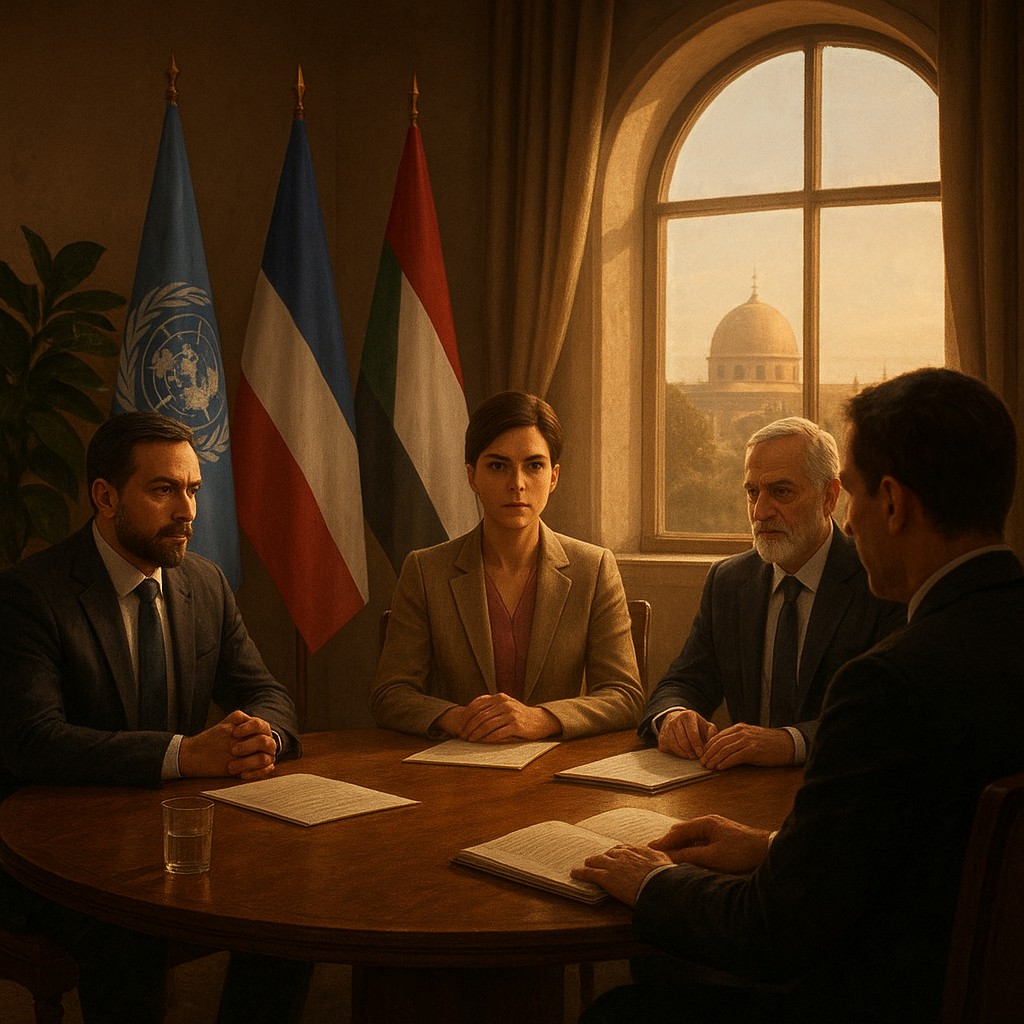
The geopolitical landscape of 2026 is no longer defined by the constant roar of heavy guns, but by the tense silence of high-stakes diplomatic rooms. After years of watching a war of attrition destroy lives and drain economies, the world is seeing a shift toward what many hope will be the final act of this tragedy. We have reached a historic turning point where the exhaustion of both sides has finally met a coordinated, forceful push from international mediators. It is no more a question of whether the parties will meet, but rather how much they are willing to give up to ensure a future that does not involve life in the trenches.
Understanding the current state of these talks requires looking past public speeches to see the actual framework of the negotiations. After nearly four years of fighting, the conversation has moved beyond the "red lines" and "deal-breakers" that stalled earlier mediation attempts. The current momentum is driven by a mix of domestic pressure in both Kyiv and Moscow, a shift in the political climate in the United States, and a global community that is fed up with the economic chaos caused by the war. Looking at the latest news from the Abu Dhabi summits and the looming deadlines of the summer, it is clear that progress, while grueling, is finally being made.
The Desert Summit and the Abu Dhabi Breakthrough
Early in 2026, the spotlight turned to the United Arab Emirates, which became the central hub for three-way talks between Ukraine, Russia, and the United States. These meetings were a major change from previous "back-channel" or secret communications; they brought high-ranking officials together in person for days of intense discussions. Participants described the mood in Abu Dhabi as professional but cold, yet the fact that the delegations stayed to finish the scheduled talks was seen as a small miracle. This was the first time since the start of the invasion that both sides were willing to look past symbolic gestures and tackle the specific, difficult details of a ceasefire.
One of the most important results of these early 2026 sessions was an agreement to restart direct military communication between the United States and Russia. This "de-confliction" line, a direct phone or radio link, is meant to prevent accidental clashes while diplomats work, acting as a safety net for the peace process. Although the fighting hasn't stopped entirely, the tone of these talks suggests that both sides now realize a total military victory is unlikely. The Abu Dhabi sessions created a blueprint for a settlement, even though the most difficult issues regarding territory are still far from being resolved.
The first real result of these efforts was a massive, coordinated prisoner swap shortly after the first round of talks. In the past, such exchanges were small favors, but this swap was treated as a "trust-building measure" to prove to skeptical citizens at home that the talks were working. President Zelenskyy noted that while the discussions were "not easy," the return of hundreds of soldiers proved the process had real teeth. This moral victory provided the political cover needed to keep talking, despite anger from hardliners on both sides of the front line.
Mapping the Obstacles on the Road to Peace
To understand why these negotiations are so hard, it helps to look at the conflicting goals each side brings to the table. We often think of peace as a simple order to "stop fighting," but in a war this big, it means untangling decades of security worries, national pride, and international law. The table below shows the main sticking points in the 2026 peace rounds, highlighting how far apart the two sides remain on the most vital issues.
| Topic |
Ukraine's View (2026) |
Russia's View (2026) |
Potential Middle Ground |
| Territory |
Return to 1991 borders, including Crimea and Donbas. |
Recognize seized lands as part of the Russian Federation. |
Possible buffer zones or long-term lease deals. |
| Security |
Full NATO membership or solid defense deals with the West. |
Permanent neutrality for Ukraine and limits on Western aid. |
"Armed neutrality" with protection from a group of nations. |
| Rebuilding |
Russia must pay for the full reconstruction of Ukraine. |
No payments; calls for ending all Western sanctions. |
A global fund partly paid for by seized Russian assets. |
| War Crimes |
A global court to try Russian leaders for war crimes. |
Total immunity for all military and political leaders. |
A mix of legal systems or delayed trials for lower-level crimes. |
As the table shows, the gap between "1991 borders" and "recognizing seized land" is not just a disagreement; it is a massive divide. Negotiators have started to suggest "strategic patience," an idea where the physical control of land is separated from its legal status. In this case, a ceasefire would freeze the front lines, and the question of who truly owns the land would be settled through long-term diplomacy or UN votes held decades from now. It is a messy, imperfect plan that satisfies no one, but it offers a way to stop the daily casualty lists.
The June Deadline and the Pressure of Time
The most dramatic change in the 2026 peace process is the setting of a firm "peace deadline." President Zelenskyy recently shared that the United States has proposed a deadline of June 2026 for a full settlement. This is a calculated risk meant to force both Kyiv and Moscow to make the difficult compromises they have been avoiding. For Ukraine, the deadline is a reminder that Western military and money supplies are not infinite. For Russia, it is a "carrot and stick" approach, offering a path to end sanctions if a deal is made before the summer heat.
This deadline has created a sense of frantic urgency. Everyone knows that if a plan isn't set by June, the window for a negotiated peace might slam shut. This could lead to a "frozen conflict" similar to what happened on the Korean Peninsula, but in a much more dangerous part of Europe. The pressure is especially high for Ukrainian leaders, who must balance the call for justice with the reality of a tired population and a broken country. The coming months will likely see "shuttle diplomacy," where mediators fly back and forth between world capitals to bridge the final gaps in the deal.
The June deadline also matches up with changing politics in the West. With elections coming up and prices rising, the group of countries supporting Ukraine is looking for an "off-ramp" - a way to end the war that keeps Ukraine independent without requiring billions of dollars forever. This has led to a "constructive" atmosphere, which is diplomatic code for "we are finally talking about the things that matter, even if we are shouting at each other." The focus has shifted from winning the war to winning the peace, a move that requires a different set of skills and a lot of political courage.
Addressing the Myth of the Simple Ceasefire
A common mistake is thinking that a ceasefire is the same thing as peace. In 2026, this is a dangerous myth that negotiators are trying to debunk. A simple stop to the fighting, without a deep agreement, often just acts as a "reloading period." If the root causes of the war - like security and land - are not fixed, a ceasefire in June could lead to more fighting in December once both sides have stocked up on drones and missiles. This is why the Abu Dhabi talks are focusing so much on "the day after" rather than just "stop shooting."
Another myth is that these talks mean Ukraine is weak or Russia has won. In reality, both sides are exhausted. For Russia, the willingness to talk is a response to the massive cost of the war and the slow decline of its economy under sanctions. For Ukraine, these talks are an act of power; choosing how to end a war is the ultimate show of a country's strength. By taking part in these talks, Kyiv is taking control of its own future.
Finally, some think the United States is "ordering" Ukraine what to do. While the June deadline came from Washington, the actual heart of the talks is still in the hands of Ukraine and Russia. The US is acting as a facilitator, providing the support needed to make the talks real. The "constructive" nature of these meetings shows that everyone has realized that a solution forced on them from the outside will never last. It must be a deal that both Kyiv and Moscow feel they can "live with," even if they hate every part of it.
The Design of a Lasting Settlement
If a deal is reached by June, what will it look like? Most experts think it will be a "modular" peace. Instead of one giant treaty signed all at once, there will be a series of smaller, connected deals. Imagine it like a construction project: the ceasefire is the foundation, the security deals are the walls, and the land resolution is the roof. By breaking the peace process into smaller pieces, negotiators hope to build momentum. If they can successfully empty a zone around a nuclear power plant, for example, they can then move on to the harder job of moving troops away.
International observers will be vital in this 2026 plan. Any deal made in Abu Dhabi will likely need a massive UN or international team to make sure neither side uses the peace to get ready for a new attack. This "peacekeeping" part is one of the hardest pieces of the puzzle, as Russia does not want NATO troops on its borders, and Ukraine is rightly worried about any force that isn't strong enough to stop a Russian move. Finding a neutral but capable third party to act as a "peace policeman" is a top priority right now.
It is important to understand these talks because the result will change the world for the next fifty years. This isn't just about a border in Eastern Europe; it is about international law, the power of sanctions, and the future of safety in Europe. As we watch the news, we should look past the loud headlines and watch for progress on "boring" technical issues. It is in the details of grain shipments, water rights, and local policing that real peace is built, one painful sentence at a time.
Finding Hope in the Work of Diplomacy
The road to June 2026 is full of doubt and the scars of war, but the current movement is the most promising we have seen. It takes bravery to pick up a gun, but it often takes more courage to put one down and face an enemy at a table. The positive reports from the latest summits are proof that people can be resilient and that everyone wants stability. While there is no guarantee a deal will be signed by the deadline, the shift from "how do we fight?" to "how do we live in peace?" is a victory. We should feel encouraged that even the worst conflicts can move toward a solution through the steady, hard work of diplomacy. Stay informed and remember that even the darkest chapters of history eventually come to an end.