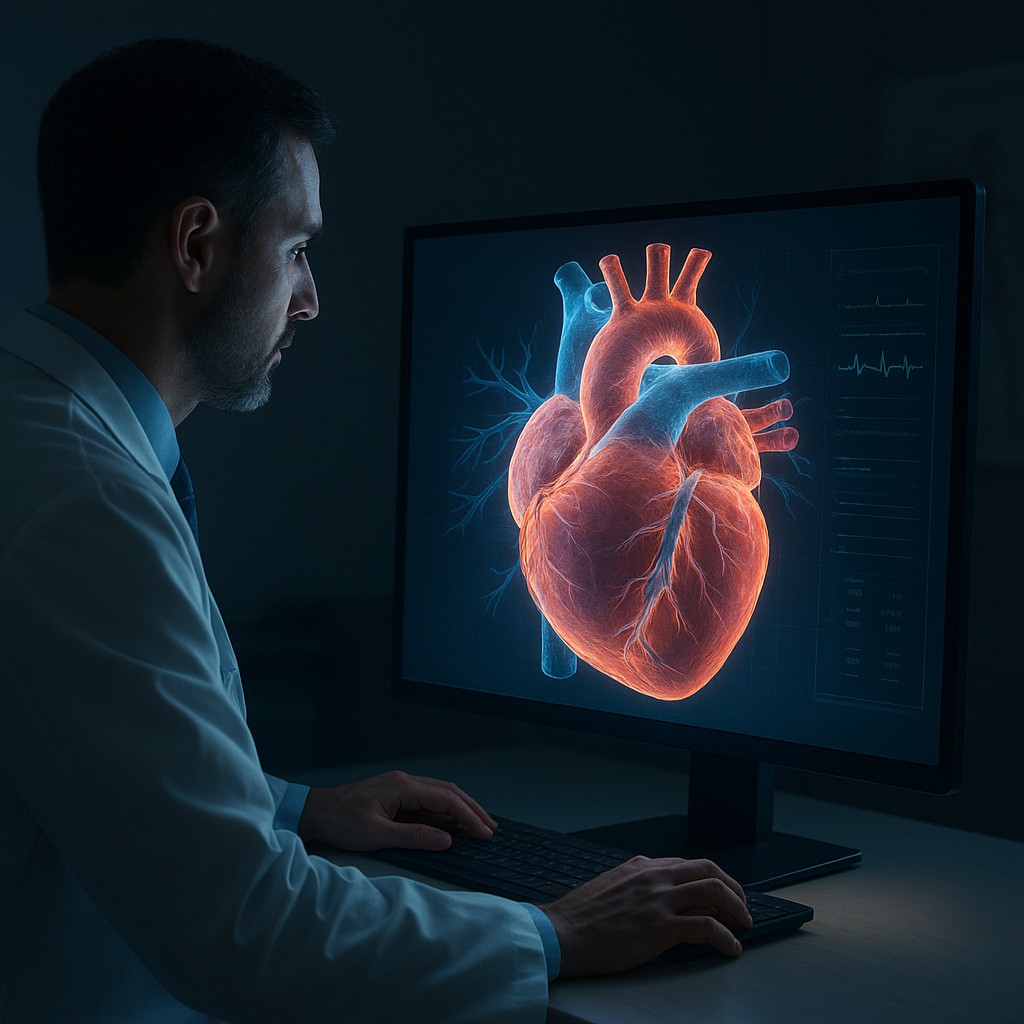
Imagine walking into a doctor's office where the physician does not just look at your charts, but pulls up a shimmering, three-dimensional version of your own heart on a screen. This digital heart beats in perfect sync with your own, reflecting every valve movement and the unique rhythm of your cardiovascular system. Instead of suggesting a surgery based on what worked for a thousand other people, the surgeon decides to "practice" on your virtual double first. They test three different surgical paths, realize the second one might cause a minor complication in your specific anatomy, and choose the third, most efficient route before you have even changed into a hospital gown. This is the promise of digital twin technology, a field that is rapidly turning the "one size fits all" approach of modern medicine into a relic of the past.
The concept of a digital twin is not entirely new; NASA has used virtual replicas of spacecraft for decades to fix technical issues from millions of miles away. However, applying this level of precision to the human body is a much more complex feat of engineering and biology. We are shifting from reactive healthcare, where we treat symptoms as they appear, to predictive healthcare, where we simulate the future to prevent problems before they start. By combining high-resolution medical imaging with constant streams of data from wearable devices, scientists are building software models that are not just pictures, but living, updating equations of our inner selves. It is a bridge between the physical reality of our cells and the limitless possibilities of computer simulation.
Building the Virtual You from the Inside Out
To understand how a digital twin works, you have to think of it as more than just a 3D model. A simple 3D print of a heart is static, but a digital twin is dynamic and hungry for information. It begins with "baseline data," which usually comes from MRI scans, CT scans, or genetic sequencing. This provides the structural map of the organ, showing exactly where your arteries curve or how thick a specific muscle wall is. But for the twin to truly live, it needs real-time input. This is where the Internet of Medical Things (IoMT) comes into play, using sensors that monitor heart rate, blood pressure, oxygen levels, and even blood sugar.
Once the data is flowing, powerful algorithms take over to process the information. These models use physics-based simulations to predict how blood will flow through a narrowed vessel or how a tumor might respond to a specific dose of radiation. If you think of your body as a complex machine, the digital twin is the diagnostic dashboard that tells the mechanic exactly what is happening under the hood without having to take the engine apart. This level of detail allows doctors to move beyond general statistics and focus on the tiny quirks of your individual biology. It is the difference between reading a manual for a generic car and having a live feed of your specific vehicle's performance while it is driving at eighty miles per hour.
A Sandbox for High-Stakes Surgery
One of the most exciting uses for this technology is in the operating room, particularly for complex procedures like brain surgery or repairing a child's heart. Traditionally, surgeons rely on their years of experience and static 2D images to plan their approach. With a digital twin, the surgery becomes a "flight simulator" experience. A surgical team can virtually perform the entire operation multiple times, testing different angles for an incision or different types of medical implants. If a specific move causes a simulated drop in blood pressure, the team learns that lesson in the virtual world rather than on the operating table.
This simulation capability is vital for oncology, the study and treatment of tumors, where cancer can be notoriously unpredictable. A digital twin of a tumor can be used to run "what if" scenarios for various chemotherapy combinations. Since every person processes drugs differently, the twin can help calculate the exact dosage required to kill the cancer cells while minimizing damage to healthy tissue. This reduces the grueling trial-and-error process that many patients endure, ensuring that the first treatment given is the one most likely to work. By the time the patient is prepped for the actual procedure, the medical team has already "seen" the outcome, significantly reducing the stress and risk of high-stakes surgery.
Knowing the Map from the Territory
While the technology sounds like something out of a science fiction novel, it is important to keep a realistic perspective on what these models actually represent. A digital twin is a mathematical representation of an organ, not a perfect biological clone. In the world of science, there is a famous saying that "all models are wrong, but some are useful." This applies perfectly here. Even the most advanced digital twin cannot account for every single protein interaction or the infinite complexity of the human immune system. There will always be some uncertainty, and the twin is meant to improve the surgeon's judgment, not replace it entirely.
Because these twins are based on data, their accuracy depends entirely on the quality of the information fed into them. If the sensors are set up incorrectly or if the imaging is low quality, the twin will provide an inaccurate simulation. This is why doctors treat the digital twin as a "decision support tool." It provides a data-driven suggestion, but the final call still rests with human expertise. Understanding this distinction helps manage expectations and ensures that we use the technology as a sophisticated guide rather than a perfect oracle. It is a highly advanced map, but the surgeon is still the one driving through the actual physical landscape of the human body.
Comparing Traditional Methods with Digital Twin Approaches
To better visualize how this technology changes the patient experience, it helps to look at the specific differences between the old way of doing things and the digital twin era. The following table highlights the shift from general medicine to personalized, simulation-driven care.
| Feature |
Traditional Medical Planning |
Digital Twin Modeling |
| Data Source |
Static images and patient history |
Real-time sensors and dynamic imaging |
| Procedure Prep |
Mental rehearsal and 2D charts |
Virtual reality "flight simulation" |
| Drug Testing |
General population statistics |
Patient-specific virtual trials |
| Risk Management |
Reactive (handling issues as they occur) |
Predictive (avoiding issues before they start) |
| Update Frequency |
Occasional (during doctor visits) |
Continuous (streaming from wearables) |
| Complexity |
Limited by human visualization |
Powered by high-performance computing |
Ethics and the Challenge of Data Security
As we move toward a world where every human has a digital counterpart, we have to deal with serious questions about privacy and data ownership. Your digital twin contains the most intimate details of your biology, including your genetic risks and your current health status. Who owns this virtual model? If a hospital creates a digital twin of your heart, do you have the right to take that data to another doctor? Furthermore, the cybersecurity requirements for this technology are immense. A hack on a digital twin could theoretically allow someone to see a patient’s vulnerabilities or even change the simulation results to influence medical decisions.
There is also the question of fairness. Developing a digital twin requires massive computing power and expensive sensors, which could initially create a gap between those who can afford "simulated certainty" and those who must rely on traditional care. However, as the cost of computing drops and wearable technology becomes more common, the goal is to make these tools a standard part of every hospital's toolkit. By addressing these ethical and logistical hurdles now, the medical community can ensure that digital twins serve as a tool for empowerment rather than another barrier to high-quality care.
Designing the Future of Longevity
While we have focused heavily on surgery and emergency care, the long-term potential for digital twins extends into everyday wellness and aging. Imagine a twin that tracks your metabolic health over decades, alerting you when your current lifestyle choices are beginning to put too much stress on your liver or kidneys. Instead of waiting for a chronic disease to cause symptoms, your digital twin could warn you years in advance, showing you a visual projection of your health ten years down the line if you don't change your habits. This shifts the focus of medicine from "repairing the broken" to "optimizing the living."
The integration of artificial intelligence will only speed up this process. AI can scan thousands of digital twins at once to find patterns that human doctors might miss. For example, if the twins of five hundred different patients all show the same subtle change in heart valve performance before a failure, the AI can flag that pattern as a new early warning sign. This creates a collective intelligence where every individual's digital twin contributes to the health of the entire community. We are moving toward a future where our virtual selves act as tireless guardians, working in the background to ensure our physical selves live longer, healthier, and more vibrant lives.
The journey into the world of digital twins is a testament to human curiosity and our refusal to accept the limitations of being "average." We are unique biological masterpieces, and our medical care should reflect that. As you look forward to the future of healthcare, remember that you are more than just a patient in a system; you are a living wonder full of valuable data. The development of digital twins is not just about better software or faster computers; it is about honoring the complexity of your life by ensuring that when your health is on the line, the decisions made are as unique as your own DNA. The virtual version of you is ready to take the lead, so the real version of you can thrive with confidence.