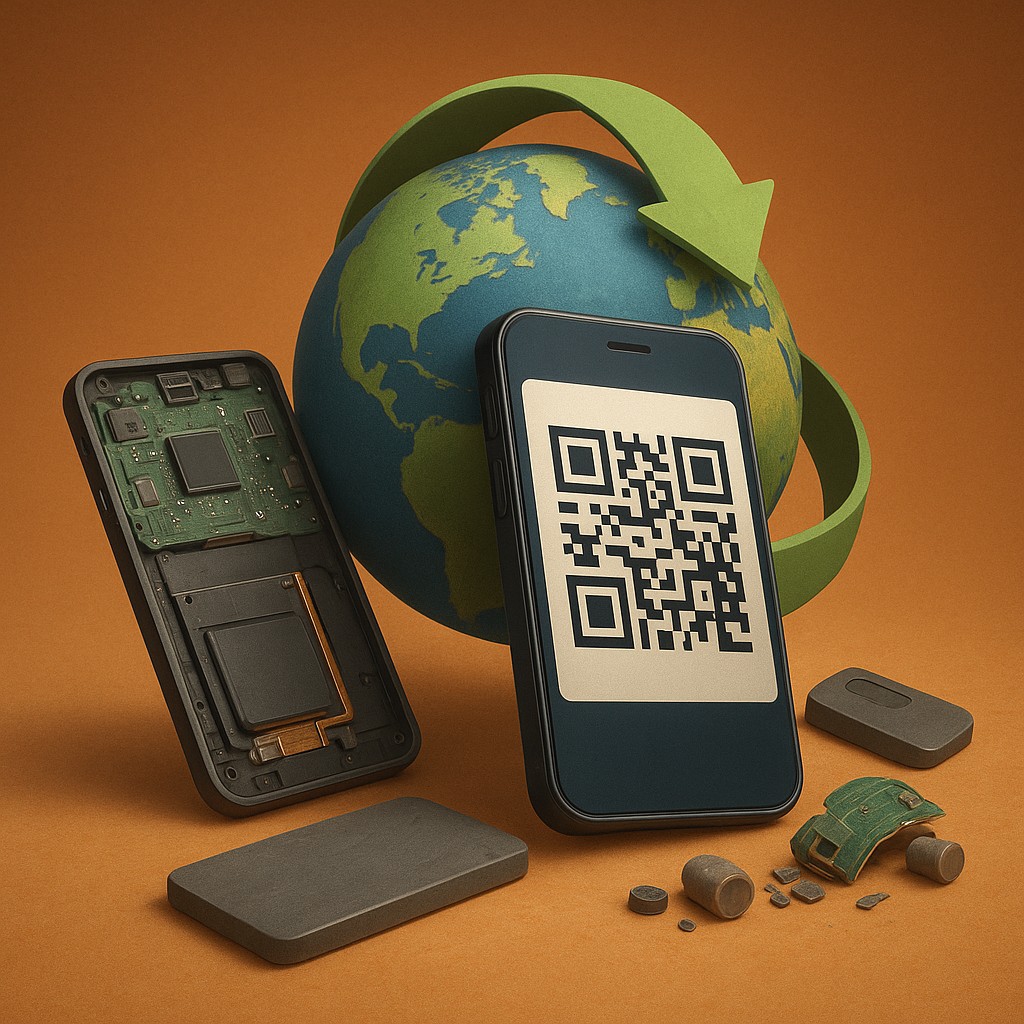
Imagine for a moment that your smartphone is more than just a polished slab of glass and metal; it is a complex library of stories. Every chip, every drop of solder, and every tiny speck of cobalt in its battery has traveled across continents to reach your pocket. Historically, the moment you decide to upgrade and toss that old phone into a drawer or a recycling bin, its story ends in a mystery. We have been living in a world of "blind consumption." We buy sophisticated technology without any real way of knowing how to take it apart or where its raw materials came from. This lack of transparency has turned our planet into a graveyard for "e-waste" - the millions of tons of electronics that sit in landfills, leaking heavy metals into the soil simply because we do not know how to dismantle them efficiently.
The global community has finally decided that "I don’t know" is no longer an acceptable answer from manufacturers. We are entering the era of the Digital Product Passport (DPP). This is a shift in technology and law that gives every physical object a "digital twin." Think of it as a birth certificate, a medical record, and a travel itinerary all rolled into one scannable code. This change moves us away from the old "take, make, dispose" linear economy. Instead, it pushes us toward a "circular economy," where products are designed from day one to be reborn as something else. It is a bold attempt to turn what we currently call "trash" back into the valuable raw materials they actually are. It ensures that the gold inside your phone stays in use instead of being buried in the ground.
The Secret Identity of Your Gadgets
At its simplest level, a Digital Product Passport is a data set that follows a product throughout its entire life. If you were to scan a QR code on a new laptop, you would see more than just a marketing website or a digital manual. Instead, you would gain access to a verified record. This record details the product’s carbon footprint, the percentage of recycled plastics in the casing, and even the specific mines where the lithium was dug up. For a consumer, this means the power to choose products based on their true environmental impact. For a recycler, it is a game changer. Instead of guessing whether a device contains dangerous chemicals or valuable silver, they can see a "bill of materials" - a list that tells them exactly what is inside and, more importantly, how to safely take those parts out to be used again.
This system relies on "unique identifiers," which act like a fingerprint for every individual unit made. In the past, companies might have released broad sustainability reports covering their entire brand, but the passport brings that accountability down to the specific device in your hand. This level of detail is necessary because two identical-looking phones might have very different histories. One might use minerals from ethical sources, while another uses materials from conflict zones. By making this data accessible through a digital system, the passport ensures that a product’s "digital identity" is just as permanent as its physical shell. It essentially allows products to talk to us, telling us their history so we can better plan their future.
Breaking the Cycle of Planned Obsolescence
One of the most frustrating parts of modern electronics is the feeling that they are designed to fail - or at least designed to be impossible to fix. We have all dealt with the smartphone that is "glued shut" or the laptop with special screws that require a tool found only in one specific factory overseas. Digital Product Passports aim to end this trend. They require that repair and disassembly instructions be part of the product’s digital record. If a manufacturer knows that every repair shop and recycler in the world will have access to their design blueprints, they are much more likely to design products that are easy to fix and take apart. The era of secret engineering is being traded for total transparency.
This shift changes what designers care about. When a product is "born" with a passport that tracks how durable it is and how easy it is to repair, companies will compete to have the best scores. It turns sustainability from a marketing buzzword into a required performance grade. If a company knows that a regulator or a smart customer can see exactly how hard it is to replace a battery, they have a huge reason to stop using glue and start using screws or clips. This does not just help the environment; it helps your wallet, too. it opens up a stronger market for local repair shops, giving them the same technical data that the manufacturer used to keep under lock and key.
Navigating the Building Blocks of the Passport
Setting up these passports is not as simple as printing a sticker on a box. It requires a massive system of digital standards and legal rules. While the European Union is currently leading the way with new laws - such as the Ecodesign for Sustainable Products Regulation - the ultimate goal is a global standard. After all, a phone made in Vietnam, sold in Germany, and recycled in Ghana needs a language that works across every border. The table below outlines the main information these passports track to ensure a product never truly becomes "waste."
| Data Category |
What it Includes |
Purpose of Data |
| Material Origin |
Source of raw materials, % of recycled content |
Ensures ethical sourcing and tracks resource use. |
| Circular Life Data |
Disassembly steps, part maps |
Helps recyclers recover rare metals quickly. |
| Environmental Impact |
Carbon footprint, water use, toxic substances |
Allows consumers to compare how "green" brands are. |
| Ownership History |
Repair logs, software updates, warranty status |
Increases the resale value of used electronics. |
| Technical Specs |
Battery chemistry, voltage, chip design |
Safety for workers handling the device during disposal. |
As shown in the table, the passport covers everything from the first spark of creation to the moment the device is taken apart. By tracking "Ownership History," for example, the passport can prove that a secondhand phone was well-maintained and fixed with genuine parts. This helps create a more trustworthy market for used goods. It turns the passport into a tool for economic value, not just an environmental chore. It makes a used gadget a certified asset rather than a risky gamble.
The Tension Between Open Data and Corporate Secrets
While the benefits of Digital Product Passports are clear, the path to total transparency is full of corporate worry. Many companies guard their supply chain information as if it were a secret recipe. They worry that if they reveal exactly where they buy their parts or how their hardware is built, competitors will copy them. This is the trade-off between privacy and progress. Regulators must find a balance by creating different levels of access. For example, a consumer might see a simple environmental score, while a certified recycler sees a detailed chemical breakdown, and the manufacturer’s trade secrets stay protected behind encrypted layers of the passport.
There is also the massive challenge of international cooperation. If the EU requires one type of digital passport but the US or China uses a different format, the system breaks down. We need "interoperability" - a fancy way of saying all the different computer systems need to be able to talk to each other. If a recycler’s software cannot read the passport of a phone made in a different region, we are right back where we started: with a pile of "mystery metal" that is too expensive to sort. Industry leaders are currently debating these standards, trying to find a digital language that is secure enough to protect business secrets but open enough to save the planet.
From Mining the Earth to Mining Our Drawers
The most exciting thing about the Digital Product Passport is how it changes our definition of a "resource." Currently, we spend billions of dollars and huge amounts of energy digging miles into the earth for minerals like gold and lithium. Meanwhile, millions of tons of these same minerals are sitting in our junk drawers, trapped inside old phones and remotes. We do not "mine" our old electronics right now because it is too difficult and expensive to figure out what is in them and how to get it out. The passport fixes this by providing a "treasure map" for every device.
When a recycler can scan a pile of electronics and immediately get a printout of exactly how much gold and lithium is there, the math of recycling changes overnight. It becomes cheaper to "urban mine" our old electronics than to dig a new hole in the ground. This creates a "closed loop," where the materials used to make your next phone might have come from your last one. This is not just an environmental dream; it is a necessity as the global supply of rare metals becomes harder to find and more expensive. The digital passport turns every product into a temporary storage container for materials that are meant to be used again and again.
Reimagining What it Means to Own Something
As we move forward, the Digital Product Passport will likely change how we view ownership. We might stop seeing ourselves as the "end users" of a product and start seeing ourselves as "temporary caretakers" of its materials. If you knew your laptop was part of a perfectly tracked global system, you might be more willing to lease your tech or return it to the company when you are done. The passport provides the trust needed for these new business models to work. It ensures that when you return a product, its history is verified and every part is accounted for.
This transition requires us to be curious and active as consumers. In the coming years, we will start seeing these labels on everything from batteries to blue jeans. It is an invitation to look beneath the surface of the things we buy and demand more accountability. We are moving away from a world of "disposable" items and toward a world of "durable" assets. The Digital Product Passport is more than just a legal hurdle for companies; it is the foundation for a future where nothing is wasted.
You now have a deeper understanding of one of the most significant shifts in modern industry. The next time you hold a piece of technology, remember that it is not just a tool. It is a collection of the earth’s limited resources, each with a story that deserves to be remembered. By supporting these digital identities, you are helping to build a world where "waste" is a word of the past. We are finally giving our objects a memory, and in doing so, we are giving our future a chance.