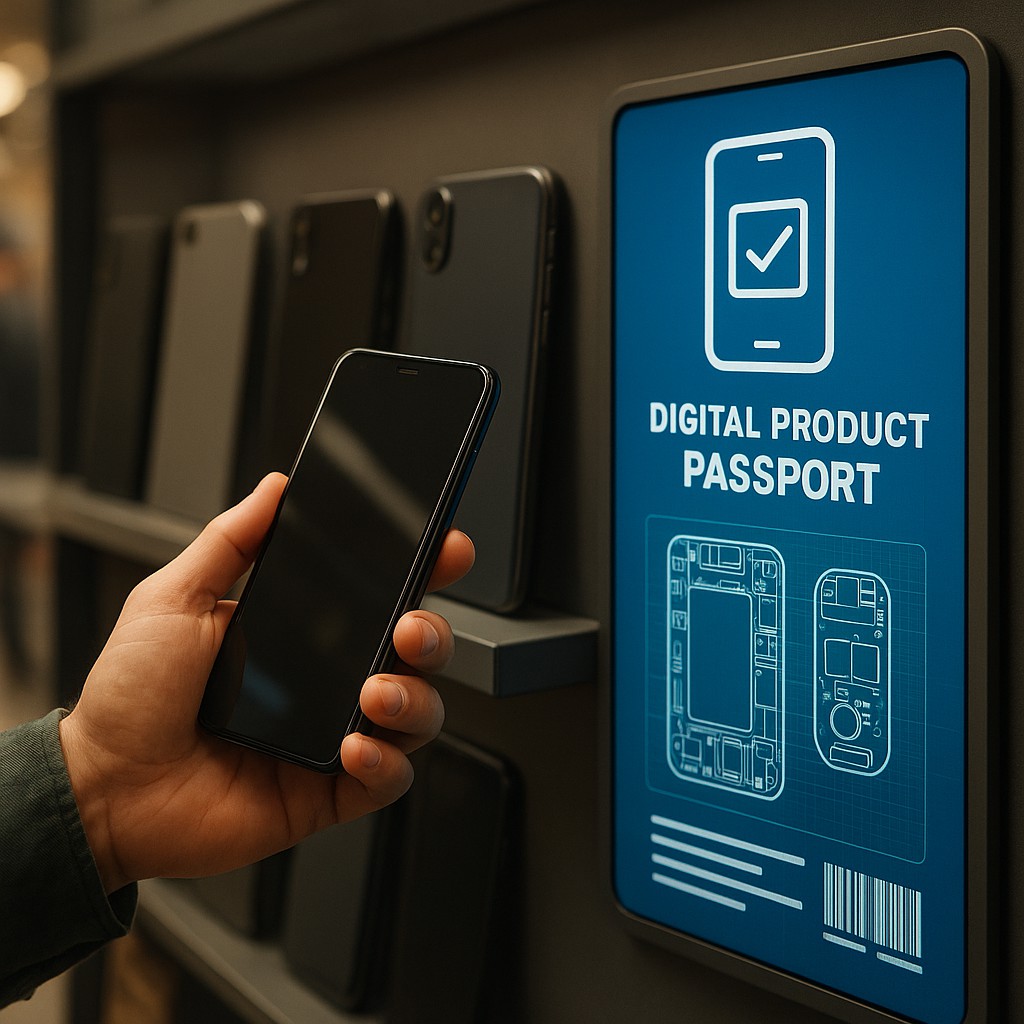
Imagine standing in a crowded electronics store, staring at a shelf of refurbished smartphones. They all look brand new, their screens polished to a mirror finish, but beneath that glass lies a mystery that would baffle even the most seasoned detective. One phone might have been cherished by a careful owner who kept it in a rugged case, while the one right next to it might have survived a three-story fall and a "back-alley" repair with cheap, third-party parts. Currently, we buy these devices based on little more than a prayer and a thirty-day warranty, hoping the battery wasn't swapped for a knock-off or that the internal sensors aren't held together by sheer luck.
This lack of transparency is more than just a headache for the average shopper; it is a massive roadblock for the global environment. Every year, millions of devices are thrown away because it is cheaper and easier to buy a new one than to verify if an old one is still good. We are essentially living in a "take-make-waste" economy, where a product’s secrets are buried with it in a landfill. However, a quiet revolution is brewing in international law. This movement aims to give every gadget a voice, a history, and a roadmap for its future. This is the era of the Digital Product Passport, a tool designed to turn the "black box" of consumer electronics into an open book.
The Secret Diary of Your Smartphone
At its core, a Digital Product Passport (DPP) is exactly what it sounds like: a digital ID card that follows a product from the moment its raw materials are pulled from the earth to the day it is finally recycled. Think of it as a medical record for your tech. When you scan a QR code or a hidden NFC chip on a device, you aren't just seeing a marketing website. Instead, you are accessing a secure database that stores verified information about the product’s carbon footprint, the percentage of recycled cobalt in its battery, and a log of every official repair it has ever had.
This is a massive leap forward from "greenwashing," where companies make vague claims about being eco-friendly without providing any proof. The DPP is part of a broader shift toward a "circular economy" - a professional way of saying we want to keep things in use for as long as possible. By providing a standardized set of data, these passports ensure that everyone in the chain, from the original manufacturer to the liquidator who buys the phone five years later, knows exactly what they are dealing with. It removes the guesswork and replaces it with solid facts, which is exactly what markets need to run smoothly.
Why Your Phone Needs a Resume
In our current world, products are often designed with a "cradle-to-grave" mentality - build it, use it, bury it. The Digital Product Passport forces a "cradle-to-cradle" approach. When a manufacturer knows that their product’s entire history will be visible to the public, their goals change overnight. If a brand uses high-quality parts that are easy to replace, that device will hold its resale value because its "health record" proves it is a safe bet. On the other hand, manufacturers who use glue instead of screws or unique parts that no one can find will see their products’ value tank as smart buyers check the passport and see a history of "unrepairable" design choices.
For the person actually using the phone, this transparency is a superpower. Imagine being able to see exactly how many times a battery has been charged before you buy a used device, or knowing for a fact that the screen was replaced by a certified pro using original parts. This level of detail doesn't just protect your wallet; it empowers you to be a more responsible consumer. You are no longer just buying a slab of metal and glass; you are investing in a verified history. This shift in value from "newness" to "reliability" is a main pillar of modern environmental laws, particularly under the European Union’s new rules for sustainable product design.
| Feature |
Current "Linear" Model |
Digital Product Passport Model |
| Material Sourcing |
Often unknown or self-reported by brands. |
Verified tracking of raw materials and origins. |
| Repair History |
Based on the seller's word or paper receipts. |
Permanent digital log of all certified repairs. |
| Recyclability |
Recyclers guess what materials are inside. |
Clear instructions and material lists for recyclers. |
| Resale Value |
Drops fast because the "health" is a mystery. |
Stays high for well-maintained, transparent devices. |
| End of Life |
Usually ends up in a junk drawer or landfill. |
Sent to specialized facilities for proper recycling. |
Deciphering the Digital Blueprint
You might be wondering how this actually works without turning into a bureaucratic nightmare. The secret is "interoperability" - making sure different systems can talk to each other. International regulators aren't just asking companies to make their own apps; they are requiring a common language for data. This means a recycler in France should be able to read the passport of a phone made in South Korea and sold in Germany. The data is usually kept on secure, shared networks to ensure that no single company can "lose" the records or edit them to hide a faulty batch of parts.
The information in these passports generally falls into three main buckets. The first is Identity and Origin, which covers where the minerals were mined and which factory built the unit. The second is Usage and Maintenance, which tracks the life of the product, including software updates and hardware fixes. The third is End-of-Life Instructions, which is perhaps the most critical for the environment. When a phone finally dies for good, a recycler can scan the passport to see exactly how to take it apart safely and which materials can be harvested for the next generation of devices. This turns a "dead" phone into a valuable "urban mine" of gold, copper, and rare earth elements.
Common Myths About Digital Identities
As with any new technology, there are plenty of misconceptions about what a Digital Product Passport can and cannot do. A common myth is that the passport is a "kill switch" or a physical tracking device. In reality, the passport carries data; it isn't an active monitor. It doesn’t use GPS to follow you around, and it certainly doesn't have the power to stop your phone from breaking if you drop it in a lake. It is a record-keeper, not a guardian angel. Its job is to provide the info needed to make the best decisions, but it cannot physically change the laws of physics or the wear and tear of daily use.
Another concern is that this will make electronics much more expensive. While there is an initial cost for manufacturers to set up these tracking systems, the long-term goal is to save money for both consumers and the planet. By making the used market more reliable, we reduce the need to mine new materials and manufacture new goods at such a frantic pace. When a product lasts twice as long because it is easier to repair and resell, the "cost per year of use" for the owner actually goes down. We are moving away from the "disposable tech" era, which was only "cheap" because we weren't paying for the massive environmental cost of cleaning up the mess it left behind.
The Role of the Recycler in the Loop
While we often focus on the buyer and the seller, the true heroes of this new economy are the recyclers. Currently, recycling electronics is like trying to solve a puzzle while blindfolded. A recycler might receive a mountain of different smartphones and have no idea which ones contain hazardous chemicals or which ones have batteries that might catch fire if poked. They have to treat everything with extreme caution, which makes the process slow and expensive.
With a Digital Product Passport, that blindfold is removed. The recycler scans a pallet of devices and instantly receives a "parts list" for every single one. They know exactly where the lithium-ion battery is, how to remove it without damaging anything else, and which plastics can be melted down together. This efficiency makes recycling profitable, which is the only way to ensure it happens globally. By providing a clear "instruction manual" for the end of a product's life, the DPP ensures that the materials we've already worked so hard to extract stay in the economy and out of the dirt.
Shaping a Future of Conscious Ownership
The move toward Digital Product Passports represents a deep shift in how we relate to the things we own. We are moving away from being passive "consumers" who simply use and toss, toward becoming "stewards" of the resources we hold in our hands. When every object has a story, a lineage, and a clear impact, we can no longer ignore the consequences of our purchases. This transparency creates a new kind of accountability, not just for the corporations that build the hardware, but for the people who decide which brands deserve their money.
As these regulations roll out worldwide, starting with big-impact items like batteries and electronics, we are seeing the birth of a more honest marketplace. You should feel empowered knowing that the "gamble" of the used market is being replaced by the certainty of data. The next time you hold a piece of technology, imagine the invisible thread of its digital passport connecting it back to the earth and forward to its next life. We are finally building a world where progress isn't measured by how much we can throw away, but by how skillfully we can keep the things we love in use.