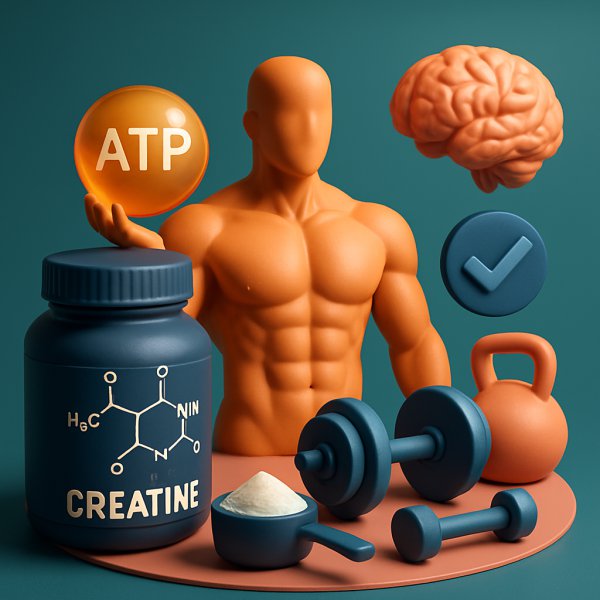
Why creatine quietly deserves a spot in your bathroom cabinet and gym bag
If you think creatine is only for muscleheads downing powder in a gym bathroom, think again. Creatine is one of the most studied nutritional compounds in human history, with decades of research showing benefits that reach beyond strength gains to cognition, aging, and recovery. It is inexpensive, well tolerated by most people, and backed by a surprisingly robust scientific résumé. That combination - potent effect, low cost, strong evidence - is rare in nutrition, which is why creatine matters.
Imagine your cells as tiny battery packs that power everything from a heavy squat to solving a math puzzle while sleep deprived. Creatine is a fast way to recharge those batteries, especially when you need energy in a flash. For short bursts of high-intensity activity, or when the brain needs immediate energy, creatine helps replenish ATP, the cellular currency of work, faster. That biochemical boost translates into practical results: more reps, faster recoveries, clearer thinking on a long day.
Beyond the gym, creatine has quietly shown benefits in older adults, in rehabilitation contexts, and in certain neurological situations. While it is not a panacea, its safety profile and multi-system effects make it a uniquely useful tool for a wide range of people. Over the next sections you will learn how creatine works, who benefits most, how to take it, what myths to ignore, and how to design a sensible plan if you decide to try it.
By the time you finish, you should feel confident discussing creatine at a dinner party, applying it safely to your training or health plan, and answering a few common myths with evidence-based calm. Let us unwrap the science, stories, and steps in a way that is practical and a bit delightful.
What creatine actually is and where it comes from
Creatine is a naturally occurring nitrogenous compound synthesized primarily in the liver and kidneys from three amino acids - arginine, glycine, and methionine. The body then transports creatine to tissues like skeletal muscle and the brain, where about 95 percent of it is stored. In muscle, creatine exists both as free creatine and as phosphocreatine, which serves as a rapidly mobilized reserve to regenerate ATP during short, intense efforts. You can also obtain creatine from dietary sources such as red meat and fish, but typical omnivorous diets provide only around 1 gram per day.
Because muscles store a finite amount of creatine, supplementation raises intramuscular levels and increases the phosphocreatine pool. That boost matters for activities that rely on quick energy - think sprinting, jumping, or heavy lifting. Vegetarians and vegans often start with lower muscle creatine levels and therefore may experience larger relative gains from supplementation. The biochemical simplicity of creatine belies its outsized practical effects.
How creatine powers energy: a cellular tale
Picture a sprint finish in a bike race: your muscles call for ATP instantly, faster than mitochondria can spin up new ATP via oxygen. Here creatine phosphate steps in like an emergency generator, donating a phosphate group to ADP to rapidly regenerate ATP. This system operates on the timescale of seconds, which is why creatine benefits high-intensity, short-duration work. The creatine transporter proteins shuttle creatine into muscle cells, and once inside, creatine kinase enzymes shuttle phosphates back and forth to maintain energy balance.
Over time, by increasing the phosphocreatine reservoir, creatine supplementation allows you to sustain maximal efforts for a bit longer, recover between sets more quickly, and perform slightly more total work in a training session. Those small increments accumulate, producing meaningful gains in strength and muscle mass when combined with consistent resistance training. The brain also uses ATP intensely, and raising cerebral creatine has been linked to improvements in certain cognitive situations, particularly when baseline creatine is low or energy demand is high.
Evidence-based benefits that go beyond "more reps"
The most consistent benefits of creatine are improved high-intensity exercise performance and increased lean mass when paired with resistance training. Meta-analyses of hundreds of trials show reliable gains in strength and power, especially in short-interval tasks. Beyond the gym, evidence supports cognitive benefits in specific contexts - for example, improved memory and intelligence test performance during sleep deprivation or in older adults. Creatine has also shown promise as an adjunct in neurological conditions and in muscle-wasting disorders, though such uses require clinical oversight.
For older adults, creatine combined with resistance exercise helps preserve muscle mass and functional capacity, which can translate to better mobility and reduced frailty. In rehabilitation settings, creatine can expedite strength recovery after immobilization or surgery. Importantly, benefits are generally dose-dependent up to a saturation point, and individual response varies. That variability means some people notice dramatic changes, while others experience subtler improvements.
Forms, flavors, and the one table that clarifies the choices
Creatine supplements come in several chemical formulations, but not all are created equal in evidence or cost-effectiveness. Creatine monohydrate is the gold standard - cheap, proven, and effective. Other forms claim advantages in solubility or absorption, but most lack convincing superiority. The table below summarizes the common variants, pros, cons, and the bottom-line recommendation.
| Form of creatine |
Key claim |
Evidence and notes |
Bottom-line recommendation |
| Creatine monohydrate |
Proven, cheapest |
Strongest evidence for efficacy and safety; micronized improves mixability |
First choice for most users |
| Micronized creatine |
Better mixing |
Same molecule as monohydrate, smaller particles, easier to dissolve |
Good option if you dislike grit |
| Creatine HCl |
Better solubility, less bloating |
Limited independent evidence of superior uptake; more expensive |
Consider if GI sensitivity to monohydrate |
| Creatine ethyl ester |
Better absorption claim |
Poor evidence, tends to convert to creatinine faster |
Avoid, not recommended |
| Buffered creatine (e.g., kre-alkalyn) |
Stability in stomach |
Insufficient high-quality evidence of advantage |
Not necessary for most people |
| Creatine nitrate, citrate |
Increased solubility |
Some studies show effects, but usually more expensive for similar benefit |
Optional, cost-effectiveness lower than monohydrate |
How to dose and time it: practical rules that actually work
There are two common dosing strategies that both lead to increased muscle creatine stores. The first is a loading protocol of roughly 20 grams per day divided into 4 doses for 5-7 days, followed by 3-5 grams per day as maintenance. This saturates muscles quickly and is useful if you want faster effects. The second is simply taking 3-5 grams per day from the start, which will saturate stores more slowly over 3-4 weeks but avoids any loading-related gastrointestinal discomfort.
Timing matters less than consistency, but a slight edge may exist for taking creatine shortly after exercise when blood flow and insulin-mediated uptake are favorable. Pairing creatine with a small carbohydrate or carbohydrate-protein snack can modestly increase muscle uptake. Hydration is sensible but you do not need to chug water obsessively; creatine increases water content in muscle cells, which is part of how it aids growth and recovery.
Safety, side effects, and who should check with a clinician
Creatine is generally well tolerated in healthy adults when taken at recommended doses. Common effects include weight gain due to water retention in muscle, and occasional gastrointestinal upset at high single doses. Contrary to a persistent myth, there is no strong evidence that creatine damages kidneys in healthy people. However, if you have preexisting kidney disease, are taking nephrotoxic medications, or are pregnant or breastfeeding, consult your healthcare provider before starting supplementation.
Some people worry about cramping or dehydration, but randomized trials do not consistently support those claims. Creatinine levels measured on blood tests may increase after creatine supplementation, which can be misinterpreted as kidney dysfunction. If you take creatine and have routine labs ordered, inform your clinician so results are interpreted correctly. Overall, creatine is one of the safest ergogenic aids available.
Common myths, confidently busted
Myth 1: Creatine is a steroid or illegal performance enhancer. Creatine is a natural compound, not a steroid, and is legal and allowed in all major sports. Myth 2: You must cycle creatine to avoid tolerance. No solid evidence requires cycling for effectiveness; muscles stay saturated with consistent maintenance dosing. Myth 3: Creatine will make women look bulky or manly. Creatine supports muscle growth when paired with resistance training, but it does not change your hormonal profile or cause feminizing or masculinizing effects.
Another myth is that caffeine negates creatine. Some older studies suggested an interaction in isolated contexts, but real-world use combining reasonable caffeine and creatine doses usually shows no major harm. If you rely on extreme caffeine or notice performance blips, experiment by adjusting amounts, rather than abandoning creatine altogether. Myth-busting is useful because misconceptions often keep people from trying something safe that could help them.
Special populations and nuanced uses
Vegetarians and vegans often start with lower muscle creatine and tend to experience larger relative improvements in performance and cognition from supplementation. Older adults benefit particularly from the combination of creatine and resistance training, which supports mobility and independence. For athletes in weight-class sports, remember that creatine-induced weight gain is primarily water and muscle, so plan timing around competition if necessary.
Children and adolescents may use creatine in certain clinical contexts under medical supervision, but routine supplementation in young athletes should be approached cautiously and with professional oversight. Pregnant and breastfeeding people should avoid starting new supplements without discussing them with a clinician, because clinical data are limited. When used thoughtfully and in consultation with healthcare providers as needed, creatine can be beneficial across a spectrum of ages and conditions.
Two short stories from real life
Sam is a 28-year-old vegan recreational lifter who plateaued on his squat and deadlift after two years of steady training. Curious, he began taking 5 grams of creatine monohydrate daily and paired it with targeted accessory work and progressive overload. Within six weeks he noticed he could perform an extra rep or two on heavy sets and added 10 pounds to his squat in two months. His coaching team credited the extra work capacity and recovery afforded by creatine as a key factor in breaking the plateau.
Grace is a 68-year-old woman recovering from hip surgery who feared losing more independence. Her physical therapist introduced a program of progressive resistance training and asked her physician about adding creatine. With guidance and monitoring, she took 3 grams daily, kept consistent with rehab exercises, and over three months she regained much of her pre-surgery strength and confidence. The combination of training and creatine helped her rebuild muscle faster than expected, improving her mobility and reducing fear of falls.
A practical, story-driven 6-step action plan you can try this week
Imagine you decide to test creatine for six weeks. Start simple, follow a routine, and observe changes.
- Talk to your clinician if you have kidney disease, take nephrotoxic drugs, are pregnant, or have major medical concerns. Clear the path before starting.
- Buy creatine monohydrate from a reputable brand - micronized if you prefer smoother mixing - and start with 3-5 grams per day to avoid fuss. Taking a consistent scoop each day is more important than timing.
- Pair your daily creatine with a post-workout snack or a small carb-protein drink to slightly enhance uptake; if you do a loading phase, split doses to avoid GI upset.
- Track simple metrics weekly - training volume, sleep, mood, body weight, and perceived recovery - to see if creatine influences them. Use a notebook or app; data beats speculation.
- Stay hydrated and keep resistance training consistent; creatine amplifies the benefits of good training, it does not substitute for it.
- Reassess after 6-8 weeks, including any lab work if relevant, and decide whether to continue long-term at 3-5 grams per day.
Helpful quick list - dosing options:
- Loading: 20 g/day divided into 4 doses for 5-7 days, then 3-5 g/day maintenance.
- No-load: 3-5 g/day continuously, saturates stores in 3-4 weeks.
Reflection prompts to deepen your understanding
- What specific goals could creatine realistically support in your life - strength, recovery, cognitive clarity, or rehabilitation - and how would you measure progress?
- If you have a training plateau or are entering a season of higher stress or poor sleep, what would change in your daily routine if creatine helped you recover faster?
- What concerns or barriers do you have about trying creatine, and who could you consult to address them?
Compact key takeaways you can remember without notes
- Creatine is a naturally occurring, well-studied compound that increases rapid energy capacity and enhances high-intensity performance.
- Creatine monohydrate is the cheapest and most evidence-backed form, and a daily 3-5 gram maintenance dose works well for most people.
- Benefits extend beyond muscle to cognition and aging, particularly when paired with resistance training.
- Creatine is generally safe for healthy adults, but consult a clinician if you have kidney disease or other major health issues.
- You do not need to cycle creatine, and common myths about steroids, cramping, and severe dehydration are unsupported in healthy users.
Go ahead, be curious and practical
Creatine is an elegant example of a small intervention with outsized effects when used sensibly. It does not promise miracles, but it reliably boosts the body and brain where rapid energy is needed. If you are training consistently, recovering from injury, or simply want to support cognitive resilience in demanding moments, creatine offers a low-risk, high-value option worth trying. Approach it with a clear plan, track your results, and let gradual improvements be your proof.
If you decide to try creatine, do it deliberately, monitor how you feel, and enjoy the quiet satisfaction of using a well-understood, evidence-based tool to get a little better every week.