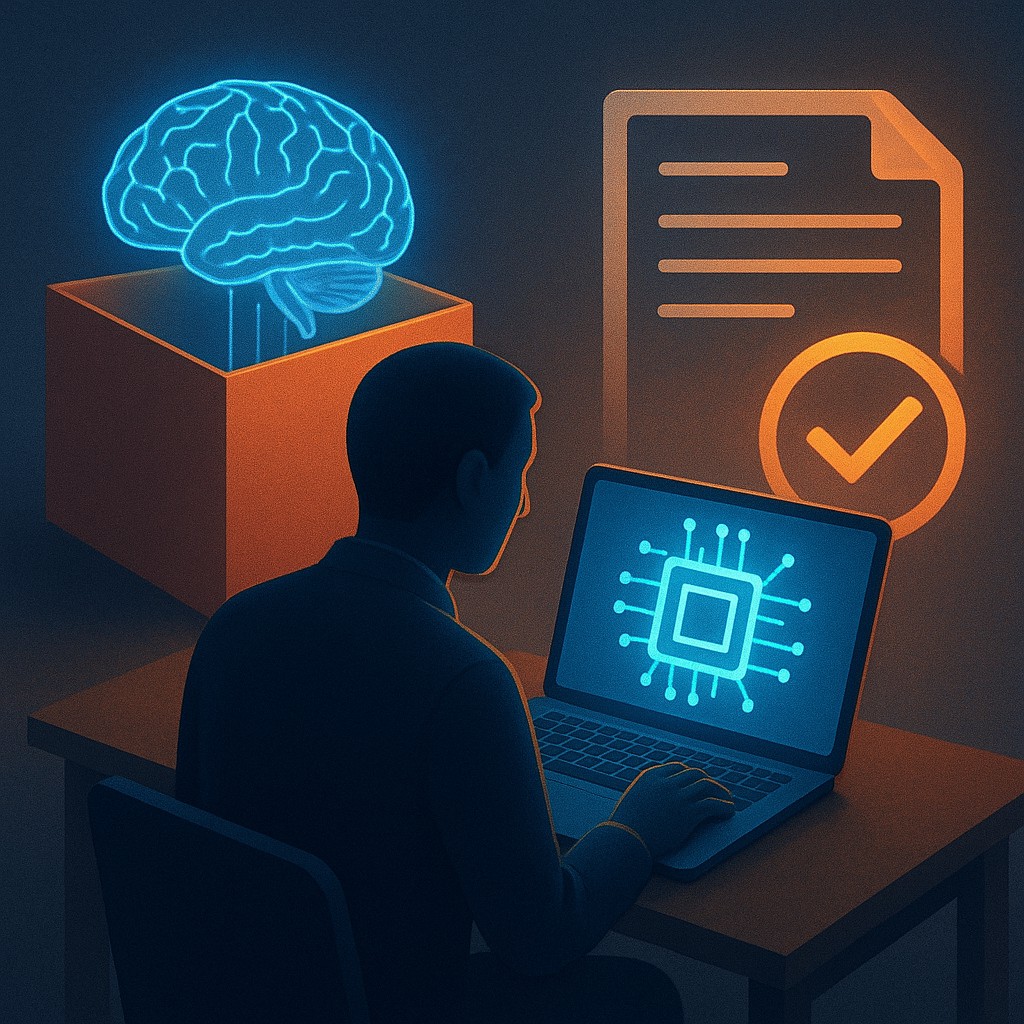
Imagine you are applying for your dream job. You have spent years sharpening your skills, your resume is flawless, and you meet every single requirement in the job posting. You hit submit, feeling a surge of hope, only to receive an automated rejection email four seconds later. There was no human recruiter, no thoughtful review of your portfolio, and no chance to explain that gap in your employment history from three years ago. Instead, a silent mathematical formula decided you werent a "culture fit" based on data points you cannot see and logic you aren't allowed to question. This is the reality of the black box era, where algorithms act as invisible gatekeepers for everything from home loans to healthcare.
The problem isn't that machines are inherently malicious, but rather that they are incredibly efficient mirrors. If you feed a computer decades of hiring data from a company that previously only hired people from certain wealthy neighborhoods, the computer will conclude that living in those zip codes is a prerequisite for success. It doesn't know it is being "biased" in the human sense; it simply thinks it is being statistically accurate. As these automated systems take over more of our civic life, a new movement in tech regulation is demanding that we stop crossing our fingers and hoping for the best. This is where the Algorithmic Impact Assessment comes in: a rigorous new way to force software developers to look their creations in the eye before letting them loose on the world.
Moving Past the "Move Fast and Break Things" Era
For the last two decades, the tech industry operated under a mantra of rapid iteration. The idea was simple: build a product, launch it immediately, and if it accidentally ruins someone’s credit score or denies them a life-saving medical procedure, you can just release "Version 2.0" to fix the bug later. While this works fine for photo-sharing apps that occasionally crash, it is a disastrous philosophy when applied to tools that determine legal rights or economic mobility. We are now seeing a global shift toward a "preventative" model of innovation. Regulators are beginning to treat software more like heavy machinery or new medicine. You would not launch a new drug without clinical trials, so why should a loan-approval algorithm be any different?
This shift represents a fundamental change in how we define corporate responsibility. In the past, if an algorithm produced a biased result, companies could play the "oops" card, claiming they never intended to discriminate. However, Algorithmic Impact Assessments (AIAs) focus on outcomes rather than intentions. It doesn't matter if the developer has a heart of gold if the code they wrote ends up systematically disadvantaging marginalized groups. By requiring companies to document their logic and test for unfair impacts before deployment, we are moving toward a world where "I didn't mean to" is no longer a valid legal defense.
The Anatomy of an Algorithmic Impact Assessment
So, what does an AIA actually look like in practice? Think of it as a deep-dive forensic investigation into a piece of code. It starts with data provenance, which is a professional way of asking, "Where did you get this information, and is it tainted?" If a bank uses historical data from the 1950s to train a mortgage-approval AI, that data is inherently poisoned by historical housing discrimination. The assessment forces the developer to acknowledge this "data debt" and explain how they have cleaned or adjusted the information to prevent those old ghosts from haunting new borrowers. It is an exercise in radical transparency that pulls back the curtain on the "secret sauce" of private software.
Beyond the data, the assessment looks at the mathematical weight assigned to different variables. For example, if a hiring AI gives a massive amount of "points" to candidates who played lacrosse in college, an AIA would flag this. While playing lacrosse isn't a protected category like race or gender, it serves as a "proxy" for wealth and privilege. By identifying these proxies, auditors can force companies to rebalance their equations. This process isn't just about avoiding lawsuits; it is about building systems that are actually more accurate. A system that ignores a brilliant candidate just because they didn't play a specific sport is, quite frankly, a bad piece of software. AIAs turn these social concerns into technical requirements.
Comparing Old Development Habits with New Regulatory Standards
To understand the scale of this change, it helps to look at how different the "Pre-AIA" world is from the "Post-AIA" world. The following table summarizes the key shifts in how technology is being governed and evaluated.
| Feature |
The Old "Black Box" Model |
The New "Impact Assessment" Model |
| Primary Goal |
Speed to market and high efficiency. |
Safety, fairness, and legal compliance. |
| View of Bias |
An accidental "bug" to be patched later. |
A predictable risk to be mitigated upfront. |
| Transparency |
Proprietary "secret sauce" logic. |
Documented, auditable decision paths. |
| Accountability |
Intent-based (Did we mean to be biased?). |
Outcome-based (Did the system cause harm?). |
| Public Role |
Passive users of the technology. |
Stakeholders with a right to explanations. |
This transition is often compared to environmental impact studies. Before the 1970s, a factory could simply dump chemicals into a river and apologize only if the fish started floating to the top. Today, you have to prove you won't kill the fish before you even break ground on the factory. Algorithmic Impact Assessments are doing the same for the digital ecosystem. They ensure that the "downstream" effects on society are considered before the first line of code is ever used in the real world. This represents a maturing of the industry that recognizes code is not just math; it is social policy written in programming languages like Python or C++.
Cracking the Black Box Without Breaking the Magic
One of the biggest misconceptions about these regulations is that they will destroy innovation by forcing companies to give away their trade secrets. Skeptics argue that if you have to explain every part of an algorithm, you lose the competitive advantage that makes the software valuable. However, AIAs don't usually require companies to post their entire source code on a public billboard. Instead, they require companies to show their work to qualified third-party auditors or government agencies. It is more like a building inspector checking the wiring in a skyscraper. The public doesn't need to see the blueprints for the elevator motor, but they do need a professional to certify that the elevator isn't going to free-fall forty stories.
Another myth is that "math cannot be biased" because numbers are objective. This is perhaps the most dangerous idea in modern tech. While 2+2 always equals 4, the decision to use "number of arrests" instead of "number of crimes committed" as a data point in a policing algorithm is a human choice loaded with bias. Math is a tool, not a moral compass. AIAs help engineers realize that "objective" data often carries the baggage of a very subjective world. By forcing a dialogue between sociologists, legal experts, and coders, these assessments bridge the gap between "it works mathematically" and "it works for society."
The Global Wave of Algorithmic Accountability
We are seeing these requirements pop up in major laws around the world, most notably in the European Union's AI Act. This landmark regulation categorizes AI systems by risk level. If you are building a "high-risk" system, such as one used in education, employment, or law enforcement, an impact assessment isn't just a suggestion; it is a legal requirement for entering the market. In the United States, cities like New York have already implemented laws requiring "bias audits" for automated employment tools. This isn't a fringe movement anymore; it is becoming the global standard for doing business in the 21st century.
This regulatory wave is also changing the job market. We are seeing the rise of the "Algorithm Auditor," a role that requires a mix of data science skills, legal knowledge, and ethics. These professionals are the "new accountants" of the digital age. Just as a public company needs an independent firm to audit its finances to prevent fraud, companies will increasingly need independent firms to audit their algorithms to prevent discrimination. For the next generation of tech workers, understanding the social impact of their code will be just as important as knowing how to manage a database or design a user interface.
Designing for a More Human Future
At its heart, the push for Algorithmic Impact Assessments is a push for a more human-centered digital world. It is an acknowledgment that while machines are great at finding patterns, humans are the only ones who can decide which patterns are worth keeping and which ones belong in the trash heap of history. These assessments encourage a slower, more intentional style of creation. They ask developers to pause and consider the person on the other side of the screen, the one whose life might be changed by a single "if/then" statement. By weaving ethics into the very fabric of the development process, we aren't just making software safer; we are making it more worthy of our trust.
As you navigate this increasingly automated world, remember that technology is not an unstoppable force of nature like the weather. It is a tool shaped by human hands, guided by human values, and governed by human laws. The move toward algorithmic accountability is a powerful reminder that we have the power to demand better from the tools we use. By championing transparency and rigorous testing, we ensure that the future of artificial intelligence isn't a cold, unfeeling black box, but a bright, open window into a fairer society. You are not just a data point in someone’s equation; you are a stakeholder in the digital age, and you deserve a system that sees the full complexity of your humanity.