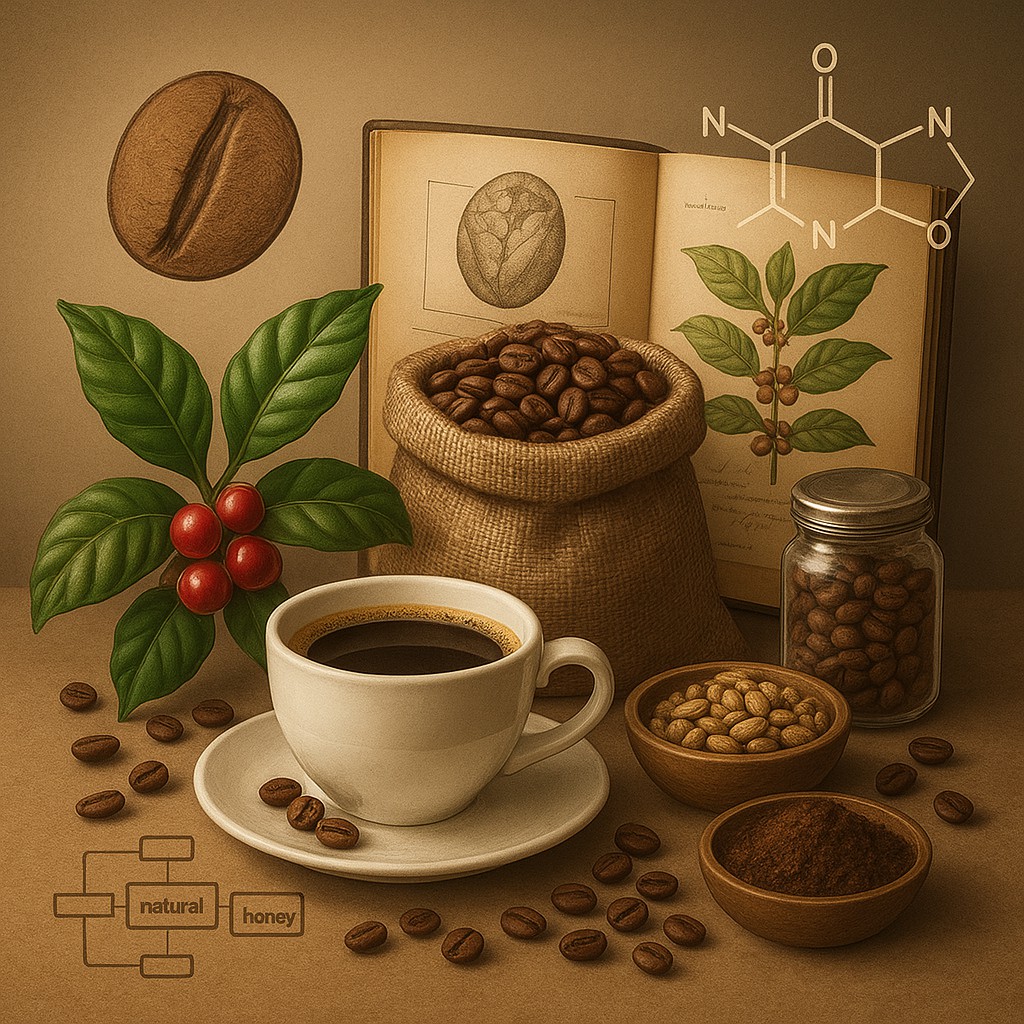
Why coffee deserves your curiosity (and your first sip)
Coffee is not just the drink that drags you out of bed, it is a small daily miracle that has crossed continents, wars, fashions and laboratories. A single cup carries a complex story of botany, climate, human know-how, and chemical alchemy in your brain. Learning about coffee helps explain how the same seed can suggest chocolate, jasmine or orange, and why your focus sharpens after a few sips.
Beyond the social ritual and the taste pleasure, coffee is a fascinating subject for nutrition and neurobiology. Its effects on attention, mood and memory are real, but shaped by genetics, individual tolerance, and how the coffee is grown and prepared. Coffee is also a mirror of our planet: it reveals differences in soil, altitude and culture that make the world’s cups so varied.
If you think you know coffee because you love your morning espresso, you are about to discover layers of history, science and craft you did not expect. This text walks you through the journey from bean to brain, untangling myths and facts, and giving practical keys to choose and enjoy coffee with more insight.
Make your cup, but don’t gulp it all at once. We will dive into origins, the main botanical families, varieties, processing, and finally the biology of the buzz.
Distant origins and legends that stand up
The best-known story of coffee’s origin takes place in Ethiopia around the 9th century, in the legend of the shepherd Kaldi. He reportedly noticed his goats acting unusually lively after eating red cherries from certain bushes. Local monks used the berries to stay awake during prayers, and the rest sparked a stimulating revolution. The tale likely has embellishments, but it reflects Ethiopia’s early role as the birthplace of Coffea.
From Ethiopia, coffee traveled to the Arabian Peninsula, mainly Yemen, where it was cultivated and turned into a drink by the 15th century. Yemeni ports like Mokha (or Mocha) played a big part in spreading coffee to Europe and Asia. By the 17th century, the plant had reached European colonies, giving rise to coffee cultures in Latin America, West Africa and Southeast Asia.
Over centuries, coffee has taken on many social meanings: sacred beverage, colonial commodity, centerpiece of intellectual exchange in European coffeehouses, then a global product. Today producing regions have developed strong flavor identities, where altitude, climate, soil and skill shape the character of the cup.
Who are coffee’s botanical families and why it matters for your cup
Botanically, there are dozens of Coffea species, but three dominate global production: Coffea arabica, Coffea canephora (often called robusta), and Coffea liberica. These species differ in taste, disease resistance, caffeine content and growing requirements. Knowing these differences helps explain why some coffees are expensive and delicate, while others are bold and bitter.
Here is a quick comparison to capture the essential differences between these three main species:
| Species |
Historical origin |
Caffeine content |
Typical flavor profile |
Growing conditions |
| Arabica (C. arabica) |
Ethiopia |
Low to moderate |
Fruity, floral, fine acidity, aromatic complexity |
High altitudes, disease sensitive |
| Robusta (C. canephora) |
Central and West Africa |
High |
Full-bodied, earthy, more bitter, dense crema in espresso |
Hardy, grows at low altitude, high-yielding |
| Liberica (C. liberica) |
West Africa |
Variable |
Woody, fruity, sometimes smoky notes, rare on the market |
Very rustic, uneven yields |
This table shows the gist: arabica tends to mean finesse and aromatic complexity, robusta provides strength and caffeine, and liberica offers exotic, unusual profiles usually found in local markets or specialty cafes.
Varieties, cultivars and terroir: micro-differences, macro-impact in the cup
Within arabica there are hundreds of varieties and cultivars, like Typica, Bourbon, Caturra, Catuai and Geisha. Each has genetic traits that affect bean size, disease resistance and aroma profile. But genetics are only part of the story: terroir - altitude, soil composition, rainfall and microclimate - shapes those traits to produce unique coffees. Borrowed from wine, the word terroir explains why the same cultivar can taste different depending on the mountain it grows on.
Human hands matter too. Farming practices - shade management, selective picking, fertilization - determine the quality of cherries harvested. Manual picking, often more costly, allows harvesters to select only ripe cherries, favoring cleaner aromatic extraction. Mechanical or non-selective harvesting can introduce under- or overripe beans, upsetting the flavor balance.
Finally, biodiversity and socio-economic conditions influence the sustainability of farms. Small specialty plots aim to maximize quality and income by choosing varieties suited to the local climate, while large plantations often favor hardy, high-yielding varieties.
From farm to cup: processing, roasting and extraction methods that change everything
After harvest, cherries go through very different processing methods that strongly shape final flavor. The three main approaches are washed, natural (dry) and honey. The washed process removes the pulp quickly and tends to produce clean acidity and aromatic clarity. The natural process dries whole cherries, often yielding intense fruity aromas and a sweeter mouthfeel. Honey processing removes the pulp but leaves some mucilage during drying, creating coffees that sit between the two, with more caramelized notes.
Roasting, the next step, releases and transforms aromatic compounds. A light roast highlights acidity and floral or fruity notes in a high-altitude arabica. A medium roast balances sweetness and bitterness. A dark roast develops cocoa and smoky notes, reduces perceived acidity and can amplify bitter sensations. Roasting is an art: a slight change in temperature or time can make a very different cup.
Finally, extraction method - espresso, drip filter, French press, cold brew - influences concentration and expression of flavors. A quick pressure extraction like espresso emphasizes crema and intensity, while a filter brew reveals delicacy and nuance.
How coffee acts on the brain: the chemistry of wakefulness, explained simply
The key molecule in coffee is caffeine, a central nervous system stimulant. At the molecular level, caffeine blocks adenosine receptors in the brain. Adenosine is a neuromodulator that signals tiredness; when it binds to its receptors you feel sleepy. By blocking those receptors, caffeine prevents the sleep signal, producing alertness and wakefulness.
Beyond adenosine, caffeine has indirect effects on other neurotransmitters like dopamine and noradrenaline. It slightly boosts dopaminergic transmission in certain regions, which can lift mood and motivation, without producing the intense effects of a direct dopamine stimulant. Noradrenaline and adrenaline contribute to increased alertness, sometimes a higher heart rate, and mobilization of energy.
Observed cognitive effects include temporary improvements in sustained attention, reaction time and vigilance. Effects on memory are more nuanced: caffeine may help consolidate some types of memory if consumed at the right time, but it does not magically turn a tired brain into a super-performer. Tolerance builds quickly - regular drinkers experience less stimulation than occasional users.
Benefits, limits and common myths to know
Coffee has been widely studied, and findings show interesting but cautious associations. Consumed in moderation, coffee is linked to a lower risk of certain neurodegenerative diseases, like Parkinson’s, and a modestly reduced risk of type 2 diabetes. It also contains antioxidants that contribute to some metabolic benefits. Still, correlation is not causation, and these links often depend on how coffee is consumed, initial health status and lifestyle factors.
Here are a few myths to bust:
- Coffee systematically dehydrates you: false. Coffee has a mild diuretic effect, but in regular consumers it contributes to overall fluid intake and does not cause meaningful dehydration.
- Coffee automatically causes chronic high blood pressure: exaggerated. Caffeine can raise blood pressure temporarily in some people, but habitual consumption does not necessarily lead to long-term hypertension for most.
- Coffee ruins your sleep if you drink it in the evening: partially true. Half of the caffeine can remain in your system for several hours, and sensitivity varies, so avoid late coffee if you are sleep sensitive.
- Decaf is caffeine-free: false. It contains a small amount of caffeine, but far less than regular coffee.
Be cautious for certain groups: pregnant women, people with severe anxiety or heart rhythm disorders should discuss their intake with a healthcare professional.
Practical tips to drink better and enjoy smartly
Learning to enjoy coffee starts with identifying what you like - acidity, sweetness, bitterness, body - then matching those preferences to origin, variety and preparation methods. Here are simple, practical tips:
- Favor freshly roasted beans and grind just before brewing to preserve aromas.
- If you like bright acidity and fruity notes, explore high-altitude arabicas from Central America or Ethiopia, light roasted.
- For a bold cup with good crema in espresso, include a small percentage of quality robusta, or choose a dark-roasted arabica.
- Avoid drinking coffee 6 to 8 hours before bedtime if you are sleep-sensitive, and test your tolerance gradually.
These small habits will boost pleasure and reduce unwanted effects.
A short guide to recognizing a good coffee by your palate
Coffee tasting, or "cupping", relies on a few accessible criteria: dry aroma, acidity, body, balance, finish. The dry aroma, before brewing, already hints at aromatic notes. Acidity is not a flaw, it brings liveliness - think lemon or apple depending on the profile. Body describes mouthfeel: light, medium or rounded like chocolate. Balance means no single trait overwhelms unpleasantly.
Learn to describe your cup with simple words: fruity, floral, chocolate, caramel, earthy, nutty. The more you practice, the better you will sense differences between a high-altitude Bourbon and a Brazilian robusta.
Looking ahead: coffee, climate and innovations
Climate change and plant diseases threaten some historical producing regions, especially arabica, which demands high altitude and a stable climate. Researchers and growers are trialing more resistant varieties, replanting shade, and adopting agroecological practices to protect quality and biodiversity. Innovation is also happening in the cup: hybrid coffees, experimental processing, and new extraction techniques that reveal different aromatic profiles.
Supporting sustainable practices, buying traceable quality coffees and valuing producers’ work are ways to help coffee remain a source of pleasure and fair income.
Go ahead, experiment and build your own science of taste
Coffee is both simple and infinite. A single seed can tell you about mountains, shipping routes, hardworking hands and chemical reactions in your brain. Taste with curiosity, read origin labels and try different methods, and you become both an informed consumer and a small sensory researcher.
Start by identifying a cup you like, then break it down: origin, species, processing, roast, brewing method. Then try a new profile each week. After a few attempts your flavor vocabulary will sharpen and your enjoyment will grow. Drink wisely, notice how your body reacts, and share your discoveries over a good cup - that is where the art of coffee also becomes a human connection.