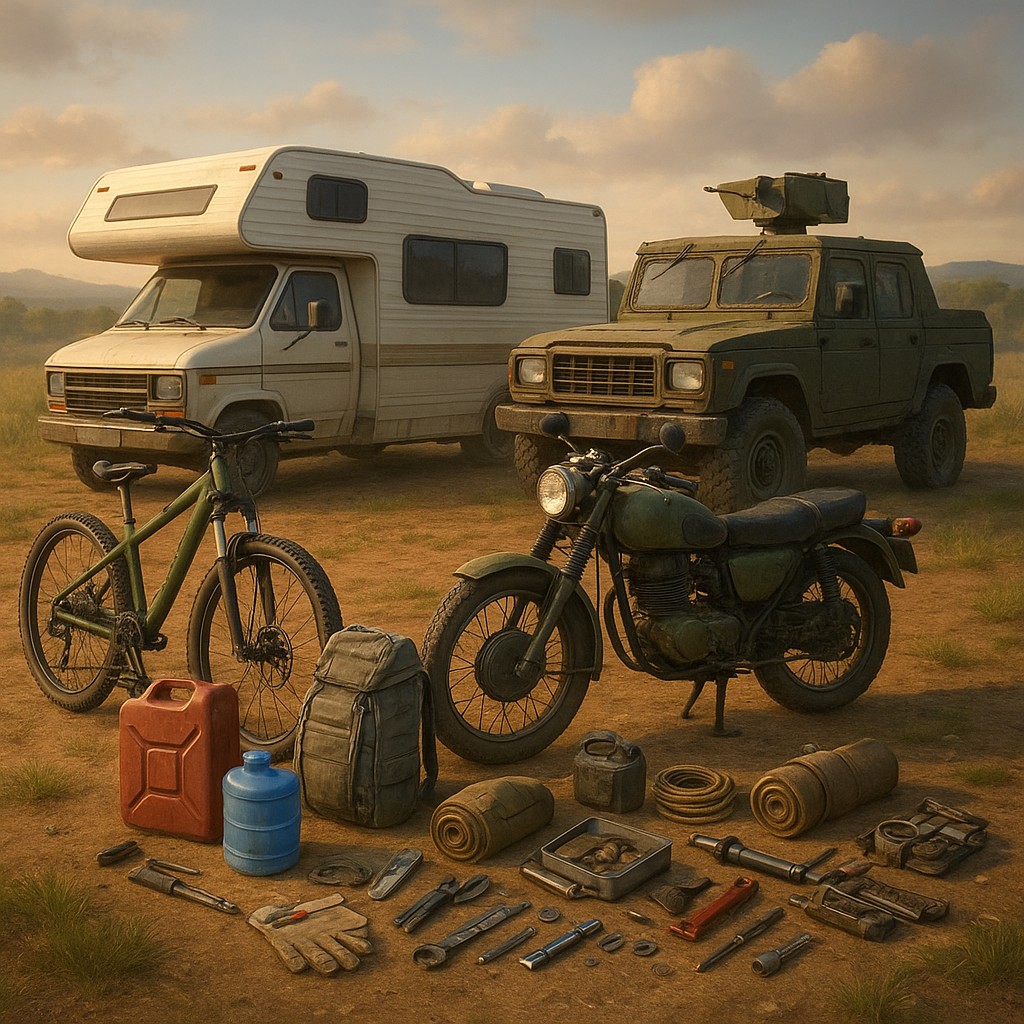
Why the apocalypse vehicle question matters more than you think
Imagine a world where GPS flickers, grocery shelves sit empty, and the radio plays static between tunes. A lot of fiction treats the "vehicle choice" like a style pick - armored limousine here, souped-up muscle car there. But in any real breakdown of infrastructure, the vehicle you pick will influence your access to water, food, shelter, and safety, and it will shape how you travel with others, what repairs you can do, and how long you can stay mobile. This is not just about looking cool, it is about survival math meeting everyday practicality.
Picking an apocalypse vehicle is an exercise in tradeoffs. Speed loses value if you cannot refuel. Armor is only useful if you can maintain the added weight. Large living rigs are comfortable until they get stuck in mud or draw unwanted attention. So the "best" vehicle is the one that balances mobility, reliability, range, payload, and repairability for the scenario you are most likely to face.
This guide will walk you through the physics, the common myths, the realistic retrofits, and the decision tree that helps you choose or build a vehicle that actually gets you where you want to go. I will blend clear science, practical tips, and a few storytelling snapshots so you remember the tradeoffs when it counts.
By the end you will know what to look for at a dealership or a junkyard, which upgrades earn their keep, and why one particular configuration often emerges as the practical winner for most plausible disaster scenarios.
What "best" really means - clarifying the mission
Before choosing anything, narrow the mission. Are you planning to bug out to a rural rendezvous 200 miles away, or to stay local and scavenge supplies? Will you travel solo, with a partner, or a small group? What hazards do you expect - urban unrest, extreme weather, chemical contamination, or long-term infrastructure collapse? Each of those variables changes how you weight criteria like speed, stealth, and living space.
There are a handful of universal priorities you should use to evaluate any apocalypse vehicle. Reliability is first, because a flashy machine that breaks down is a dead asset. Next comes fuel efficiency and fuel source flexibility, since fuel scarcity is one of the most persistent problems after major disruptions. Off-road capability matters if roads are damaged or blocked. Payload and storage let you carry water, tools, food, and spare parts. Finally, repairability and modular systems let you adapt the vehicle over time, using common parts and simple tools.
If you keep these priorities front-and-center, you avoid common traps like choosing big RVs that attract attention, or exotic electrics that cannot be charged when the grid is down. The right choice will rarely be the most expensive or the flashiest.
The top contenders and how they compare in the real world
Let us look at the most realistic vehicle classes people consider, and what they truly offer when civilization stumbles. I will summarize the main strengths and weaknesses, then provide a compact comparison table for quick reference.
- Pickup trucks, especially diesel 4x4s: High payload, good off-road capability when equipped, easy to maintain with abundant parts, excellent for towing and storage. Diesel engines are resilient and often have better fuel economy. They can be customized with a canopy, roof rack, and modular storage.
- SUVs and crossovers: Good for families, more comfortable, often have all-wheel drive. But payload and towing are limited compared to pickups, and many modern SUVs are complex to repair.
- Campervans and RVs: Provide immediate living space, cooking, and sleeping. They are heavy, have a large profile that reduces stealth, and are poor off-road. Maintenance and fuel use are problematic in long disruptions.
- Motorcycles and dirt bikes: Extremely mobile and fuel efficient, great for scouting or quick errands. They carry very little cargo and offer no protection from weather or threats.
- Bicycles: Quiet, virtually maintenance-free, and excellent for short-range, low-energy travel. They are slow and carry minimal cargo, but they are invaluable in local post-collapse mobility.
- Armored vans or ex-military vehicles: Offer protection and durability, but they are heavy, expensive to acquire and run, and require specialized maintenance. They are also conspicuous.
- Amphibious vehicles or boats: Essential if your post-disaster plan involves waterways or island hopping. Boats present their own logistics - fuel, mooring, and exposure to the elements.
Here is a compact table comparing these classes across the key criteria:
| Vehicle Type |
Mobility (off-road) |
Fuel Efficiency |
Carrying Capacity |
Repairability / Parts |
Stealth / Visibility |
| Diesel 4x4 Pickup |
High |
Good |
High |
High - common parts |
Moderate |
| SUV / Crossover |
Moderate |
Moderate |
Moderate |
Moderate |
Moderate |
| Campervan / RV |
Low |
Poor |
Very High |
Low - specialized |
Low (very visible) |
| Motorcycle / Dirt Bike |
Very High |
Excellent |
Very Low |
Moderate |
High (small) |
| Bicycle |
Variable (off-road OK) |
None |
Minimal |
High - simple |
Very High |
| Armored / Military Vehicle |
High |
Poor |
High |
Low - specialized |
Low (very visible) |
| Boat / Amphibious |
Variable |
Variable |
Moderate |
Variable |
Moderate-High (on water) |
Why a diesel 4x4 pickup often wins the practical vote
If you were to pick one vehicle type that balances nearly all priorities, a diesel-powered 4x4 pickup, ideally a simple, older model, often comes out on top. Here is why.
Diesel fuel stores and burns differently than gasoline. Diesel engines tend to run longer on the same amount of energy, and older diesel engines are mechanically simpler than modern gasoline engines with electronic fuel injection and emissions controls. Simpler engines mean you can fix more problems in the field with basic tools. Diesel also handles long-term storage better if treated correctly, and biodiesel options can sometimes be sourced from waste vegetable oil in a pinch.
The pickup chassis is designed to carry heavy loads, tow, and survive rough roads. A flatbed or covered canopy lets you configure storage modules, water containers, spare parts, lumber, fuel bladders, and even a pop-up sleeping module. Add a winch and recovery gear, and you have a vehicle that can pull itself out of a tight spot or assist others.
Crucially, pickup trucks are common worldwide. That ubiquity makes spare parts more accessible, and knowledge about their repair is widespread. In a future where supply chains are strained, a vehicle the community can service is far more valuable than a rare, exotic option.
Retrofitting right - upgrades that actually matter
If you start with a good base vehicle, sensible upgrades transform it into a resilient apocalypse platform. Prioritize light but effective changes that increase capability without killing reliability.
First, improve mobility and resilience: heavy-duty off-road tires, a modest lift to increase ground clearance, reinforced skid plates for vulnerable components, and a quality recovery winch. Second, increase range and fuel access: install an auxiliary fuel tank or carry military-style fuel cans in a secure manner. Consider a simple ambulance-style roof rack or a modular rear storage system for quick access to tools and water.
For living and comfort, choose modularity. A removable camper shell or slide-in cradle allows you to switch between cargo and living modes. Use insulated, breathable roof tents for sleeping when stealth is needed. Solar panels with a battery bank can power communication and small appliances, but remember solar is a supplement, not a primary engine fuel source.
Repairability upgrades are underrated: carry common consumables - belts, hoses, filters, fuses, spare tires, and a well-stocked tool kit. Add a heavy-duty jack, a quality air compressor, and a compact parts catalog for your vehicle model. Also teach yourself and your team basic mechanical skills before you need them.
Fuel myths and the real science of energy sources
There are two big myths that come up often. One, that electric vehicles are automatically superior because electrical energy is the future. Two, that gasoline is always better than diesel.
Let us unpack both. Electric vehicles have incredible torque, low maintenance, and no tailpipes, and if you live near a reliable renewable microgrid or have a way to generate power, they can be excellent. However, batteries are heavy, degrade with cycles and time, and require specialized parts and diagnostic tools to repair. In a long-duration collapse of the electrical grid, finding consistent charging will be very challenging unless you have a well-thought-out off-grid charging plan.
About gasoline versus diesel, gasoline engines can be easier to cold-start in some conditions, and gasoline is widely available. But diesel has higher energy density by weight and often better fuel economy for heavy loads. Critically, older diesel engines tolerate low-quality fuel better and are simpler mechanically. If you expect to scavenge or improvise fuels, diesel gives you more options and resilience.
Another fuel option is biofuels, like straight vegetable oil or biodiesel blends. They require filters and sometimes modifications to fuel systems, but in dire situations they can be a lifesaver if collected and processed safely.
Security, concealment, and community - more than armor and guns
Safety in a collapse is more about choices and behavior than raw armor. Large conspicuous vehicles paint a target on your back. A white, well-maintained pickup with low-profile storage is less provocative than a camo-clad tank. Avoid obvious markers that you are carrying significant supplies, and travel at off-peak times when possible.
Armor adds weight and drains performance, and it complicates maintenance. Instead of heavy steel plating, use layered defenses: visibility discipline, noise reduction, situational awareness, and adjustable barriers like sandbags or removable panels that can be added temporarily. Defensive training, conflict avoidance, and a plan to join or coordinate with trusted neighbors will generally go farther than upgrading to a military-spec vehicle.
Community networks are crucial. A single vehicle can support several households if you share logistics, fuel sources, and repair skills. Think of the ideal vehicle as a node in a resilient network, not just a lone wolf machine.
Common pitfalls and how to avoid them
Several myths and mistakes tend to repeat when people plan for apocalyptic mobility. First, do not obsess over top speed. In damaged infrastructure, top speed rarely helps; acceleration, torque, and low-end power matter far more. Second, avoid modern vehicles that are electronically complex unless you or your group have training in their systems. Complexity means fewer options to improvise repairs.
Third, do not fall for the "RV solves everything" trap. RVs are nice for immediate shelter, but they are loud, thirsty on fuel, and get stuck. If you want a living area, build a removable module that fits on a pickup, so you can ditch the module if mobility becomes critical.
Finally, remember that maintenance is the best investment. Regularly service your vehicle, cycle through spares, practice repairs, and test your retrofits. A reliable vehicle that you know inside out outperforms a theoretically superior vehicle you cannot manage.
A practical checklist to build your apocalypse-ready vehicle
The following checklist focuses on high-impact, realistic items you can acquire and familiarize yourself with before a crisis begins. It is a short list by design - concentrate on things you can maintain.
- Reliable vehicle, preferably an older diesel 4x4 pickup, with low-to-moderate miles and a clean maintenance history.
- Heavy-duty off-road tires and at least two spares, plus a quality jack and tire repair kit.
- Recovery gear: rated winch, snatch straps, shackles, and a shovel.
- Fuel strategy: extra fuel cans, auxiliary tank if feasible, fuel stabilizer, and knowledge of local fuel sources.
- Water and storage: insulated water containers, a multi-stage filter, and modular storage boxes tied down securely.
- Power and communications: small solar setup with battery bank, hand-crank or battery radios, and charger adapters for phones and comms.
- Tools and spares: basic mechanic tool set, filters, belts, hoses, fuses, and a compact parts inventory tailored to your vehicle.
- Shelter and sleeping: removable canopy, roof tent or slide-in module, and weather-appropriate sleeping gear.
- Skill development: basic mechanical skills, navigation by map and compass, and first aid training.
Closing vignette and final recommendation to inspire action
Picture this: dawn light softens on a muddy dirt track as a compact diesel pickup crests a ridge. The bed carries a modular storage system, a solar roll-up panel, two spare tires, and a camouflaged roof tent. The vehicle is modest and unremarkable-looking, but its owner knows how to change a fuel filter by feel, can jury-rig a coolant hose, and has a neighbor who swaps fruit for a gallon of diesel. They travel at a steady, sustainable pace, avoiding highways that collect trouble like a magnet. They are not the fastest, but they are the most resilient. That is precisely the kind of advantage you want in a long-term scenario.
The best apocalypse vehicle is not a single shiny model, it is a thinking tool - chosen for the mission, kept maintained, and adapted to your skills and community. For most people aiming to stay mobile, safe, and serviceable in hard times, a simple diesel 4x4 pickup, thoughtfully retrofitted and kept in good mechanical shape, strikes the best balance between capability and practicality. If you prefer stealth and local mobility, a bicycle and a motorcycle form an unbeatable short-range combo. If your plan centers on water routes, focus on boats and amphibious platforms.
Start today by learning the mechanical basics of your current vehicle, assembling a compact toolkit, and making a simple parts inventory. Practice with your setups, rotate your spare parts, and build relationships with neighbours who might form a skilled team. The smartest choice is the one you can maintain, drive with confidence, and share with trusted people.
Go choose, fix, and practice. The peace of mind of a well-prepared vehicle beats the fantasy of a tank on the driveway any day.