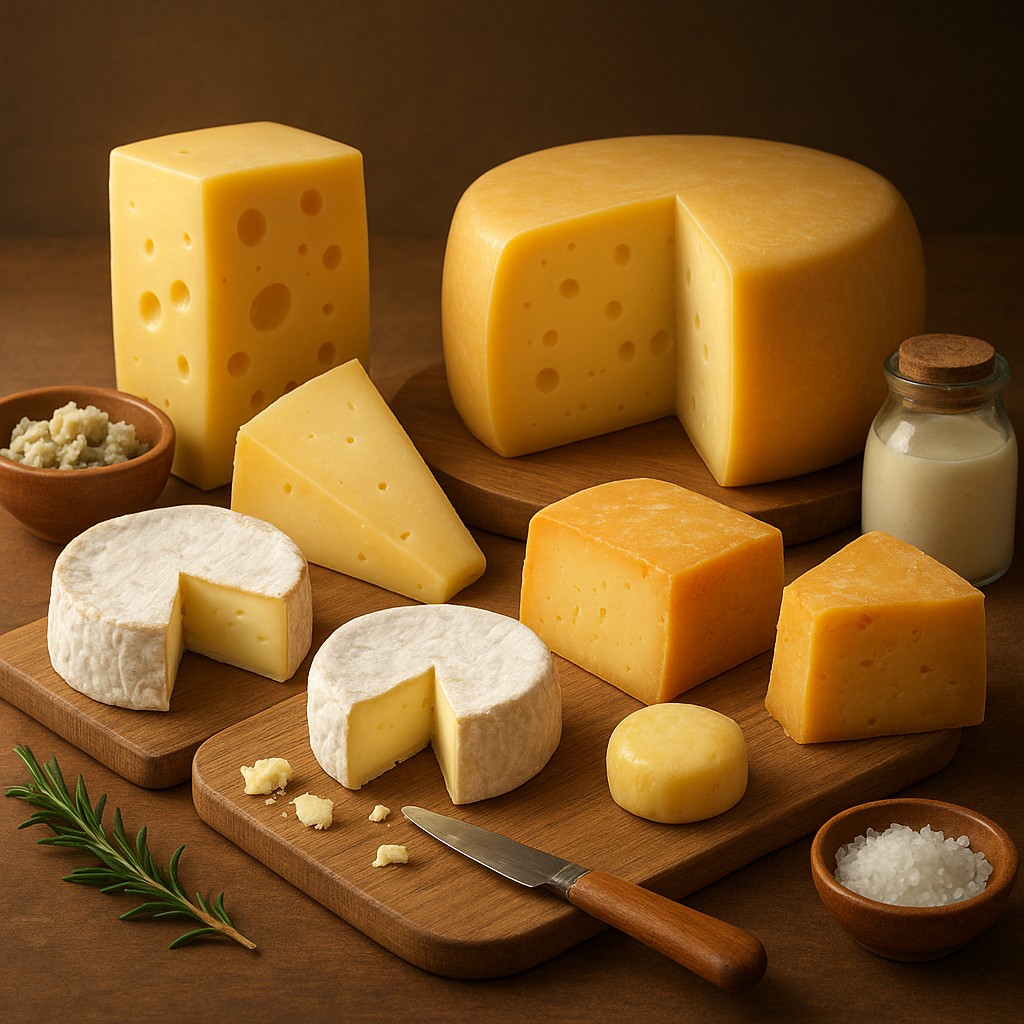
Why cheese deserves your full attention
Imagine a simple, almost magical transformation: fragile, perishable white milk becomes a fragrant, complex mass that can age for months or even years in a ripener's cellar. That is what makes cheese so fascinating: it sits at the crossroads of home science, cultural history and a laboratory of flavor. Every wedge tells a story of terroir, animal feed, human practices and the microbes working behind the scenes. Understanding how cheese is made, and why so many varieties exist, helps you not only choose better cheese boards, but also appreciate the creativity packed into a single bite.
Cheese appeals as much to gourmets as to curious scientists. It is a living product: it changes after production, its texture and taste evolve with aging, and it responds to temperature and humidity like an organism. Learn the essential steps of cheesemaking and you will see how simple interventions can produce a melting Camembert, a fruity Comté or a sharp Roquefort, just by tweaking the recipe, the microbes or the maturation conditions. And if you like stories, every cheese has legends: a distracted abbot, an inspired shepherd, a lucky mistake in the cellar - cheese heritage is full of anecdotes.
Do not expect a magic recipe that instantly turns your kitchen into a village cheese dairy. Instead, think of this as a guided walk: we will start with milk and its invisible actors, then cover the actions that separate the solids from the liquids, and finally follow time, the sculptor of taste. You will find clear explanations, some practical tips and a summary table to remember the main cheese families. In the end you will feel more confident in front of a cheese counter, ready to choose, taste and maybe try your first experiments.
From raw material to curd: the steps that transform milk
The starting point is milk. Cow, goat, sheep or buffalo milk contains proteins, fat, lactose and microorganisms. Its composition directly shapes the future cheese: a milk high in fat yields a creamier paste, sheep milk brings a stronger flavor, and the animal’s diet - grass, hay, cereals - leaves aromatic traces. Before processing, milk may be standardized, pasteurized or left raw; those choices affect both safety and flavor profile.
Next come lactic starters: bacterial cultures that turn lactose into lactic acid. This acidification lowers pH and prepares the milk to coagulate. Then rennet or a vegetable or microbial coagulant is added to trigger protein coagulation, mainly of casein. Coagulation separates milk into two phases: curd, the solid, and whey, the liquid. The time and firmness of this step greatly influence the final texture.
Cutting and working the curd are crucial actions. By cutting it into small grains, gently heating and stirring, you encourage whey expulsion and control moisture in the paste. The smaller and hotter the curd is cut, the drier and firmer the cheese will be, as with Parmesan. Conversely, for fresh cheeses you limit cutting to retain more moisture. Subsequent techniques include molding, pressing to remove remaining whey, and salting, which can be done on the surface or by immersion in brine.
Salting is not only seasoning: it regulates microbial activity, draws out more water and refines texture. Finally, affinage, or maturation, transforms the cheese through microbes, enzymes and controlled physical conditions. Some cheeses are eaten very young, others need months or years to develop desired aromas. Each step is an opportunity to influence the result, and much of human skill lies in finding the right balance.
The bacteria and molds that make the difference
Lactic starters, such as Lactococcus or Lactobacillus, provide the first aromatic layer by producing acid and releasing flavor compounds. On some cheeses, molds like Penicillium camemberti or Penicillium roqueforti colonize the paste or surface, giving buttery, mushroomy or sharp notes. Other cheeses develop a surface bacterial flora, like Brevibacterium linens on washed rinds, producing strong, cellar-like aromas.
These microorganisms are not unwanted guests, but controlled allies. Their activity causes proteolysis - the breakdown of proteins into peptides and amino acids - and lipolysis - the breakdown of fats into free fatty acids. These transformations release a variety of odor molecules: cheesy, fruity, sulfurous or floral. The ripener adjusts temperature, humidity and rind washings to encourage certain microbes, and thus sculpts the aromatic profile.
Aging: patience and precise handling
Aging takes place in caves or ripening rooms where temperature and humidity are controlled. Temperature is often cool and stable, between 8 and 14 °C depending on the type, while humidity is high to prevent drying and to favor the right flora. Cheeses are regularly turned, brushed, washed in salty water or rubbed with cultures to guide the rind development. These daily actions are small corrections that shape texture and flavor.
Over time the paste softens or firms, aromas deepen, and openings may form as in blue cheeses where cavities develop. Aging can last a few days for fresh cheeses, several weeks for soft-ripened types, months for pressed cheeses, and several years for very aged hard cheeses. A good affineur knows when to stop: too early and the cheese lacks character, too late and it can lose its balance.
A simple map to navigate cheese families
Classifying cheeses helps quickly understand what you will find on the plate. The most useful criteria are moisture and texture (fresh, soft, pressed, blue), rind type (natural, bloomy, washed, pressed) and milk type. Here is a summary table to help you remember some classics and their characteristics.
| Cheese |
Milk |
Type and texture |
Typical aging time |
Rind |
Typical flavors |
| Mozzarella |
Buffalo or cow |
Fresh, stretched curd, moist |
0-2 weeks |
No rind |
Mild, milky, slightly tangy |
| Fresh goat cheese |
Goat |
Fresh, creamy to crumbly |
0-3 weeks |
Thin, sometimes natural |
Tangy, herbal, bright |
| Camembert / Brie |
Cow |
Soft paste with creamy center |
2-8 weeks |
Bloomy rind (Penicillium) |
Buttery, mushroomy, creamy |
| Reblochon |
Cow |
Soft paste, dense texture |
4-8 weeks |
Washed rind |
Nutty, milky, fruity |
| Munster |
Cow |
Soft paste, sometimes runny |
1-3 months |
Washed rind |
Strong, salty, aromatic |
| Comté |
Cow |
Cooked-pressed paste, firm |
6-24 months |
Natural |
Fruity, nutty, caramel notes with age |
| Parmigiano-Reggiano |
Cow |
Cooked-pressed, granular |
12-36 months |
Natural, hard |
Umami, dried fruit, salty |
| Roquefort |
Sheep |
Blue-veined paste |
3-6 months |
Natural with blue veining |
Piquant, salty, creamy |
| Bleu d’Auvergne |
Cow |
Blue-veined paste |
2-4 months |
Natural |
Piquant, creamy, earthy |
This table does not cover everything, but it gives practical landmarks: the longer a cheese is aged, the more concentrated the flavors tend to be; bloomy rinds bring softness and mushroom notes, while washed rinds offer stronger, saltier characters.
Raw or pasteurized, what is the real impact?
Pasteurization heats milk to kill unwanted microbes, which increases food safety. However, pasteurization also reduces part of the native microflora that contributes to complex aromas. Raw-milk cheeses demand strict know-how and aging rules to be safe, but they can offer a broader aromatic palette. This does not mean pasteurized cheese is flavorless: many well-made modern cheeses deliver great quality. The choice often depends on regulations, the producer and tradition.
Common misconceptions and frequent mistakes to correct
Some beliefs persist despite science and experience. First, the myth "any mold on cheese is dangerous" is false. On blue cheeses or bloomy-rind cheeses, molds are sought after and beneficial. Conversely, a cheese that has wild, chaotic mold growth in your fridge can be suspect; the rule is to check the type of mold, the smell and overall appearance. When in doubt, it is safer to err on the side of caution.
Another misconception: "pasteurized means bland." This is not systematic. Properly controlled, pasteurized milk can produce rich flavor profiles through the use of starters and careful aging. Likewise, "cheese is bad for your health" is simplistic. Cheese is nutritious: a source of protein, calcium, vitamins B12 and A. Of course, it often contains salt and fat, so moderation and choosing lighter varieties suit your health goals.
Finally, you may hear "you cannot make good cheese at home." False for fresh cheeses and some simple aged cheeses. Products like ricotta, fromage blanc, paneer or even simple goat fresh cheeses are within reach of a diligent home cook. Complex aged cheeses require specific conditions and strict hygiene for a safe result.
Practical tips for tasting, storing and serving cheese
To get the most from a cheese, a few simple moves are enough. Serve cheese at room temperature: take it out 30 to 60 minutes before tasting to release aromas. Present cheeses from mildest to strongest to respect the palate, and offer simple accompaniments: neutral bread, fresh fruit, a light jam or a mild honey. A glass of water between bites also works wonders to refresh the palate.
For storage, avoid wrapping cheese directly in plastic wrap which makes it sweat and stifles aromas. Prefer parchment, partially breathable plastic wrap, or better, cheese paper. Store cheeses in the least cold part of the refrigerator, lightly wrapped and in a closed container to limit odor transfer. Very aged cheeses keep better in a slightly humid environment; some enthusiasts use airtight boxes with a damp cloth to maintain humidity. Freezing often damages the texture of soft cheeses, so freeze only cheeses intended for cooking.
A few practical tasting tips:
- Taste in small portions, savor and notice how the flavor develops.
- Mentally note sensations: acidity, saltiness, bitterness, texture.
- Buy several small pieces rather than one large block to vary your choices.
Taking your first steps in home cheesemaking
If you are tempted by home cheesemaking, start with simple recipes that do not require long aging. Ricotta is made by heating whey or milk, adding an acid to precipitate proteins, then draining. Paneer, an Indian fresh cheese, is obtained by adding lemon juice to hot milk and pressing the curd. Fresh cheeses made from kefir or yogurt are also accessible and let you experiment with cultures.
Hygiene rules are essential: clean utensils, potable water, controlled temperatures and quality ingredients. For simple aged cheeses, equip yourself with a thermometer, molds, a light press and a clean space to control temperature and humidity. Start small, record parameters and results, then adjust gradually. The greatest pleasure is watching each batch evolve and improving every time.
Why cheese will continue to surprise us
Cheese is human and microbial alchemy, a product where tradition meets experimentation. Learning how it is made, tasting different families and trying small home productions will make you not only more knowledgeable, but also more curious. The next time you open a cheese board, think of the cows and goats that grazed, the hands that shaped it, the microbes that transformed it and the time that matured the product. This overview invites you to explore with appetite and method. So go ahead: taste, compare, ask the cheesemonger questions and maybe, one day, create your own little cheesemaking masterpiece. Enjoy the sensory journey and bon appétit.