Why cards feel like a secret language your brain already knows how to read
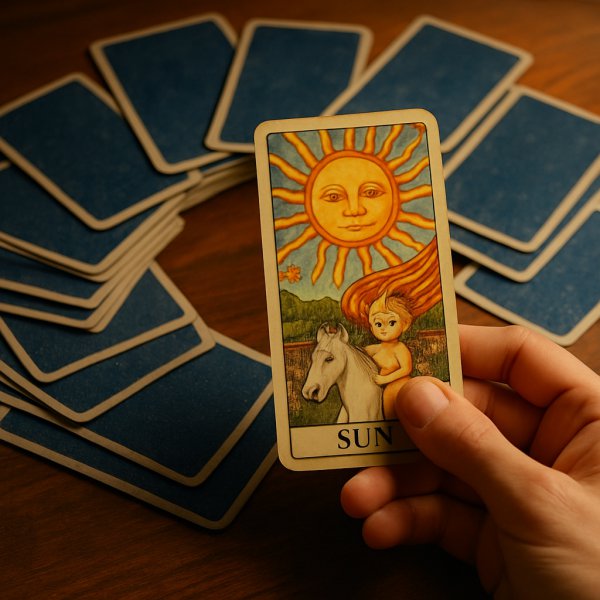
Picture this: you sit down, shuffle a deck of worn cards, and pull a single image that, for some reason, makes your chest unclench. Maybe it is a bucolic scene, an ancient figure, or a burst of color that lands perfectly on a problem you were chewing on. That pause, that click of recognition, is the engine behind card reading. It is not magic that arrives from nowhere, it is meaning being unlocked in you.
People come to cards for many reasons - clarity, comfort, challenge, curiosity. In a busy world that prizes data and outcomes, cards offer a gentle doorway into reflection and storytelling. They are both mirror and map: reflecting what you already know, and mapping possible steps forward. This makes learning to read cards useful whether you want to entertain, to aid friends, or to deepen your own inner work.
If you have ever wondered if card reading is fake, manipulative, or the secret language of mystics, this guide will take you through what really happens: the historical roots, the psychological mechanics, the practical skills, and the ethical guardrails. By the time you finish, you will understand how to approach a deck with curiosity and confidence, and how to use it as a tool for insight rather than a crystal ball that decides your fate.
Get comfortable. We will move from simple to more complex ideas, sprinkle in a few memorable analogies, and give you clear steps and exercises you can try tonight. Learning to read cards is like learning a new form of conversation - with symbols, stories, and your own intuition playing leading roles.
How card reading actually works: pattern, projection, and the art of question-asking
At its core, a card reading is a meaning-making exercise. When you look at a card, your brain instantly processes shape, color, symbol, and narrative cues. This is the same cognitive machinery that recognizes faces, reads movie plots, or finds metaphors in poems. Cards present archetypal images and themes that act as prompts. Once prompted, your mind weaves them into your personal story, highlighting connections and sparking new perspectives.
Two psychological forces are especially important: pattern recognition and projection. Pattern recognition helps you spot relationships between cards in a spread - similar color palettes, repeating symbols, or matching numbers. Projection is when your emotions, memories, and hopes color the interpretation. Projection is not cheating; it is the very reason cards can tell you something useful about your life because the imagery serves as a canvas for your inner material to appear.
There are also social and linguistic elements. A reader crafts a narrative, asks probing questions, and offers metaphors that reframe a situation. The act of naming patterns out loud consolidates meaning in a way that private thought does not. In short, card reading works because it combines sensory cues, narrative framing, and a safe space for reflection - and that combination reliably moves thinking forward.
Two families of decks and why they feel different
Not all decks are created equal. Two main families dominate modern practice: tarot decks and oracle decks. Think of them as different languages with different grammar.
- Tarot decks follow a structured system, usually 78 cards, divided into the Major Arcana (22 archetypal cards like The Fool or The High Priestess) and the Minor Arcana (four suits with numbered and court cards). This structure gives tarot a shared grammar, which makes learning and comparison across decks easier.
- Oracle decks are loose and creative, with variable numbers of cards and unique themes. They are more like free verse - flexible, direct, and often friendlier for beginners.
Both are valid. Tarot offers structure and layers of meaning that support deep comparative readings, while oracle cards are great for direct prompts and emotional uplift. Choosing between them is a bit like choosing between a well-worn map and an improvised sketchbook - both will guide you, but in slightly different ways.
Cards as a language: learning the grammar without memorizing a dictionary
Learning to read cards is like learning to read poetry, not like memorizing a phonebook. You will want to know core meanings, but equally important is learning how to combine them into stories.
Start with the big picture vocabulary. For tarot, learn the Major Arcana as big life themes - beginnings, endings, transformation, guardianship - and the suits in the Minor Arcana as domains of life: Wands for action and will, Cups for emotion and relationships, Swords for thought and conflict, Pentacles for material life and work. For oracle decks, pay attention to the deck's theme words and the artist's notes. Every deck comes with its own accent.
Practice a grammar of connections. Ask yourself: Which elements repeat? Is there movement from left to right, or a central figure dominating the scene? What emotions does the card evoke? Combine literal observations - colors, objects, characters - with metaphorical associations. Over time your readings move from "this card means X" to "these cards are telling a story about Y."
Preparing to read: ritual, technique, and simple habits that sharpen insight
Preparation matters because it helps you focus. Preparation does not need to be theatrical - it can be as simple as setting a quiet spot, taking a few deep breaths, and centering your question. This small ritual signals to your brain that you are switching into reflective mode.
Here is a basic pre-reading routine to try: ground yourself with three slow breaths, state your question clearly and positively, shuffle while thinking about that question, cut the deck if you prefer, and fan or draw in a way that feels natural. The physical act of shuffling is not magical; it is a micro-ritual that moves thoughts from the mind to the hands, which helps ideas surface. Keep a journal nearby to jot down impressions before you overthink them.
A clear question yields clearer answers. Replace vague prompts like "What will happen?" with focused, open-ended questions such as "What do I need to know about my relationship with X?" or "What approach will help me grow in my career over the next three months?" Good questions invite insight rather than issuing binary forecasts.
Common spreads and when to use them
Different spreads are like different lenses. Some are surgical and precise, others are wide-angle and exploratory. Learning a small set of spreads will give you versatility.
- One-card pull: Use for daily reflection or to focus on a single issue. It is fast, clarifying, and habit-building.
- Three-card spread: Often read as Past - Present - Future, or Situation - Challenge - Advice. It balances brevity and narrative.
- Five-card spread: Offers depth, showing context, obstacles, advice, and outcome. It is useful when you want a fuller picture without becoming overwhelmed.
- Celtic Cross: A classic 10-card spread that maps influences, subconscious factors, hopes, fears, and likely outcomes. It is rich, but takes practice to interpret fluently.
Choose a spread that matches your question. If you want a quick check-in, pick one or three cards. If you need complexity, reach for a five-card layout or the Celtic Cross. Practice leads to intuition about which spread best fits which kind of question.
How to interpret without falling into wishful thinking
Interpretation is both art and skill. To avoid wishful thinking, use a trio of moves: observe, connect, and test.
First, observe. Describe the card honestly. What do you see? What emotion comes up? What symbols stand out? Spend a minute listing neutral facts before you assign meaning.
Second, connect. Ask how these symbols relate to the question and the querent. Build a narrative linking card imagery to life circumstances. Make associations rather than declarations. Use phrases like "this could suggest" or "one way to read this is."
Third, test. Propose a careful, testable insight or action. Instead of predicting long-term destiny, suggest an experiment: a small step to try and a time to re-check. For example, "This card suggests you might benefit from setting a boundary this week. Try saying no to one request and notice what happens."
This method keeps readings useful and grounded. You become less of a fortune-teller and more of a reflective coach.
Table: Tarot versus Oracle at a glance
| Feature |
Tarot |
Oracle |
| Typical size |
78 cards with standard structure |
Variable, often 30-60 cards |
| Structure |
Major and Minor Arcana with suits and numbers |
No standard structure, theme-driven |
| Learning curve |
Medium to steep - system to learn |
Gentle - meanings often printed on cards |
| Best for |
Deep, layered readings and symbolic analysis |
Direct prompts, emotional support, creativity |
| Reproducibility |
Easier to compare across decks and readers |
Highly variable, depends on deck's theme |
| Use case example |
Detailed relationship timelines |
Daily affirmation or thematic guidance |
Ethics, boundaries, and how to read responsibly
Reading cards for yourself or others comes with ethical responsibilities. The most important rule is consent - never read for someone who has not asked. Respect privacy and keep sensitive information confidential.
Avoid giving professional advice that should come from trained experts. Cards can illuminate feelings and options, but do not substitute for medical, legal, or financial counsel. When a reading touches on serious issues - abuse, major medical issues, suicidal thoughts - encourage seeking professional help and refrain from definitive statements.
Practice empowerment. Frame readings to support the querent's autonomy rather than creating dependency. Use language that emphasizes choice: "This indicates a possible path" rather than "This will happen." When reading for others, ask what kind of feedback they want - direct guidance, gentle metaphors, or practical steps.
Common myths and misconceptions, gently busted
Myth 1: Tarot or oracle cards predict one fixed future. Reality: Cards present tendencies, possible outcomes, and psychological insights. They illuminate likely paths based on current trajectories, but humans can change course.
Myth 2: You need to be psychic to read. Reality: While intuition helps, reading is primarily about observation, storytelling, and practice. Any thoughtful person can learn to read cards.
Myth 3: Some cards are "bad" and others "good" universally. Reality: A card like Death often signals transformation, not literal death. Context and metaphor determine whether a card is challenging or liberating.
Myth 4: Reversals (upside-down cards) always mean the opposite. Reality: Reversals add nuance - delay, internalization, resistance - but do not mechanically invert meanings.
Dispelling these myths helps you approach cards with curiosity rather than fear.
Practical exercises to build skill and trust in your readings
Daily practice builds fluency faster than once-a-week marathon sessions. Try these exercises for the next two weeks.
- One-card daily draw: Pull a card each morning, write three observations, and note how it showed up in your day. This trains your observation and associative muscles.
- Three-card storytelling: Once a week, pull three cards and write a 300-word story linking them to a real situation in your life. This helps with narrative construction.
- Reverse reading practice: Deliberately ignore the guidebook. Interpret a card using only images and emotions for five minutes, then compare to the deck notes. You will develop independent associations.
- Shadow questions: Pull a card for what you are avoiding about a problem. Often the answer points to the action you are resisting.
Keep a cards journal where you log the question, the spread, your immediate impressions, and follow-up notes. Over months you will notice patterns in your interpretive style and the deck's tendencies.
A step-by-step mini reading you can try tonight
Try this simple routine to actualize the theory.
- Settle: Sit with your deck for a minute, breathe, and state a clear question like "What should I focus on this next week?"
- Shuffle and draw: Shuffle while thinking of the question, then draw three cards into a left-to-right row.
- Label the positions: Left is Focus, Middle is Challenge, Right is Action.
- Observe: For each card, spend one minute listing three literal observations - colors, figures, objects.
- Connect: Spend two minutes per card linking those observations to your life. Ask how Focus connects to Challenge, and how Action responds to both.
- Test: Decide on one small experiment to try in the next 48 hours based on the Action card. Write it down and set a reminder.
Example mini-reading interpretation: The Focus card shows The Hermit, the Challenge is Five of Wands, the Action is Ace of Pentacles. You might interpret this as needing quiet reflection (Hermit) while interpersonal conflict distracts you (Five of Wands), and the practical step is to create a small, concrete project or task (Ace of Pentacles) to anchor your energy. Your experiment: spend 20 minutes each evening on a tangible work goal for three days.
Questions to pause and reflect - quick prompts to use with any spread
- What image in the card pulled held my attention first, and why might that be true for me now?
- Which card felt comforting, and which felt challenging? How do those feelings map to current life roles?
- If the deck is a friend offering advice, what tone did it use - direct, gentle, urgent - and what does that tone reveal?
- What one small action does this reading make most sensible, and how will I test it this week?
Answering these will deepen your readings and help you see cards as tools for action, not just snapshots.
Bringing science and wonder together: why ritual works and how to keep skepticism friendly
There is nothing contradictory about enjoying the poetic mystery of cards while acknowledging cognitive mechanisms. Rituals signal the brain to focus, reduce stress, and open associative thinking. Narrative framing helps the brain integrate experience and consider alternative interpretations. These are well-studied psychological effects that explain why card reading can be therapeutic and clarifying for many people.
Hold healthy skepticism like a companion, not a gatekeeper. Ask for evidence, test suggestions, and follow up to see what works. Good reading invites accountability - it offers hypotheses you can try. Over time, the combination of ritual, observation, and testing builds both meaningful insight and reliable skill.
Keep going: building confidence and making cards part of your life
Learning to read cards is a process of mastering vocabulary, practicing grammar, and developing style. It takes time, but each reading sharpens your capacity to observe and tell truthful stories. Remember to keep it playful: try new decks, swap readings with a friend, and read older journaled readings to notice how your interpretations evolve.
Cards will not solve every problem, but they will train you to notice patterns, to ask better questions, and to become an active agent in your life story. The more you practice, the more the images will stop being mysterious strangers and start feeling like wise, quirky companions.
Go ahead, shuffle the deck. Ask a clear question. Draw a card. You are not summoning fate, you are making room for insight. That is powerful.