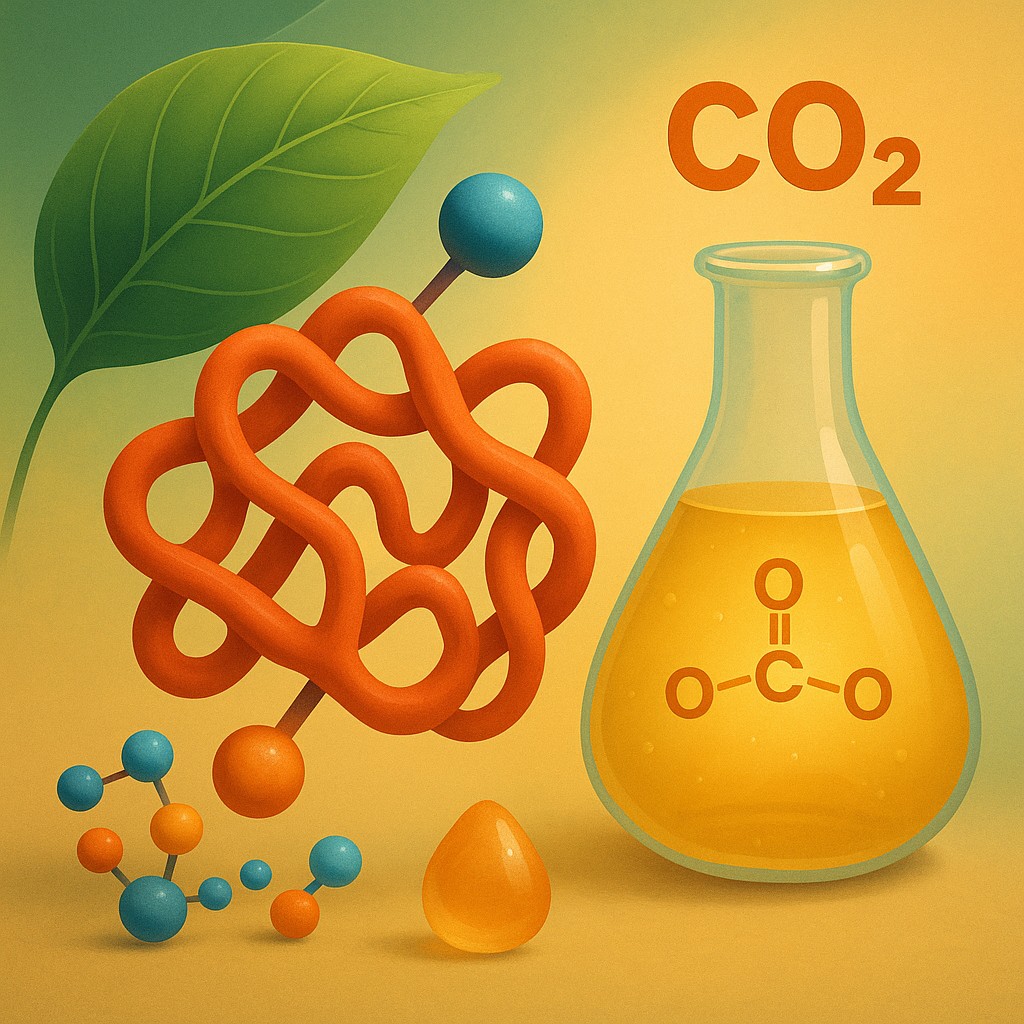
Every time you take a breath, you are part of a masterpiece of chemical engineering refined over millions of years. Your blood does not just "hold" oxygen; it uses a complex transport molecule called hemoglobin that knows exactly when to grab an oxygen molecule and, more importantly, exactly when to let it go. If the bond were too weak, you would not get enough oxygen from the air. If it were too strong, the oxygen would stay stuck to your blood cells and never reach your brain or muscles. This delicate balance, a biological "catch and release," has inspired a new generation of industrial systems designed to scrub carbon dioxide directly from modern factory smokestacks.
As we look for ways to cool the planet, we face a massive logistical hurdle: carbon dioxide (CO2) is very difficult to catch once it mixes with the air. In a typical power plant exhaust, CO2 is diluted by nitrogen and water vapor, making it a "needle in a haystack" problem. For decades, the methods used to pull that needle out were clunky, expensive, and drained too much power. However, by studying the biology of our own veins, chemical engineers are now developing "formulated solvents." These are liquid cocktails of synthetic amines - chemicals derived from ammonia - designed to mimic how hemoglobin binds to gases. They offer a path to cutting carbon that is more elegant, efficient, and significantly cheaper than the brute-force methods of the past.
The Molecular Handshake of Synthetic Hemoglobin
To understand how these modern solvents work, we have to look at the "chemical handshake" happening at the molecular level. In your body, hemoglobin changes its shape based on its surroundings, becoming more or less "sticky" for oxygen. In the industrial world, engineers use liquid amines to perform a similar trick with carbon dioxide. When the solvent is cool, the amine molecules have an open, welcoming shape. As the exhaust gas bubbles through the liquid, the CO2 molecules are snatched up by the amines and held tight. This is the "loading" phase, and it happens with surprising speed and precision.
The real magic happens during the "unloading" phase. Traditional carbon capture systems required massive amounts of heat, often well over 120 degrees Celsius (248 degrees Fahrenheit), to break the chemical bond and release the CO2 for storage. This created an "energy penalty" where a power plant might have to burn 30 percent more fuel just to run the carbon capture machine itself. Modern formulated solvents are much more sensitive. By fine-tuning the molecular structure of the amines, engineers can lower the temperature needed to "reset" the liquid. It is like a spring-loaded trap that requires only a gentle nudge, rather than a hammer blow, to release its contents. This allows the solvent to be cycled back to the start to begin the process again, thousands of times before the liquid wears out.
Solving the "Sticky" Problem
One of the greatest challenges in carbon capture is selectivity. If you imagine a factory chimney as a giant straw, the gas coming out is a messy soup of different elements. There is a lot of nitrogen, some leftover oxygen, various pollutants like sulfur dioxide, and a relatively small amount of CO2. If your solvent is too "thirsty" for everything, it fills up with useless gases before it can catch the carbon. This is where the "formulated" part of the solvent comes in. These are not just single chemicals; they are carefully balanced recipes of different types of amines mixed with water and "promoters" that act like chemical coaches.
These promoters help carbon dioxide take priority. Engineers design the solvent so that CO2 molecules fit perfectly into a chemical "pocket," while other gases simply bounce off. This high level of selectivity makes the system efficient. If the solvent only grabs what it is supposed to, you do not waste energy heating up nitrogen just to throw it away later. It creates a streamlined loop where the solvent acts as a dedicated shuttle, moving back and forth between the "absorber" (where it catches the gas) and the "stripper" (where it drops it off).
Balancing the Energy Books
The industrial world is governed by the laws of physics, which state that you never get something for nothing. Every time we capture a ton of carbon, we have to spend energy to do it. The goal of formulated solvents is to keep that energy bill as low as possible. This is often measured as the "heat of absorption," which is just a way of asking how much energy is needed to break the chemical bond. By experimenting with different structures, researchers have found ways to reduce this heat requirement, choosing molecules that hold the CO2 firmly enough to carry it, but loosely enough to let go with minimal effort.
The table below shows how traditional solvents compare to these new, biologically inspired versions across several key areas:
| Feature |
Traditional Solvents (e.g., MEA) |
Formulated Solvents (Advanced Amines) |
| Energy Penalty |
High; takes a lot of steam from the plant. |
Lower; designed for "easy release" at lower heat. |
| Capacity |
Low to Moderate; carries limited CO2. |
High; can carry more CO2 per gallon. |
| Corrosiveness |
Very high; tends to eat through metal pipes. |
Controlled; additives help protect equipment. |
| Durability |
Breaks down quickly in heat and oxygen. |
Robust; engineered to last for thousands of cycles. |
| Selectivity |
Moderate; can be "distracted" by other gases. |
Extremely High; specifically tuned for CO2 molecules. |
The Thermal Swing and the Recycling Loop
The lifecycle of a formulated solvent is a continuous loop known as a "thermal swing." Imagine a giant Ferris wheel where the seats are the amine molecules. At the bottom of the wheel (the absorber tower), the seats are empty and cold. As the wheel turns, "passengers" (CO2 molecules) jump into the seats. The wheel then carries them to the top (the stripper tower). At the top, a heat source warms the seats, which makes the passengers want to get off. The CO2 is collected, squeezed into a liquid, and sent underground or used for industry. The empty seats then swing back down to the bottom, cool off, and wait for the next passengers.
This process sounds simple, but the engineering required to keep the "seats" from breaking is immense. Oxygen and heat are the enemies of these chemicals; they can cause the solvent to turn into a "gunk" that no longer works. Modern formulas include "inhibitors" that prevent this breakdown. It is like adding antioxidants to your diet to prevent cell damage. By keeping the solvent healthy, companies can run these plants for months at a time without needing to replace the expensive chemical mix, which is the key to making carbon capture affordable.
Breaking the Cost Barrier with Waste Heat
The most exciting development in this field is the ability of these solvents to work with "waste heat." Most industrial processes, from glass making to steel production, throw off a lot of heat that usually just disappears into the atmosphere. Because new formulated solvents are so sensitive, they do not necessarily need high-pressure steam from a dedicated boiler. They can often be "reset" using the heat the factory was going to throw away anyway. This turns a waste product into the energy source for carbon capture, making the process nearly "free" in terms of power once the equipment is built.
However, we must remain realistic. Even with these advancements, formulated solvents are not a "set it and forget it" solution. They require massive infrastructure. To capture the emissions from a single large gas power plant, you need towers hundreds of feet tall and thousands of gallons of solvent circulating every minute. There is also the question of what to do with the CO2 once it is caught. While the "chemical handshake" has improved, it only solves the gathering part of the problem. Storing and moving the carbon still requires its own set of innovations.
From Small Bottles to Giant Towers
Scaling these solvents from a lab beaker to an industrial park is a feat of precision. In the lab, everything is controlled. In the real world, the "smoke" coming out of a power plant changes by the hour. It might be hotter one day, or wetter the next. Formulated solvents must be tough enough to handle these shifts without failing. Engineers use computer models to simulate how these liquids flow through metal or ceramic filters inside the towers, ensuring every drop of liquid has the best chance to touch the gas.
Researchers are also developing "water-lean" solvents. Usually, these amines are dissolved in water, but water takes a lot of energy to heat up. By replacing some of that water with special organic liquids, engineers can further reduce the energy needed for the "thermal swing." This is the ultimate goal: a solvent that acts like a dry sponge for CO2, requiring almost no energy to squeeze it dry when it is full. We are not there yet, but the progress from the first chemicals to today’s solvents is as huge as moving from a steam engine to a modern electric motor.
The Role of Carbon Capture in a Green Future
It is important to see this technology as a bridge rather than the final destination. While capturing carbon at the source is vital for "hard-to-fix" industries like cement and steel - which cannot easily run on electricity alone - it is only one piece of the puzzle. The goal is to create a circular carbon economy where we stop adding "new" carbon to the atmosphere from underground and instead manage what is already here. Formulated solvents give us a high-speed, high-efficiency net to catch that carbon before it escapes.
By mimicking the elegance of systems like human blood, we are finding that the most complex problems often have solutions rooted in basic biology. The "chemical handshake" of the amine may seem small, but when multiplied by billions of tons of emissions, it becomes a powerful tool for repairing the planet. Every breath you take is a reminder of the goal: a world where we move molecules with the same grace and purpose as our own bodies.