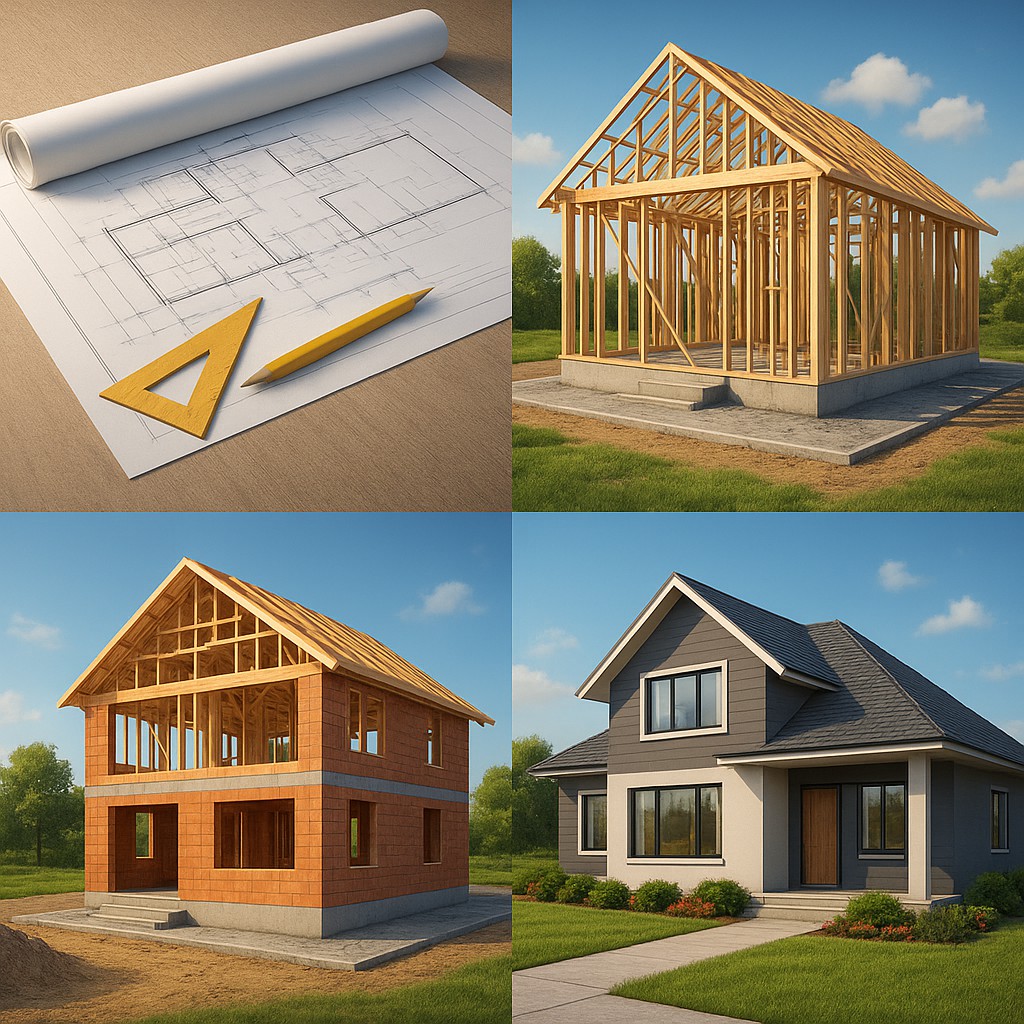
Building a house is perhaps the closest a person can get to performing literal magic. You start with a patch of dirt, a few weeds, and a dream. Through a series of highly organized steps involving heavy machinery and piles of sawdust, you end up with a climate-controlled sanctuary where you can eat toast in your pajamas. It is the ultimate "slow-cooker" project, demanding more patience than a toddler in a candy store, but the reward is a home tailored specifically to the way you live. Whether you want a minimalist glass cube or a cozy cottage with more nooks than a library, the process follows a predictable, though often thrilling, rhythm.
Most people approach home building with a mix of excitement and genuine terror, mostly because there are so many moving parts. It isn't just about stacking bricks; it is about navigating legal red tape, managing budgets that seem to have a mind of their own, and making thousands of tiny decisions about things you never knew existed, like the finish on a door hinge or the "color temperature" of a lightbulb. However, once you pull back the curtain on the construction site, the chaos reveals itself to be a beautifully choreographed dance. Understanding this process is the difference between feeling like a victim of the project and feeling like the conductor of a very loud, very dusty orchestra.
The Mental Blueprint and Legal Foundations
Before a single shovel hits the ground, you have to survive the "paper phase," which is arguably the most mentally draining part of the whole journey. This is where you work with architects and designers to translate your vague ideas into precise technical drawings. You might think you want an open floor plan until you realize that means your noisy dishwasher will compete with your favorite TV show. During this stage, you aren't just drawing rooms; you are mapping out your future daily routine. You are deciding how far you want to carry groceries from the car and whether you want the sun to hit your face at 7:00 AM or if you prefer a dark, cave-like bedroom.
Once the drawings look perfect on your screen, the bureaucracy begins. Every city has its own set of rules, known as building codes or zoning laws, designed to ensure your house doesn't fall over or block your neighbor’s sunlight. This involves submitting your plans for approval, paying fees that might make your eyes water, and securing permits. This phase requires Zen-like patience because while the internet is fast, local government permit offices often move at the pace of a glacier. It is a necessary hurdle, though, as these checks ensure your home is safe, sturdy, and legal.
Carving the Earth and Building the Bones
When the permits finally arrive and the excavators roll onto the site, the transformation becomes physical and very loud. The first step involves clearing the land and digging space for your foundation, which is the most important part of the house that you will never actually see. If the foundation is shaky, the rest of the house will be a disaster, so builders take this part very seriously. Depending on your soil and budget, you might have a simple concrete slab, a crawl space, or a full basement. Workers pour concrete into wooden forms reinforced with steel bars called rebar, creating a rock-solid base that can support the weight of several elephants.
Once the concrete cures, which is just the technical way of saying it dries and hardens into stone, the "skeleton" of the house begins to rise. This is the framing stage, and it is the most satisfying part of the build because the house grows tall at an incredible speed. Suddenly, you can see where the kitchen starts and where the bathroom ends. Most modern homes use wood framing, but steel or insulated panels are also popular for their efficiency. By the end of this phase, the house looks like a giant wooden ribcage. The roof goes on next, followed by windows and exterior doors, reaching a major milestone called being "dried-in." This means the interior is finally protected from the rain, allowing the delicate indoor work to begin.
The Invisible Nervous System of the Home
With a roof over your head, the house now needs its internal organs and nervous system. This is a busy period where plumbers, electricians, and HVAC (heating, ventilation, and air conditioning) technicians swarm the house. They run wires through the wall studs like copper spiderwebs, snake pipes through the floorboards, and install metal ducts to carry air. It is a complex puzzle because all these systems have to fit in the small gaps behind your future walls without getting in each other's way. This is also the last time you will see the "innards" of your home, so many homeowners take photos of the open walls to remember exactly where a pipe or wire is located before it is covered up.
As these systems go in, you will face "rough-in inspections." A city official will walk through the house to make sure the wiring won't cause a fire and the pipes won't leak. It is a high-stakes moment, but these inspectors are essentially your quality control team. Once they give the green light, insulation is packed into the walls. This is the secret ingredient that keeps your house warm in the winter and cool in the summer, acting like a giant thermal blanket. Only after the insulation is in place can the drywall be hung, which finally turns the wooden skeleton into a recognizable series of rooms.
A Quick Guide to Construction Milestones
| Stage |
Primary Goal |
Physical Evidence |
| Pre-Construction |
Planning and Legalities |
Blueprints, permits, and many emails. |
| Foundation |
Grounding the structure |
Concrete slabs or basement walls in the ground. |
| Framing |
Creating the shape |
Wooden "skeleton" and roof supports appear. |
| Rough-Ins |
Installing systems |
Wires, pipes, and vents visible in walls. |
| Exterior Finishes |
Weatherproofing |
Siding, brick, or stucco and windows. |
| Interior Finishes |
Making it livable |
Drywall, paint, flooring, and cabinets. |
The Art of the Finish and the Final Polish
Once the drywall is sanded smooth and the walls are painted, the house enters the "finishing" phase. This is where it stops looking like a construction site and starts looking like a home. This is the exciting part where your style comes to life. Kitchen cabinets are bolted to the walls, countertops are leveled, and the flooring is laid down. This stage feels slower than framing because of the precision required. A gap in a floorboard or a crooked cabinet door will bother you forever, so builders and carpenters take their time to ensure every corner is square and every seam is tight.
Following the big installations comes the "trim out." This involves adding decorative details like baseboards and crown molding, which hide the gaps between different materials and give the rooms a polished look. Electricians return to install the light fixtures and outlets, while plumbers hook up the sinks and toilets. Outside, the landscaping team might be laying sod or planting trees to turn the dirt patch into a yard. This is also the time for the "punch list," a famous document where you and your builder walk through the house with blue tape, marking every tiny scratch or imperfection that needs to be fixed before you make the final payment.
Debunking the Myths of Home Building
There are several common myths about building a house that can cause unnecessary stress. The first is that you can accurately predict your move-in date on day one. In reality, weather, shipping delays, and labor shortages are part of the game. A smart homeowner views the "completion date" as an educated guess rather than a fixed point in time. Life happens, and sometimes the custom marble you wanted gets stuck on a boat. Flexibility is your best friend during a build, and building a buffer into your schedule will save your sanity when the inevitable delay occurs.
Another common misconception is that building a new house is always more expensive than buying an existing one. While the upfront price of a new build can be higher, you have to consider the long-term savings. A new home is built to modern energy standards, meaning your utility bills will likely be much lower than in an older, draftier house. Furthermore, you won't have to worry about replacing a roof or a water heater for a decade or more. You are paying a premium early on for the peace of mind that everything works perfectly.
Becoming the Master of Your Domain
The final step in this saga is the closing and the hand-off of the keys. This is a moment of triumph, marking the end of months or even years of planning. You will walk through the front door not as a guest, but as the owner of a unique creation. Every light switch you flip and every drawer you open is a testament to the decisions you made and the hurdles you cleared. It is a powerful feeling to stand in a space that literally did not exist until you decided it should. You have transformed a patch of earth into a home for your memories, and that is a major achievement.
As you settle in, the dust will settle, and the sound of hammers will be replaced by the quiet hum of your refrigerator and the laughter of friends. You will eventually forget the stress of the permit office and the struggle of picking out tile patterns. What remains is a house that fits you like a well-tailored suit, providing comfort and safety. Building a house is a marathon, not a sprint, but as you sit on your new porch and watch the sunset, you will realize that every single step of the journey was worth it.