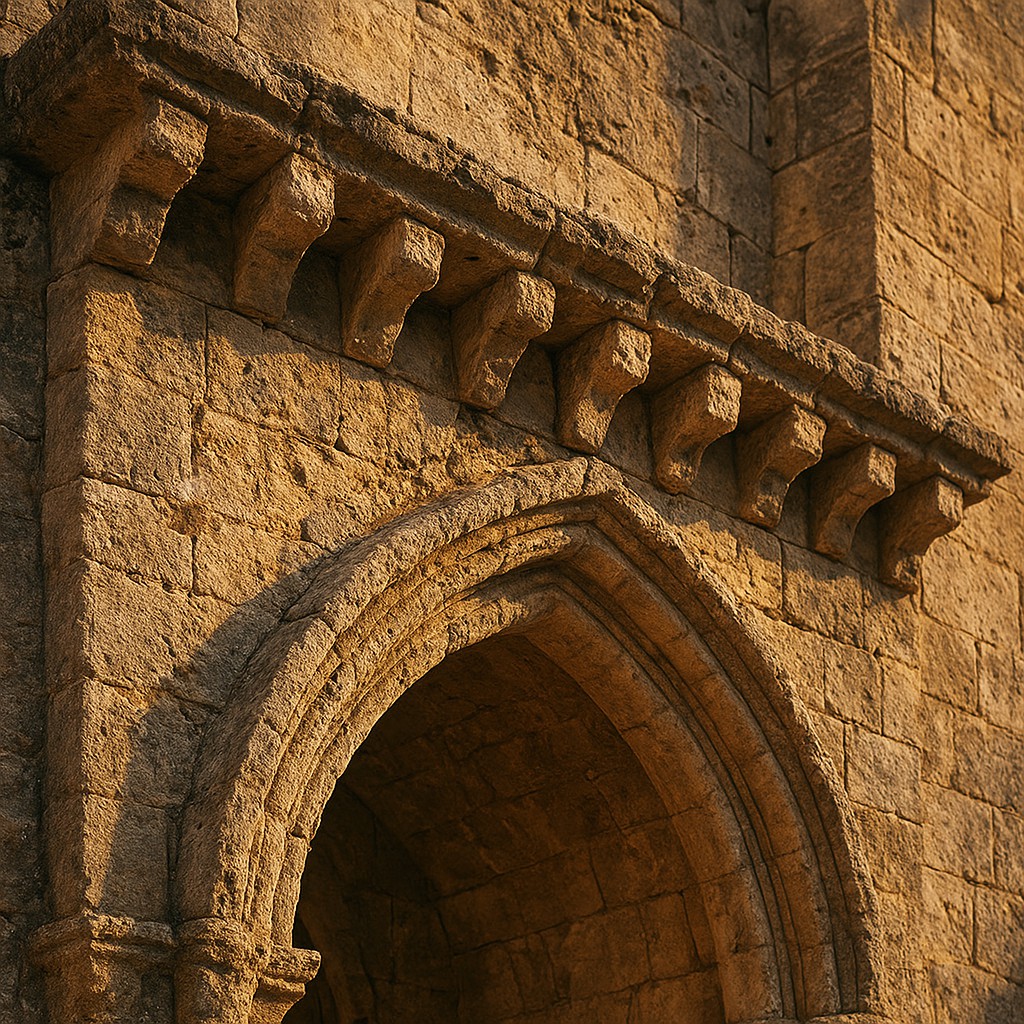
Imagine standing before a cathedral that has weathered a thousand years of storms. Its towering walls still seem to defy the march of time. You might assume these buildings survived because they were made from the toughest, most stubborn materials on Earth. It is a logical guess, but it misses the most brilliant trick in the architect’s handbook. Many of the world’s most enduring monuments are not preserved by their hardness. Instead, they survive because they are willing to lose a little bit of themselves every single year. They use a strategy that feels strange in our modern world of "planned obsolescence," where things are built to break: they use a dedicated "sacrificial" layer whose only job is to wear away so the rest of the building can live.
This concept, known as the sacrificial layer, is an ancient masterclass in long-term thinking. Instead of fighting a losing war against the constant friction of wind, rain, and frost, ancient builders accepted that erosion is a fact of life. They designed a buffer - a top coating or a specific row of stones - to take the brunt of the weather. By making this outer shell from a softer or more porous material than the structural core, they ensured that damage stayed on the surface. There, it could be easily watched and replaced. It is a philosophy of protection that values the health of the heart over the perfection of the skin.
Engineering the Art of Predictable Failure
To understand why a builder would want a part of their work to fail, we have to look at how water destroys stone. In the world of masonry, water is the ultimate invader. It finds the tiniest cracks in a wall, settles in, and waits for the temperature to drop. When water freezes, it expands by about nine percent. It acts like a tiny car jack that can split even the hardest granite from the inside out. If a wall is built as a single, solid block of hard stone, this pressure builds up inside the "bones" of the building. Eventually, the very pillars holding the roof up begin to shatter and flake away.
The sacrificial layer solves this by providing a "path of least resistance." In many ancient stone walls, especially those in Northern Europe or the American Southwest, builders would cap a wall with a layer of softer stone or a mix of lime mortar and soil. Because this layer is more porous (meaning it has more tiny holes) than the expensive, load-bearing stone underneath, it acts like a sponge. It draws moisture upward and outward into itself. When the freeze-thaw cycle begins, the ice breaks the soft "cap" rather than the structural wall. The cap is ruined, but the wall stays bone-dry and intact. This is a controlled failure, much like the crumple zone on a modern car, designed to absorb the hit and sacrifice itself for the safety of the interior.
The Chemistry of Sacrificial Mortar
This principle goes beyond the top of a wall; it also governs the "glue" that holds ancient buildings together. In historic masonry, the mortar between bricks or stones is meant to be the weakest link in the chain. Modern cement is often incredibly hard and waterproof. That sounds like a good thing until you realize it traps moisture inside the brick. Ancient lime mortars, however, are softer and "breathes" more than the stones they surround. This ensures that any salt buildup or moisture movement happens within the mortar joints.
Over decades, the mortar will crumble and fall out. To an untrained eye, this looks like neglect. In reality, that crumbling mortar is saving the brick. If the mortar were harder than the brick, the brick itself would shatter. Replacing a bit of mortar - a process called repointing - is cheap and easy. Replacing a thousand hand-carved structural stones is a disaster. By choosing a material that is "weak" in a specific way, the builders guaranteed that decay would happen only in the most replaceable areas. It is a beautiful irony: the building survives because its joints are willing to turn to dust.
Comparing Preservation Strategies
When we look at how different materials handle the stress of the world, we can see why the sacrificial approach is so effective. The table below shows the difference between trying to outlast the environment versus working with it.
| Protection Strategy |
How it Works |
Main Benefit |
Long-term Risk |
| Waterproof Shield |
Using hard sealants or tough cement. |
Immediate protection from all moisture. |
Traps internal water; causes explosive structural cracks. |
| Natural Hardness |
Choosing the densest stone (like granite). |
Very slow natural wear and tear. |
Brittle; very difficult and expensive to repair once damaged. |
| Sacrificial Cap |
Using a softer, porous top layer. |
Moves all damage to a predictable, replaceable zone. |
Requires regular maintenance and "re-capping." |
| Sacrificial Mortar |
Using lime binders softer than the stone. |
Prevents stone "spalling" (flaking) by absorbing ice pressure. |
Mortar must be replaced every 50 to 100 years. |
As the table suggests, the sacrificial method requires us to redefine what a "successful" build looks like. If your goal is to never touch the building again for fifty years, you might choose a waterproof shield. However, if your goal is for the building to be standing in five hundred years, the sacrificial layer is the only logical choice. it proves that maintenance is not a design flaw, but a natural part of a building's life.
Managing the Friction of the Outside World
The sacrificial layer is more than a trick for masons; it is a metaphor for how we protect the things that matter most in our lives. We all face "weathering" from the world, whether it is the stress of a difficult job, the grind of a long project, or the drain of social interaction. If we try to be perfectly hard and unyielding - to be the "granite" that never changes - we eventually become brittle. Under enough pressure, our core can snap because we have no buffer to absorb the shock.
In a professional setting, a sacrificial layer might look like a "beta" version of a product. You put something out there that you know isn't the final, precious core of your work. You let it take the hits, collect the feedback, and weather the storms of criticism. The "layer" is allowed to be imperfect or even to "fail" because its purpose is to protect the core vision from being damaged before it is ready. It allows you to learn where the environment is harshest without risking your entire career.
This strategy also applies to how we manage our time. Think of "buffer time" between meetings or your weekends as a sacrificial layer. These parts of your schedule are designed to take the brunt of unavoidable friction - traffic jams, last-minute emergencies, or minor setbacks. If you schedule your life with zero breathing room, those setbacks hammer directly against your mental health. By intentionally building in "expendable" time, you ensure that even if the day is a disaster, your structural integrity remains intact.
The Myth of Permanent Perfection
One of the biggest misconceptions about the sacrificial layer is that it represents "bad work." Someone walking past an ancient wall might see the top layer crumbling and think the builder was lazy. This is a classic case of misunderstanding the timeline. The builder wasn't thinking about how the wall would look in five years; they were thinking about how it would look in five hundred. They knew that a "perfect" looking wall that is 100% hard is actually 100% vulnerable.
We see this same myth in modern culture, where we are sold "maintenance-free" products. Whether it is plastic siding for a house or a "lifetime" coating on a car, these materials often hide problems rather than solving them. When they eventually fail - and everything eventually fails - they do so catastrophically because they cannot be repaired piece by piece. The sacrificial layer teaches us that "perfection" is a static, dead state, while "longevity" is a moving, living process. A thing that can be repaired is a thing that can live forever.
Even in tech, developers use "canary builds" as a sacrificial layer. They release a new update to a tiny group of users first. This group acts as the buffer. If there are bugs in the code, it breaks the canary build rather than crashing the entire server for everyone. This is the same ancient wisdom applied to code instead of limestone. By planning for wear and tear, we gain control over it.
Applying the Buffer Strategy to Growth
When we embrace the idea of the sacrificial layer, we stop fearing mistakes and see them as necessary protection. If you are learning a new skill, your early attempts are your sacrificial layers. They are going to be messy, they will cause some embarrassment, and they will eventually be discarded. But they are not failures. They are the protective shield that allows your talent to develop safely underneath. Without those messy first attempts, your "inner stone" would be exposed too early and might crumble under the pressure of expectation.
Think about how you can apply this to your current projects. Where are you trying too hard to be perfect? Where could you add a "cap" - a layer of your work, your time, or your ego that you are willing to let the world scuff up? By creating these intentional buffers, you aren't just protecting your work; you are ensuring you have the stamina to stay in the game for the long haul.
The ancient masons knew a secret we often forget: the key to standing tall through the centuries isn't being the hardest object in the room. It is being the smartest one. It is about knowing what to hold onto and what to let go of. By building your own sacrificial layers, you can navigate the storms of life with quiet confidence - weathered on the surface, perhaps, but solid and unshakable at the core. Build something that knows how to lose a little, so that it can ultimately keep everything.