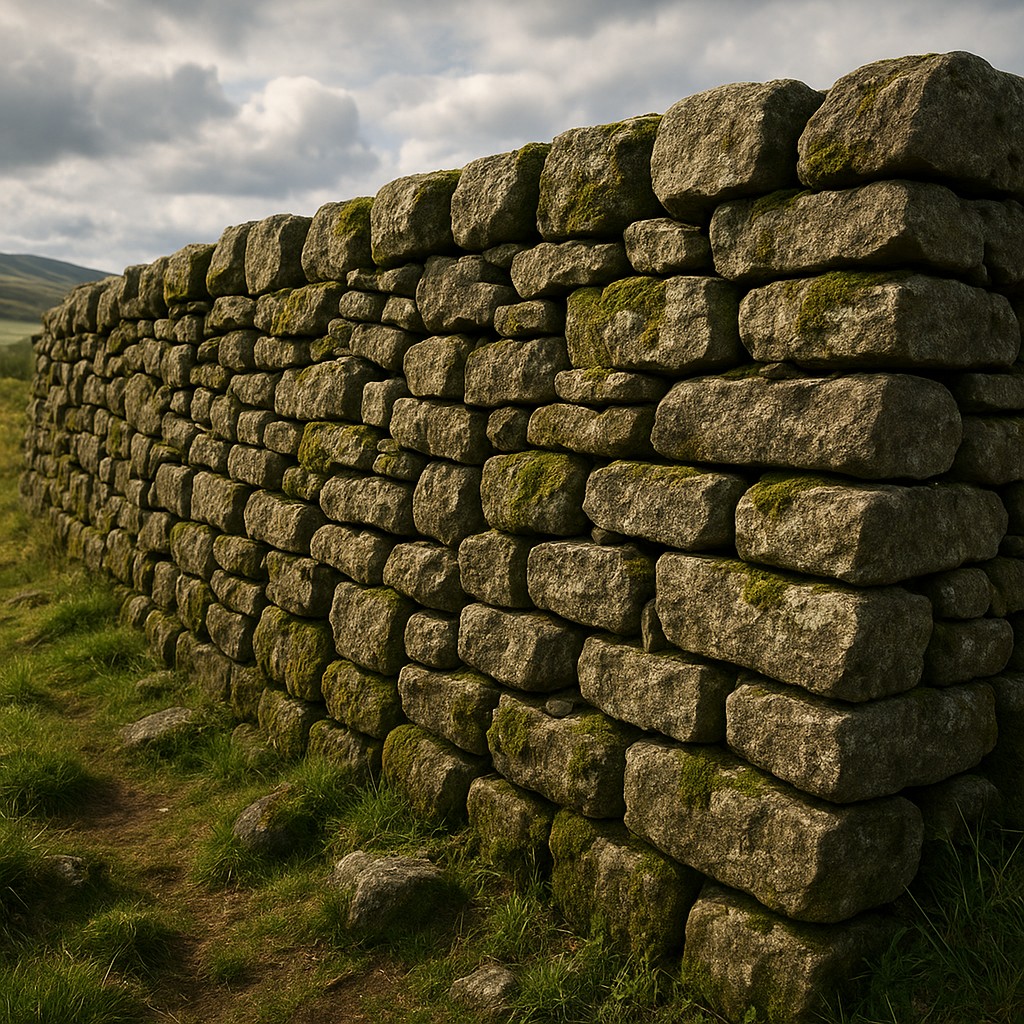
Imagine standing before a massive, moss-covered wall in the Scottish Highlands or the rolling hills of the Cotswolds. It has no cement, no glue, and no steel reinforcements. It is simply a collection of heavy, jagged rocks piled together in a way that seems to defy both the wind and the decades. You might expect a stiff breeze or a curious sheep to topple the whole thing like a house of cards, yet these structures often outlast modern skyscrapers. While our sleek concrete retaining walls frequently crack, bulge, and eventually fail, these ancient "dry-stone" walls remain stubbornly upright for centuries.
The secret to this longevity isn't a mystical spell or some lost architectural superpower. Instead, it is a masterclass in working with the laws of physics rather than trying to bully them into submission. By leaving out the mortar, the ancient masons created a structure that is essentially "breathable." It manages the invisible, destructive forces of nature through a clever combination of friction, gravity, and permeability (the ability for liquid to pass through). To understand why a wall without glue is often stronger than one with it, we have to look at the hidden enemy of every engineer: the weight of water.
The Invisible Bully Known as Hydrostatic Pressure
When we build a modern wall, our instinct is to make it a solid, impenetrable fortress. We use concrete and mortar to seal every gap, believing that a rigid barrier is the best defense against the elements. However, this creates a massive problem when it rains. Soil acts like a giant sponge; when it gets wet, it holds onto an incredible amount of water. If that water has nowhere to go because a solid wall is blocking its path, it begins to push. This is known as hydrostatic pressure, and it is the most common cause of wall failure in the modern world.
Hydrostatic pressure is a patient and unrelenting force. As the water level rises behind a solid wall, the pressure increases exponentially. Eventually, the weight of the water becomes greater than the strength of the concrete or the grip of the foundation. This results in "bowing," where the wall begins to belly out toward the street, or "toppling," where the entire structure simply tips over under the strain. By trying to keep the water out, the solid wall unwittingly turns itself into a dam. Unless that wall is built as thick as the Hoover Dam, it is eventually going to lose that fight.
Furthermore, water is particularly destructive during the winter. In colder climates, the water trapped behind a rigid wall will freeze and expand. This "frost heave" exerts a mechanical force so powerful it can snap solid masonry like a dry twig. Because a mortared wall is rigid and brittle, it cannot handle this expansion. It has no choice but to crack. Once those cracks appear, even more water enters, more freezing occurs, and the cycle of destruction speeds up until the wall is nothing more than a heap of expensive rubble.
Turning a Wall Into a Sieve
Dry-stone masons solved the problem of water pressure by simply inviting the water to come through. Instead of a solid barrier, a dry-stone wall acts as a giant filter or a vertical drainage bed. Since there is no mortar filling the spaces between the rocks, there are thousands of tiny channels throughout the entire structure. When a heavy rainstorm hits, the water doesn't pool up behind the stones; it simply trickles through the gaps and exits on the other side. This prevents hydrostatic pressure from ever building up in the first place.
This design philosophy is a form of passive engineering. Rather than spending vast amounts of money and material trying to resist a force, the mason designs the structure to neutralize the force before it becomes a problem. The stones themselves remain dry and stable because the "load" they are carrying is just the stone above them, not a thousand tons of water-logged mud. It is a beautiful irony of engineering: the very gaps that make the wall look "unfinished" to a modern eye are the exact features that protect it from being knocked over.
This drainage capability extends to the internal core of the wall as well. Professional dry-stone walls are not just two rows of stones leaning against each other. The middle of the wall is filled with smaller "hearting" stones. This internal packing acts like a secondary drainage system, ensuring that any moisture that makes it past the first layer is quickly directed downward or outward. It is a three-dimensional drainage network that requires zero maintenance and never gets clogged like a modern plastic drainpipe might.
The Dance of Gravity and Friction
If there is no glue holding the stones together, you might wonder why they don't just slide off one another. The answer lies in the strategic use of friction and the "batter" of the wall. Masons don't just stack stones vertically; they build them with a slight inward slope, meaning the wall is wider at the base than it is at the top. This inward lean ensures that gravity is constantly pulling the stones toward the center of the wall rather than letting them spill outward.
The stability of the wall is also a result of "interlocking." Masons follow a strict rule: "one over two, and two over one." This means that every stone should straddle the gap between the two stones beneath it, much like the pattern of a brick wall, but with the added complexity of irregular shapes. This creates a massive amount of surface contact. When you combine the heavy weight of the stones with their rough texture, the resulting friction is so high that the stones are practically locked in place. They aren't just sitting there; they are wedged together by the force of gravity itself.
| Feature |
Dry-Stone Walls |
Mortared/Concrete Walls |
| Binding Agent |
Gravity and friction |
Mortar, cement, or adhesive |
| Response to Water |
Permeable; allows natural drainage |
Impermeable; creates water pressure |
| Flexibility |
High; can shift without breaking |
Low; brittle and prone to cracking |
| Longevity |
Centuries (with minimal care) |
Decades (before repairs are needed) |
| Freeze/Thaw Impact |
Moves with the soil |
Cracks under internal pressure |
| Maintenance |
Re-stacking occasionally |
Demolition and replacement |
Resilience Through Flexible Adaptation
One of the most fascinating aspects of a dry-stone structure is its ability to "heal" or at least adapt to its environment. The earth is not a static object; it breathes, shifts, and settles. Minor earthquakes, growing tree roots, or the seasonal expansion of the soil can cause the ground to move by several inches. In a rigid concrete wall, this movement is a death sentence. A crack in a concrete foundation will travel up the entire height of the wall, ruining its strength almost immediately.
A dry-stone wall, however, is a flexible system. Because the stones are not glued together, they can shift and settle independently of one another. If the ground beneath one section of the wall sinks slightly, the stones will simply rub against each other and find a new balance. The wall might look a bit more "wavy" than it did a century ago, but it remains standing. It is a "living" structure that moves in harmony with the landscape rather than fighting against it.
This flexibility is also what makes these walls so resilient against the freeze-thaw cycles mentioned earlier. When the moisture in the soil freezes and expands, the dry-stone wall can flex outward slightly to handle the pressure and then settle back into place when the ice melts. There is no rigid bond to break, so there is no permanent damage. The stones are essentially "floating" in a state of high-friction stability, making them the ultimate example of a resilient system that thrives because it isn't stiff.
The Art of Hearting and Through-Stones
Beyond the external appearance, the true strength of a dry-stone wall lies in the hidden techniques used during construction. A common mistake made by amateurs is "tracing," which involves placing long, thin stones so their beautiful faces are visible on the outside, but they don't reach deep into the wall. A professional mason does the opposite. They place stones with the "length into the wall," ensuring that the bulk of each stone’s weight is tied into the middle of the structure. This creates a deep, heavy anchor that prevents the face of the wall from peeling away.
To truly lock the two sides of the wall together, masons use "through-stones" (sometimes called "tie stones"). These are extra-long rocks that span the entire width of the wall, reaching from the front face all the way to the back. These stones act like heavy-duty staples, binding the two faces together and preventing them from bulging outward. Usually placed every two or three feet in height, through-stones are the secret structural ribs that keep the wall from splitting down the middle under its own weight.
Finally, there is the "hearting." This refers to the smaller, jagged stones packed tightly into the center of the wall. A wall with a hollow center is a wall that will fail, as the outer stones will eventually tip inward. By packing the center with small stones, the mason ensures that every large stone has a solid surface to rest against. This hearting must be packed by hand, not just shoveled in, to ensure there are no large gaps. This creates a dense, heavy core that still allows water to flow through but provides the internal pressure necessary to keep the outer stones in their place.
Why Old Methods Outperform Modern Solutions
In an era of high-tech materials and chemical adhesives, it feels counterintuitive to suggest that stacking "naked" rocks is a superior technology. Yet, when we look at the lifespan of infrastructure, the dry-stone method reveals a profound wisdom. Modern walls are often built for the short term; they are cheap to install using machinery but expensive to maintain and impossible to repair without specialized equipment. When a concrete wall fails, you usually have to bring in a jackhammer, haul the debris to a landfill, and start from scratch with new, carbon-heavy materials.
Dry-stone walls, conversely, are the ultimate expression of a circular economy. If a section of a dry-stone wall does eventually tumble, perhaps because a massive tree fell on it or a centuries-old foundation finally gave way, the repair process is incredibly simple. You don't need to buy new materials. You simply pick up the stones that fell and stack them back up. The "waste" from a collapsed wall is the exact material needed to fix it. This makes the technique not only environmentally friendly but also economically sustainable over hundreds of years.
Furthermore, we are beginning to see a return to these "primitive" concepts in modern civil engineering. Engineers now use "gabion baskets," wire cages filled with loose rocks, to stabilize hillsides and riverbanks. These are essentially industrialized versions of dry-stone walls. They use the same principles of permeability and flexibility to manage water and soil movement. Even in our most advanced projects, we are finding that the ancients were right: a structure that allows nature to pass through it will always outlast a structure that tries to stand in nature's way.
The next time you encounter an old stone wall while hiking or driving through the countryside, take a moment to look at the gaps between the rocks. Those tiny windows of air are not signs of weakness or neglect. They are the vents that allow the wall to breathe, the drains that protect it from the crushing weight of hidden water, and the joints that allow it to dance with the shifting earth. In a world that often prizes rigid perfection, the dry-stone wall reminds us that true strength often comes from being open, flexible, and willing to let the elements pass right through you. Be like the stone mason: build for the centuries by understanding the forces you cannot change, and give them a graceful way to move on.