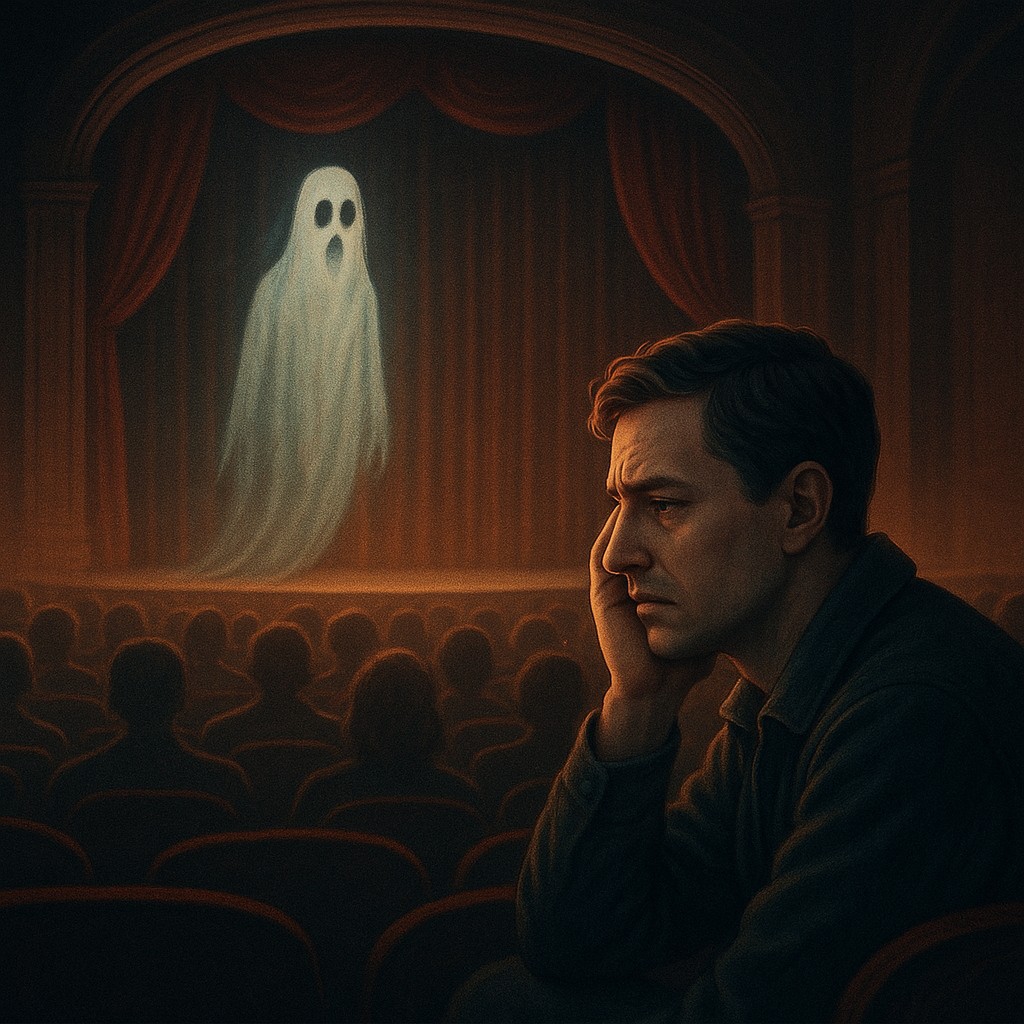
Picture yourself in a packed theater, watching a protagonist make a choice so bafflingly self-destructive that you want to scream at the screen. We have all been there, watching a character choose loneliness over love or aggression over peace, even when we know it will lead to their ruin. On the surface, these choices look like bad writing or random chaos. But in the hands of a master storyteller, they are actually symptoms of a hidden infection. Writers call this infection the Ghost: a psychological anchor from the past that keeps a character chained to a version of themselves they should have outgrown long ago.
The Ghost is the secret ingredient that turns a flat caricature into a living, breathing person. It represents a specific traumatic event or a long period of hardship that gave the character a deeply flawed worldview. Once we understand a character’s Ghost, their irrational behavior suddenly makes perfect sense. We see they aren't just being difficult; they are surviving according to a set of rules they learned when they were most vulnerable. This unseen history makes us care, because we recognize that we all carry ghosts of our own.
The Haunting Logic of Internal Scars
A common mistake in storytelling is confusing a "sad backstory" with a Ghost. A sad backstory is just a list of bad things that happened, like a character’s childhood home burning down or the death of a pet. These events are tragic, but they only become a Ghost when they fundamentally change how the character moves through the world. A Ghost is a psychological wound that never healed, hardening into a "Lie" that the character accepts as absolute truth. For example, if a character was betrayed by a business partner ten years ago, the Ghost isn't the betrayal itself; it is the resulting belief that "everyone is out to get me" or "I am only safe if I am in total control."
In literary terms, the Ghost fuels the character’s "Weakness." While the character’s "Need" is what they must learn to find happiness, and their "Desire" is the goal they are chasing in the plot, the Ghost is the wall standing between them. it acts as a defense mechanism that used to work. At the time of the original trauma, the character likely adopted a specific behavior to protect themselves from more pain. However, by the time the story begins, that protection has become a prison. The very wall they built to keep monsters out is now blocking the light, creating the friction that drives every scene.
The beauty of this setup is that it creates natural conflict without needing a typical villain. Usually, the protagonist is their own worst enemy because their Ghost forces them to see the world through a cracked lens. When a friend offers help, the Ghost whispers that it is a trap. When a new opportunity appears, the Ghost screams that failure is a certainty. This creates a deep sense of irony for the reader: we can see the path to happiness clearly, but the character is blinded by a history we are only beginning to uncover.
The Anatomy of an Active Wound
To truly understand how the Ghost works, we have to look at how it shows up in the present day. A well-written Ghost explains the "why" behind the "what." If a character is incredibly stingy and refuses to spend a dime even after they become wealthy, the Ghost might be a childhood of extreme poverty where every penny meant the difference between eating and starving. If a character is a serial cheater who refuses to commit, the Ghost might be the crushing abandonment they felt when a parent walked out on the family.
The following table shows how a past event (the Ghost) turns into a mental flaw and becomes a hurdle in the actual plot.
| The Past Event (The Ghost) |
The Resulting Lie (Internal Belief) |
The Current Flaw (Behavior) |
The Plot Obstacle (Active Interference) |
| A pilot survives a crash where his entire crew died. |
"I am a danger to anyone who follows my lead." |
Intense isolation and refusal to work in teams. |
He sabotages a mission because he won't trust his co-pilot with a vital task. |
| A child is constantly scolded for being "too loud" or "too much." |
"Showing feelings or speaking up leads to rejection." |
Emotional numbness and extreme stoicism. |
She loses her marriage because she cannot tell her spouse what she loves or needs. |
| A student is publicly shamed for a mistake during a performance. |
"Mistakes are permanent and destroy who I am." |
Obsessive perfectionism and fear of risks. |
He turns down a promotion because he is terrified of failing in front of others. |
| An orphan is moved through several different foster homes. |
"Nothing good ever stays, so don't get attached." |
Cynicism and leaving others before they can leave. |
They break up with a partner the moment things get serious to avoid being dumped first. |
As these examples show, the Ghost is never passive. It is an active participant in every decision. Writers often reveal the Ghost slowly, like a detective finding clues at a crime scene. We see the strange behavior first, and only later do we find the wound that caused it. This creates a specific kind of tension where the reader asks, "Why is this person acting this way?" instead of just "What happens next?" It shifts the focus from the plot to the person, which is the mark of high-quality, character-driven drama.
Breaking the Cycle of Defense Mechanisms
The true climax of a character’s journey happens when the Ghost is finally confronted and put to rest. This is often called the "moment of truth" or "self-revelation." For most of the story, the character has used their flaw as a shield. They believe that if they stop being cynical, or perfectionistic, or isolated, they will be destroyed. The plot must eventually create a situation where those old defenses no longer work. They reach a crossroads: they must either cling to the safety of their Ghost and fail, or drop the Ghost and grow into someone new.
This change is incredibly difficult because the Ghost is comfortable. Even if it makes the character miserable, it is a misery they understand. Letting go of a Ghost means stepping into the unknown without protection. This is why character growth often feels like a death; the old self, built on the foundation of the Ghost, must die so a healthier person can be born. When a character finally looks their past in the eye and says, "That happened to me, but it is not who I am," the reader feels a massive sense of relief. We are watching a human being break a cycle of trauma that may have lasted for decades.
In many ways, the Ghost is the most relatable part of any fictional person. Real life is rarely a straight line toward success; it is a messy series of reactions to things that have already happened to us. When we see a character struggle with their Ghost, we see our own tendencies to overreact, to pull away when we should reach out, or to repeat the same mistakes. By watching a character beat their Ghost, writers give readers a map for overcoming their own. It suggests that while we cannot change the past, we can change the stories we tell ourselves about it.
Common Pitfalls and the Misunderstood Past
The most frequent mistake writers make is making the Ghost too easy to solve. If a character’s trauma can be fixed by one short talk or a "cheer up" speech, the Ghost wasn't strong enough. A true Ghost is rooted in the character's nervous system. It is a reflex. It should feel like the character is trying to breathe underwater when they try to act against their Ghost. If it doesn't hurt to change, the change doesn't mean anything to the audience.
Another misconception is that every character needs a massive, explosive Ghost involving death or disaster. In reality, some of the most haunting Ghosts are quite ordinary. Being ignored as a middle child can be a Ghost. Having an overly successful older sibling can be a Ghost. Moving to a new school every year can be a Ghost. The scale of the event matters much less than the impact it had on the character’s logic. A "small" event that leads to a "large" personality flaw is often more interesting than a huge explosion that leads to a predictable reaction.
Finally, writers must make sure the Ghost fits the theme of the story. If a book is about the importance of community, the protagonist’s Ghost should make them distrustful of groups. If the theme is about the burden of family legacy, the Ghost should involve the character’s relationship with their parents or expectations. When the Ghost, the flaw, and the theme all line up, the story feels like a whole where every piece is pushing toward the same emotional finish line.
The Ghost as a Mirror of the Human Condition
Ultimately, studying the Ghost is an exercise in empathy. It teaches us that behavior is rarely "crazy" or "unreasonable" once you understand where it came from. In the real world, we often judge people by what they do now without thinking about their history. In fiction, the Ghost lets us step inside someone else’s pain and see how they are trying to protect themselves. It reminds us that every person we meet is carrying a world of experiences we cannot see, and that most "villainy" is actually just poorly managed pain.
When you start looking for the Ghost in your favorite movies and books, you will see it everywhere. You will see it in the detective who can't stay married because his father was a "hero" who was never home. You will see it in the businesswoman who crushes her rivals because she was told she would never amount to anything. You will see it in the hero who refuses to carry a gun because of one terrible split-second decision in his youth. These characters stay with us because their struggles feel true to the weight of being alive.
By mastering this concept, you gain a deeper appreciation for the art of storytelling. You start to see a narrative not just as a series of events, but as a psychological journey toward healing. The next time you feel frustrated by a character’s choices, look for the shadow standing behind them. Ask yourself what they are so afraid of, and what lie they are telling themselves to keep the pain away. In finding the Ghost, you find the heart of the story, and perhaps a new way to look at the people in your own life who are just trying to survive their own hidden histories.