The invisible tool you already carry everywhere: why better breathing matters right now
Imagine a tool that costs nothing, fits in any pocket, and can calm you during a tense meeting, sharpen your focus before a presentation, help you fall asleep after a long day, and kickstart your energy for a workout. That tool is your breath, and most people treat it like background noise instead of the secret instrument it is. Learning a few reliable breathing techniques rewires your nervous system, improves performance, and makes stressful moments far easier to handle, all without gadgets or appointments.
People often think breathing is automatic and therefore uninteresting, but that overlooks a rare power: breathing is both involuntary and voluntary. That means you do not have to think about it for your body to breathe, but you can also deliberately change your breathing to influence your heart rate, hormones, and emotional state. This dual control is what makes breathwork such an efficient skill to learn - small adjustments produce outsized effects.
Over the next sections you will learn how breathing actually affects your body and mind, practice clear, practical techniques from calming to energizing, and find a plan to weave breathwork into daily life. By the end you will have not only new knowledge, but a toolkit you can use the moment you feel stressed, sleepy, or scattered.
How breathing really shapes your body and mind
Breath affects the body through mechanics and chemistry. Mechanically, the diaphragm and intercostal muscles create pressure differences that move air and massage your vagus nerve, lungs, and heart. Chemically, breathing controls carbon dioxide and oxygen levels, which change blood pH and influence whether you feel dizzy, calm, or ready to sprint. Understanding these two angles helps make sense of why different patterns feel so different.
The nervous system is a major mediator of breath effects. Slow, consistent exhalations stimulate the parasympathetic system, the relaxation side of the autonomic nervous system, which lowers heart rate and creates a sense of ease. Faster, forceful breaths increase sympathetic activation, raising alertness and readiness. Because you can choose your breathing pattern, you can dial your nervous state up or down like a radio knob.
Breath also interacts with emotion circuitry in the brain. When you consciously change your breathing pattern, you send signals up to brain regions that manage fear and mood, which can help extinguish anxious loops. This top-down effect is why simple breathing practices can reduce panic, help regulate anger, and improve emotional clarity during decision making.
The foundational move: how to breathe with your diaphragm (the anchor skill)
Learning diaphragmatic breathing is like learning to ride a bike before attempting stunts - it makes everything else easier and safer. Diaphragmatic breathing means that the diaphragm, a dome-shaped muscle under your lungs, does most of the work. This pattern encourages fuller inhalations, longer exhalations, and a calmer nervous system compared with shallow chest breathing.
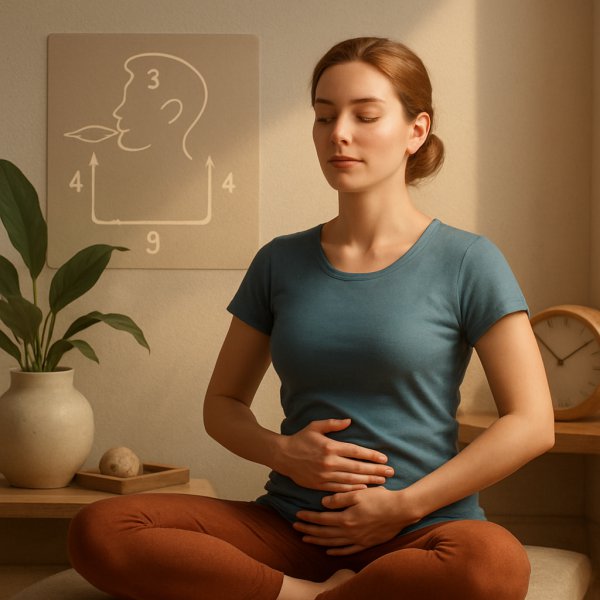
To practice diaphragmatic breathing, start lying on your back with knees bent or seated comfortably, one hand on your chest and one on your belly. Breathe in through your nose and aim to make the hand on your belly rise more than the one on your chest, which shows the diaphragm is engaging. Exhale slowly through your nose or slightly parted lips, feeling the belly fall, and repeat for 5 to 10 minutes to build a habit.
A common beginner mistake is trying to force a big breath with shoulders and neck, which adds tension and defeats the purpose. Instead, imagine filling a balloon in your lower ribs first, then letting any residual air expand the upper chest slightly. Practice twice daily - morning and evening - and you will notice greater ease in other techniques you try later.
Simple, reliable calmers: three breathing patterns that actually work
Box breathing - A technique used by athletes and leaders to center attention and reduce stress. Inhale through the nose for a count of four, hold for four, exhale for four, hold for four, and repeat. Box breathing boosts focus by giving your mind a rhythm to follow, which reduces rumination and keeps your nervous system steady.
4-7-8 breathing - A soothing method useful for anxiety and sleep initiation. Inhale for four counts, hold for seven, then exhale for eight counts, through the mouth or nose depending on comfort. The extended exhale encourages parasympathetic activation, making this pattern highly effective before bed or when you need to deescalate a panic surge.
Resonant or coherent breathing - This pattern aims for a breathing rate that maximizes heart rate variability, typically around five to six breaths per minute. Breathe in for five to six seconds, then exhale for five to six seconds, maintaining an even rhythm. Resonant breathing creates physiological coherence, which can enhance resilience and sustained calm during stressful tasks.
Practical steps to try these three during a busy day:
- If you are in a meeting and need focus, do a single 60-second round of box breathing.
- When you first lie down for sleep, do 4-7-8 for three cycles to cue relaxation.
- For daily mental fitness, practice resonant breathing for 10 minutes in the morning, preferably seated and uninterrupted.
Energize or reset: breathing techniques for alertness and performance
Not all breathing aims to calm, some breathe to awaken and energize. Kapalabhati, a yogic rapidly driven exhalation practice, uses quick, forceful exhalations with passive inhalations to clear the head and increase alertness. Wim Hof breathing, a more intense method combining deep cyclical breaths with breath holds, claims benefits in endurance and cold tolerance though it requires caution and guidance.
These energizing methods raise oxygen intake, alter carbon dioxide levels, and pump sympathetic nervous system activity, which feels invigorating and vivid. They are powerful tools when used briefly and with attention, for example 3 to 5 rounds before a workout or creative sprint, but they are not appropriate for everyone or every situation.
Safety notes: avoid forceful or breath-holding techniques if you have cardiovascular disease, high blood pressure, epilepsy, or are pregnant, unless cleared by a clinician. For beginners, start with short, guided sessions and stop if you feel lightheaded, have chest pain, or experience nausea.
The balancing act: alternate nostril breathing and mindful rhythm
Alternate nostril breathing is an easy, portable way to balance left-right autonomic tone and steady the mind. Use your thumb to close one nostril while breathing through the other, then switch, maintaining slow, even breaths. The act of alternating places attention on the breath and creates a felt symmetry that many people find calming and focusing.
This practice is particularly helpful before public speaking or exams, because the ritual itself reduces performance anxiety by providing a predictable routine. It requires only a few minutes and translates well to seated situations, like before a commute or during a thinking break at work. Try three minutes of alternate nostril breathing and notice how mental chatter often quiets down.
When breathing helps sleep and when it does not
Breathing techniques can be potent aids for sleep, especially when racing thoughts or anxiety are the main obstacles. Methods that emphasize lengthening the exhale, like 4-7-8 and resonant breathing, activate parasympathetic responses that lower arousal and create sleep-friendly physiology. Doing these practices as part of a consistent wind-down ritual makes them more reliable because your brain learns the association between breath and bedtime.
However, breathing is not a universal panacea for sleep disorders driven by physical problems such as untreated sleep apnea, chronic pain, or medical conditions. If you snore loudly, wake gasping, or experience daytime sleepiness despite good sleep habits, seek a professional evaluation. In many cases breath techniques complement medical care, but they should not replace diagnosis and treatment when serious conditions are present.
Common myths and the real science behind them
Myth: You have to breathe deeply all the time for health - Truth: Depth is context-dependent, and forcing very deep breaths constantly can actually increase anxiety and dizziness for some people. The right pattern depends on your goal - calm, focus, energy, or endurance - not a blanket prescription for maximum depth.
Myth: Breathwork cures everything - Truth: Breathing practices are powerful and helpful, but they are tools, not cures. They work best as part of a broader approach that may include therapy, exercise, sleep hygiene, and medical care when needed. Expect meaningful improvements, but also use judgment about when to seek professional help.
Myth: Faster breathing always means more oxygen - Truth: Rapid shallow breathing can reduce effective oxygen delivery by blowing off too much carbon dioxide, which paradoxically reduces oxygen unloading to tissues. Breath quality matters more than rate alone.
A simple, safe progressive plan to build a daily breathing practice
Start with 5 minutes a day for two weeks, then add 5 minutes every two weeks until you reach 20 minutes daily. Begin with diaphragmatic breathing to build a relaxed foundation, then introduce box breathing and 4-7-8 for stress and sleep. Add resonant breathing sessions for mental resilience, and experiment with energizing techniques briefly before workouts.
A weekly micro-plan to get going:
- Monday: 10 minutes diaphragmatic practice in the morning.
- Wednesday: 5 minutes box breathing before a meeting, 5 minutes resonant breathing before bed.
- Friday: 10 minutes resonant breathing with mindful attention.
- Weekend: Try a guided 15-minute session that includes both calming and energizing practices, keeping safety cautions in mind.
Consistency is more valuable than intensity, so prioritize short daily habits over infrequent long sessions. Record how you feel after practice for a week to notice patterns and stay motivated.
Quick reference table - choose the right technique when you need it
| Technique |
Best for |
Pattern example |
Typical duration |
Notes |
| Diaphragmatic breathing |
Baseline calm, posture |
Slow nose inhale, belly-rise, slow exhale |
5-10 minutes |
Foundation skill, do daily |
| Box breathing |
Immediate focus, stress control |
Inhale 4, hold 4, exhale 4, hold 4 |
1-5 minutes |
Great in meetings or pre-performance |
| 4-7-8 |
Sleep onset, panic reduction |
Inhale 4, hold 7, exhale 8 |
2-4 minutes |
Powerful for bedtime rituals |
| Resonant/coherent |
Long-term resilience |
Breathe at ~5-6 breaths per minute |
10-20 minutes |
Improves heart rate variability |
| Alternate nostril |
Emotional balance, centering |
Close one nostril, alternate, even breaths |
3-5 minutes |
Portable and discreet |
| Kapalabhati |
Quick energizer, clarity |
Fast forceful exhales, passive inhale |
1-3 minutes |
For experienced practitioners only |
| Wim Hof (modified) |
Alertness, endurance prep |
Cycles of deep breaths with holds |
2-5 rounds |
Requires guidance and caution |
Common mistakes, and how to correct them
One frequent error is trying to "do it perfectly" on the first try, which can produce tension and discouragement. Breathwork is a skill that improves with gentle repetition, so aim for approximate consistency rather than perfection. Notice sensations without judgment, and let the practice be a laboratory for learning, not a test.
Another mistake is practicing in the wrong context, such as doing intense breath holds before driving or in water. Match the technique to the situation: calming breaths before bed or meetings, energizing breaths before exercise. Finally, avoid holding your breath for long without supervision if you have health concerns; when in doubt, consult a clinician.
Reflection prompts to make these ideas personal and practical
Take a moment to answer the following prompts in your notebook or on your phone. These little reflections help anchor learning and convert ideas into habits.
- When during my day do I feel most tense, and what would happen if I used a 60-second breathing tool there?
- Which breathing technique feels intuitively calming, and which feels energizing to me after one trial?
- Can I commit to two 5-minute practice sessions daily for the next two weeks to build the habit?
- What medical or situational reasons might mean I should pause or adapt breathwork, and who would I consult if unsure?
These questions nudge you from passive reading to active trial. Try one of the techniques immediately after reflecting to see how your body responds.
When to proceed cautiously and when to seek professional guidance
Breathing practices are low-risk for most people, but there are clear red flags that warrant caution. If you have heart disease, high blood pressure, epilepsy, severe asthma, a history of fainting, pregnancy complications, or any condition where blood pressure or oxygenation is a concern, check with your healthcare provider. Also, stop practice and seek help if you experience chest pain, prolonged dizziness, fainting, or severe shortness of breath.
For mental health conditions such as panic disorder or PTSD, breathwork can be helpful but also triggering if done without guidance. In these cases work with a therapist who uses breath-based interventions or a qualified instructor who understands trauma-sensitive approaches. When the practice feels destabilizing rather than stabilizing, that is your cue to seek professional support.
How to make breathing last: integrate breath into everyday life
The most successful breath practices are the ones you actually do, so embed breathing into activities you already do. Pair a two-minute diaphragmatic check-in with brushing your teeth, add box breathing to your standing-in-line moments, or use resonant breathing while waiting for your computer to boot. Small consistency beats occasional marathon sessions.
Treat breathwork like sharpening a tool rather than a one-time fix - the more you practice, the quicker you can access calm or focus. Keep it playful: experiment with different rhythms, use music to guide resonant breathing, or practice with a friend to stay accountable. Over time you will internalize these patterns so they come naturally when you need them.
Final nudge: a short starting routine you can do right now
Find a comfortable seated position, place one hand on your belly and one on your chest, and close your eyes if comfortable. Do five diaphragmatic breaths to anchor the diaphragm - inhale gently through the nose for four counts, exhale for six counts to emphasize the out-breath. Then do two rounds of box breathing to focus the mind, and finish with one minute of resonant breathing at five breaths per minute. Notice how your body and mind feel before and after, then go about your day with the confidence that you carry a powerful tool in your breath.
Breathe curious, breathe deliberate, and breathe often - you are now equipped to use something you already have in smarter, kinder, and more effective ways.