Why a handful of islands and towns feel like a secret recipe for living longer
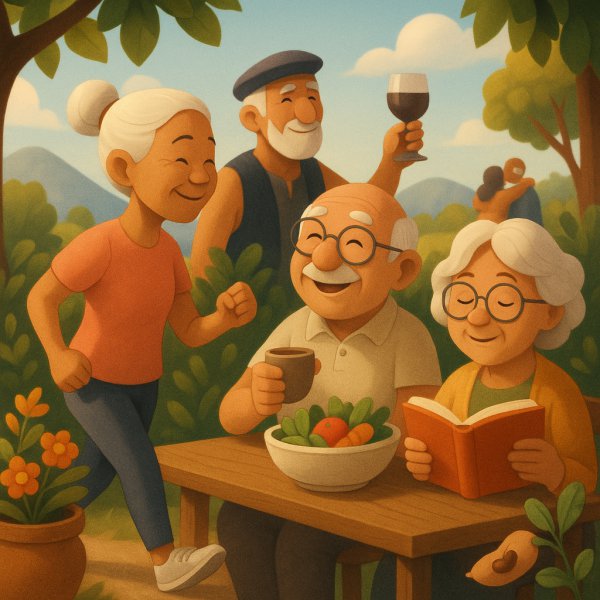
Imagine a small town where centenarians sit on benches knitting, neighbors greet each other by name, and children run barefoot on streets that have seen generations. This is not a tourist brochure, it is a pattern that researchers found in a handful of places around the world. These places, later called Blue Zones, have unusually high numbers of people who live to 100 or older, while remaining active, mentally sharp, and relatively free of chronic disease.
That suddenly sounds important, not merely interesting. The obvious questions follow - is this luck, genes, or something replicable? If it is replicable, could your neighborhood borrow some of that mojo? The search for answers turns out to be a delightful mix of anthropology, epidemiology, common sense, and practical everyday choices that you can test on yourself.
This text will walk you from the curious anecdote to the careful science, unpacking the lifestyle patterns that recur across Blue Zones, explaining why those patterns likely matter, and giving you realistic, actionable ways to try them. Along the way you will meet real places and practices, face common myths, and end with a short plan you can start this week.
Where the Blue Zones are, and what makes them stand out
The term Blue Zones began as an exploratory mapping project. A demographer drew blue circles on a map where unusually many people lived past 100. Over time, five regions rose to prominence for their concentration of healthy elders: Okinawa in Japan, Sardinia in Italy, Nicoya Peninsula in Costa Rica, Ikaria in Greece, and Loma Linda in California. Each region has its own history, cuisine, and culture, but when you look across them, similar lifestyle themes emerge.
These regions are not utopias. They still face poverty, political change, and illness. What distinguishes them is not absence of modern problems, but lifestyle structures that seem to buffer against chronic disease - heart disease, diabetes, dementia - more effectively than in many modern urban settings. Researchers and writers, most notably Dan Buettner and teams collaborating with National Geographic, synthesized these recurring features into practical lessons for other communities.
One important point right up front: Blue Zones are primarily observational stories, not clinical trials. These populations show correlations between certain lifestyle features and longevity, which are highly suggestive but not absolute proofs of causation. Still, when evidence from physiology, nutrition, psychology, and social science aligns with those correlations, a compelling, usable picture begins to form.
The story of Blue Zones is useful because it reframes longevity as an outcome of a lifestyle ecosystem - a set of small, culturally embedded decisions that add up. Instead of chasing a single magic bullet, the takeaway is an invitation to reweave daily life so health becomes the default option.
The core habits that keep returning - a handy summary table
Below is a compact table that summarizes the recurring principles across Blue Zones, why they matter, and one small action you can try this week to borrow that benefit.
| Principle (Power Nine themes) |
Why it helps - short science-backed reason |
One simple action to try this week |
| Move naturally |
Regular low-intensity activity reduces inflammation, preserves muscle and balance |
Walk more - aim for 15-20 minutes after meals |
| Plant-slant diet |
Plants provide fiber, antioxidants, and lower calorie density |
Add one extra vegetable to two meals daily |
| Purpose - "reason to get up" |
A sense of purpose reduces stress hormones and promotes resilience |
Write one sentence about your personal purpose |
| Downshift - stress rituals |
Chronic stress accelerates aging via cortisol and inflammation |
Try 5 minutes of deep breaths or tea ritual daily |
| 80 percent rule |
Stopping short of fullness reduces overeating and metabolic strain |
Pause before second helpings, eat until 80 percent full |
| Moderate alcohol in groups |
Moderate wine intake linked with cardiovascular benefits in context of socializing |
Share a small glass of wine or tea with friends, not alone |
| Family first |
Strong family ties provide emotional support and practical care |
Call or visit a family member this week, make plans together |
| Social circles that support health |
Friends influence habits and reward healthy choices |
Join a walking group or community class |
| Belonging, faith or spirituality |
Rituals and shared meaning reduce loneliness and promote healthy routines |
Attend a community or faith gathering, or start a Sunday ritual |
This table is a cheat sheet, not a prescription. The magic is in how these elements interact and become part of a daily rhythm.
How daily movement becomes powerful without a gym membership
One surprising commonality of Blue Zones is that people are not doing high-intensity workouts five times a week, they are simply built to move. Think of movement as woven into life - carrying water, tending gardens, walking to shops, climbing stairs, and engaging in household tasks. This pattern results in frequent bouts of low-to-moderate activity that preserve cardiovascular health, muscle mass, and metabolic flexibility.
Physiologically, muscles that are used regularly signal the whole body to maintain insulin sensitivity, regulate inflammation, and keep bone density up. Movement also supports mental health by releasing endorphins and reducing stress. The takeaway is practical: you do not need to transform into a gym rat to capture benefits, you need to increase incidental activity and break up long periods of sitting.
Try redesigning micro-habits: take phone calls standing or walking, park farther away, take the stairs, garden for 20 minutes, or adopt a post-meal walk. Small repeated behaviors compound into meaningful results.
The plant-slant plate, not strict veganism
Across Blue Zones, diets differ culturally, but most lean heavily toward plants. Beans, legumes, whole grains, vegetables, nuts, fruits, and modest amounts of fish or dairy appear often. Meat is usually eaten in small quantities and often reserved for celebrations rather than daily meals. The net effect is calorie control, high fiber, and a broad mix of micronutrients and phytonutrients that fight oxidative stress.
Science supports these patterns: plant-based components are linked to lower rates of heart disease, certain cancers, and diabetes. Beans and legumes are especially common among centenarians and show beneficial effects on blood sugar and satiety. The practical message is flexible - a plant-slant helps, strict rules are optional. If you like animal foods, focus on quality and reduced frequency.
If you are considering dietary change, start modestly: make two meals this week plant-first, experiment with a new bean recipe, and notice how your energy and digestion respond.
Social connection, community rituals, and why friendships are medicine
Longevity in Blue Zones is strongly social. People belong to close-knit families, neighborhoods, religious or social groups, and these networks reinforce healthy habits. Social ties offer practical support - someone to bring soup when you are ill, a friend to walk with - and emotional benefits that reduce stress and loneliness, both linked to worse health outcomes.
More than just being connected, Blue Zone communities have explicit rituals around food, celebration, and caregiving that strengthen identity and reduce risky behaviors. For example, elders are integrated into daily life, not isolated in care facilities. This integration gives both a sense of purpose and a built-in support network that encourages healthy choices.
Practically, you can cultivate these benefits by prioritizing group activities, inviting neighbors for meals, joining clubs that meet regularly, or volunteering. Small acts of social investment return large health dividends.
Purpose and stress rituals - the quiet engines of resilience
Centenarians in Blue Zones often describe clear reasons to get up in the morning. Okinawans call it ikigai, Sardinians speak of social roles and occupational identity, Nicoyans mention a "plan de vida" or life purpose. Purpose seems to confer stress resilience, better sleep, and healthier routines.
Alongside purpose are daily rituals that downshift stress - whether it is afternoon naps in Ikaria, prayer and Sabbath rest in Loma Linda, or tea and storytelling in Okinawa. These low-tech routines break up the day, reduce chronic cortisol exposure, and give the nervous system time to recover.
In practical terms, reflect on what gives your life meaning and build small rituals that signal rest and renewal. This might be a 10-minute gratitude practice, a weekly phone call with a mentor, or a daily hobby that is not performance oriented.
What the science actually says, and where it gets fuzzy
Research on Blue Zones mixes observational studies, ecological comparisons, and interventions inspired by Blue Zone principles. Observational data consistently link plant-rich diets, physical activity, social networks, and lower stress with lower mortality and better healthspan. Biological mechanisms - lower inflammation, improved metabolic health, and cognitive preservation - align with these associations.
However, causation is complex. Genetics do play a role in longevity, and environmental factors like clean air, affordability of nutrient-dense foods, and social policies shape outcomes. Selection bias and survivor bias matter - those alive at 100 may have unique attributes that are not easy to reproduce. Additionally, cultural norms that promote these lifestyles may be hard to transplant wholesale into different socioeconomic contexts.
The pragmatic conclusion is balanced: while not every detail can be copied exactly, many of the underlying principles are robust across cultures and supported by mechanistic biology. Applying them improves health probability, not guarantees centenarian status.
Common misconceptions that make longevity look like magic
A lot of mythology grows around longevity, so let us clear up a few persistent myths. First, genes are not destiny. While certain genetic variants enhance longevity, most of the variance in lifespan is explained by behavior and environment. Second, extreme calorie restriction or exotic supplements are not required. Blue Zone habits are about sustained, moderate choices rather than radical diets or pills.
Third, alcohol is not a necessary key to longevity. Moderate consumption, often wine with meals in social settings, appears beneficial in context, but drinking is not a recommended shortcut for those who do not drink. Fourth, the "one-rule" fallacy is tempting - searching for a single miracle food, exercise, or pill. Blue Zones show that longevity is cumulative, a web of small habits.
Finally, replicating Blue Zones is not just about copying recipes. It is about designing environments and social norms that make healthy choices easier, from walkable streets to communal meals.
Small experiments you can run this month - practical steps that actually stick
One of the best ways to learn if these ideas work for you is to run short, low-stakes experiments. Think of them as design iterations, not lifetime vows. Here are some simple, evidence-aligned actions to try over the next 30 days.
- Walk after meals: aim for a 10-20 minute stroll after dinner at least five times a week. This helps digestion, blood sugar, and mood.
- Add legumes twice a week: beans, lentils, or chickpeas are inexpensive and nutrient-dense, and they boost fiber and satiety.
- Schedule a weekly social ritual: a phone call, coffee date, or shared meal that is recurring and non-negotiable.
- Practice the 80 percent rule at one meal per day: eat slowly, pause mid-meal, and stop when you feel mostly full.
- Create a downshift ritual: tea, deep breathing, or a short nap at the same time each day to reduce stress.
Track changes in sleep, energy, hunger, mood, and ease of movement. These observations are valuable because they let you tailor habits that fit your life.
A simple starter checklist you can use right away
If you like checklists, here is a small, realistic daily template inspired by Blue Zones. It is meant to be doable and compounding.
- Morning: one purpose reflection (1 sentence), light movement (10 minutes)
- Meals: plant-forward choices, include beans or vegetables at two meals
- Midday: 10-20 minute walk after lunch or dinner
- Social: connect with one person meaningfully this week
- Evening: 5-10 minute downshift routine before bed
Repeat weekly and adjust. The key is consistency, not perfection.
Reflection questions to make these ideas yours
Consider these prompts to help translate Blue Zone lessons into your context. Spend a few minutes journaling or discussing them with a friend.
- What small movement can I weave into my typical day that would be easy and sustainable?
- Which plant-based foods do I enjoy that I could use more of in my meals?
- What gives my life purpose, and how could I honor it for five minutes each day?
- Who in my life could I deepen connection with, and how would I begin?
- What ritual helps me downshift, and how could I make it non-negotiable?
- What barriers might stop me from trying these changes, and what is one tiny workaround?
These questions are designed to move you from admiration to action, because real change begins with one deliberate choice.
Putting Blue Zone thinking into modern life - small changes, big potential
Adapting Blue Zone principles to contemporary life does not require uprooting everything. It is about making the healthy choice the convenient choice. Rearrange your kitchen to make fruits and veggies more visible, set walking meetings, invite neighbors over instead of defaulting to screens, and build a few small rituals that create predictable stress relief. Over months and years, these adjustments align your environment with your health goals.
Remember, the social fabric is a multiplier. One person changing their habits often influences others. By favoring community, purpose, gentle daily movement, and a plant-forward plate, you tap a powerful combination that scientific and anecdotal evidence suggests protects healthspan. Longevity becomes less of a lottery and more of a design problem you can steadily improve.
Wrap-up: a friendly challenge to try what you learned
You have read how islands, peninsulas, and neighborhoods create conditions where people live longer with more vigor. You learned the major themes - natural movement, plant-slant diets, deep social bonds, regular downshifting, and a sense of purpose - and why each matters physiologically and socially. None are exotic; all are accessible with small, consistent changes.
Pick two habits from the starter checklist and commit to them for 30 days. Notice the tiny shifts - how your body feels after a post-meal walk, how a shared meal changes your mood, how a brief daily ritual affects stress. Longevity is a long game, but it starts with a series of kind, thoughtful choices today. Try them, adapt them, and in ten years you will be grateful you did.
If you want, tell me which two habits you will start and I will help you design a simple 30-day plan tailored to your schedule and preferences.