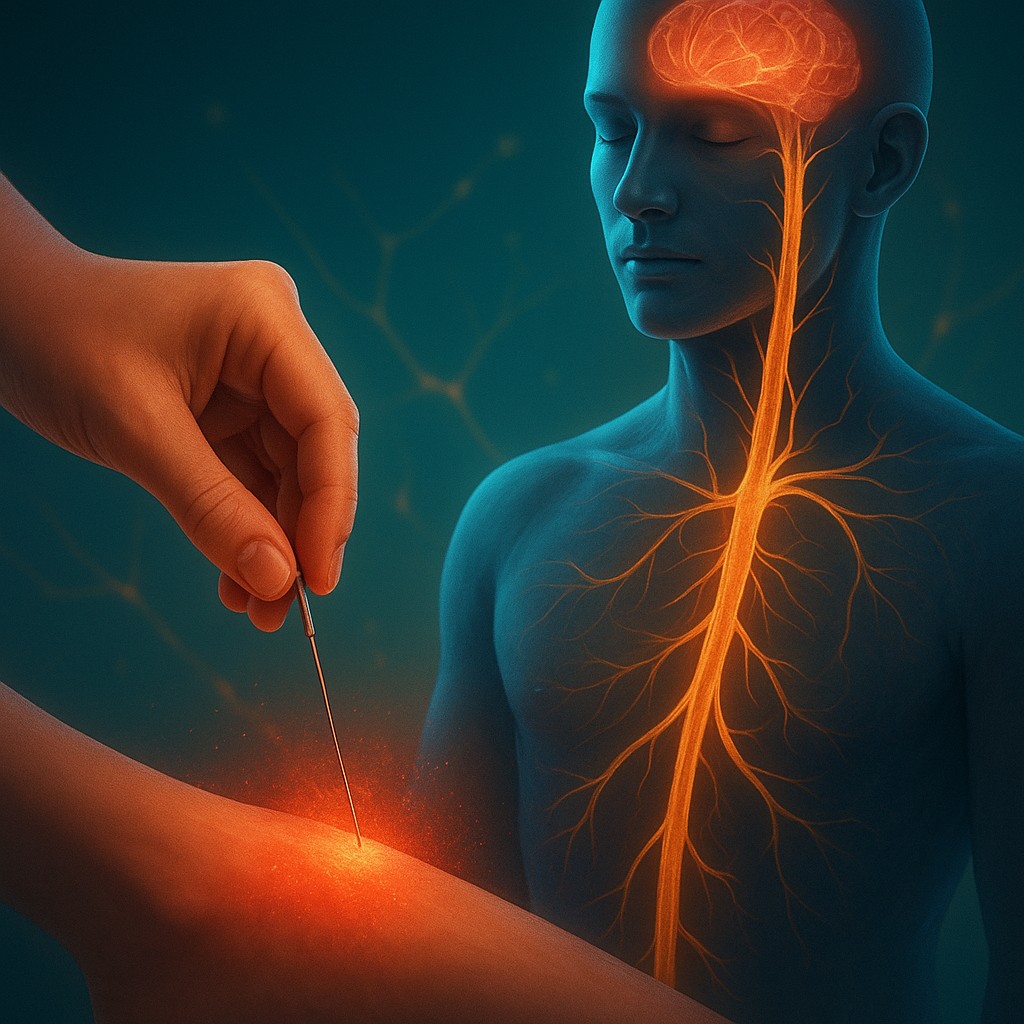
For centuries, Western medicine largely dismissed the practice of placing thin needles into "energy channels" as a colorful placebo. The common assumption was that if patients felt better, it was either a trick of the mind or perhaps a small rush of natural, feel-good chemicals called endorphins triggered by the minor sting. However, modern neurology labs are uncovering something far more grounded in biology. Researchers have found that these ancient needle points act like "biological buttons." When pressed correctly, they send high-speed electrical signals directly to the brain.
Think of your body as a high-tech smart home with all the wiring hidden behind the walls. For a long time, we couldn't find the master switch for the immune system - the one that tells the body to stop overreacting with painful swelling and heat, known as inflammation. It turns out that the vagus nerve, a massive "superhighway" of fibers running from the brain down to the gut, is a vital part of that control panel. By studying how specific acupuncture points connect to this nerve, scientists are moving away from the mystical and toward the mechanical. They are proving that the nervous system can act like a remote control for our internal defenses.
The Great Internal Superhighway
To understand how a needle in the leg can soothe inflammation in the lungs or joints, we have to look at the star of the show: the vagus nerve. In Latin, "vagus" means "wandering," which is a perfect description because this nerve winds its way through most of your torso. It links to the heart, lungs, stomach, and liver, serving as a two-way communication line between your brain and your vital organs. It is the main engine behind the "rest and digest" system, providing a calm balance to our "fight or flight" stress response.
For years, we believed the vagus nerve only managed basic functions like heart rate and digestion. Now we know it also "listens in" on the immune system. When the body senses a threat, such as a virus or an injury, it releases alarm proteins called cytokines. These proteins tell the body to swell up or get hot to kill off invaders. Sometimes, however, this alarm gets stuck in the "on" position, leading to long-term health problems. Researchers have discovered that stimulating the vagus nerve can essentially send a "cease and desist" order to immune cells, turning off the alarm.
This discovery is changing our view of human anatomy. Rather than seeing the immune system as a collection of loose cells floating in the blood, we are starting to see it as a hard-wired network. This network responds to electrical pulses just as much as it does to medicine. The signals triggered by acupuncture needles are effectively a language the vagus nerve speaks, allowing us to "hack" the body's software to fix a physical hardware problem.
Mapping the Bioelectrical Circuits
A common question is why a practitioner would put a needle in someone's shin to treat a headache or a stomach ache. It sounds like a stretch, but the secret lies in "neuro-immune reflexes." These are specific pathways where the nerves in your skin and muscles are directly linked to the nerves controlling your internal organs. Not every spot on your skin has this connection, which is why acupuncture relies on very precise "maps" of the body.
Recent studies using advanced imaging have shown that stimulating a point near the knee (traditionally called Zusanli or ST36) sends a specific signal up the spinal cord. From there, the signal hits the brainstem and bounces back down the vagus nerve. This isn't a random zap; it's a targeted message. This circuit tells the vagus nerve to talk to the adrenal glands, the small organs that sit like hats on top of your kidneys. Once the adrenal glands get the word, they release dopamine and other chemicals that tell the immune system to relax.
This research explains why "fake" acupuncture usually fails in clinical trials. If a researcher places a needle even an inch away from the "active" point, they miss the specific nerve fibers needed to trigger this brain-to-body circuit. It is like trying to turn on a light by pressing the wall next to the switch; you are applying pressure, but you aren't hitting the trigger. This precision suggests that ancient practitioners may have been early "electrical engineers" of the human body.
Beyond the Placebo Myth
Critics often claim that acupuncture is "all in your head." While the placebo effect is a real and powerful thing, latest research shows a much more physical, "meat and potatoes" process at work. When we talk about "systemic" inflammation, we mean the entire body is on high alert. If acupuncture were just a mental trick, we wouldn't see the specific chemical changes in the blood and adrenal glands that researchers are now recording in real time.
There is a big difference between just feeling better mentally and a physical drop in "pro-inflammatory cytokines" - the molecules that cause pain and tissue damage. No amount of "positive thinking" can easily mimic the complex interaction between the vagus nerve and the adrenal system. This is a physical reflex that happens whether you believe in the treatment or not, much like how your leg kicks when a doctor taps your knee with a rubber hammer.
The following table shows how different perspectives view the body’s ability to manage internal "noise" or inflammation.
| Feature |
Standard Medication |
Traditional View |
Modern Neurology View |
| Primary Method |
Chemical (drugs) |
Energy (Qi flow) |
Electrical (nerve signals) |
| The "Remote" |
The bloodstream |
Meridians/Channels |
The vagus nerve |
| Main Target |
Enzymes or cells |
Life force balance |
Neuro-immune reflexes |
| Speed |
Varies (minutes to days) |
Immediate or gradual |
Fast electrical pulses |
| Key Player |
Laboratory drugs |
The body's "Energy" |
Brainstem and adrenals |
Engineering a Better Response
The most exciting part of this research isn't just proving an old method works; it is the potential to improve it. Now that we know the vagus nerve is the "cable" we are trying to tap into, scientists are testing "electro-acupuncture." This involves passing a tiny, gentle electric current through the needles. It isn't painful; instead, it ensures the signal sent to the brain is clear and strong. Think of it like upgrading from an old, slow internet connection to high-speed fiber optics.
By adjusting the frequency of these pulses, researchers are finding they can target different types of health issues. For example, a low-frequency pulse might work best for back pain, while a higher frequency might better calm an overactive immune response in the gut. We are essentially learning how to "code" for the nervous system. Instead of using a pill that goes everywhere in the body and causes side effects, we might one day use precision nerve stimulation to target only the area that needs help.
This "bioelectronic medicine" is a growing field that owes a great deal to traditional practices. It bridges the gap between the old idea that the body is interconnected and the modern need for data-backed results. We are learning that the body is a sophisticated, buzzing communication network. When we get the communication right, the body has a remarkable ability to heal itself.
Correcting Common Misconceptions
As we look closer at this topic, it is important to clear up some myths. One major misconception is that acupuncture is "magic" and can cure anything instantly. In reality, it is a physical stimulus. Just as one trip to the gym won't give you perfect muscles, one session of nerve stimulation usually won't fix years of chronic inflammation. It is a process of "re-training" the nervous system to stay in a calm state.
Another myth is that all acupuncture points are the same. In fact, the density of nerve fibers varies wildly across the body. A needle in your ear triggers a completely different neurological path than a needle in your toe. Some points link to the vagus nerve, while others interact with different parts of the stress-response system. The "remote control" has many buttons, and we are still learning which one opens the garage and which one turns on the sprinklers.
Finally, people often worry they have to "believe" in the practice for it to work. The evidence suggests otherwise. While a positive attitude helps any recovery, the vagus-adrenal circuit is a physical, hard-wired path. Whether you are a skeptic or a believer, if the right nerve fiber is stimulated at the right frequency, the body will release its chemical messengers. This shift from "belief" to "biology" is what is finally bringing these techniques into modern hospitals and clinics.
The Future of the Wired Body
We are at a fascinating point where the stethoscope meets the needle. As our understanding of the vagus nerve grows, we will likely see a shift in how we treat long-term illness. Instead of just managing symptoms with chemicals, we may become experts at "tuning" our own nervous systems. This research doesn't just validate an old tradition; it opens a new world of "drug-free" treatments that use the body's own wiring to stay healthy.
The idea that you carry a "remote control" for your immune system inside your own neck and limbs is both empowering and incredible. It suggests our bodies are much more communicative than we ever realized. As we continue to map these electrical points, we aren't just looking at needles and nerves; we are deciphering the very language of life. The next time you think about how your brain and body interact, remember they are constantly talking - and sometimes, they just need a little nudge to start the right conversation.