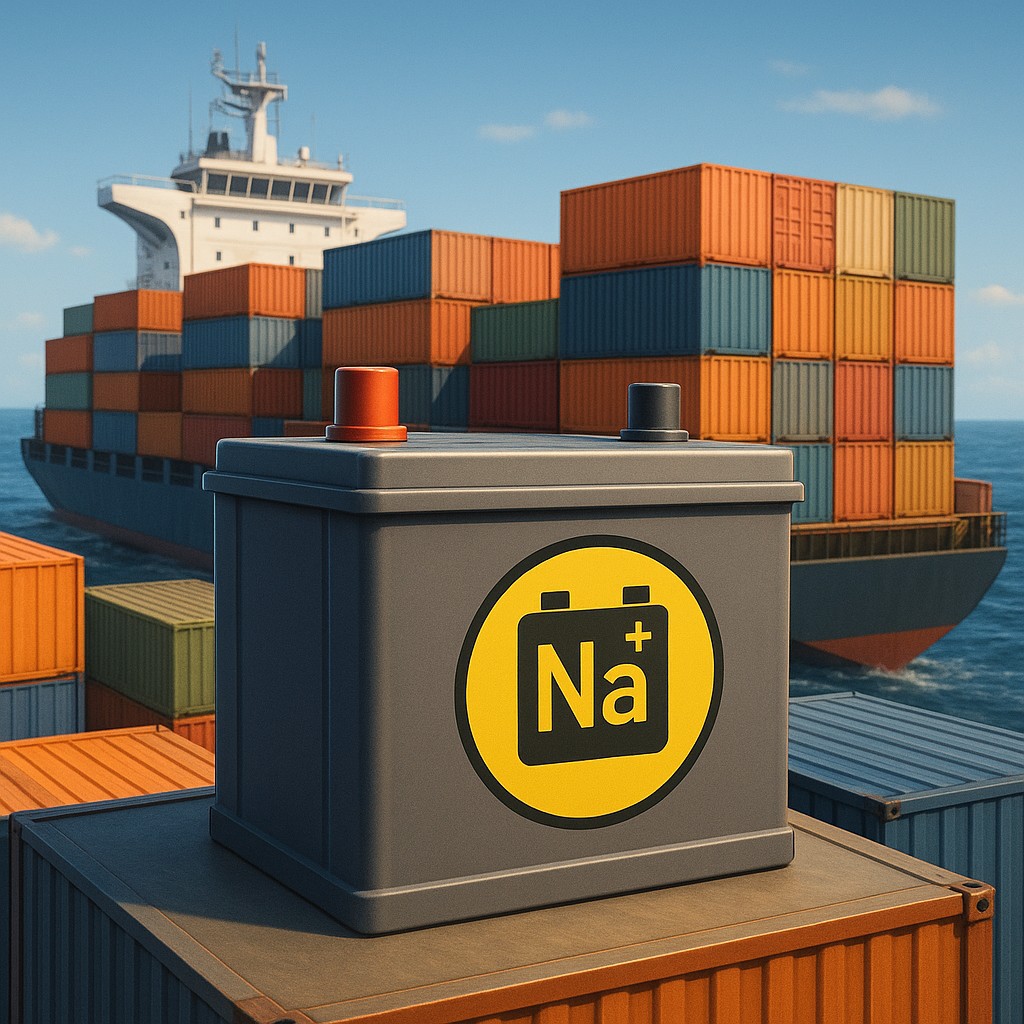
Imagine you are standing on a cargo ship in the middle of the Pacific Ocean, surrounded by thousands of shipping containers. Inside many of those boxes are the lithium-ion batteries that power our laptops, electric vehicles, and smartphones. While they are marvels of modern engineering, the shipping industry views them as a collection of "vibrating chemical firecrackers." Because lithium-ion batteries are prone to catastrophic failure if they are damaged or if their internal chemistry becomes unstable, they are subject to some of the strictest and most expensive transportation rules on the planet. They cannot be shipped "empty" because their internal structures would physically fall apart, yet shipping them with a charge means they carry a constant risk of a thermal runaway-a self-heating fire that could turn a cargo hold into a furnace.
This tension between energy capacity and safety has created a massive logistical bottleneck for green energy. As we try to build a global grid powered by wind and solar, we need to move massive amounts of battery storage from factories to power plants. But if moving a battery is a high-stakes gamble involving specialized fireproof containers and "hazardous materials" surcharges, the cost of renewable energy stays artificially high. This is where sodium-ion technology enters the picture. It is more than just a cheaper alternative to lithium; it represents a fundamental shift in battery stability. By swapping out a single metal component that has long been a liability, sodium batteries are proving that sometimes the best way to move forward is to build something that can safely sit at a total standstill.
The Copper Trap and the Mystery of the Dissolving Collector
To understand why sodium-ion batteries are a logistical game-changer, we first have to look at the "Achilles' heel" of the standard lithium-ion cell: the copper current collector. Inside every lithium battery, there are two sides: an anode and a cathode. The anode uses a thin foil of copper to help electrons flow in and out of the battery. For years, copper was the only viable choice because it does not react with lithium at high voltages. However, copper has a dark secret. If the battery's voltage drops too low, usually because it has been left uncharged for too long or "deeply discharged" to zero volts, the copper foil begins to transform. It literally starts to dissolve into the battery's liquid electrolyte.
When you eventually plug that battery back into a charger, the dissolved copper does not just disappear. Instead, it settles back out of the liquid, forming tiny, needle-like structures called dendrites. These metallic needles grow through the internal separator of the battery like roots breaking through a sidewalk. Eventually, they poke a hole through to the other side, creating a short circuit. The next time you try to charge that battery, the energy does not go toward storage; it goes toward heating up that short circuit, often leading to smoke, fire, or an explosion. Because of this "low-voltage suicide" mechanism, lithium batteries must always be shipped with a partial charge, usually around 30 percent, to keep the voltage high enough to prevent the copper from dissolving.
The Aluminum Advantage and the Zero-Volt Miracle
Sodium-ion batteries avoid this entire catastrophe through a clever bit of material science. Unlike lithium, sodium does not form an "alloy" or a chemical bond with aluminum at low voltages. In a lithium battery, you cannot use aluminum on the anode side because the lithium would eat right through it, turning it into a brittle mess. But sodium is perfectly content to sit next to aluminum without causing any trouble. This allows manufacturers to replace the heavy, expensive, and chemically sensitive copper with cheap, lightweight aluminum foil on both sides of the battery.
This switch to aluminum is the "secret sauce" that allows sodium-ion batteries to be shipped at zero volts. Because aluminum is perfectly stable even when the battery is completely drained, a sodium-ion cell can be "shorted" to itself for transport, making it as inert as a block of wood. You could drop it, crush it, or poke a hole in it, and because there is no stored electrical energy, there is no spark to start a fire. This "zero-volt state" is the holy grail of battery safety. It means that instead of being treated like a crate of dynamite, a shipment of sodium-ion batteries can be handled like a shipment of toaster ovens. The reduction in insurance costs, specialized packaging, and fire-suppression requirements makes the total cost of ownership plummet even before you consider the price of raw materials.
Comparing the Titans of Energy Storage
While safety is its standout feature, it is helpful to see how sodium-ion stacks up against the reigning champion of the battery world. We often talk about batteries in terms of "energy density," which is how much power you can pack into a specific weight. Lithium is the undisputed king here, but sodium is quickly carving out a niche where low cost and high safety matter more than being lightweight.
| Feature |
Lithium-Ion (NMC/LFP) |
Sodium-Ion |
| Anode Collector |
Copper (Dissolves at 0V) |
Aluminum (Stable at 0V) |
| Shipping State |
30% Charge (Active/Hazardous) |
0% Charge (Inert/Safe) |
| Raw Material Cost |
High (Lithium and Cobalt are rare) |
Very Low (Salt is everywhere) |
| Cold Weather Performance |
Poor (Loses capacity quickly) |
Excellent (Maintains power) |
| Energy Density |
High (Best for long-range EVs) |
Moderate (Best for power grids) |
| Cycle Life |
Very Good |
Improving Rapidly (5,000 to 50,000+) |
The table highlights a critical trade-off. If you are building a high-performance sports car, you will likely still choose lithium because every pound matters. But if you are building a massive battery array to support a city's power grid, the battery does not need to move once it is installed. In that scenario, the fact that sodium is slightly heavier becomes irrelevant, while the fact that it is 30 to 40 percent cheaper and won't burn down a warehouse becomes the deciding factor.
Moving Beyond the "Lithium Crisis"
The push for sodium isn't just about safety during shipping; it is also about breaking the environmental and political grip of lithium mining. Lithium is relatively rare, and extracting it often requires enormous amounts of water in some of the driest places on Earth. Sodium, by contrast, is the sixth most abundant element in the Earth's crust. We can get it from soda ash or even common sea salt. By shifting our stationary storage needs to sodium-ion chemistry, we preserve the world's limited lithium supply for uses where high energy density is a requirement, like aviation or high-end electronics.
Furthermore, sodium batteries are proving to be surprisingly resilient in extreme environments. Lithium batteries tend to struggle when the temperature drops below freezing, but sodium-ion cells maintain most of their capacity even in sub-zero conditions. This makes them ideal for wind farms in the North Sea or solar arrays in the high desert. When you combine this environmental grit with the ability to ship them "dead" and safely, you realize that sodium isn't just a backup plan for when lithium gets too expensive. It is a specialized tool designed for the rugged reality of global infrastructure.
Reimagining the Global Supply Chain
The ripple effects of zero-volt stability extend from the factory floor to the recycling center. In a traditional lithium-ion factory, the "formation" process-the first time a battery is charged-is a dangerous and highly monitored step. Batteries then have to be stored in temperature-controlled, fire-monitored warehouses until they are sold. If a shipment is delayed at a port for three months and the batteries self-discharge below that critical copper-dissolving threshold, the entire multi-million dollar shipment might have to be scrapped for safety reasons.
Sodium-ion removes this "ticking clock" from the supply chain. Manufacturers can build the cells, drain them to zero volts, and store them on a standard shelf indefinitely. If a container gets stuck in a canal for a month, there is no risk of the batteries dying or becoming fire hazards. On the back end, recycling sodium batteries is also simpler. Because they can be fully discharged without risk, recyclers can shred and process the materials without the constant fear of a fire triggered by residual energy hiding in the cells. The use of aluminum instead of copper also simplifies metal recovery, as aluminum is easier and cheaper to process in existing recycling streams.
A Scalable Future for Renewable Energy
As we move toward a world where most of our power comes from intermittent sources like the sun and wind, the "storage problem" becomes the only problem that truly matters. We need batteries by the petawatt-hour. If we tried to meet that demand using lithium alone, we would likely strip the planet of its accessible lithium reserves while facing a constant logistical nightmare of transporting hazardous materials across borders. Sodium-ion technology provides a pressure-release valve for the entire industry.
The transition to sodium-ion storage represents a shift from "high-energy-at-all-costs" to "smart-energy-for-the-masses." By leveraging the simple chemistry of salt and the structural stability of aluminum, we are building a foundation for a power grid that is not only sustainable but fundamentally safer than the one we have today. The next time you see a massive shipping container or a field of battery cabinets, remember that the most exciting thing about them might be the fact that, for the first time in history, they can be completely, safely, and perfectly empty.
The journey of the sodium-ion battery reminds us that innovation doesn't always mean making things faster or more powerful. Sometimes, true progress is found in making things more stable, more accessible, and more forgiving. By solving the hidden problem of dissolving copper and embracing the zero-volt miracle, we are unlocking a future where clean energy isn't just a luxury, but a reliable reality for everyone. The humble salt-based battery may not win the race for the fastest car, but it is very likely to win the race to save the world, one safely shipped container at a time.