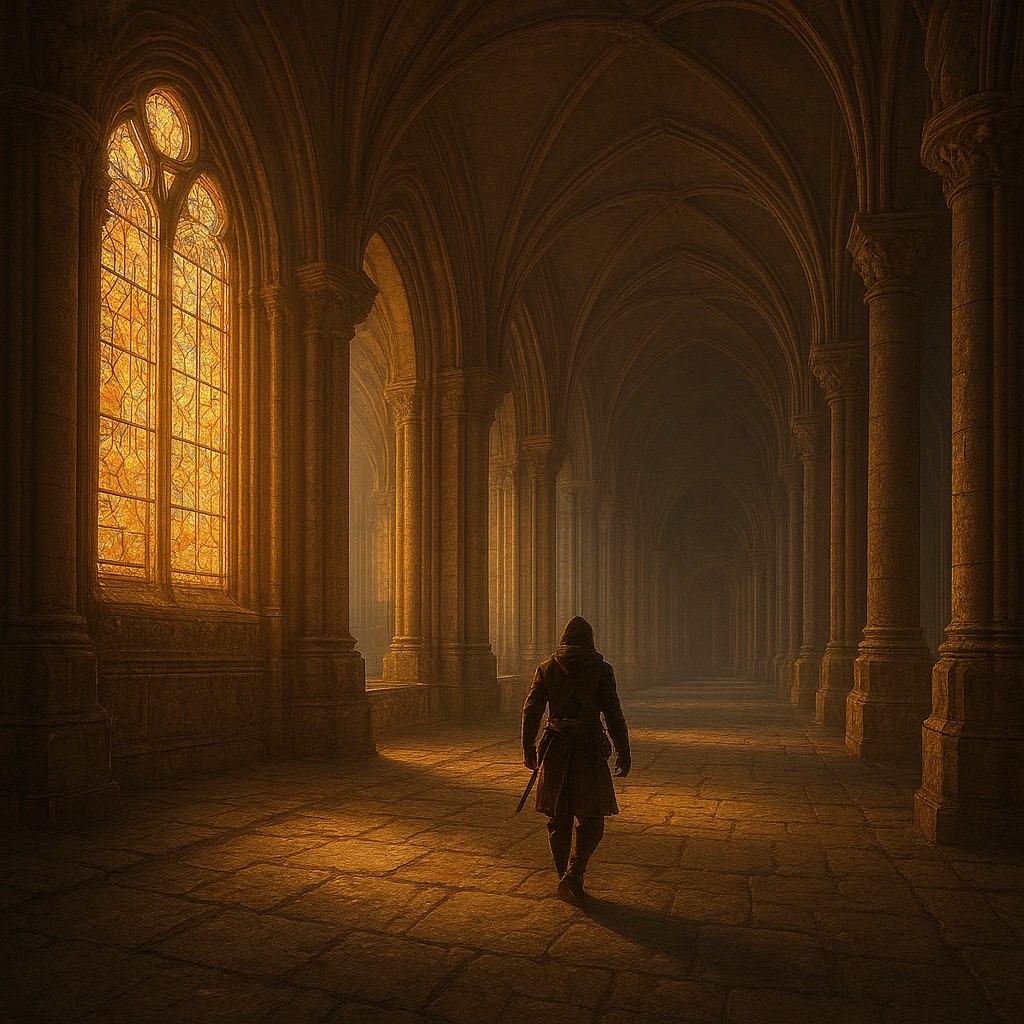
Imagine you are exploring a massive, ancient cathedral in a high-budget video game. For the first ten minutes, the view takes your breath away. Golden light filters through stained glass, intricate carvings wind up the stone pillars, and the echo of your footsteps creates a haunting sense of awe. But as you play for the next three hours, something shifts in your brain. Those once-grand pillars become gray blurs. The golden light turns into visual background noise you barely notice. By the fourth hour, you aren't even looking at the world anymore. You are staring at the mini-map in the corner of your screen, rushing toward a blinking marker because the environment has become "invisible" to you.
This mental fade-out does not happen because you are tired or because your eyes are straining. It happens because your brain has decided the cathedral is no longer "news." Our brains evolved to prioritize new information and ignore the background noise of the familiar. In game design and psychology, this is known as Aesthetic Fatigue. It is the moment when a digital world's beauty stops being a benefit and becomes a repetitive pattern that the brain "tunes out" to save energy. This mechanism explains why some games feel like a magical journey while others feel like a chore, and it reveals a lot about how we process the world around us.
The Biology of Boredom and Sensory Adaptation
To understand why we get tired of looking at beautiful scenery, we have to look at how our neurons handle data. Our sensory systems are built to detect change, not things that stay the same. Think about walking into a coffee shop. At first, the smell of roasted beans is strong and pleasant. After twenty minutes, you do not smell it at all. This is called sensory adaptation. Your brain labels the smell as "safe and constant," so it stops sending those signals to your conscious mind. If a fire started in the kitchen, you would smell the smoke instantly because it represents a change in your environment.
Aesthetic Fatigue works on the same principle but in a more complex way. When a game designer uses the same texture for every wall or just three tree models for an entire forest, they accidentally tell the player's brain to go into "low power mode." The brain recognizes the pattern and stops looking for details, assuming there is nothing new to learn. This is a survival tool. Processing high-resolution visual data takes a lot of energy. By tuning out repetitive shapes, the brain saves its fuel for things that might actually matter, like a predator jumping from the shadows or a new gameplay mechanic.
In entertainment, however, this energy-saving mode is a disaster. When a player tunes out, they lose their sense of immersion. They stop "living" in the world and start "operating" it. Shifting from exploration to mere task-completion is often the first step toward a player quitting the game. If the environment offers no new visual sparks, the brain perceives the passage of time differently. This leads to the feeling that a game is a "grind," turning a hobby into an unpaid internship in a very pretty, but very monotonous, office.
Designing Against the Brain's Natural Filter
Game developers use several tricks to keep our brains from clicking into that "ignore" state. The most effective method is visual variety, but it is about more than just adding colors. It is about "rhythm." Just as a song needs both silence and sound to be catchy, a game needs both visual resting points and focal points. If a game is 100 percent intense detail all the time, the player suffers from sensory overload, which leads to exhaustion. If it is 100 percent repetitive, they suffer from aesthetic fatigue.
The sweet spot is often found in the "rule of three" or the use of "hero assets." A hero asset is a unique, one-of-a-kind object placed in a setting to break the pattern. Imagine a long, repetitive hallway in a futuristic lab. To fight fatigue, a designer might place a single overturned chair with a spilled cup of coffee near a door. This small detail signals to the player's brain that this specific spot is different. It prompts a question: "Who was sitting there? Why did they leave in a hurry?" That tiny spark of curiosity resets the sensory adaptation clock, forcing the brain to look for more clues.
| Design Element |
Effect on the Brain |
Result for the Player |
| Repetitive Textures |
Sensory Adaptation |
Increased boredom, "tuning out" the world |
| Unique Hero Assets |
Pattern Breaking |
Increased curiosity and active observation |
| High Contrast Areas |
Neural Recruitment |
Focuses attention on important paths |
| Environmental Clutter |
Cognitive Friction |
Creates a "lived-in" feel, slowing the pace |
| Monochromatic Palettes |
Energy Conservation |
Leads to mental fatigue and a feeling of "the grind" |
Stories Told Through the Scenery
One of the best weapons against aesthetic fatigue is environmental storytelling. This is the art of placing objects in a world to tell a story without using any dialogue. When a player enters a room and sees a skeleton reaching for a locked door, their brain gets a mini-mystery to solve. This is no longer just "Room 42"; it is "The Room Where Someone Didn't Make It." By turning the environment into a book the player must read, designers ensure the player's eyes are always scanning for details rather than glazing over.
Environmental storytelling works because it turns "looking" into "investigating." This moves the mental workload from the basic visual centers to the higher-thinking parts of the brain. When we investigate, we look for meaning instead of just patterns. This leads to a "flow state," or being "in the zone." In this state, a player is so involved in the world that they forget they are sitting in a chair with a controller. To keep this going, designers pepper the world with "flavor" that defies the repetitive nature of computer-generated art.
It is also important to separate this mental fatigue from physical eye strain. Eye strain is about the muscles in your eyes getting tired from staring at a glowing screen. Aesthetic fatigue is purely psychological. You could have perfectly rested eyes and a high-end monitor, but if the content is just a loop of the same three gray rocks, your brain will still tire of the experience. It is an exhaustion of interest, not an exhaustion of the body.
Breaking the Grind with Visual Logic
Players often blame the "grind" on game mechanics, like having to kill a hundred monsters to level up. While that is part of it, the visual environment plays a massive role in how "heavy" that task feels. If those monsters are killed in a forest that looks the same in every direction, the task feels endless. However, if the player moves through a changing landscape, from a lush meadow to a burnt clearing and then to a rocky cliff, the brain perceives progress even if the task stays the same.
Good level design uses "vistas" and "landmarks" to provide a sense of scale. A landmark is a large, unique structure visible from far away, like a glowing tower or a smoking volcano. This acts as a visual anchor. It tells the brain where you are in the world, which reduces the mental effort needed to navigate. When we know where we are in relation to a big, unique object, we feel more comfortable. This allows the brain to stay focused on the fun parts of the game rather than the chore of not getting lost.
Finally, color theory signals changes in the "emotional" zone. A sudden shift from cool blues to warm oranges acts as a "palate cleanser" for the eyes. This is why successful open-world games have distinct "biomes," or regional climates. Moving from a snowy mountain to a desert isn't just for realism; it is a strategy to reset the player's vision and prevent aesthetic fatigue. Each new color palette tells the brain, "Wake up, the rules have changed, and there is new information to find."
Master the Art of Paying Attention
Aesthetic fatigue isn't just for game designers; it is a lens for understanding our daily lives. If your productivity dips at work or your interest fades during a long project, look at your surroundings. Are you staring at the same beige walls and the same digital folders every day? Your brain might be tuning out your life to save energy. By making small changes to your workspace or taking a new route to the office, you can trick your brain back into a state of high engagement.
The next time you are deep in a digital world, look at the "clutter" around you. Notice a rusty bucket, the way light hits a rug, or the fact that no two trees look the same. Now you know those are not just decorations. They are carefully placed "brain-reboots" designed to keep you curious and excited. By recognizing the battle between your brain's desire to save energy and the designer's desire to keep your attention, you can appreciate world-building on a much deeper level.