Most people do not wake up one morning and decide, "Today is perfect for starting an expensive habit that hurts my health and makes me smell like an old campfire." Bad habits like smoking or heavy drinking usually begin as quick fixes: a social shortcut, a way to soak up stress, or a small ritual that says "break time." The problem is habits are loyal. Once your brain learns that a behavior reliably changes how you feel, it keeps suggesting it like a pushy friend with bad taste.
Quitting can feel oddly personal, like breaking up with something that kept you company at awkward parties, rough weeks, and dull afternoons. That is why "just stop" advice often fails. Habits are about more than willpower - they involve wiring, triggers, rewards, the setting around you, identity, and the very human urge to feel better right now.
The good news is the best ways to quit a bad habit are not mystical. They are practical strategies supported by psychology, neuroscience, and lots of real-world testing. You do not need to be a superhero. You need a plan that makes quitting easier than continuing, especially on days when motivation takes a vacation.
Understanding the habit loop, the brain’s favorite shortcut
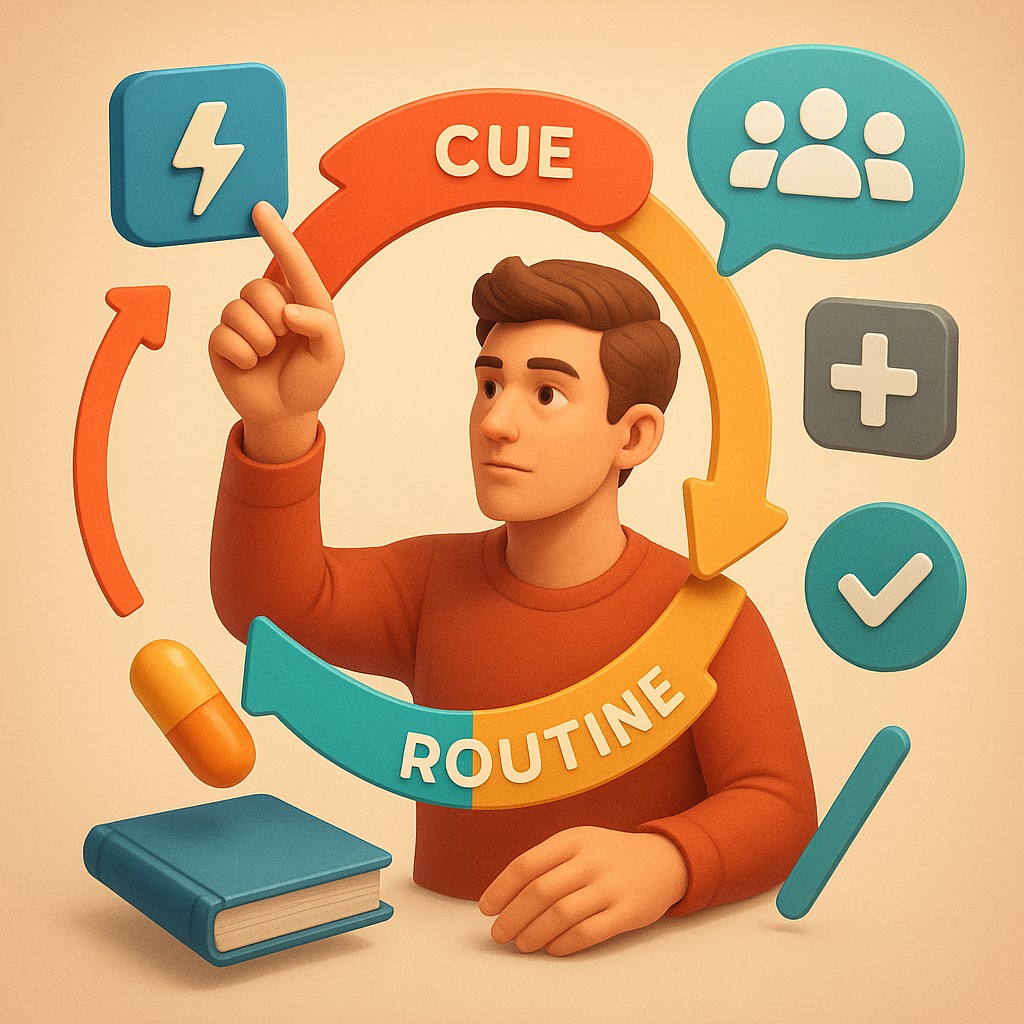
Habits run on a simple loop: cue, routine, reward. The cue is the trigger - finishing a meal, feeling stressed, seeing a bar, smelling smoke. The routine is the behavior - smoking, drinking, pouring "just one." The reward is the payoff - pleasure, relief, stimulation, social bonding, or simply stopping discomfort. Over time your brain squashes that whole sequence into an automatic program.
Nicotine and alcohol also change the brain in ways many habits do not. Nicotine quickly boosts dopamine and trains your attention to notice smoking cues. Alcohol affects GABA (which calms the brain) and glutamate (which excites it), so anxiety quiets down and your inhibitions loosen. Your brain learns, "When I feel X, do Y, and I will feel better." That learning does not disappear just because you know the risks.
A helpful shift is to see cravings as predictions, not commands. Your brain predicts a cigarette or a drink will fix a feeling. If you do not follow the prediction, the craving rises, wavers, and then falls. Each time you ride out a craving, you teach your brain a new lesson: "We can get through this without the old routine."
Getting clear on your “why” without turning it into a poster
People are told to find their motivation as if it were a hidden treasure. In reality motivation is more like a picky house cat - it appears when it wants to. A better plan is to create a "why" that is specific, personal, and tied to daily life, and then back it up with systems that work when motivation is gone.
Instead of "I want to be healthier," try "I want to wake up without a cough," or "I want my anxiety to be lower on Monday mornings," or "I want my kids to stop noticing my breath smells like an ashtray." Concrete reasons create emotional pull. They also help when you are bargaining with yourself at 10 pm and your brain suddenly remembers quitting is optional.
Name what the habit has been doing for you, without judgment. Smoking might have been a boundary, a break, social glue, or a way to handle anger. Drinking might have helped ease social fear, numb grief, or feel like a reward after work. If you do not identify the job the habit is doing, you may quit the substance but keep the need, which often leads to relapse or swapping to another habit.
Replace, don’t just remove: designing healthier rewards and rituals
A habit is easier to change when you swap the routine but keep the cue and the reward, at least at first. If you always smoke after lunch to get a "reset," make a new after-lunch reset that is quick and satisfying. If you drink at night to shift out of work mode, build a new "closing ritual" that tells your body the day is done.
Replacement is not about finding a perfect stand-in that feels exactly the same. It is about giving your brain a new, reliable option that meets the same need with less cost. Early on the replacement may feel less thrilling. That is normal. The old habit has years of practice and often a chemical edge. Your new routine needs repetition, not perfection.
Here are specific replacement ideas that are easy to repeat:
- For stress relief: 4-7-8 breathing, a brisk 10-minute walk, a hot shower, stretching, journaling one page of a "brain dump."
- For oral fixation and hand-to-mouth habits: sugar-free gum, toothpicks, crunchy snacks, a reusable straw, a fidget tool.
- For social connection: text a friend, join an activity group, order a fun non-alcoholic drink, volunteer for a role that keeps your hands busy.
- For reward and celebration: a special tea, a favorite podcast only during walks, save habit money for something tangible.
If you worry replacements are "not strong enough," remember you can stack them. A short walk plus music plus a cold drink can make a surprisingly satisfying reset. Your brain likes bundles.
Handling cravings like a scientist (not a courtroom lawyer)
A common myth is that cravings mean you are weak or "still addicted," so you might as well give up. Actually, cravings are a normal part of unlearning, and they usually come in waves. If you treat each craving like evidence in a trial against yourself, you will waste time on self-criticism. If you treat it like data, you gain control.
One simple technique is urge surfing. When a craving hits, rate it from 1 to 10 and notice where it sits in your body - tight chest, restless hands, saliva. Then do something small and time-limited: drink water, walk around the block, wash the dishes, breathe for two minutes. Check your rating again after 5-10 minutes. Most cravings peak and fade, even if they feel urgent at first.
Another useful tool is "delay, distract, decide." Tell yourself you can have the cigarette or drink after 15 minutes, then fill those 15 minutes with something that changes your state. The goal is not to white-knuckle forever; it is to interrupt the automatic script. Often the craving is gone or much smaller by the time you get to "decide."
A quick map of triggers and smarter counter-moves
Tracking your triggers for a week can feel nerdy, but it works. Note when you crave, what you were doing, who was there, and what you felt. Patterns show up fast. Once you spot them, you can design targeted changes instead of relying on generic advice.
| Trigger type |
What it looks like in real life |
What to do instead (practical, fast) |
| Routine cue |
Coffee and a cigarette, a drink while cooking |
Change the sequence: use a new mug, sit in a different spot, chew gum, make a mocktail |
| Emotional cue |
Stress, loneliness, anger |
2-minute breathing, text someone, short workout burst, write 5 lines in a journal |
| Social cue |
Friends smoke, office happy hour |
Tell one ally, bring a substitute drink, set a time limit, practice a script |
| Environmental cue |
Pack of cigarettes in a drawer, alcohol visible |
Remove, lock, or move it; add friction; keep alternatives in sight |
| "Permission" cue |
"I deserve it," "It was a hard day" |
Replace with a better reward: a bath, a game, dessert, or put money in a reward jar |
The table hides a secret: you are not fighting the habit everywhere at once. You are mostly fighting it in a few predictable moments. Win those moments and the whole habit starts to wobble.
Make the environment do the heavy lifting
Willpower is overrated, not because you lack it, but because it is a limited resource. The best quitters redesign their surroundings so the default choice supports their goal. This is not cheating. This is smart.
Start by adding friction to the negative habit. If cigarettes are in your bag, put them in the trunk. If alcohol is in the house, stop stocking it for a while or make it hard to reach. Delete delivery apps that make late-night buys too easy, or set limits that require an extra step. Tiny barriers matter because cravings are impatient.
Then remove friction for the new habit. Put sparkling water at the front of the fridge. Leave walking shoes by the door. Stock easy snacks if low blood sugar triggers you. Prepare something to do with your hands during your usual smoking time. Your environment becomes a quiet coach nudging you toward better choices.
Finally, change your habit neighborhoods. If your smoking spot is the balcony chair, move the chair. If your drinking cue is the same bar stool, take a different route home for a few weeks. The goal is not to avoid life forever, but to disrupt autopilot long enough for new routines to take hold.
Use social support without making it weird (or fragile)
Quitting is easier with other people, but support does not mean telling everyone your plan. You need the right kind of help: steady accountability, understanding, and fewer temptations.
Pick one or two people who are calm and reliable. Tell them exactly what you need, for example: "Text me at 9 pm when my cravings hit," or "Please do not offer me drinks," or "If I slip, help me restart instead of lecturing." Clear requests stop well-meaning friends from saying things like "Just do not think about it," which is about as useful as telling someone not to picture penguins.
For smoking, consider structured help like quitlines, group programs, or counseling. For drinking, options include therapy, mutual-help groups like SMART Recovery or AA, or medical support, especially if alcohol has been a main coping tool. Social support works best when it is consistent and easy to reach during trigger moments, not only after you have already struggled.
Asking for help is not a sign you are "not strong enough." It shows you understand how behavior change actually works. Humans are social animals. Trying to quit entirely alone is like playing a team sport by yourself.
Consider proven medical and therapeutic tools (especially for nicotine and alcohol)
For smoking, evidence-based aids can double or triple your odds of quitting. Nicotine replacement therapy - patch, gum, lozenge, inhaler - eases withdrawal while you practice new behaviors. Prescription meds like varenicline or bupropion can reduce cravings for some people. These tools are not "replacing one addiction with another." They deliver nicotine more slowly and more safely than cigarettes and help separate the chemical dependence from the habit.
For alcohol, medical advice can be crucial because withdrawal can be dangerous for heavy, long-term drinkers. If you drink heavily every day or have withdrawal symptoms - shaking, sweating, anxiety, nausea, trouble sleeping - talk to a clinician before stopping suddenly. Medications can cut cravings, and therapy can address the reasons drinking became necessary. The right approach depends on how much you drink and your health history, and there is no prize for making it harder than it needs to be.
Therapies like CBT (cognitive behavioral therapy) help you spot the thoughts that lead to relapse, such as "I already messed up, so I might as well keep going." Motivational interviewing helps you strengthen your own reasons for change without shame. If you have anxiety, depression, trauma, or ADHD, treating those conditions can make quitting much easier, because the habit often does unpaid emotional work.
Plan for slips so they don’t become a full comeback tour
Many people think success means quitting once and never thinking about it again. In reality, change often includes a few wrong turns. A slip is a data point, not a moral failure. The biggest risk is the "what-the-heck effect," where one cigarette or one night of drinking becomes "I ruined everything," and you give up entirely.
Adopt a "rapid recovery" mindset. If you slip, ask three questions: What was the trigger? What did I need in that moment? What will I do differently next time? Then get back to your plan right away, ideally within 24 hours. The faster you restart, the less your brain relearns the old habit.
Make an if-then plan ahead of time. For example: "If I want a cigarette after dinner, then I will brush my teeth and walk for 10 minutes." Or, "If friends pressure me to drink, then I will order a soda with lime and say I am training to sleep better." These scripts may sound cheesy, but under pressure your brain loves having lines pre-written.
Building an identity that makes the new habit stick
Long-term change gets easier when you move from "I am trying to quit" to "I do not do that anymore." This is not about pretending to be perfect. It is about aligning daily choices with a version of you that feels real and worth protecting.
Identity shifts through small proof. Each time you handle stress without smoking, you collect evidence: "I can cope." Each time you socialize without drinking, you collect proof: "I can connect without it." The brain updates its self-story based on repeated actions, not pep talks.
One quiet but powerful trick is to name the new identity in practical terms: "I am a person who takes care of my lungs," or "I am someone who sleeps well," or "I am learning to be present even when I am uncomfortable." You do not need to announce it. You just need to act in ways that make it more true.
A closing push: quit like a builder, not a hero
Stopping smoking or drinking is not one brave act. It is a series of small design choices that make the right action easier and the old action less automatic. Learn your triggers, replace the routine, shape your environment, recruit support, and practice riding cravings like waves instead of treating them like emergencies. Over time the habit loses its shine, not because life becomes perfect, but because you get better at meeting your needs without paying the old price.
If you want one final practical reminder, make it this: you are not trying to "fix yourself." You are updating a system that made sense once and no longer serves you. Start today with one small change you can repeat tomorrow. Consistency beats intensity, and every craving you outlast teaches your brain a new, healthier normal.