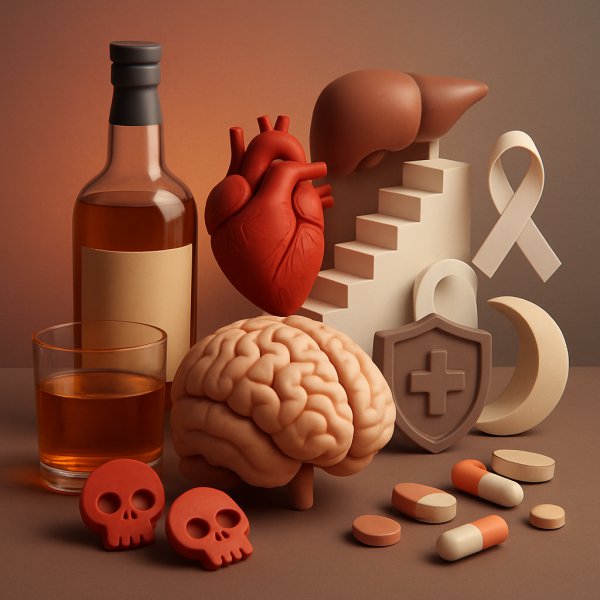
Why the question matters: a small sip with big consequences
Imagine you are carrying a credit card that charges invisible interest every time you use it. At first the fee is tiny, almost comforting, and some months it even seems to reward you. Over the years the balance creeps up, and suddenly the interest alone is a problem. Alcohol works like that invisible-card system for the body. One glass may feel harmless, but biology is quietly adding interest - on your liver, brain, heart, and long-term cancer risk.
Most people think of alcohol as social grease - a conversation starter, a stress dissolver, a reward after a long day. That social narrative is powerful and partly true: many gatherings involve alcohol, and a drink can change mood rapidly. The tricky part is the difference between short-term pleasure and long-term cost. While a cocktail might make an evening fun, repeated drinking rewires brain chemistry, increases disease risk, and raises the odds of accidents and poor decisions.
This guide is not moralizing or sermonizing. It is a clear-eyed tour of how alcohol affects health, why some common beliefs about "moderate" drinking are shaky, and what you can do if you want to cut back or quit. Expect a mix of biology explained without jargon, vivid examples you can remember, direct tips you can try tonight, and reflection questions that make the science personal.
If you want to make safer choices, take better care of your body, or support someone whose drinking is becoming a problem, understanding the mechanisms and risks will make you smarter and more confident. Read on - your future self will thank you.
What alcohol actually does inside you: a simple roadmap
Alcohol, chemically known as ethanol, is small and slippery - it moves freely in water and fat, so it crosses membranes, enters blood quickly, and reaches the brain within minutes. Your body treats ethanol like a toxin. The liver is the main processing plant, converting ethanol to acetaldehyde, then to acetate, and finally into harmless compounds that the body can burn for energy. Acetaldehyde is the bad actor - it damages DNA and proteins, and it is classified as a carcinogen.
Alcohol affects your brain chemistry almost immediately. It boosts certain neurotransmitters that reduce inhibition and increase the reward signal, and it suppresses others that normally keep impulses in check. Over time, repeated drinking shifts the brain toward tolerance - you need more alcohol to feel the same effects - and dependence, where the brain expects alcohol to function normally. Those changes are not moral failures, they are biological adaptations.
Beyond the liver and brain, alcohol touches nearly every organ system. It inflames the gut and liver, damages heart muscle over time, raises blood pressure, disrupts sleep architecture, reduces infection-fighting ability, and increases the risk of several cancers. Picture a leaky roof: even a slow drip will damage insulation, wiring, and supports long before you see the collapse. Alcohol is that slow drip.
Finally, alcohol's dangers are both dose-dependent and pattern-dependent. A single night of heavy drinking increases the risk of accidents, injuries, and acute poisoning. Chronic heavy use raises disease risk dramatically. But research now shows that even low levels of drinking can increase lifetime risk for certain diseases, especially cancer. The idea of a harmless daily drink is being reconsidered by scientists.
Short-term harms: the obvious nights you remember - and the ones you do not
When most people imagine alcohol harms they think of hangovers, fights, and missed appointments. Those are real, but they are the tip of the iceberg. In the short term, alcohol impairs judgment, reaction time, and coordination, which directly increases the chance of accidents and violence. It also reduces sleep quality - you may fall asleep faster, but alcohol fragments later sleep and robs you of deep restorative stages.
Physiologically, high blood alcohol concentration can depress breathing and heart function, sometimes fatally. Even at lower levels, alcohol disrupts glucose regulation and can trigger irregular heart rhythms in susceptible people. Alcohol also lowers inhibitions that protect you socially and legally - from risky sexual behavior to poor financial choices - creating consequences that ripple beyond the body.
One vivid story: Sarah, a single mom, had two glasses of wine after a long day and decided to drive a short distance to get milk. A sudden pothole and delayed reaction led to a crash that injured her and her child. Nobody ever plans to be reckless, but alcohol makes split-second decisions worse. Short-term harms often create long-term consequences.
Long-term damage: organs that pay the bill slowly but surely
Alcohol's chronic effects are wide-ranging and cumulative. The liver is the classical victim - decades of heavy drinking progressively cause fatty liver, then inflammation known as alcoholic hepatitis, and finally cirrhosis, where scar tissue replaces functioning liver. Cirrhosis can lead to liver failure, bleeding, and life-threatening infections.
The brain shrinks with prolonged heavy use. Memory, attention, and executive function suffer; some changes are partially reversible after abstinence, but other damages can be permanent. Alcohol also aggravates mental health disorders - it increases the risk of depression and anxiety, and using alcohol to self-medicate often deepens these conditions.
Cardiovascular effects are complex. Binge and heavy drinking raise blood pressure, cause irregular heart rhythms such as atrial fibrillation, and contribute to weakening of heart muscle - alcoholic cardiomyopathy. For a long time there was talk that moderate drinking - especially wine - protected the heart. Newer evidence suggests that the protective effect is either small, due to confounding factors, or absent for many people; any potential benefit needs to be weighed against increased cancer risk.
Cancer risk deserves a special callout. Alcohol is causally linked to multiple cancers, including those of the mouth, throat, esophagus, liver, breast, colon, and rectum. The risk increases with the amount consumed, but even low levels of alcohol raise the chance of certain cancers, particularly breast cancer. Mechanisms include DNA damage by acetaldehyde, hormonal changes, and inflammation.
How ethanol causes harm: a few mechanisms that explain a lot
To understand why alcohol is so broadly damaging, it helps to know the main ways it harms cells and systems. First, the acetaldehyde problem. When the liver converts ethanol to acetaldehyde, this intermediate is reactive and damages DNA and proteins, increasing mutation rates and cancer risk. Some people have genetic variations that slow acetaldehyde metabolism, making them more susceptible to harm.
Second, oxidative stress and inflammation. Alcohol metabolism produces reactive oxygen species, which damage cell membranes and trigger chronic inflammation. Persistent inflammation is a common pathway to cancer, fibrosis in the liver, and artery damage. Think of oxidative stress as microscopic rusting.
Third, alcohol alters neurotransmitter systems - GABA, glutamate, dopamine - which change mood, sleep, and decision-making. Over time the brain compensates by altering receptor density, producing tolerance and dependence. Fourth, alcohol disrupts the gut barrier and microbiome, allowing bacterial products to enter the bloodstream and prime the immune system in harmful ways. This gut-liver-brain axis helps explain why alcohol causes damage both locally and systemically.
Patterns of drinking and risk - binge, regular moderate, and genetic differences
Not all drinking patterns are equal. Binge drinking - typically defined as 4 or more drinks for women and 5 or more for men in about two hours - produces very high blood alcohol levels and is associated with acute harms like accidents, violence, poisoning, and sudden cardiac events. Repeated binge episodes raise long-term risk as well.
Regular moderate drinking may seem safe, but recent large studies show increases in risks such as cancer even at low-to-moderate intake. The concept of a "safe" threshold varies by disease - for instance the link to cancer appears to have no safe lower bound, while cardiovascular effects may not rise substantially until higher levels. Genetics also matter: some individuals metabolize acetaldehyde slowly, increasing carcinogenic exposure, and sex differences mean women generally experience more harm at lower amounts due to smaller body water content and different enzyme activity.
Finally, interactions with medications are important. Alcohol can interact dangerously with sedatives, certain pain medications, and some antibiotics, increasing sedation or causing toxic effects. Always check medication labels and ask a clinician about interactions.
Common myths that confuse smart people
Myth 1 - "A glass of red wine is heart-healthy and cancels out risks." It is true that early observational studies suggested lower heart disease in moderate drinkers, but more rigorous research shows that this apparent benefit is likely due to confounding lifestyle factors. Any small heart benefit is overshadowed by increased cancer risk and other harms for many people.
Myth 2 - "You can sober up fast with coffee or a cold shower." These will make you more alert, but they do not lower blood alcohol concentration or reduce impairment. Time is the only effective sobering method.
Myth 3 - "Drinking in moderation keeps you from becoming dependent." While moderate drinking reduces risk compared with heavy drinking, dependence can develop in people who drink modest amounts regularly. Risk factors include family history, mental health conditions, and social stressors.
Myth 4 - "Alcohol-free days are unnecessary if you drink moderately." Regular alcohol-free days help the liver recover, reduce tolerance, and lower cumulative risk. They are a simple, effective habit.
One table that summarizes short-term and long-term harms by system
| Body system |
Short-term harms |
Long-term harms |
| Brain and behavior |
Impaired judgment, coordination, memory blackouts |
Cognitive decline, dependence, mood disorders |
| Liver |
Acute inflammation, fatty liver |
Alcoholic hepatitis, cirrhosis, liver failure |
| Heart and vessels |
Irregular rhythms, elevated BP during binge |
Hypertension, cardiomyopathy, increased stroke risk |
| Cancer risk |
- |
Increased risk of cancers - oral, pharynx, esophagus, liver, breast, colorectal |
| Sleep and metabolism |
Fragmented sleep, glucose swings |
Chronic sleep disturbance, weight gain |
| Immune system |
Reduced infection defense |
Chronic immune dysfunction, worse outcomes with infections |
How to spot when drinking becomes a problem - honest signals
It helps to know the early signals that drinking is moving from social use to a problem. Look for increased tolerance - needing more to get the same effect - and unsuccessful attempts to cut down. Missing obligations, routine hangovers, conflicts with loved ones about drinking, and using alcohol to cope with emotions are red flags. Physical signs include waking tremors, early morning drinking urges, or blackouts.
A practical rule of thumb is to track frequency and quantity for a month. If patterns show daily drinking, repeated binge episodes, or drinking to relieve withdrawal symptoms, that suggests risk. Several validated screening tools exist, such as AUDIT-C, but a simple self-check can be surprisingly clarifying: how often do you have more than intended, and has drinking ever caused you trouble at work or with relationships?
Practical steps to reduce harm - small actions that build big changes
Cutting back can be surprisingly manageable if you use clear, practical strategies. Start by counting your drinks for a week and labeling standard serving sizes - many people underestimate how much they pour. Set specific, measurable goals like "no alcohol on weeknights" or "maximum three drinks on social nights." Create alcohol-free rituals - try a sparkling water with citrus, herbal tea at night, or a short walk after dinner.
Plan social strategies: be the driver, arrive with a nonalcoholic drink in hand, practice saying no with confidence, and suggest activities that do not center on drinking. Delay tactics work - give yourself 15 minutes to see if you still want a drink. If you struggle with cravings, identify triggers such as stress or certain friends, and create alternative coping mechanisms like exercise, journaling, or calling a friend.
Medically, some people benefit from medications that reduce craving or make drinking unpleasant. If you suspect dependence or if cutting down causes withdrawal symptoms such as tremors, nausea, severe anxiety, or seizures, seek medical help immediately - withdrawal can be dangerous. Professional programs and support groups help many people; combining behavioral strategies with medical care offers the best outcomes for heavy drinkers.
Quick practical checklist:
- Count, then reduce weekly units by a set percentage.
- Designate alcohol-free days and build rituals.
- Substitute nonalcoholic beverages that feel celebratory.
- Avoid keeping alcohol at home, or limit types and quantities.
- Use social scripts and safe excuses when declining drinks.
Reflection prompts to make this personal
- When was the last time alcohol caused a small but real problem in your life - a late morning, awkward text, or missed plan? How did it affect you emotionally the next day?
- If you imagined your health five to ten years from now, what would your ideal relationship with alcohol look like? What small habit could you change this week to move toward that vision?
- Think about a habit you successfully changed before. Which strategies from that success could you reuse to reduce drinking now?
Take a moment to write short answers to these - the act of answering increases the chance you will change.
What to say to someone you care about
Talking to a friend or partner about alcohol is delicate but doable. Approach with curiosity and concern, not blame. Use "I" statements - for example, "I noticed you seem more tired after drinking these days, and I care about you" - instead of accusatory lines. Offer help - like attending an appointment together or joining an alcohol-free activity - and respect autonomy. If safety is at risk, be firmer about seeking professional help.
If you are the one hearing concern, try listening without defending immediately. Reflective responses like "I hear that you are worried about me" open a real conversation faster than denials.
When to seek professional help
If you experience withdrawal symptoms, loss of control, or your drinking is harming relationships, finances, or work, it is time to consult a clinician. Severe withdrawal can be life-threatening and requires supervised detox. Beyond medical needs, addiction specialists, therapists using motivational interviewing or cognitive behavioral therapy, and peer support groups like Alcoholics Anonymous or SMART Recovery provide structured paths to recovery. There is no single right path - many people recover through different combinations of therapy, medication, and community.
A practical plan for the next 30 days
Week 1: Track. Count every drink, noting time, mood, and situation. Designate at least three alcohol-free days.
Week 2: Replace. Introduce alternatives and rituals - a nonalcoholic cocktail, an evening walk, or a hobby slot. Reduce total weekly units by 20 percent.
Week 3: Social strategy. Plan how to handle social events, set a maximum per outing, and practice saying no. Reward progress with nonalcoholic treats.
Week 4: Evaluate and adjust. Review your log. If you reduced successfully, set a new goal. If not, identify barriers and seek a friend or clinician for accountability.
This stepwise approach creates momentum and makes change less overwhelming.
Closing: your choices matter and they compound
Alcohol is not an instant disaster for everyone, and life is understandably hard sometimes. But the evidence is clear: alcohol can be surprisingly harmful in ways that quietly accumulate. The choices you make today - a few fewer drinks this week, one more alcohol-free day next month - are investments that compound in the direction of better sleep, sharper thinking, lower disease risk, and steadier mental health. Think of your body as an instrument you want finely tuned for decades, not a device to be tolerated until it breaks.
You do not have to be perfect. Small, consistent changes beat dramatic, unsustained attempts. If cutting down feels daunting, seek support - from friends, clinicians, or peer groups. Be curious about your own patterns, compassionate with setbacks, and proud of progress. In the end, choosing to know the facts and act on them is one of the smartest, kindest things you can do for yourself and for the people who depend on you.
If you want, tell me one detail about your current drinking routine - how often, how much, and what you want to change - and I will help design a personalized 30-day plan you can actually stick to.