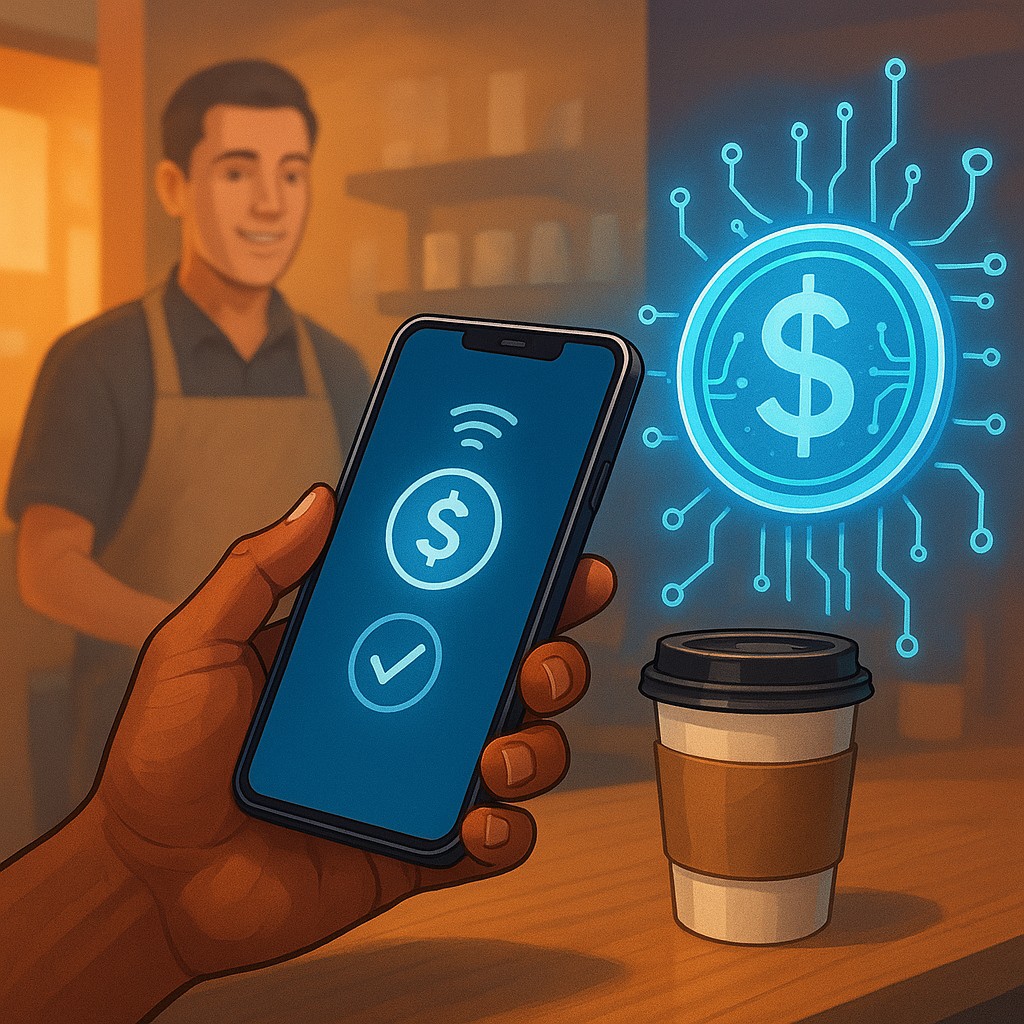
Imagine walking into your favorite local coffee shop and tapping your phone to pay for a latte. At that exact microsecond, the sales tax is sliced off and sent to the government, the barista’s tip is deposited directly into their digital wallet, and the shop owner receives the rest. Not a single person or middleman had to lift a finger.
Today, our financial world relies on a series of slow "handshakes" between banks, clearinghouses, and payment processors that can take days to finalize. We live in an age of high-speed internet but "low-speed" money. The digits on your screen move instantly, but the actual value behind them is often stuck in a bureaucratic traffic jam.
The next evolution of your wallet isn't just about ditching paper bills; it is about fundamentally changing what those bills can do. We are entering the era of Central Bank Digital Currencies, or CBDCs. These are digital versions of a nation's official currency. Unlike the balance in your banking app, which is essentially a private promise from your bank to pay you, a CBDC is a direct claim on the central bank. It is the digital version of the cash in your pocket, but with a hidden superpower: programmability. This allows money to behave like software, carrying its own instructions and performing complex tasks automatically.
Moving Beyond the Digital Ghost of Paper Cash
To understand why this is such a massive leap, we first need to look at how we use digital money today. When you send a wire transfer or use a credit card, you are really just sending a message to a database. Your bank updates its ledger to show you have less money, and the receiver’s bank updates theirs to show more. While this feels instant, it is a mess of behind-the-scenes paperwork. Banks must verify they actually have the funds to cover these promises, often waiting for "settlement" periods that drag on through weekends or holidays. It is a system built on old-fashioned bookkeeping that was simply digitized rather than reinvented.
A CBDC is a "native" digital asset. In this system, the currency is not just a digital placeholder for a physical dollar; it is a piece of code that lives on a specialized ledger managed by the government. This allows for "atomic settlement," a term meaning the payment and the transfer of ownership happen at the exact same time. There is no waiting for a check to clear because the money is the settlement. By removing layers of middlemen, the financial system stops acting like a rusty machine and starts running like a high-performance engine.
The Magic of Logic in Your Wallet
The most transformative feature of these new currencies is programmability. If traditional money is a "dumb" object like a rock, programmable money is more like a smartphone. You can tell a smartphone to act only if a specific condition is met, such as "turn on the lights when I get home." Programmable money applies this same logic to value. It uses "smart contracts," which are self-executing bits of code that trigger a payment only when pre-set rules are met. This builds the "if/then" logic of a legal contract directly into the money itself.
Take a complex business deal or a real estate sale as an example. Traditionally, you might need a third-party escrow agent to hold the funds until the deed is signed and the inspection is finished. With programmable CBDCs, the money stays in a digital "waiting room" and only releases itself to the seller the moment the digital deed is updated in the official record. There is no need for a middleman to hold the funds, and no risk of one party disappearing with the money before the deal is done. The money acts as its own referee.
Streamlining Taxes and the Safety Net
One of the most practical uses for programmable money is automating taxes and public benefits. Currently, shop owners collect sales tax, hold onto it, and then file complex reports to pay the state. This is a huge burden for small businesses and leaves room for mistakes or fraud. In a CBDC economy, the "tax logic" could be built into the purchase. When you buy shoes, the currency could split itself automatically, sending the tax to the government and the base price to the shop. This would eliminate much of the manual accounting that keeps business owners awake at night.
This automation works for social services, too. Imagine a government sending disaster relief funds programmed to be spent only on essentials like food, medicine, or building supplies. Or consider Social Security benefits that arrive with surgical precision the moment someone becomes eligible, without manual processing. For most people, this could mean instant refunds for canceled flights or insurance payouts that trigger the moment a sensor detects a flooded basement, skipping weeks of paperwork.
Central Control versus Decentralized Dreams
It is easy to confuse CBDCs with cryptocurrencies like Bitcoin since both use digital ledgers. However, they are opposites in how they are built. Bitcoin is "decentralized," meaning no single bank or government controls it. It runs on a public blockchain verified by a global network of computers. Because it isn't backed by anything other than market demand, its value swings wildly. In contrast, a CBDC is the ultimate form of centralized money. It is issued, regulated, and backed by a nation’s central bank, ensuring its value stays stable and tied to the national currency.
While decentralized finance (DeFi) is a "wild west" of innovation, CBDCs aim to provide a "paved highway" for the public. Governments argue they can offer the speed of blockchain while keeping the safety and protections of a regulated system. The trade-off is privacy. Because the government manages the ledger, they have a bird's-eye view of the economy that was never possible with cash. This distinction is at the heart of the debate as digital currencies move from the lab to the real world.
| Feature |
Physical Cash |
Traditional Bank Account |
CBDC (Programmable) |
| Payment Speed |
Instant (In-person) |
1 to 3 business days |
Instant (Anywhere) |
| Programmability |
None |
Limited (Auto-pay) |
High (Smart Contracts) |
| Issuer |
Central Bank |
Commercial Bank |
Central Bank |
| Middlemen |
None |
Many (Visa, Banks, etc.) |
Few to None |
| Accessibility |
Must be there in person |
Requires a bank account |
Uses a digital wallet |
Overcoming Hurdles to a Frictionless Economy
Despite the potential, switching to a programmable currency isn't as simple as flipping a switch. Central banks are currently testing pilot programs to solve big technical and ethical problems. One concern is security. If a nation's entire economy runs on one digital ledger, that ledger becomes a massive target for hackers. Engineers must ensure the system can handle millions of transactions per second without crashing while staying virtually unhackable.
There is also the issue of "inclusion." While many people are comfortable with digital wallets, millions worldwide do not have bank accounts or steady internet. A successful CBDC must work offline, perhaps through specialized cards that can exchange value without a live connection. If the future of money is digital, we must ensure the most vulnerable people aren't left behind in a world where physical cash is no longer king.
Embracing a Smarter Way to Pay
The shift toward programmable money is one of the biggest changes to the concept of value since we stopped using gold to back our currency. We are moving toward an economy that is not just faster, but smarter. By building logic into our money, we are removing the "friction" that slows down new businesses. We are creating a world where financial systems are more transparent, where taxes are automatic, and where government help can be delivered as fast as a text message.
As we reach this new frontier, it is worth looking at our wallets with a bit of wonder. The coins and bills we have used for centuries are being replaced by something far more powerful. We are no longer just sending money; we are sending instructions and intent. By understanding these systems today, you are preparing for a future where your money works as hard as you do. The future of finance is purposeful, and it is coming to a digital wallet near you.