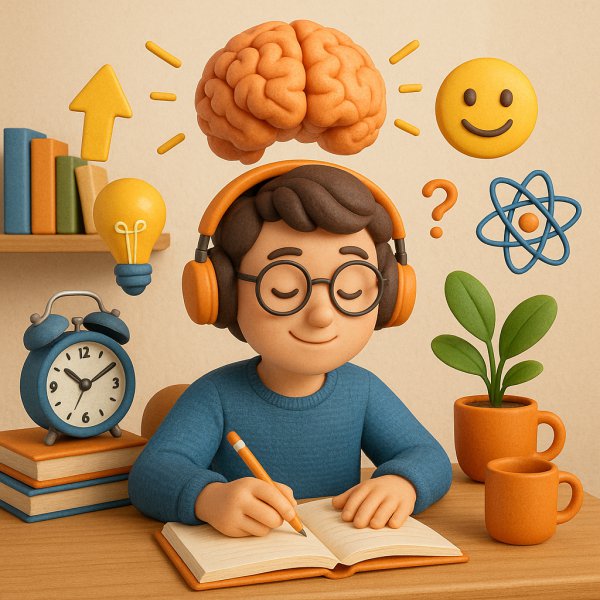
What if 15 minutes a day could make your brain feel younger?
Imagine a tiny gym for your brain that you can visit from your kitchen table, your commute, or your lunch break, and every visit adds a little strength, flexibility, and sparkle to how you think, feel, and live. Learning something new every day is exactly that kind of workout. It is not just a feel-good hobby. Neuroscience shows that novelty and challenge physically reshape brain circuits, improve mood, sharpen thinking, and build long-term resilience. If you want to trade mental fog for curiosity-fueled clarity, the habit of daily learning is the simplest, most powerful tool in your toolkit.
You will read about the brain science, emotional payoffs, social and career benefits, common myths, and a practical plan you can start today. Along the way you will meet real-world research and stories, try small challenges, and come away with specific steps to keep the momentum going. Think of this as a guided tour of why curiosity is not frivolous; it is an investment in your brain and your life.
How curiosity physically rewires your brain and keeps it flexible
The adult brain is not a static machine that slowly winds down. It is dynamic and responsive. When you learn something new, neurons in relevant networks fire together and form stronger connections. Over time, these connections become more efficient and sometimes create new pathways. Neuroscientists call this neuroplasticity. Plasticity explains why taxi drivers who master complex maps show structural changes in the hippocampus, and why people who pick up new skills later in life can still see measurable brain change.
Two major biological players underline this process. First, learning increases levels of brain-derived neurotrophic factor, or BDNF, a protein that helps neurons survive, grow, and make new synapses. Higher BDNF is associated with better memory and mood. Second, learning promotes myelination - the insulating sheath around nerve fibers - which improves the speed and reliability of information flow. Combine increased synaptic strength, new synapses, and better signaling, and you have a brain that is faster, more adaptable, and better at solving novel problems.
Daily learning gives you clearer thinking, better memory, and protection as you age
When you practice learning daily, cognitive improvements are not limited to the topic you are studying. Transferable benefits include improved attention, better working memory, sharper executive functions, and greater mental flexibility. These are the skills you use to focus in noisy places, juggle multiple tasks, plan ahead, and adapt when the unexpected happens. The accumulation of small, daily learning sessions builds what researchers call cognitive reserve - a buffer that helps the brain cope with age-related changes and pathology.
There is evidence linking lifelong mental stimulation to lower risk of cognitive decline and dementia. Studies show that engaging in mentally stimulating activities, combined with social interaction and physical exercise, predicts slower decline in memory and reasoning. Practically, that means daily learning is a long-term insurance policy for your mental abilities and independence.
| Benefit category |
What changes in the brain |
Everyday example |
| Memory & recall |
Stronger synapses in hippocampus and cortex |
Remembering names, recipes, instructions |
| Attention & focus |
Improved prefrontal network efficiency |
Sustaining work on a complex report |
| Problem solving & creativity |
Broader network connectivity, more flexible thinking |
Finding inventive solutions under pressure |
| Cognitive reserve |
Compensatory alternative pathways |
Maintaining function despite age-related changes |
| Speed of processing |
Increased myelination |
Quicker reactions when learning new software |
Unexpected emotional and mental health perks of learning daily
Learning is pleasurable. Novelty and mastery trigger dopamine, the brain's reward chemical, which promotes motivation and positive mood. That small jolt of reward each time you grasp a new idea creates momentum; curiosity becomes a self-sustaining engine. People who regularly engage in learning report higher life satisfaction, a stronger sense of purpose, and better psychological well-being.
Daily learning also helps with stress. Gaining skills and knowledge increases a sense of control and competence, which reduces anxiety linked to uncertainty. When a stressful problem arises, a brain trained to adapt and find solutions is less likely to catastrophize. Learning can be therapeutic in small doses: it organizes attention away from rumination, provides a sense of forward movement, and connects you to communities when you share what you have learned.
"Curiosity did not kill the cat; it helped the cat build new circuits and feel better about climbing that tree."
- A playful reminder that seeking new things is one of the clearest paths to well-being
Social, career, and life benefits that go beyond the brain
Learning something new every day is not just an individual activity. It changes how you relate to others and how you navigate the world. New skills expand the kinds of conversations you can have, provide fresh topics to bond over, and make you a more interesting collaborator. Employers prize adaptability more than ever; demonstrating a habit of continuous learning signals resourcefulness, initiative, and resilience.
Creativity, too, flourishes when you accumulate diverse knowledge. Cross-domain insights often come from connecting distant dots - for example, applying a principle from music to organize a team project. On a practical level, daily learning keeps your résumé current, deepens professional competence, and makes career transitions easier. On a human level, it helps you discover passions and purpose-sparking pursuits that can become meaningful pastimes or second careers.
Case study: Maria, who learned new things daily
Maria took up 15 minutes of reading about design, 10 minutes of language practice, and a weekly online course in data basics. After six months she felt more confident at work, was invited to contribute to cross-functional projects, and reported less anxiety when faced with new tasks. A year in, she switched teams and moved into a role that matched her newly developed interests. Maria's story shows how small, consistent learning adds up to meaningful life shifts.
Common myths about learning every day - busted and explained
Myth: "Your brain becomes fixed after a certain age; learning is pointless later in life." False. While plasticity declines in some ways with age, it does not vanish. Older adults retain substantial capacity to learn, especially when learning is meaningful, socially engaging, and paired with healthy habits like sleep and exercise. Studies demonstrate measurable brain changes even in older learners who take up new skills like languages or music.
Myth: "Multitasking while learning makes you more efficient." False. Divided attention reduces depth of encoding and the ability to retrieve information later. Focused, short sessions with deliberate practice beat unfocused long sessions. Quality beats quantity when it comes to durable learning.
Myth: "You must be exceptional at something to get benefits." False. The cognitive and emotional benefits come from the act of learning and sustained engagement, not from becoming an expert. Small, honest progress is the engine of benefits.
A simple, science-backed daily learning plan you can start today
You do not need a degree, expensive courses, or perfect discipline to get the benefits. Try this simple plan that fits into busy lives and uses proven learning principles - novelty, retrieval practice, spacing, and interleaving.
- Commit to 15-30 minutes each day. Break this into micro-blocks if needed, such as two 10-minute sessions. Small, consistent exposure beats occasional marathon sessions.
- Use active recall. Instead of re-reading, try to explain the idea aloud, write a summary from memory, or answer questions. Retrieval strengthens memory more than passive review.
- Space and vary it. Revisit topics after intervals and mix different domains, such as language, technical skill, creative pursuit, or general knowledge. Interleaving improves problem-solving and transfer.
- Teach or apply. Share your new learning with someone, write a short post, or apply it in a tiny real-world task. Teaching consolidates memory and reveals gaps.
- Pair learning with movement and sleep. Even light aerobic exercise before or after a learning session increases BDNF; sleep consolidates memory. Habit stacking works well - for example, study for 15 minutes after your morning coffee and a quick walk.
Weekly framework example:
| Day |
15-30 minute focus |
Practice method |
| Monday |
New language vocabulary |
Active recall with flashcards |
| Tuesday |
Short programming concept |
Do a 10-minute hands-on exercise |
| Wednesday |
Creative skill - drawing |
15-minute timed sketch |
| Thursday |
Read an article on a different field |
Summarize and explain aloud |
| Friday |
Practical life-skill |
Try and record outcome, reflect |
| Weekend |
Deep session or social learning |
Join a meetup or teach someone |
Mini challenges and reflective prompts to keep curiosity alive
Try one of these 7-day micro-challenges to make daily learning tangible and fun. Each day pick a different domain and spend 15 to 30 minutes.
- Day 1: Learn five phrases in a new language and use them in sentences.
- Day 2: Watch a 10-minute explainer video on a science topic and write a one-paragraph summary.
- Day 3: Try a five-minute drawing exercise, then compare it with your second attempt. Note improvements.
- Day 4: Read an opinion piece from a field you normally avoid; list three new ideas you learned.
- Day 5: Practice a coding puzzle for 20 minutes and explain the solution to a friend.
- Day 6: Cook a simple recipe from a different cuisine and reflect on the process.
- Day 7: Teach someone one new thing you learned this week; ask them one question back.
Reflective questions to ask after each session: What surprised me? What felt hard and why? How could I apply this in a week or a month? What would make this stick?
How to measure progress and stay motivated without burning out
Measurement does not need to be high-pressure. Keep a simple learning log: date, topic, time spent, one insight, one action. Over weeks, patterns emerge and you can spot momentum. Try a monthly review instead of daily grading to avoid perfectionism. Celebrate small wins - a new phrase used correctly, a concept understood without looking it up, a task completed that would have felt impossible before.
Community is a powerful motivator. Join a book club, an online micro-course group, a language buddy, or a local meetup. Accountability nudges keep habits alive. If motivation dips, switch domains, reduce session length, or introduce playful constraints like learning only through podcasts for a week. Importantly, avoid turning learning into another source of stress; the goal is steady enrichment, not exhaustion.
Final thoughts - why this tiny habit matters more than you think
Learning something new every day compound-improves your brain, mood, relationships, and options in life. The benefits are both immediate and future-facing: a single session can lift your mood and shift perspective, while years of consistent curiosity builds resilience against cognitive decline, enhances creativity, and increases adaptability in a changing world. The habit is accessible, evidence-based, and adjustable to any schedule.
Start small, focus on fun and relevance, and keep the focus on curiosity rather than perfection. In a decade, your older self will not remember every fact you learned, but will notice a clearer mind, more interests, richer conversations, and a life shaped by continuous growth. If you want a simple closing prompt to get started, try this: pick one micro-thing to learn right now, set a 15-minute timer, and report back to someone about what you discovered. Curiosity is contagious, and your brain will thank you.